

With 7,985 foreclosure starts in the first quarter of 2026, California currently ranks as the third highest state for homeowners in distress. It’s completely natural to feel a sense of dread when you look at those numbers and wonder if your own home is next. When the bills pile up, the choice between a short sale vs foreclosure california often feels like a lose-lose situation. However, one of these paths allows you to maintain your dignity and sets the stage for a much faster financial recovery.
You probably believe that losing your home means your credit is ruined forever, but you have more options than you think. We understand the deep anxiety that comes with potential homelessness and the confusion regarding California’s debt forgiveness laws. This guide promises to show you how to navigate these high-stakes decisions to protect your family’s future. We’ll examine how specific state protections, such as Code of Civil Procedure §580e, can prevent lenders from pursuing you for unpaid balances. You will discover the exact steps to minimize credit damage and start your journey toward a secure financial life.
Key Takeaways
- Distinguish between a voluntary, homeowner-led exit and an involuntary seizure to regain control over your property’s transition.
- Compare the credit recovery timelines to see how a short sale can help you qualify for a new mortgage years sooner than a foreclosure.
- Leverage California’s unique anti-deficiency laws and the Homeowner Bill of Rights to shield yourself from future debt collection.
- Understand the critical differences in a short sale vs foreclosure california to determine which path offers the best protection for your financial health.
- Learn why specialized representation is essential to navigate lender negotiations and avoid predatory scams during a housing crisis.
Understanding Short Sale vs. Foreclosure in California (2026)
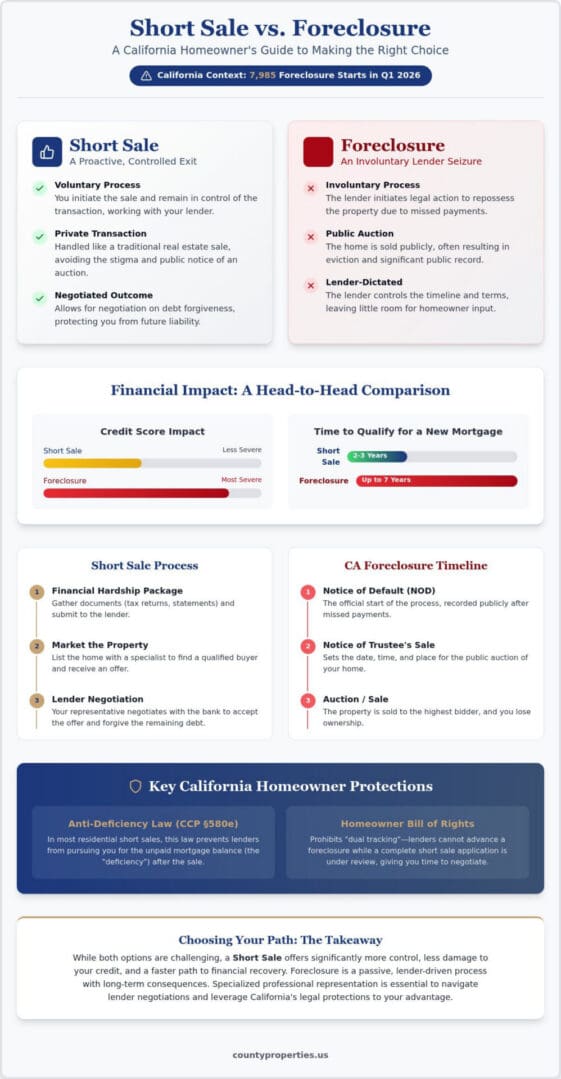
Distressed properties are climbing across the state. In Q1 2026 alone, California saw 7,985 foreclosure starts, marking it as one of the most active regions for lender filings. This surge means more families face a pivotal choice. A short sale is a proactive, homeowner-initiated transaction where your lender agrees to accept less than the total mortgage balance to facilitate a sale. Conversely, Understanding Foreclosure as a legal process is vital; it’s an involuntary seizure where the bank takes the property due to missed payments. The core difference is control versus surrender.
Why the Distinction Matters to You
Choosing the right path impacts your life for years. A foreclosure often stays on your record for seven years, making it incredibly difficult to secure a new home loan in Southern California. Short sales are typically viewed more favorably by future lenders, often reducing that wait time to just two or three years. There’s also a significant emotional difference. A foreclosure ends in a public auction, while a short sale is handled as a private real estate transaction. California law also offers specific protections regarding deficiency judgments. In most residential cases, a properly negotiated short sale prevents the bank from coming after you for the unpaid balance later, providing a cleaner break for your financial recovery.
Signs You Should Act Now
Timing is everything in the short sale vs foreclosure california debate. If you’ve received a Notice of Default (NOD), the clock is officially ticking. You shouldn’t wait until the bank forces a sale. Another warning sign is when your mortgage payments consume more than 40% of your gross household income, leaving little room for life’s other necessities. In the shifting 2026 market, negative equity can trap you in a home you can no longer afford. Taking action early allows you to explore short sale options before the bank moves toward a forced sale. We’re here to act as your dependable guide, helping you pivot from a crisis toward a fresh financial start and a more secure future.
The Process Breakdown: Control vs. Consequences
The fundamental difference between these two paths lies in who holds the steering wheel. A short sale is a voluntary choice you make to protect your future. Foreclosure, by contrast, is an involuntary legal process where the lender dictates the terms and the timing. While the short sale vs foreclosure california debate often centers on financial loss, the psychological benefit of maintaining control is just as significant. When you initiate a sale, you’re an active participant in your financial recovery rather than a passive observer of a legal seizure.
By choosing a short sale, you engage a Short Sale Specialist who acts as your advocate. This isn’t a typical real estate transaction; it’s a high-stakes negotiation with the bank’s loss mitigation department. We step in to manage these complex communications, ensuring your financial hardship is presented effectively to the lender. Under the California Homeowner Bill of Rights, lenders are prohibited from “dual tracking.” This means they can’t move forward with a foreclosure auction while your completed short sale application is under review. This legal protection gives you the breathing room needed to secure a better outcome without the immediate fear of an auction date.
The Short Sale Timeline
Patience is your greatest asset during this process. A short sale can take several months to conclude, but the long-term Credit Score Impact is far less severe than a forced exit. Your journey typically follows three structured phases:
- Financial Hardship Package: You’ll gather tax returns, bank statements, and a letter explaining why you can no longer sustain the mortgage.
- Marketing the Property: You’ll list your home with a real estate agent near me who specializes in distressed properties to find a qualified buyer.
- Lender Negotiation: Once an offer is submitted, your specialist negotiates with the bank to accept the purchase price as payment in full, even if it’s less than what you owe.
The California Foreclosure Timeline
In California, the non-judicial foreclosure process moves with mechanical precision. Once it starts, the windows for intervention begin to close rapidly. Connecting with a knowledgeable professional early can help you identify which timeline best suits your recovery goals before these dates pass.
- Notice of Default (NOD): This is the formal start. You have a 90-day period to reinstate the loan or negotiate an alternative like a short sale.
- Notice of Sale (NOS): If the default isn’t cured, the lender records this notice. It sets an auction date, usually 21 days later.
- Trustee’s Sale: This is the final auction. Once the gavel falls, you no longer own the home, and your opportunity for a strategic exit is gone.
Financial Impact: Credit Scores, Taxes, and Future Buying
The financial aftermath of a distressed property event is often what homeowners fear most. While both options leave a mark, the severity of the impact varies significantly. When analyzing a short sale vs foreclosure california, your credit score is the first line of defense. A short sale typically results in a drop of 50 to 150 points. In contrast, a foreclosure can slash your score by 200 points or more. This isn’t just about a number; it’s about how quickly you can return to a normal financial life. Most lenders, including those following Fannie Mae and Freddie Mac guidelines, allow you to apply for a new mortgage just two to three years after a short sale. If you allow a foreclosure to proceed, you’re likely looking at a seven-year waiting period.
Liability for the remaining debt is another critical concern. California homeowners benefit from specific legal shields that aren’t available in every state. Under California Code of Civil Procedure §580e, lenders are generally prohibited from pursuing a deficiency judgment after a short sale of a one to four unit residential property. This means they can’t come after your other assets or garnish your wages for the “gap” between what you owed and what the house sold for. Foreclosures don’t always offer this same level of certainty, especially if there are secondary liens involved. Beyond your bank account, a foreclosure can even impact your career. Many employers in the financial sector or positions requiring security clearances view a foreclosure as a sign of significant financial instability, whereas a short sale is often seen as a responsible settlement of debt.
The Tax Implications (1099-C)
When a lender forgives a portion of your mortgage, the IRS usually views that “canceled debt” as taxable income. You’ll likely receive a Form 1099-C in the mail. However, the California Mortgage Relief Act and various 2026 tax exemptions may provide relief for homeowners in specific hardship situations. It’s vital to have your settlement reviewed by a professional before you sign. We work to ensure the bank’s agreement includes language that maximizes your eligibility for these tax exclusions, preventing a surprise bill from the state or federal government.
Recovery: Life After a Distressed Sale
Your path to recovery starts the day your escrow closes. Rebuilding your credit involves managing small lines of credit and ensuring every future payment is on time. If you’re staying in the San Diego area, renting with a short sale on your record is much easier than with a foreclosure. Landlords often appreciate that you took the initiative to resolve your debt. By following a structured recovery plan, you’ll find yourself well-positioned for buying a home in Southern California again much sooner than you thought possible. We stay by your side as a dependable guide, helping you transition from crisis to a position of strength.
California Specifics: Protections You Need to Know
California’s legal landscape offers a safety net that few other states provide. Known as a “non-recourse” state for most residential loans, California limits a lender’s ability to pursue your personal assets. The “One-Action Rule” is a cornerstone of this protection; it dictates that a lender can only take one form of legal action to recover debt, which is typically foreclosing on the property itself. This prevents them from suing you personally while also trying to seize the home. Understanding these boundaries is essential when you’re caught in the short sale vs foreclosure california dilemma.
The California Homeowner Bill of Rights (HBOR) further strengthens your position. It explicitly forbids “dual tracking,” the predatory practice where a bank continues the foreclosure process while simultaneously negotiating a loan modification or short sale. Under Senate Bill 900, banks must also provide a single point of contact. You won’t be bounced between anonymous call center agents. You’ll have a dedicated person who knows your case, which is a vital component for a transparent and predictable outcome during a difficult transition.
Anti-Deficiency Protections in Short Sales
One of the most powerful tools in your arsenal is California Code of Civil Procedure §580e. This law prohibits lenders from seeking a deficiency judgment after a short sale of a one to four unit residential property. This protection is comprehensive; it generally applies to both the primary mortgage and any junior liens, such as second mortgages or HELOCs, provided those lenders agreed to the short sale. To ensure you’re fully protected, we verify that your bank’s approval letter includes a “Full Satisfaction” clause. This legal language ensures the lender cannot sell the remaining debt to a collection agency later, giving you the total financial closure you deserve.
Foreclosure Prevention Resources
You don’t have to face the bank alone. HUD-approved housing counselors provide free, methodical guidance to help you understand your rights and potential modifications. If you’re in San Diego County, local mediation programs can facilitate direct conversations with your lender to find a resolution that keeps your future intact. Before the clock runs out, it’s wise to implement a foreclosure prevention california strategy that leverages these state-specific laws to your advantage.
We act as your seasoned mentor to ensure these laws work for you, not against you. If you’re ready to secure your financial future and explore the protections available to you, contact our team today to discuss your specific situation.
Choosing Your Path: Why Professional Representation is Non-Negotiable
When you’re facing a housing crisis, you’ll likely be bombarded with “We Buy Houses for Cash” signs and aggressive mailers. These entities often prey on the fear of homeowners who feel they’ve run out of time. While some are legitimate investors, many operate with predatory terms that can leave you in a worse financial position than when you started. Choosing a professional path in the short sale vs foreclosure california decision requires a partner who prioritizes your long-term stability over a quick transaction. You deserve a clear, honest assessment of your options rather than a high-pressure sales pitch.
A standard real estate agent often lacks the specialized training required to negotiate with a bank’s loss mitigation department. Selling a distressed property isn’t just about finding a buyer; it’s about convincing a multi-billion dollar lender to accept a financial loss. At County Properties, we take a collaborative approach. We don’t just list your home. We act as a bridge between you and your lender, using our seasoned expertise to advocate for your best interests. This professional mediation is what allows you to move forward with your dignity intact, making a clean break from a difficult financial chapter without the lasting stigma of a forced auction.
What to Look for in a Short Sale Agent
Your choice of representation can dictate your success. You need a guide who has navigated the specific requirements of major lenders like Chase, Bank of America, and Wells Fargo. Every bank has its own internal processes and “hardship” criteria that must be met. You should look for these specific traits in your ally:
- Lender-Specific Knowledge: Deep experience with the nuances of different bank departments and their unique documentation requirements.
- Transparency: Clear, consistent communication about timelines and expectations for selling a home in southern california.
- Service-First Mindset: A commitment to your personal financial recovery and future goals rather than just a commission check.
Your Next Steps
Reclaiming your future begins with a single, deliberate action. The process moves quickly, and the earlier you engage a specialist, the more options you’ll have to avoid a forced auction. Start by organizing your financial life so you can present a clear case to your lender. We recommend taking these three steps immediately:
- Draft a Hardship Letter: Explain the specific life events, such as medical issues or employment changes, that led to your current situation.
- Gather Financial Records: Collect your two most recent tax returns, pay stubs, and bank statements to prove your financial standing.
- Schedule a Consultation: Talk to an expert who can analyze your specific loan type, equity position, and eligibility for state protections.
You don’t have to navigate this transition alone. We are here to act as your dependable guide, providing the expert resources and empathetic support you need to start your path toward financial recovery. Contact County Properties for a confidential foreclosure prevention analysis today to explore your options and protect your family’s future.
Take Control of Your Financial Future Today
Deciding between a short sale vs foreclosure california is one of the most significant choices you’ll ever make for your financial health. By choosing a short sale, you’re opting for a faster recovery timeline and leveraging robust state protections like CCP 580e to shield your assets. You don’t have to surrender to the bank’s timeline or face the emotional weight of a public auction alone. Taking a proactive stance now ensures that you remain the primary decision-maker in your life’s next chapter.
County Properties brings decades of experience navigating Southern California market cycles. As Short Sale Specialists in San Diego, we provide the empathetic, service-centric guidance you need to exit a difficult situation with your dignity intact. We act as your dependable guide, ensuring every negotiation with your lender serves your long-term goals. If you’re ready to explore a strategic path forward, Request a Confidential Foreclosure Prevention Consultation with our team. You have the power to turn this challenge into a fresh start. We’re here to help you every step of the way.
Frequently Asked Questions
Is a short sale better than a foreclosure for my credit score?
Yes, a short sale is typically much less damaging to your credit score than a foreclosure. While a foreclosure can slash your score by 200 points or more; a short sale often results in a more manageable drop of 50 to 150 points. This difference is critical because it allows you to begin rebuilding your financial reputation much sooner. You’ll also see the event removed from your record years earlier than a forced sale.
Can I stay in my home during the short sale process?
You can remain in your home throughout the entire short sale process until the transaction officially closes and the title transfers to the new owner. This provides your family with a predictable timeline to plan your next move. Unlike a foreclosure, which can end in a sudden eviction after a trustee sale, a short sale is a collaborative process. We work to ensure you have the time and dignity to transition comfortably.
Does California law protect me from the bank asking for more money after a short sale?
California law provides strong protections under Code of Civil Procedure §580e, which prohibits lenders from seeking a deficiency judgment after an approved short sale on a 1 to 4 unit residential property. This means once the bank agrees to the sale, they generally cannot pursue your other assets for the unpaid balance. We carefully review your approval letter to confirm it includes the necessary “Full Satisfaction” language to ensure your total financial protection.
How long do I have once I receive a Notice of Default in California?
Once you receive a Notice of Default (NOD) in California, you have a 90-day period to cure the default or negotiate an alternative like a short sale. If the debt isn’t resolved, the lender can then record a Notice of Sale (NOS), which sets an auction date at least 21 days later. This approximately four-month window is your primary opportunity to take action. Acting early is essential to prevent an irreversible trustee sale.
Can I do a short sale if I am not behind on my payments yet?
You don’t necessarily need to be behind on your mortgage payments to qualify for a short sale. If you can demonstrate an imminent financial hardship, such as a job transfer or a significant drop in household income, many lenders will consider your application. This proactive approach is often the best way to handle the short sale vs foreclosure california dilemma. It allows you to protect your credit score before any missed payments occur.
What are the tax consequences of a short sale in California in 2026?
In 2026, the IRS generally treats canceled debt as taxable income, and you’ll likely receive a Form 1099-C. However, several state and federal exemptions, including the California Mortgage Relief Act, may shield you from this tax liability if you meet specific hardship requirements. Because tax laws are situational, we recommend consulting with a professional to review your settlement. We coordinate the necessary documentation to ensure you maximize your eligibility for these critical tax exclusions.
Can I buy another house immediately after a short sale?
You generally cannot buy a new home immediately, but the wait time is significantly shorter than after a foreclosure. Most conventional lenders following Fannie Mae or Freddie Mac guidelines require a waiting period of two to three years after a short sale. If you allow a foreclosure to occur, that wait typically extends to seven years. Taking the short sale path is a strategic investment in your future, putting you back in the market faster.
What is the “One-Action Rule” in California real estate?
The “One-Action Rule” is a unique California protection that requires a lender to proceed against the security, your home, as the first step to recover a debt. They cannot sue you personally for the money until they have exhausted the value of the property through foreclosure. This rule prevents lenders from bypassing the home to garnish your wages directly; it ensures the property remains the primary source for settling the loan.