

An older septic system doesn’t have to derail your home sale. If you’re wondering how to sell a house with an old septic system in San Diego County, start by replacing uncertainty with information. Age alone doesn’t establish a system’s condition, but missing records and unanswered buyer questions can complicate a sale.
It’s understandable to worry that buyers will view an older system as a deal-breaker. A clear, organized septic file helps explain its documented history and known condition, giving you a stronger basis for sale decisions. It can’t guarantee a particular outcome, but it can help you answer questions instead of scrambling for information later.
This guide explains how to gather available records, assess the system, prepare accurate disclosures, and identify which local requirements may apply to your property. You’ll also learn how verified findings can guide your next steps, from addressing known concerns to choosing a marketing strategy that fits the home and your goals.
Key Takeaways
- Age alone doesn’t establish a septic system’s condition. Gather available records and organize what you know before listing.
- Use verified findings, timing, buyer concerns, and property circumstances to weigh repair, replacement, or selling with the system’s known condition documented.
- Learn how to sell a house with an old septic system in San Diego County by preparing clear information and planning for buyer questions.
- Keep documented facts, professional findings, your observations, and unanswered questions separate when preparing septic information and disclosures.
- Turn the information you gather into a listing and buyer-communication plan, with local seller representation helping coordinate transaction steps.
Selling a San Diego County House With an Old Septic System: What to Expect
A clear process makes an uncertain septic history easier to manage as you prepare to sell. Start by separating what you know from what still needs to be established. System age is not, by itself, a finding of failure. An older system may prompt questions, but its condition and any applicable requirements depend on more than its installation date.
For sellers learning how to sell a house with an old septic system in San Diego County, preparation means considering the property’s records, observable condition, parcel details, and likely buyer questions together. This information helps you decide what to investigate and how to describe the system accurately during the sale.
What does an old septic system mean for a home sale?
A septic system generally collects wastewater in a tank, where solids settle, then directs liquid to a soil absorption area for further treatment. The Septic tank overview introduces common system components and types, but it cannot identify the design or condition at your property.
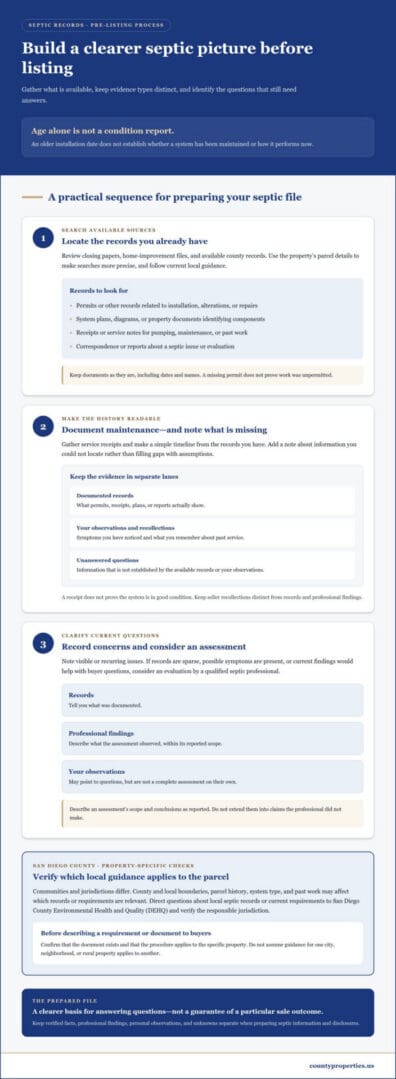
Keep four things distinct: the system’s age, its maintenance history, symptoms you have observed, and findings from a qualified professional. An older installation date may tell you when the system was put in, but it doesn’t establish whether it has been maintained or how it performs now. An odor or wet area may deserve attention, but neither is a complete assessment on its own. Avoid describing the system as sound or failed unless the available evidence supports that conclusion.
Why San Diego County location and parcel details matter
San Diego County includes different communities and jurisdictions, so a property’s location can affect which agency records or requirements are relevant. Don’t assume guidance for one city, neighborhood, or rural property applies to another. County and local boundaries, parcel history, system type, and past work may all matter when you identify records and next steps.
Use the property’s parcel details to make record searches more precise, and direct questions about local septic records or current requirements to San Diego County Environmental Health and Quality (DEHQ). The County implements onsite wastewater rules through its local program, but you should verify which requirements apply to a specific property with the responsible jurisdiction. Do this before telling buyers that a document exists or that a particular procedure is required.
Buyer expectations vary, too. One buyer may focus on maintenance history or available documentation; another may ask what the system means for their plans. You don’t need to predict every concern. Base your preparation on verified, property-specific information, and identify unknowns instead of filling gaps with assumptions.
This gives you a practical starting point: establish what the records show, distinguish observations from professional findings, and verify which local guidance applies to the parcel. With those details in view, you can consider your next steps without treating age as a verdict.
Gather Septic Records and Assess the System Before Listing
Once you know which questions matter for your property, create a straightforward file to help answer them. You don’t need a complete archive to begin. A focused search, notes about missing information, and an assessment when appropriate can give you a more reliable picture before listing.
Which septic-system documents should a seller look for?
Records vary by property, so treat this as a search list, not a checklist every home must complete. Look through closing papers, home-improvement files, and available county records for items such as:
- Permits or other records related to installation, alterations, or repairs
- System plans, diagrams, or property documents identifying system components
- Receipts or service notes for pumping, maintenance, or past work
- Correspondence or reports concerning a septic issue or evaluation
Keep documents as they are, including dates and names, and note what you couldn’t locate. A missing permit doesn’t prove work was unpermitted, and a receipt doesn’t prove the system is in good condition. For general maintenance context, the EPA SepticSmart Homeowners resource explains care practices, but it doesn’t establish the history or present condition of your specific system.
When can a professional assessment help?
An assessment by a qualified septic professional can clarify observed conditions and identify questions that may affect sale preparation. Consider one if records are sparse, you’ve noticed possible symptoms, or you want current findings to discuss with buyers. Describe the assessment’s scope and conclusions as reported, without extending them into claims the professional didn’t make.
Records tell you what was documented; professional findings describe what an assessment observed. Seller recollections are a third source of information. Keep all three distinct so a maintenance receipt, a professional observation, and your memory of past service aren’t presented as equivalent evidence.
Use this ordered preparation process:
- Locate records. Search your files and identify any available county records using current local guidance.
- Document maintenance. Gather service receipts and make a simple timeline from the records you have.
- Assess concerns. Record visible or recurring issues and consider whether a qualified professional’s evaluation would clarify them.
- Organize findings. Group documents by type, note dates, and list unanswered questions without guessing at answers.
Requirements for inspections, permits, disclosures, or transfer can depend on the parcel and responsible jurisdiction. Verify current guidance with San Diego County Environmental Health and Quality or the relevant local authority before treating a step as mandatory. As you prepare the file, seller representation and listing guidance can help you organize how system information will be handled in buyer discussions and transaction steps.
Repair, Replace, or Sell As-Is: Compare Your Options
There isn’t one right answer for every older septic system. The best path depends on verified findings, available records, property circumstances, your timing, and how you want to address buyer concerns. A professional assessment can help define an issue, while current guidance from the responsible authority can clarify what work or approvals may apply. Age alone doesn’t determine whether repair or replacement is appropriate.
Compare the options using property-specific facts
| Option | What to weigh |
|---|---|
| Repair | Consider this when professional findings identify a repairable concern. Review the scope, timing, service records, and any applicable permit or approval requirements with the responsible authority. |
| Replacement | Explore this when findings and local guidance indicate that repair may not address the issue or replacement may be appropriate. Property conditions and the time needed to plan and complete the work can affect whether this fits your sale timeline. |
| Sell with the known condition documented | This may suit a seller who prefers not to complete work before listing. Organize existing records and findings, communicate known information accurately, and prepare for buyer questions, due diligence, or negotiation. |
These are options to evaluate, not guarantees of buyer acceptance or transaction timing. A documented repair plan may help a buyer understand what was found and what work is proposed, but it doesn’t establish that the concern is resolved. Replacement also isn’t automatically necessary just because the system is old. Verify any required work, permits, or approvals with the applicable local authority before making plans or describing them to buyers.
What should sellers weigh before choosing an as-is approach?
An as-is approach can mean you don’t plan to make a particular repair before the sale, but the phrase doesn’t establish the system’s condition or settle disclosure obligations. Handle known information accurately. Keep documented findings, service history, your observations, and unanswered questions distinct. Avoid broad listing language that suggests a condition that hasn’t been established.
Buyers may conduct their own due diligence, request more information, or raise the system’s condition during negotiations. These possibilities create uncertainty, not a predictable outcome. Prepare by organizing the facts, considering your preferred timing, and deciding how you’ll respond if a buyer asks about repairs or further evaluation. Confirm current disclosure and transfer requirements for the property with appropriate authoritative sources.
To decide how to sell a house with an old septic system in San Diego County, compare the practical effect of each option against your priorities, not assumptions about what buyers will accept. A clear plan can also account for the rest of the transaction, from listing preparation to buyer communication. The Southern California home-selling guide provides broader context for planning a sale while you work through this property-specific decision.
Prepare Disclosures, Listing Details, and Buyer Questions
A well-organized septic file helps you communicate clearly without overstating what you know. Keep information concise, dated where possible, and easy to review during listing preparation and buyer discussions. The goal isn’t to make an older system sound better or worse. Present known facts accurately and make unanswered questions visible.
How can sellers explain an older system accurately?
Use specific, attributed information instead of broad assurances such as “fully functional.” Distinguish a dated service receipt from a professional assessment, and describe each according to what it actually says. Identify your own observations as observations. Don’t guess at a technical cause, predict the system’s remaining lifespan, or imply that a past service visit establishes its current condition.
Check California disclosure duties and applicable forms against current authoritative sources for your transaction. Disclose known information as required, and don’t conceal a concern because you plan to sell as-is. If you have questions about your legal obligations or how to complete a disclosure, seek guidance from independent legal counsel. County Properties provides real estate representation, not legal advice.
What should the listing file make easy to understand?
Arrange the available documents so a buyer can follow the system’s known history without confusing records, professional findings, and seller observations. A simple index can identify each item, its date, and its source. If a record is missing, label it as unavailable rather than treating its absence as proof of a defect or proof that no issue exists.
A practical file may include these materials when they exist:
- Available plans, diagrams, or other information showing the system’s location
- Installation, permit, repair, or alteration records
- Maintenance and service receipts, organized by date
- Professional assessment documents, with the author and assessment date identified
- Relevant correspondence about the system or past work
- A short list of seller observations and unanswered questions
Before sharing documents or completing transaction disclosures, verify which current California requirements and local procedures apply to the property. Keep the listing description consistent with the file. If an assessment identifies a concern, don’t replace its specific language with a broader claim. If you have no professional finding on a question, make clear that the file doesn’t answer it.
Prepare a few calm, factual responses to likely buyer questions: which records are available, what maintenance they document, whether an assessment exists, and what remains unknown. Consistent answers help prevent confusion as conversations move from the listing to due diligence. For broader seller support, the guide to choosing a real estate agent can help you consider the representation and communication approach that fits your sale.
Learning how to sell a house with an old septic system in San Diego County means preparing for questions as well as organizing paperwork. County Properties provides personalized seller representation to help coordinate listing preparation and buyer discussions.
Plan the Sale With Local Guidance and a Clear Next Step
Once you’ve assembled the system information, use it to shape a practical sale plan. Verified records and findings can guide listing preparation, help you respond consistently to buyer questions, and clarify what remains unresolved. They can’t predict how a buyer will respond, but they keep the conversation grounded in the information available for your property.
How does septic documentation fit into the selling process?
Before marketing the home, decide which records are ready to share, which facts belong in listing discussions, and which questions may need further attention. Buyer requests vary by property and transaction. One buyer may ask about maintenance history, while another may focus on an assessment or available system plans. Keep a consistent record of what you provide, and don’t present an unanswered question as a confirmed finding.
Septic details are one part of a broader transaction plan. The seller representation guide offers wider context for preparing and coordinating a Southern California home sale. County Properties can help turn your property information into a clear listing and communication plan.
How can County Properties help sellers move forward?
Seller representation brings structure to practical transaction steps: coordinating listing preparation, tracking buyer questions and document requests, and helping manage communication as the sale progresses. County Properties serves San Diego County sellers with a collaborative, personalized approach. The team was established in 1995, and founder Arnie Levine has 36 years of Southern California real estate experience.
This guidance focuses on the real estate process. It doesn’t replace a septic professional’s assessment, direction from the responsible local authority, or independent legal advice. Your agent can help organize transaction steps while you rely on appropriate sources for technical findings and legal questions.
Use this short checklist to move from preparation to action:
- Collect the system records and findings you have, and note gaps plainly.
- Verify property-specific local procedures and applicable disclosure requirements.
- Choose a sale approach based on the available facts, your priorities, and timing.
- Prepare consistent responses for likely buyer questions and document requests.
A clear plan can’t guarantee a particular sale outcome, but it can help you approach the process with better organization and fewer avoidable surprises. Talk with County Properties about selling your San Diego County home and plan your next steps with personalized seller representation.
Take the Next Step With a Clear Sale Plan
You don’t have to resolve every uncertainty before you begin planning. Choose a next step based on what you know, what still needs attention, and the outcome you want from the sale. A thoughtful plan can help you stay focused as new information or buyer questions arise.
If you’re considering how to sell a house with an old septic system in San Diego County, start with a conversation about your goals, timing, and the property’s circumstances. With personalized, collaborative guidance, you can map out the real estate steps while directing technical and legal questions to the appropriate professionals.
Talk with County Properties about your San Diego County home sale and discuss a path forward that fits your needs. Your sale can begin with one clear, informed step.
Frequently Asked Questions
Can I sell a house in San Diego County with an old septic system?
Yes. An older septic system doesn’t automatically prevent you from selling your home. The transaction may still involve questions about the system’s condition, property records, or requirements that apply to the parcel. A buyer may want to understand how the home handles wastewater before deciding whether it fits their needs. Prepare to discuss what is known accurately, and verify current local requirements rather than assuming every sale follows the same process.
Does an old septic system have to be replaced before selling a house in San Diego County?
No. Age alone doesn’t establish that replacement is necessary. The decision depends on verified condition findings and any applicable direction from the responsible authority. A professional may identify a repairable concern, recommend further evaluation, or explain why a different course merits consideration. Before committing to work, clarify what the findings say and verify whether local permits or approvals apply. Don’t promise buyers a repair will resolve an issue unless its scope and result are documented.
Should I inspect a septic system before listing my home?
An assessment before listing can be useful if you’ve noticed recurring problems, have little information about the system, or want to address likely buyer questions early. It may also help you plan listing discussions if the findings raise follow-up questions. An assessment isn’t automatically required for every sale, so verify any transaction-specific inspection or certification requirement with the responsible jurisdiction. Keep written results available and describe their scope accurately.
What septic-system records should I provide to a home buyer?
Share relevant records you have that help explain the property’s septic history, such as service receipts, system plans, permits, repair paperwork, or a professional assessment. A brief index with dates and document descriptions can make the file easier to review. Provide copies rather than parting with original records, and don’t label a document as proof of present performance if it only records past work. Coordinate document sharing through the transaction process.
Do San Diego County septic rules apply to every property in the same way?
No. The requirements or records relevant to a property can depend on its location, parcel history, and responsible jurisdiction. Don’t rely on a neighboring home’s sale as a definitive guide for yours. Use the parcel information to ask San Diego County Environmental Health and Quality or the applicable local authority what current guidance applies. Confirm the answer for your property before treating an inspection, permit, or transfer step as required.
Can I sell a house as-is if the septic system has a known problem?
An as-is sale may be possible, but that wording doesn’t remove applicable duties to disclose known material issues or settle what a buyer may request during negotiations. Describe the known problem factually, without minimizing it or guessing about its cause. Buyers may conduct due diligence and respond differently depending on their plans and circumstances. For questions about disclosure obligations or contract language, consult an independent California real estate attorney.
What happens if I cannot find the original septic permit or system records?
Missing paperwork doesn’t, by itself, prove that the system is defective or that work was unauthorized. Record what you searched for and what you couldn’t locate, then ask San Diego County Environmental Health and Quality about records associated with the parcel. The County maintains septic records, though older or incomplete files may require additional follow-up. If the search doesn’t answer a buyer’s question, make that uncertainty clear instead of filling the gap with an assumption.