

A smooth California closing depends on getting paperwork in promptly, keeping title work moving, and scheduling inspections early. Most financed home purchases in California take 30 to 45 days to close, while cash purchases can close in 7 to 14 days. Knowing how to ensure a smooth real estate closing process in California means staying ahead of deadlines and addressing questions before they become last-minute obstacles.
It’s understandable to focus on signing day, but keeping a real estate closing on track takes work throughout escrow. Accurate documents, clear communication, and timely decisions help you move through each step with confidence.
This guide explains how closing works and what buyers and sellers can do to keep a California transaction moving, from responding to lender and title requests to completing inspections and the final walk-through. It also explains when legal advice may help, particularly if contract terms, contingencies, or a dispute need careful attention.
Key Takeaways
- Send requested lender and escrow paperwork promptly, and review every document for accurate names, property details, and terms before signing.
- Stay in touch with the lender and title company so title questions and ownership requirements surface early rather than near closing.
- Schedule inspections early and plan the final walk-through to leave time to address concerns before signing.
- Consider independent legal advice when contract terms, title issues, or a dispute make the transaction more complex.
1. Submitting lender and title-company documents promptly
For a financed California purchase, gather requested pay stubs, bank statements, tax forms, and identification. Buyers also need the signed purchase contract, addenda, revisions, escrow instructions, and closing documents that require signatures. Sellers should organize transaction records and promptly provide requested title information. The documents needed depend on whether you’re buying with a mortgage or paying cash.
What documents are required to close on a home in California? Buyers commonly provide lender-requested financial records, identification, signed transaction documents, and closing funds. Sellers provide signed transfer paperwork and information required for title and escrow. Ask the responsible party about outstanding items, and keep a record of what you submitted and when.
What California disclosures must sellers provide before closing? Sellers must disclose known issues with the home and provide written disclosures applicable to the property and transaction. Buyers should read the disclosures alongside the purchase contract, ask about unclear details, and keep copies with their escrow records.
Send the complete purchase contract, addenda, and revisions to the lender and title team promptly after offer acceptance. This gives the lender a full transaction record for appraisal ordering and underwriting review. Late amendments, seller credits, or financing changes may require additional review and disclosures. Knowing how to ensure a smooth real estate closing process in California starts with sharing accurate, complete documents before changes become urgent.
Use electronic signatures when available, and store digital files in a secure, clearly labeled folder. Before signing, confirm that names, vesting information, property address, dates, and terms match across documents. The Consumer Financial Protection Bureau says lenders must provide the Closing Disclosure at least three business days before closing. Review it promptly and direct questions to the lender. To help ensure a smooth real estate closing process in California, track requests, signatures, and responses in one checklist so everyone can see what remains outstanding.
2. Title search and title insurance
During escrow, the title company searches public records to confirm ownership and identify issues affecting the property. The search can reveal unpaid taxes, recorded liens, easements, or claims that need attention before title clearance. Ask for the preliminary title report early, then review the listed owners, legal description, and exceptions with your agent.
In California, sign escrow and transfer documents according to the transaction’s written instructions, and follow any notarization requirements stated for each document. The title company sends the new deed and other ownership documents to the local government for recording. Confirm that the names and vesting details match the purchase agreement before signing, since recording establishes the public ownership record.
Title insurance addresses certain issues tied to the property’s past ownership, not future damage or repairs. A buyer’s policy is a one-time purchase and lasts as long as the buyer owns the insured home. Ask the title company to explain the policy documents, covered risks, and listed exceptions, and distinguish the owner’s policy from any lender’s title coverage.
Keep the lender, title company, and agents involved throughout each review. Tell the lender promptly about title questions, purchase changes, or credits that may affect approval. If a search shows a lien, the parties may need payoff information or other documents before the title company can clear it. A deposit or agreed repair doesn’t resolve a title defect, so address these as separate issues in transaction communications.
For a coordinated review, share title updates with the people handling the purchase and respond promptly to requests. Check that the lender’s insurance requirements align with the property’s coverage before funding. The title company can explain how unresolved exceptions affect the proposed policy and recording process. Once title conditions are addressed, signed documents and loan funds can move toward recording and completion.
3. Scheduling inspections and final walk-throughs
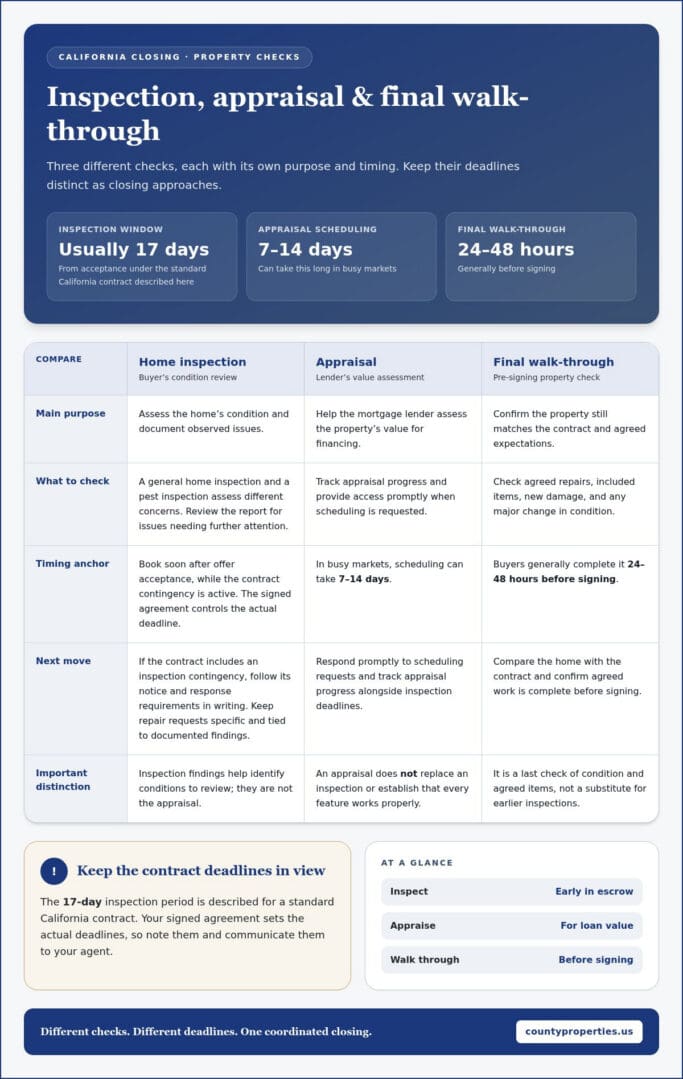
Book the home inspection soon after offer acceptance, while your contract contingency remains active. Under the standard California contract described here, buyers usually have 17 days from acceptance to complete inspections and request repairs. Your signed agreement controls, so note its actual deadlines and communicate them to your agent. Early scheduling leaves time to review findings, discuss repairs, and make decisions before contingency deadlines.
A general home inspection and a pest inspection assess different concerns. Ask the inspector to document observed issues, then review the report for conditions that may need further attention. If the contract includes an inspection contingency, follow its notice and response requirements in writing. Keep repair requests specific and connect each one to a documented finding rather than relying on a verbal conversation.
An appraisal serves a separate purpose: it helps the mortgage lender assess the property’s value for financing. It does not replace an inspection or establish that every feature works properly. In busy markets, scheduling an appraisal can take 7-14 days, so promptly provide access and respond to scheduling requests. Track appraisal progress alongside inspection deadlines to spot timing conflicts early.
Buyers generally complete the final walk-through 24-48 hours before signing. Check that the property’s condition matches the contract, agreed repairs are complete, included items remain, and no new damage or major change has appeared. Sellers can prepare by completing agreed work and leaving the home in the condition required by their agreement.
Before wiring funds, independently call the title or escrow company using a phone number from a trusted source, not the email containing the instructions. Confirm the recipient and wire details by phone before sending payment. If the walk-through reveals an unfinished repair or a new problem, document it, notify your agent promptly, and agree on next steps in writing before closing. This gives the parties a clear record to address before signing.
4. Hiring a real estate attorney
Common California closing delays include unresolved title issues, appraisal or underwriting questions, incomplete paperwork, and disputes over repairs or credits. Avoid preventable hold-ups by tracking deadlines, sending requested documents promptly, and documenting contract changes in writing. An attorney can help address legal questions before they disrupt the transaction.
An attorney can be especially useful when the purchase agreement includes complex contingencies, unusual property terms, tight deadlines, or a disagreement between buyer and seller. Escrow officers follow escrow instructions, but they aren’t attorneys and can’t provide legal advice. Questions about fixtures, personal property, contingency removal, liquidated damages, arbitration, or mediation fall outside the escrow holder’s role.
Legal review can clarify what a contract requires before you sign or remove a contingency. For example, if the seller agrees to complete repairs or provide a credit, an attorney can review how that agreement is written and whether it matches the purchase agreement. Counsel can also coordinate with your agent, lender, and escrow officer to address inconsistencies, payoffs, and prorated expenses. An appraisal concern or a title cloud may need closer review because either can affect financing or ownership.
Before engaging counsel, identify the specific issue and gather relevant documents: the purchase agreement, amendments, title materials, lender requests, and communications about credits or repairs. Ask for a clear explanation of the review process, expected milestones, and decisions that require your attention. If the transaction is straightforward, with standard terms and no dispute, a limited review may be enough; complex financing, title concerns, or conflicting contract interpretations call for broader support.
After counsel reviews the documents, keep the agent and escrow officer informed about agreed changes so everyone works from the same version. If you’re the seller, share any written repair or credit agreement promptly. County Properties guides sellers through representation and transaction coordination, while legal advice about contract rights should come from an attorney.
County Properties: Seller Representation
County Properties provides Seller Representation to help you manage the practical steps of a home sale, including coordinating transaction communication and tracking closing milestones. Turn to the team for guidance organizing the sale, responding to requests, and keeping the parties aligned as escrow moves forward.
For buyers, Buyer Representation supports you through the purchase process and its key decisions. County Properties also offers Short Sale and Foreclosure Prevention, Senior Real Estate Transition, and Cash Offer Facilitation for clients whose circumstances call for these options. Real estate representation can help coordinate the transaction, while legal questions about contract rights belong with an attorney.
Share your situation and where you are in the transaction to discuss the appropriate next step. Contact County Properties to talk about representation for your California real estate sale.
Move Forward With a Clear Plan
A real estate closing is a major personal and financial transition. Decide what support will help you move forward clearly, organize decisions, and stay engaged with the people involved in your transaction. A useful starting point for learning how to ensure a smooth real estate closing process in California is matching your support to your role and circumstances.
County Properties offers Seller Representation and Buyer Representation, along with Short Sale and Foreclosure Prevention. These services support clients with different real estate needs, while legal questions about contract rights belong with an attorney. Choose the guidance that fits your situation and helps you approach the next stage with purpose.
When you’re ready to discuss your real estate plans, contact County Properties today. Take the next step with confidence and keep your goals at the center of the process.
Frequently Asked Questions
How Does Closing on a House Work?
Closing completes the purchase by finalizing required documents, transferring funds, and recording the change in ownership. The buyer reviews and signs closing papers, provides the required funds, and completes lender conditions; the seller signs transfer documents and receives the sale proceeds. After the deed is recorded and the transaction is complete, the buyer can take possession according to the purchase agreement.
How long does it take to close on a house?
Most financed home purchases in California take 30 to 45 days to close, while a cash purchase can close in 7 to 14 days. Financing reviews, appraisal timing, title questions, and incomplete paperwork can affect the schedule. Your contract sets the target date, so keep track of deadlines and raise timing concerns promptly with the transaction team.
Do You Need a Real Estate Attorney in California?
California homebuyers and sellers aren’t generally required to hire a real estate attorney for every closing. An attorney can be valuable if you face disputed contract terms, unusual contingencies, a title issue, or a disagreement over repairs or credits. Escrow officers aren’t attorneys and don’t provide legal advice, so direct legal questions to qualified counsel.
What Does Closing Actually Cost?
California buyers should budget 2%-5% of the purchase price for closing costs, in addition to the down payment. The total depends on items such as lender charges, title and escrow services, recording, taxes, and prepaid expenses. Review the estimated closing statement and compare it with your final figures so you understand which costs apply to your transaction.
Who Does What During Escrow?
The escrow officer follows the written instructions and coordinates documents and funds, while remaining neutral if the parties disagree. The lender reviews the borrower’s financing and releases loan funds after its conditions are met. The title company handles title work and deed recording; agents help coordinate communication. Buyers and sellers provide information, meet contract obligations, and sign their documents.
What are the steps in a California real estate closing?
A California closing typically moves from an accepted purchase agreement into escrow, where the parties complete contract requirements and the lender processes financing. The title company reviews ownership records, the parties resolve outstanding conditions, and the buyer and seller sign closing documents. The buyer provides funds, the lender releases loan proceeds when applicable, and the deed is sent for recording before the transaction is complete.