

The risks of removing all contingencies on a home offer in California include losing important cancellation protections and putting your earnest money deposit at risk. Contingencies don’t automatically disappear when a deadline passes; buyers generally remove them in writing. Once a contingency is removed, your ability to cancel is sharply limited, especially if financing falls through or an inspection uncovers costly problems.
It’s understandable to consider waiving protections to make an offer more competitive. But removing them before you have the information you need can turn uncertainty into financial exposure. The key is understanding what each contingency protects and whether the condition it covers has actually been resolved.
This article explains how active contingency removal works in California, what inspection, appraisal, and financing contingencies protect, and what can happen if you remove them too early. It also explains how a partial removal can preserve some protections while you assess the rest of the transaction.
Key Takeaways
- Contingencies remain active until they’re formally removed in writing, so a missed deadline doesn’t automatically waive your protections.
- Inspection, appraisal, and financing contingencies address different risks; understand what each one covers before deciding whether to remove it.
- Removing protections too early can leave you responsible for unexpected costs or put your deposit at risk if you can’t complete the purchase.
- Review property information and assess your financing before making a removal decision, and consider whether a partial removal better fits your situation.
What Is a Contingency Removal and What Happens After I Remove Contingencies in San Diego?
In California, a buyer removes a contingency by signing a written removal form for that specific protection. After removal, cancellation becomes more difficult, and the buyer’s deposit may be at risk.
Deposit Protection Before Removal
A contingency can protect your earnest money deposit if a contract condition isn’t satisfied. Deposits are typically 1 to 3% of the offer price and are held in neutral escrow. If you cancel in writing while a contingency remains active, you’re entitled to the full deposit back. A loan contingency makes the agreement dependent on securing financing, so a lender’s denial may allow cancellation while that protection remains active.
Deposit Exposure After Removal
Removing a contingency limits your ability to cancel based on the condition it covered, exposing your deposit to a seller’s claim if you don’t complete the purchase. For an owner-occupied residential property with one to four units, California Civil Code Section 1675 allows a seller to keep liquidated damages of up to 3% of the purchase price when both parties initialed the liquidated damages clause, according to the California Legislature. This is a potential limit, not an automatic forfeiture. If the parties dispute the deposit, escrow can’t unilaterally release it to the seller.
Breach-of-Contract Risks
Removing contingencies does not restore protection if a problem with your loan arises later. If your lender denies financing and you can’t close, the seller may claim that you breached the contract and seek the deposit under the agreement. Your exposure depends on the contract terms and the circumstances of cancellation. Removing the loan contingency before financing is secure can leave you facing both a failed purchase and a deposit dispute.
Local Practices and Offer Risks
Local competition can influence whether a seller favors an offer with fewer contingencies, but it doesn’t change the written agreement’s terms. In San Diego, weigh that competitive pressure against the specific risks of waiving protections. Customary practice is no substitute for reviewing the contract: identify which contingencies remain, what each covers, and whether you could complete the purchase if a problem arises.
Inspection, appraisal, and financing contingencies
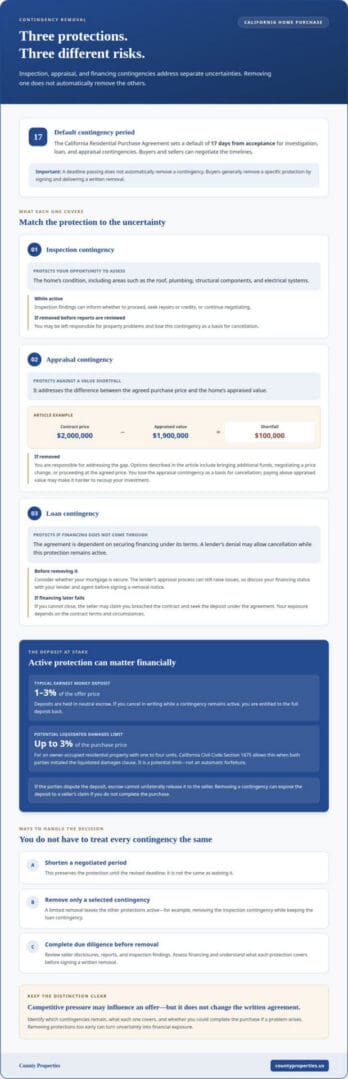
These protections address different risks in a California home purchase. The California Residential Purchase Agreement sets a default period of 17 days from acceptance for investigation, loan, and appraisal contingencies, though buyers and sellers can negotiate the timelines.
An inspection contingency gives you time to assess the home’s condition. An inspection can cover the roof, plumbing, structural components, electrical systems, and other major areas. While the contingency is active, findings can help you decide whether to proceed, seek repairs or credits, or continue negotiating. Removing it before reviewing reports can leave you responsible for property problems.
An appraisal contingency addresses the difference between the agreed purchase price and the home’s appraised value. For example, a home under contract for $2,000,000 that appraises at $1,900,000 has a $100,000 shortfall. If you remove the appraisal contingency, you’re responsible for addressing that gap. You might bring additional funds, negotiate a price change, or proceed at the agreed price, but you lose the contingency as a basis for cancellation. Paying above appraised value may also make it harder to recoup your investment.
A loan contingency protects you if financing doesn’t come through under the agreement’s terms. Before giving up that protection, consider whether your mortgage is secure. A lender’s approval process can still raise issues, so discuss your financing status with your lender and agent before signing a removal notice. The loan contingency is separate from inspection and appraisal protections; removing one doesn’t automatically remove the others.
Waiving a contingency removes that protection, while shortening its period preserves it until the revised deadline. A limited waiver removes only the selected contingency, leaving the others active. For example, you could remove the inspection contingency while keeping the loan contingency. County Properties’ Buyer Representation can help you weigh the decision before signing.
What is active contingency removal in California?
Active removal means buyers formally waive specific protections in writing under the residential purchase agreement. Contingencies don’t automatically disappear when the stated timeline passes.
Commitment and Default After Removal
Removing a contingency means proceeding without that specific cancellation protection. If you later can’t complete the purchase, the seller may claim your earnest money deposit. Your options depend on the contract and the reason for cancellation. New material information from the seller may warrant review, renegotiation, or possible cancellation, but those rights aren’t automatic. The disclosure and circumstances matter.
Due Diligence Before Removal
Due diligence means reviewing available property information and completing investigations before waiving the related protection. Read seller disclosures and reports, and assess inspection findings before deciding whether the home’s condition is acceptable. An investigation contingency may allow cancellation if, in good faith, you’re dissatisfied with the property or a matter affecting it. To make an offer more competitive, consider shortening negotiated periods or selectively removing a satisfied contingency rather than waiving all protections.
Written Contingency Removal
To remove a contingency, sign and deliver a written removal form identifying the specific protection you’re waiving. The California purchase agreement’s default investigation, loan, and appraisal period is 17 days from acceptance, but those deadlines can be negotiated. The passage of 17 days alone doesn’t remove contingencies. If a seller delivers a Notice to Buyer to Perform, the buyer has two business days to remove contingencies or cancel. Track the written timeline and each notice carefully.
Inspection Waiver Risks
Waiving the inspection contingency means giving up the right to cancel based on inspection findings. An inspection can reveal problems with the roof, plumbing, structure, or electrical systems; without that protection, you may have less leverage to seek repairs or credits. Review reports and disclosures before deciding. If the seller later provides new material information, you may have grounds to review or renegotiate, but cancellation rights aren’t automatic.
Risks of removing contingencies prematurely
The central risk is giving up a contractual protection before resolving the uncertainty it covers. The risks of removing all contingencies on a home offer in California can include being committed even when inspection results, financing, or new property information raises concerns. A competitive offer may appeal to a seller, but it doesn’t resolve those uncertainties.
Consider a buyer who removes the investigation contingency before reviewing a septic report. If the report later identifies costly repairs, the buyer may have lost the contingency-based option to cancel or negotiate over the finding. The seller may consider a request, but the buyer can’t assume they’ll agree. The practical question is whether you’re prepared to accept the property and address the issue yourself.
Financing creates a separate risk. A buyer might remove the loan contingency while a lender is still processing the mortgage, then face a denial or changed loan terms. If the buyer can’t close, the seller may claim the deposit under the agreement. Another risk of removing all contingencies on a home offer in California is losing a contractual way to respond if financing changes after the waiver.
Insurance can also affect a California purchase. In a high-fire-risk area, confirm homeowners insurance availability and cost before removing protections. If coverage later proves unavailable or unaffordable, you may have fewer contract-based options. A buyer who needs to sell a current home first could also face added pressure if that sale stalls after waiving the sale contingency.
New material information delivered by the seller after removal may give you grounds to review it, renegotiate, or potentially cancel. Those rights aren’t automatic; the information and contract circumstances matter. Don’t treat a new disclosure as an assured exit or a contingency deadline as automatic removal. Before signing, identify which uncertainty remains and whether you can manage its consequences. If a senior move is part of your decision, explore Senior Real Estate Transition guidance as you consider the timing of your next home.
County Properties: Seller Representation
County Properties provides Buyer Representation for people weighing offer terms and considering contingency removal. Your agent can help you understand the transaction timeline, compare the protections in your offer, and assess whether a partial waiver or shorter period better fits your priorities. This guidance can help you make an informed real estate decision, but it doesn’t replace legal advice about contract rights.
If you’re selling rather than buying, County Properties’ Seller Representation can guide you through your side of the transaction. The team also offers Short Sale and Foreclosure Prevention and Senior Real Estate Transition for homeowners facing those circumstances.
Contact County Properties to discuss your real estate needs, or visit countyproperties.us.
Make your next offer decision with clarity
The risks of removing all contingencies on a home offer in California are easier to weigh when you focus on what you can accept, not just what might make an offer more appealing. Before committing, consider how much uncertainty you’re willing to carry into the transaction and which protections matter most to your plans. A strong offer should reflect your priorities as well as the seller’s expectations.
If you’re preparing to buy or sell, take time to discuss your approach before making a decision that changes your contractual position. A thoughtful conversation can help you define the questions that matter and move forward with greater confidence. Talk with County Properties about your real estate plans, then take your next step with a clearer sense of direction.
Frequently Asked Questions
What if the buyer claims the seller failed to disclose something as a reason to cancel?
A buyer who alleges that the seller failed to disclose a known material defect may have grounds to cancel and seek the deposit, even after removing contingencies. The claim depends on the defect, what the seller knew, and the transaction documents. For example, a newly discovered roof leak is different from evidence that the seller knew about it and failed to disclose it.
Can New Disclosures Reopen Contingencies in California?
New disclosures don’t automatically reinstate contingencies the buyer has already removed. If the seller provides material information afterward, the buyer may have grounds to review it, renegotiate, or potentially cancel, depending on the information and contract circumstances. A new report about a serious property condition calls for close review, but doesn’t by itself guarantee the buyer can cancel or recover the deposit.
Can You Back Out After Inspections?
Yes. A buyer can cancel based on inspection concerns while the investigation contingency is active if, in good faith, they’re dissatisfied with the property or a matter affecting it. After removing that contingency, inspection findings alone generally no longer offer the same cancellation protection. A separate issue, such as an alleged failure to disclose a known material defect, may still provide a basis to challenge the transaction.
How long is the default contingency period in California?
The California Residential Purchase Agreement sets a default period of 17 days from acceptance for investigation, loan, and appraisal contingencies. The parties can negotiate different timelines, so the signed agreement controls your transaction. For instance, a contract may set a shorter investigation period while giving the buyer more time to satisfy financing conditions. Review each deadline separately because the periods need not match.
What does removing all contingencies from a California home offer mean?
It means the buyer has formally removed each contingency included in the agreement and can no longer rely on those conditions as cancellation protections. The buyer is then expected to complete the purchase; canceling without a valid basis can expose the deposit to a seller’s claim. Before signing, compare the removal form with the contract to see exactly which protections it addresses.
What are the risks of waiving the appraisal contingency in California?
Waiving the appraisal contingency means you’re responsible for addressing a shortfall if the appraised value is below your purchase price. If your lender bases its loan on the lower appraised value, for example, you may need additional funds to cover the difference or negotiate with the seller. Without the contingency, a low appraisal alone may not give you the same contractual route to cancel.