

What if the biggest solar-related hurdle in your home sale isn’t the panels, but uncertainty about who owns them? Selling a home with solar panels in California can raise practical questions about a paid-off system, an outstanding loan, a lease, or a power purchase agreement. Buyers may also ask how the system works, what records are available, and whether any utility agreement transfers with the home.
It’s reasonable to wonder whether solar will make your sale more complicated or affect what buyers are willing to pay. The answer depends on the system and its terms, so a blanket promise about savings or added value can create confusion. Clear information gives buyers a better basis for evaluating the property.
This guide explains how to identify your system’s ownership and contractual status before listing, gather useful payment, warranty, and system records, and prepare for common buyer questions. You’ll also learn how to describe the panels accurately and address solar-related details as part of your California home sale. Organized documents and a clear plan can help you present the property with confidence, without overstating what the system will deliver.
Key Takeaways
- Selling a home with solar panels in California starts with identifying whether the system is owned, financed, leased, or covered by a power purchase agreement.
- Each ownership arrangement can bring different payment responsibilities and transfer considerations, so review the agreement before listing.
- Solar panels don’t guarantee a higher sale price or faster transaction. Buyers may weigh system condition, documented performance, and remaining obligations.
- Gather contracts, loan details, warranties, installer information, and available production records to answer buyer questions clearly and consistently.
- Organized solar information helps your real estate partner coordinate pricing, marketing, and transaction milestones.
Selling a Home With Solar Panels in California: What Sellers Need to Know First
Solar panels don’t prevent you from putting a California home on the market. The key is understanding what a buyer would be taking on. The system may be owned outright, financed with a loan, leased, or connected to a power purchase agreement (PPA). Each arrangement can affect the paperwork, payment obligations, and transfer process.
Start by separating the equipment from the electricity arrangement. The panels, inverter, and battery, if there is one, are physical equipment. A solar agreement may separately set out payments, access to the equipment, or terms for purchasing the electricity it produces. Two systems that look alike from the street can have very different financial and contractual details. California’s solar market has evolved alongside policy changes. The Solar Power in California Overview offers broader background, but your own contract explains the terms tied to your home.
A solar-equipped home sale is a property transaction in which clear information about system ownership, records, and ongoing agreements helps buyers understand what comes with the home. That gives you a practical starting point without requiring broad claims about the system’s value.
Why the solar arrangement matters as much as the panels
Identify the arrangement before describing the system to potential buyers. An owned system may have no continuing solar payment, while a financed system may still have a loan balance. With a lease or PPA, a third party may own the equipment, and the agreement may set out payments or transfer terms. None is automatically right for every seller or buyer. What matters is explaining accurately what transfers with the property and what obligations may continue.
Saying “the home has solar” doesn’t tell a buyer whether the panels are paid off or whether an agreement needs to be assumed, transferred, or otherwise addressed. Use the contract and current account information as your reference, and don’t guess about terms you haven’t located.
What California sellers should establish before listing
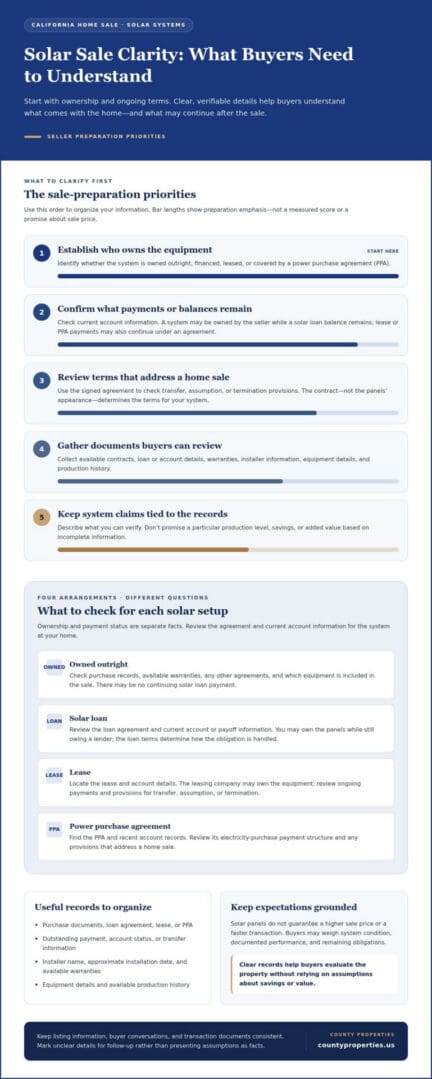
Gather the basic facts early, while you have time to track down missing records. Organize what you find in one folder and make a note of any documents you still need. Useful starting points include:
- The purchase documents, loan agreement, lease, or PPA, including the parties named in each document.
- Available information about outstanding payments, account status, or transfer provisions.
- The installer’s name, approximate installation date, and warranty documents you have on hand.
- Available system records, such as equipment details or production history.
Prepare a straightforward summary of what you can verify: who owns the equipment, whether an agreement or balance remains, and which records are available. Don’t infer warranty coverage or promise a particular level of production based on incomplete paperwork. Mark unclear details for follow-up rather than presenting an assumption as fact.
California disclosure forms and requirements can change, and the appropriate details depend on the transaction. Review current requirements before completing seller disclosures, and describe any lease or unpaid financing accurately. Organized records help your real estate partner keep listing information, buyer conversations, and transaction documents consistent throughout the sale.
How Solar Ownership and Agreements Shape a California Home Sale
Two homes with similar rooftop panels can have very different financial arrangements. Before explaining your system to buyers, answer two separate questions: who owns the equipment, and what agreement, loan, or payment obligation remains? Those answers shape the documents to share and the transfer questions to resolve.
Use this comparison as a starting point, not a substitute for reviewing the agreement. The paperwork and payment terms determine what applies to your system.
- Owned outright: Look for purchase records and available warranties. There may be no solar loan payment, but confirm whether other agreements apply and what equipment is included in the sale.
- Solar loan: Review the loan agreement and current account or payoff information. You may own the panels while still owing a lender. The loan’s terms determine how that obligation is handled.
- Lease: Locate the lease and account details. The leasing company may own the equipment, with payments continuing under the contract. Review provisions about transfer, assumption, or termination.
- Power purchase agreement (PPA): Find the PPA and recent account records. The agreement generally sets terms for purchasing electricity generated by the system. Review its payment structure and any provisions that address a home sale.
California’s solar programs and standards provide broader context for these arrangements. The California Solar Energy Regulations resource from the California Energy Commission offers state-level information. Your signed agreement and current transaction requirements guide decisions for your specific sale.
Owned panels versus panels financed with a solar loan
Ownership and loan status are separate facts. A system can belong to you even if you’re still paying a lender, so don’t describe it as “paid off” until account records support that statement. Gather the loan agreement and current account details, including a payoff statement if available. Whether the loan must be paid, can be transferred, or is handled another way depends on its terms and the transaction. Don’t assume a buyer will take over the debt.
Leases and power purchase agreements during a sale
For a lease or PPA, identify the agreement’s provisions for transfer, buyer assumption, or termination. Buyers may want to review payment terms, the remaining contract details, and any steps required to continue the arrangement. Transfer procedures and eligibility depend on the contract and applicable transaction requirements. Locate the relevant clauses early, then make the documents available as the sale progresses.
As you prepare for selling a home with solar panels in California, keep the agreement, account information, and buyer-facing explanation aligned. County Properties provides seller representation to help coordinate communication about property details and transaction milestones. Southern California seller representation can provide a steady framework for the process.
Do Solar Panels Increase a California Home’s Value, or Concern Buyers?
Solar panels can be a useful feature to discuss, but they don’t guarantee a particular price premium or a faster sale. Buyers may see potential benefits, but their response often depends on what they’re being asked to take on: an owned system, a loan balance, a lease, or a power purchase agreement. System condition and the available records matter, too.
Documented solar equipment and system history are property facts. An increase in market value is an assumption until supported by the local market and a property-specific analysis. Keeping that distinction clear lets you present the system accurately without promising a financial result. It also helps you respond if a buyer asks whether the panels justify a different offer.
What may influence buyer interest and appraisal discussion
Buyers can ask more focused questions when the system’s basics are easy to understand. Useful details include the approximate installation date, equipment information, available warranty documents, and any remaining agreement term or payment obligation. Production records, if available, can show the system’s recorded history, but they don’t establish what a future owner’s bills or savings will be.
For pricing and appraisal discussions, local comparable sales and the specific property provide more relevant context than a broad solar average. Comparable homes may differ in system ownership, age, condition, equipment, or contract terms. A buyer may also weigh the cost and effort of assuming an agreement differently from an owned system. Possible electricity-bill benefits are separate from appraised value or the price a buyer and seller agree on.
Unclear paperwork can create questions unrelated to the panels’ physical condition. If a listing mentions solar but doesn’t say whether a payment remains, buyers may need clarification before assessing the full arrangement. Prepare straightforward answers based on records, and distinguish confirmed facts from details still being verified.
How to discuss savings without overpromising
Use dated utility statements or system production records if they’re available, and identify the period they cover. A past bill reflects that household’s usage, account setup, utility rates, and circumstances at the time. It isn’t a forecast for the next owner.
Future electricity costs depend on household power use, applicable utility rates, and the terms of any relevant program or solar agreement. Don’t turn a few months of records into a guaranteed annual saving, projected payback, or resale premium. Instead, show buyers the underlying documents and explain what each one records.
- Separate documented production or bills from estimates and projections.
- State the dates covered by any records you share.
- Describe system condition and agreement terms without promising a buyer’s future results.
When selling a home with solar panels in California, keep marketing language measured and supporting information accessible. Clear, consistent facts allow buyers to weigh the solar features alongside the rest of the home.
Prepare Your Solar Documents and Listing for a California Sale
A buyer-ready solar file turns scattered paperwork into a clear account of what’s installed and what, if anything, remains attached to it. Confirm ownership, collect available records, write a short factual system summary, and prepare the applicable seller disclosures. This sequence helps keep listing details and buyer conversations consistent.
Build a buyer-ready solar records folder
Keep digital copies together and note when a record is missing rather than filling the gap with an estimate. Include the purchase, loan, lease, or power purchase agreement; current account or payoff information; installer and installation details; and any system specifications or permits you have. Add warranties and maintenance or service records, but describe coverage only as the written documents state it.
Organize the folder so a buyer can follow the system’s history without sorting through unrelated files. Useful records may include:
- Contracts and agreements that identify the equipment owner and any ongoing payment terms.
- Loan information or available account records showing the current financing status.
- Installer details, installation paperwork, permits, and system specifications.
- Warranty documents and maintenance or service history.
- Available production history, with the dates covered clearly identified.
- Relevant account contacts or instructions included in the agreement documents.
You may not have every item. Label records by type and date, and keep your notes separate from original documents. This helps prevent an estimate or recollection from being mistaken for a verified system fact.
Prepare accurate listing details and disclosures
Use the records to draft a concise solar summary for your listing materials and buyer discussions. Include system capacity, approximate age, equipment details, and ownership status only when supporting documents provide that information. If you mention historical production or utility costs, identify the source and time period. Past figures describe a recorded period, not a promise about a future owner’s results.
Be precise about unresolved details. If the paperwork confirms a lease but doesn’t establish the transfer steps, state the known arrangement and avoid implying the buyer can automatically assume it. The contract and transaction requirements determine the next steps. Review current California disclosure requirements and use the appropriate documents for the sale. Don’t rely on an old form or assume a general description covers every solar-related detail.
This solar file is one part of the larger transaction plan. Connect it with your preparation for selling a home in Southern California, so property details, marketing, and sale milestones work together. County Properties provides seller representation for your California home sale, helping you organize communication and move through the transaction with a clear plan.
Plan the Sale With a California Real Estate Partner
A solar-equipped home sale is easier to manage when system details fit into the broader selling plan. Seller representation can help coordinate pricing, marketing, buyer questions, and key transaction milestones, so solar information is handled alongside the rest of the property’s features. Organized records give everyone a consistent source for explaining system ownership, equipment, and any agreement tied to it.
That support doesn’t mean treating solar as a guaranteed price advantage. It means presenting documented information, answering questions carefully, and keeping the transaction moving as decisions are made. This overview of how to find the best real estate agent near you can help you consider the guidance and communication style you want during a sale.
Integrate the solar system into the home’s sale strategy
Position the panels as one property feature among many, alongside condition, location, and relevant comparable sales. Listing language should reflect verified system details and the ownership arrangement. Distinguish an owned system from equipment covered by a lease or PPA, and don’t describe estimated savings as a guaranteed benefit. Clear, measured language lets prospective buyers consider the system without confusing a possible energy benefit with an assured sale-price outcome.
Work with your real estate partner to keep the description aligned across listing materials, property information, and conversations. If a detail changes or a contract question is resolved, update the information used in later discussions. Consistency helps buyers understand what’s confirmed and where the agreement itself determines the answer.
Keep the transaction moving from offer to closing
Once buyers review the property, keep relevant solar documents accessible and track outstanding questions. A simple record of each question, the document or contact that may answer it, and the follow-up status can prevent an unresolved issue from getting lost among other transaction tasks. Pay particular attention to questions about contract transfer, loan payoff, or account changes, since the next step depends on the agreement and transaction requirements.
Seller representation can help coordinate these conversations with offer review and other sale milestones, while you remain the source for records you hold. You don’t need to make unsupported promises to keep the process productive. A clear answer, or a direct note that a point is still being verified, is more useful than an assumption.
If you’re selling a home with solar panels in California, County Properties can help you build a thoughtful path from preparation through closing. Speak with County Properties about selling your home for collaborative seller guidance with your Southern California transaction.
Take the Next Step Toward Your California Sale
Your next move is to turn preparation into a sale plan that fits your priorities, timing, and property. As you consider selling a home with solar panels in California, base decisions on verified information and leave room for buyer questions as the transaction unfolds. A thoughtful plan helps you move forward without relying on promises about what the system will be worth to someone else.
County Properties provides seller representation across Southern California, including San Diego, with personalized, collaborative guidance through real estate transactions. A collaborative partnership helps you approach the sale as a whole, with steady support as plans take shape and decisions arise.
Plan your California home sale with County Properties and take a clear, supported step toward your next chapter.
Frequently Asked Questions
Can I sell a California home if its solar panels are not working?
Yes, a nonworking solar system doesn’t automatically prevent a home sale. Describe its known condition accurately and don’t market it as operational if it isn’t producing power. Note when the problem began, any symptoms you’ve observed, and whether you have service or repair records. Buyers can then consider the system’s condition as part of the property. If the cause is unknown, say so rather than guessing.
Should I remove solar panels before selling my California home?
Don’t assume removal is necessary just because you’re selling. First determine who owns the equipment and review any agreement that may restrict removal or set conditions for it. Consider the roof’s condition, the system’s working status, and the impact removal could have on the property. Removing panels may also leave roof work to address. Weigh those details against the buyer’s plans before making a decision.
Do solar panels need an inspection before a California home sale?
Not every sale necessarily requires a separate solar inspection, but a buyer may want more information if the system appears damaged, has stopped producing, or lacks clear operating records. A home inspection may not answer every question about electrical output or system performance. Clarify what any inspection covers, and keep its findings distinct from assumptions about future production. The parties can discuss an evaluation as part of the transaction.
What solar information should appear in a California home listing?
Include only details you can support, such as whether the system is owned or subject to an agreement, the documented installation age, and system capacity if records state it. If a loan, lease, or power purchase agreement remains, avoid wording that suggests the equipment transfers free of obligations. Keep the listing concise and make fuller records available during the transaction. Don’t advertise estimated savings as guaranteed results for a buyer.
Does homeowners insurance cover solar panels after a home is sold?
A seller’s homeowners policy shouldn’t be assumed to transfer to the buyer with the property. Coverage depends on the policy and the ownership or agreement structure of the solar equipment. Before the sale, identify whether the panels are owned or third-party-owned and share that information during the insurance discussion. The buyer should arrange appropriate coverage for their ownership period and confirm how the system is treated under their policy.
Can a buyer evaluate a solar system without relying on estimated savings?
Yes. A buyer can review system specifications, equipment records, visible condition, warranties, available production data, and the terms of any continuing agreement. These materials help assess what is installed and what responsibilities may accompany it without relying on a seller’s savings estimate. Dated production records, for example, show recorded output for that period, not a promise about future bills, which depend on the next household’s usage and utility terms.
What if I cannot find the original solar installation paperwork?
You can still prepare a useful account of what you know while clearly identifying gaps. Search email, closing files, utility or solar account portals, and household records for invoices, agreements, warranty messages, or system details. If you can identify the named account or agreement party, request copies of the records. Don’t invent an installation date, equipment capacity, or warranty status. When selling a home with solar panels in California, label unverified details as unknown.