

In the complex 2026 real estate market, many homeowners believe that an “as-is” label acts as a legal shield against future liability. The reality is far more nuanced. While you can certainly skip an expensive kitchen remodel, California law still demands total transparency regarding everything from gas powered appliances to thirdhand smoke residue. Understanding the pros and cons of selling a house as is in California is no longer just about convenience. It’s about protecting your hard earned equity from the threat of post-sale litigation.
You likely feel the pressure to move quickly, perhaps to avoid foreclosure or because you’re exhausted by the thought of managing contractors. It’s natural to want a clean break without the headache of repair contingencies. This guide provides a steady hand to help you navigate these high stakes choices. We’ll examine how new 2026 disclosure requirements for AI altered photography and federal reporting rules for all-cash transactions affect your bottom line. You’ll learn exactly how to document your sale for maximum legal protection while securing the highest possible price for your property.
Key Takeaways
- Understand why the California Residential Purchase Agreement makes “as-is” the default status and how this affects your specific repair obligations.
- Carefully weigh the pros and cons of selling a house as is in California to determine if the speed of a cash offer outweighs the typical “investor discount.”
- Protect your financial future by mastering the Transfer Disclosure Statement (TDS), including 2026 updates for AI-altered photography and tobacco residue.
- Identify why certain financing types, like FHA and VA loans, may be restricted in as-is sales and how to target the right buyer pool.
- Learn how a strategic pre-listing inspection can eliminate buyer uncertainty and help you maintain leverage during price negotiations.
What Does Selling a House ‘As Is’ Really Mean in California?
Many sellers assume that choosing an “as-is” sale is a special modification to a standard real estate contract. In reality, the California Residential Purchase Agreement (RPA) establishes this as the default baseline for almost every residential transaction. When you’re weighing the pros and cons of selling a house as is in California, you must first understand that the state’s legal framework is designed to protect both parties through transparency rather than silence. You’re essentially telling the buyer that you won’t be performing repairs, but you aren’t excused from telling them what’s wrong.
A common misconception is that “as-is” translates to “buyer beware.” California is a “seller disclose” state, meaning the burden of transparency sits squarely on your shoulders. Understanding What ‘As Is’ Means in a legal context is vital; it limits your warranty obligations regarding the home’s future performance, but it doesn’t waive your duty to reveal known defects. Even if you’ve never lived in the property, you must disclose what you’ve been told or what’s visible to the naked eye.
The California Residential Purchase Agreement (RPA) Context
Paragraph 11 of the standard California RPA explicitly states that the property is sold in its “present physical condition” as of the date of Acceptance. This specific clause protects you from being forced to fix a leaky faucet or replace old carpeting just because a buyer asks. However, this protection doesn’t cancel the buyer’s “Investigation of Property” period. Buyers still maintain the right to hire inspectors and walk through the home. If they discover a foundation crack they didn’t expect, they can still request a repair or walk away from the deal entirely. The “as-is” status simply gives you the contractual right to say “no” to those requests without being in breach of contract.
As-Is vs. Traditional Sales: A Comparison
The primary difference between these two paths lies in the negotiation of the “repair credit.” In a traditional sale, the inspection report often triggers a second round of price haggling. An as-is sale attempts to skip this step by setting a firm boundary from the first day of the listing.
- Fiduciary and Estate Sales: As-is is the preferred route for executors who have no personal knowledge of the home’s history.
- Investor Appeal: Professional buyers often prefer as-is listings because they’re looking for “fixer-uppers” where they can build equity through their own renovations.
- Buyer Psychology: For a typical family, an as-is listing can be a red flag that suggests hidden, expensive problems.
By positioning your home as-is, you’re shifting the buyer’s focus from “what will the seller fix for me?” to “what can I afford to fix myself?” This clarity can lead to a much faster closing, provided you’ve priced the home to reflect its true condition.
The Pros: Why California Sellers Choose the As-Is Route
Choosing to list your home in its current condition offers immediate relief from the “Repair Merry-Go-Round.” Instead of managing contractors, chasing city permits, or spending weekends painting, you can focus on your next chapter. This path often results in a speed of transaction that traditional sales can’t match. Many institutional investors and cash buyers actively seek these properties, often waiving inspection contingencies to move from listing to closing in record time. You don’t have to worry about staging or maintaining a “showing-ready” home for months on end.
While the convenience is undeniable, remember that California’s Strict Disclosure Laws still apply. You’re trading a potential higher sales price for the certainty of a fast, clean break. This trade-off is a central part of the pros and cons of selling a house as is in California. For many, the mental peace of a firm closing date is worth more than the extra equity gained through months of renovations.
Benefits for Senior Real Estate Transitions
For seniors, an as-is sale facilitates a dignified downsizing process. Moving to assisted living or a smaller home is emotionally taxing enough without the physical burden of clearing out decades of accumulated property or fixing structural issues. We often help families utilize Senior Real Estate Specialist (SRES) benefits to streamline this transition. By selling as-is, you remove the need for exhausting home improvements, allowing you to focus on the personal and logistical aspects of your move. If you feel overwhelmed by the process, professional seller representation can provide the steady hand you need to navigate the paperwork safely.
Avoiding Foreclosure and Financial Distress
An as-is sale serves as a critical tool for foreclosure prevention in California. When a trustee sale is looming, you don’t have the luxury of time for repairs. Facilitating a cash offer allows you to stop the foreclosure process quickly, often preserving what equity remains before the bank takes control. Even in short sale scenarios, banks frequently prefer an as-is transaction because it provides a clear, predictable path to resolving the debt. It’s a strategic move that prioritizes financial safety and credit protection over cosmetic perfection.
The Cons: The Financial and Strategic Trade-Offs
While the speed of an as-is sale is attractive, the financial trade-offs require careful calculation. The most immediate challenge is the “Investor Discount.” Professional buyers aren’t just paying for the property; they’re pricing in the risk of unknown defects and the cost of capital. In many markets, this might mean losing 20% of your equity. However, because California’s median home price reached $830,370 in February 2026, the sheer lack of inventory in hubs like San Diego often prevents the massive price drops seen elsewhere. You’re still likely to receive offers below top market value, but the competitive nature of the state’s housing market acts as a buffer.
The pros and cons of selling a house as is in California often come down to who is allowed to buy your home. By refusing to make repairs, you effectively disqualify a significant portion of the market. Most first-time buyers rely on FHA or VA loans, which require properties to meet strict “minimum property standards.” If your home has a failing roof, broken windows, or outdated electrical systems, these lenders simply won’t fund the loan. You’re then dependent on cash buyers or those with conventional financing who can afford renovations out of pocket.
The Shrinking Buyer Pool
When you list a home “as-is,” you’re selling a project. In a high-interest-rate environment, fewer buyers have the appetite for renovation debt on top of a monthly mortgage. This shrunk buyer pool can lead to the “Inspection Back-Out,” where a buyer cancels the contract once an inspector reveals the true cost of repairs. In California, where the average cost to sell a home is approximately 12.86% of the sale price, a fallen escrow is a costly setback. Deal fatigue is real. Even if you find a buyer, the bank may not agree with the valuation. If an appraiser decides the condition doesn’t support the price, the deal can stall completely.
The Risk of ‘Vultures’ and Low-Ball Offers
Identifying legitimate cash offers requires a discerning eye. You’ll likely encounter “wholesalers” who try to lock your property under contract only to sell that contract to another investor for a profit. These predatory offers often come with hidden fees or aggressive timelines. This is why having a real estate agent near me is essential. A seasoned professional can vet these offers, distinguishing between legitimate cash facilitation and low-ball “vulture” tactics. Protecting your equity means ensuring every offer is backed by proof of funds and a realistic closing schedule. Weighing the pros and cons of selling a house as is in California is easier when you have an expert filtering out the noise.
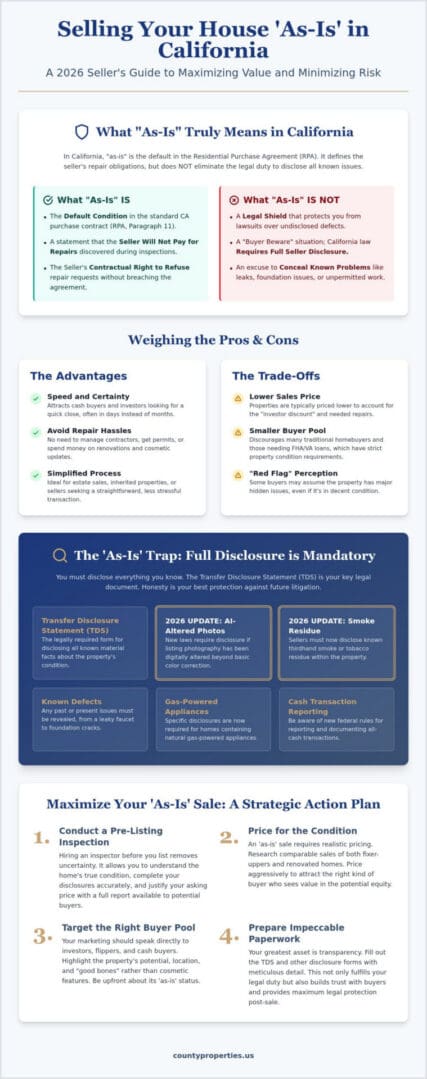
California’s Strict Disclosure Laws: The ‘As-Is’ Trap
In California, selling a property “as-is” is not a get-out-of-jail-free card for hiding defects. The legal landscape has shifted entirely from the old “buyer beware” standard to a modern “seller disclose” mandate. If you fail to mention a known issue, the buyer can sue you for fraud or breach of contract long after the deal has closed. This legal reality is one of the most significant factors when evaluating the pros and cons of selling a house as is in California. You’re effectively trading the cost of repairs for the heightened responsibility of total transparency.
The Transfer Disclosure Statement (TDS) is the most vital document in your transaction. This statutory form requires you to check boxes and provide details on everything from operational smoke detectors to structural modifications. Complementing this is the Seller Property Questionnaire (SPQ), which dives deeper into “material facts” that might affect a buyer’s desire to purchase or the price they’re willing to pay. If these documents aren’t handled with extreme care, you risk a post-closing lawsuit or a rescission, where the buyer cancels the sale and demands their money back.
Navigating the TDS and SPQ
Sellers are legally obligated to disclose all known material facts about the property even if the buyer never asks a single question. While structural issues are obvious, many sellers overlook more subtle requirements that can still lead to legal trouble. Arnie Levine uses his 30 plus years of local experience to ensure your disclosure package is bulletproof, shielding your equity from future claims.
Commonly missed disclosures include:
- Neighborhood noise from nearby schools, construction, or flight paths.
- Past insurance claims, even if the repairs were completed years ago.
- Deaths on the property that occurred within the last three years.
- New 2026 requirements regarding tobacco residue and AI-altered listing photography.
The Danger of ‘Hidden’ Defects
What happens if you genuinely didn’t know about a defect? California courts apply a “Reasonable Care” standard. You aren’t expected to be a professional home inspector, but you must disclose what a reasonable person would notice through a diligent visual inspection of the property. If a defect was “hidden” behind a fresh coat of paint or a strategically placed rug, a judge may find that you acted in bad faith.
Providing a pre-sale inspection report can actually protect you. It documents the home’s condition at the time of listing, creating a baseline that makes it much harder for a buyer to claim you hid a defect later. Even in probate or trust situations where certain TDS exemptions apply, the duty to disclose known material facts remains. If you’re concerned about the legal pitfalls of your paperwork, expert seller representation can provide the steady hand you need to navigate these requirements safely.
Strategic Moves: How to Maximize Your As-Is Sale in 2026
Successfully navigating the 2026 market requires a shift from passive selling to proactive strategy. To secure the best possible outcome, you must find the “Sweet Spot” in your list price. This is the delicate balance between attracting institutional investors and retaining enough equity for your next move. In a market where the California median home price is projected to reach $905,000 by late 2026, pricing too low leaves significant money on the table. Conversely, pricing too high scares off the cash buyers who prioritize speed. A strategic pre-listing inspection is your best defense against the “Inspection Back-Out” mentioned earlier. By providing this report upfront, you eliminate the mystery that often leads to low-ball offers. You’re telling the buyer exactly what they’re getting, which builds the trust necessary to keep a deal moving forward.
Marketing an as-is property also requires a specific lens. Instead of dwelling on the outdated kitchen or the worn flooring, we highlight the “good bones” and the untapped potential of the lot. Buyers in today’s inventory-starved market are often looking for opportunities to create value. By emphasizing structural integrity or a desirable neighborhood, we attract buyers who see the future of the home rather than its current flaws. Understanding the pros and cons of selling a house as is in California means knowing how to flip the script so your home’s condition becomes an opportunity for the right buyer.
The County Properties Advantage
At County Properties, we don’t just list your home; we act as your steady hand throughout the entire process. We’ve navigated these waters for over three decades, helping thousands of families protect their financial safety. Our team specializes in selling a home in Southern California by blending full agency protection with the speed of cash offer facilitation. We ensure that while you close quickly, your legal and financial interests remain the top priority. We provide the expertise needed to vet cash offers, ensuring they’re backed by proof of funds and realistic timelines.
Final Checklist for California As-Is Sellers
Before you commit to a path, ensure you’ve covered these essential bases to protect your equity:
- Order a preliminary title report: This identifies any liens or encumbrances that could stall your closing at the last minute.
- Consult a Senior Real Estate Specialist (SRES): If you’re transitioning from a long-term family home, an SRES can help manage the emotional and logistical weight of the move.
- Review the 2026 RPA: Ensure your contract language matches the most current California Residential Purchase Agreement standards.
- Verify disclosure compliance: Double check that your TDS and SPQ include the new 2026 requirements for AI-altered photography and tobacco residue.
Selling a home as-is doesn’t mean you’re on your own. It can be a smart, safe transition that allows you to move forward without the physical or financial exhaustion of a renovation. With a collaborative partner and a transparent strategy, you can protect your equity and start your next chapter with total confidence.
Securing Your Financial Future in the 2026 Market
Deciding how to move forward with your property is a significant milestone. While the pros and cons of selling a house as is in California involve balancing speed against potential equity, your primary goal remains a safe and successful transition. You now understand that transparency through the TDS and SPQ is your best defense against future liability. You also know that while an as-is sale might narrow the buyer pool, the high demand in Southern California creates unique opportunities for a fast, clean break.
Navigating these complexities requires a steady hand and local mastery. With over 30 years of experience in Southern California and specialized SRES certification, Arnie Levine provides the expertise needed for complex and distressed property sales. We invite you to request a no-obligation market analysis and cash offer evaluation from Arnie Levine to determine the best path for your equity. You don’t have to manage this high stakes transition alone. We’re here to ensure your sale is both legally sound and financially rewarding. Your next chapter deserves a foundation of professional reliability and expert care.
Frequently Asked Questions
Do I have to do any repairs when selling as-is in California?
You aren’t required to perform cosmetic or structural repairs, but California law mandates certain safety compliance items regardless of contract status. Sellers must ensure smoke detectors are present, carbon monoxide alarms are installed, and water heaters are properly braced. While you can refuse to fix a leaky roof, you can’t bypass these specific safety regulations. Balancing these requirements is a key part of the pros and cons of selling a house as is in California.
Can a buyer sue me after an as-is sale in California?
A buyer can certainly pursue legal action if you fail to disclose known material defects. Selling “as-is” only means you won’t pay for repairs; it doesn’t grant you immunity from California’s strict disclosure laws. If a buyer proves you intentionally hid a foundation issue or a past flood, they can sue for damages or rescission. Transparency is your only reliable protection against post-closing litigation.
What is the mandatory disclosure period for California home sellers?
The Transfer Disclosure Statement (TDS) should be delivered to the buyer as soon as possible. If you provide this document after the purchase agreement is signed, California law gives the buyer a specific window to cancel. They have three days to rescind their offer if delivered in person, or five days if delivered by mail. Timely delivery is essential to keep your escrow on track and prevent unexpected cancellations.
Will I get a fair price selling my San Diego home as-is to a cash buyer?
San Diego’s unique market dynamics often mean you’ll receive a competitive price even from cash investors. While cash buyers typically seek a discount for their risk, the region’s severe inventory shortage keeps the floor higher than in other parts of the state. We help you evaluate these offers to ensure the price reflects the property’s true potential. Weighing the pros and cons of selling a house as is in California is easier with expert market data.
Does an as-is sale mean the buyer can’t have an inspection contingency?
An “as-is” clause does not automatically remove the buyer’s right to an inspection contingency. Most buyers will still include a period to investigate the property’s condition before committing fully. They use this time to decide if they’re comfortable with the repairs needed. You have the right to refuse repair requests, but the buyer also has the right to walk away with their deposit if they find the defects too overwhelming.
How do I fill out the TDS form if I’ve never lived in the property?
If you’ve never lived in the home, you must still complete the TDS to the best of your knowledge. You’ll check the box indicating you haven’t occupied the property, but you must still disclose any information you’ve received from property managers, prior inspections, or family members. Being an absentee owner doesn’t waive your duty to reveal material facts that could affect the home’s value or desirability.
Is it better to make minor repairs or just lower the price for an as-is sale?
It’s often more strategic to lower the price than to perform minor cosmetic fixes. Buyers looking for an as-is property usually have their own vision and would rather pay less to choose their own materials. Unless a repair is a safety issue that prevents traditional financing, a price credit is usually more effective. This approach simplifies the transaction and avoids the headache of managing contractors before you move.
What are the specific as-is rules for selling an inherited estate in California?
Inherited estates sold through probate or trusts may be exempt from the standard Transfer Disclosure Statement, but not from the duty to disclose known flaws. You must still provide an Exempt Seller Disclosure or a similar document. These sales are complex and benefit from a Senior Real Estate Specialist (SRES) who understands the nuances of fiduciary duties. Proper documentation ensures the estate is protected from future claims by the new owners.