

You stand in the hallway of your childhood home, surrounded by forty years of family photos and the familiar scent of your mother’s kitchen, yet the atmosphere feels heavy with the realization that it’s time for a change. Your parents might insist they’ll never leave their “forever home,” even as the stairs become a daily challenge and the maintenance grows unmanageable. Learning how to sell an elderly parent’s house is rarely just a real estate transaction; it’s a profound life transition that requires as much heart as it does financial strategy.
It’s completely normal to feel paralyzed by the sheer volume of belongings or the fear of making a mistake in the high-stakes Southern California market. You want to honor their legacy while ensuring they have the financial resources needed for the next chapter of their lives. This 2026 guide provides the steady, expert hand you need to manage these complexities with confidence and compassion. We promise to help you secure the highest possible return on the property while maintaining family harmony throughout the process.
We’ll walk you through a manageable timeline that covers everything from decluttering forty years of history to leveraging California’s Proposition 19 tax benefits. You’ll discover how to manage parental resistance, handle the logistical hurdles of a move, and execute a sophisticated sale that protects your parents’ hard-earned equity.
Key Takeaways
- Learn how to transform difficult conversations by shifting the focus from leaving a long-term home to gaining safety and freedom in a new environment.
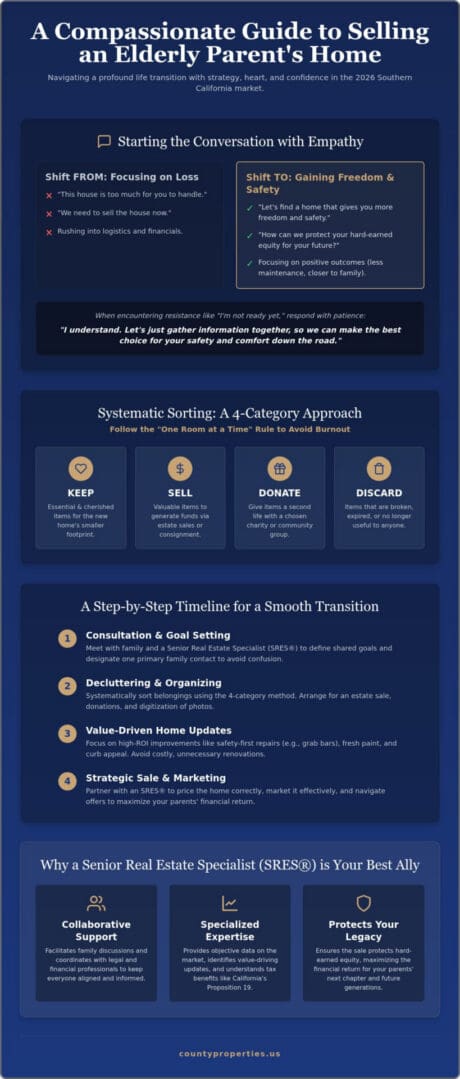
- Discover a systematic approach to sorting decades of belongings using the “One Room at a Time” rule and a proven four-category organization system.
- Master the logistics of how to sell an elderly parent’s house in the 2026 Southern California market by identifying which home updates actually drive value.
- Follow a clear, stress-free timeline that manages everything from the initial professional consultation to estate sales and safety-first repairs.
- Understand why partnering with a Senior Real Estate Specialist (SRES®) provides the collaborative support needed to protect your family’s financial legacy.
Starting the Downsizing Conversation with Empathy and Clarity
The most challenging part of this journey isn’t the paperwork or the packing. It’s the moment you sit down at the kitchen table to discuss leaving the family home. For many seniors, a house is a vault of memories, a symbol of independence, and a hard-earned legacy. You must validate this emotional weight before moving toward logistical details. Start by acknowledging their feelings. Avoid rushing into a sales pitch. Instead, focus on a collaborative approach that respects their history while looking toward their future comfort.
Effective communication requires shifting the narrative from “losing a home” to “right-sizing” for freedom. In the 2026 Southern California market, many seniors find themselves “house rich but cash poor,” trapped in large properties that require constant maintenance. By focusing on the “Why”-such as being five minutes from the grandkids or finally having the budget for travel-you create an aspirational goal. Establish these motivations early. Schedule dedicated, quiet times for these talks so they don’t feel like an ambush during a holiday or family dinner.
Scripts for Navigating Parental Resistance
When you encounter the common “I’m not ready yet” objection, respond with patience rather than pressure. You might say: “I understand this feels fast. Let’s just look at some data together so we can make an informed choice for your safety next year.” Use “safety-first” language to highlight the benefits of single-story living. Explain that moving now, while they’re healthy, allows them to choose their next home themselves. Frame the process of how to sell an elderly parent’s house as a way to preserve their financial legacy. Remind them that selling at the right time ensures their equity is protected for the next generation rather than being drained by emergency repairs or high-interest debt.
Setting Realistic Family Goals for 2026
Success in 2026 is defined by more than just a closing date. You need to identify specific metrics that matter to your family. Is the goal financial liquidity for healthcare, or is it a shorter commute for family visits? A Senior Real Estate Specialist (SRES®) can help facilitate these discussions by providing objective market data. To prevent conflicting messages, designate one primary point of contact for all real estate and legal professionals. This “family lead” keeps everyone informed without overwhelming your parents with multiple voices. Finally, create a shared family calendar. Visualizing the transition timeline helps everyone see that the move is a series of manageable steps rather than one giant leap.
A Systematic Approach to Sorting Decades of Memories
Sorting through a lifetime of possessions is often the most exhausting phase of learning how to sell an elderly parent’s house. To prevent physical and emotional burnout, we recommend the “One Room at a Time” rule. Start with a neutral space, such as a laundry room or guest bathroom, to build decision-making momentum before tackling high-emotion areas like the attic or master bedroom. This methodical pace allows your parents to process the transition without feeling overwhelmed by the sheer volume of their belongings.
A structured Four-Category System is essential for maintaining clarity during this process. Use clearly labeled boxes for Keep, Sell, Donate, and Discard. This system removes the ambiguity that often leads to “clutter paralysis.” When you encounter thousands of family photos, consider high-speed scanning services to digitize the legacy. You can preserve decades of history on a single thumb drive, allowing your parents to revisit memories without the physical bulk. Avoid the “Sentimental Trap” by focusing on the stories behind the objects rather than the objects themselves. Remind your parents that the love resides in the person and the memory, not the porcelain figurine or the heavy oak dresser.
Navigating these logistical hurdles is much simpler when you have a dependable guide to help manage the transition details. Expert support ensures that the focus remains on your family’s well-being rather than just the move.
The ‘Keep’ List: Planning for a Smaller Footprint
Before deciding on large furniture pieces, you must measure the floor plan of the new residence. A massive dining table that anchored a 3,000-square-foot home will likely crowd a 1,200-square-foot senior apartment. Prioritize items that serve multiple functions, such as an ottoman with hidden storage or a drop-leaf desk. Encourage your parents to select their “Top 10” irreplaceable heirlooms first. Packing these items early provides a sense of security and ensures their most cherished treasures are the first to arrive at the new home.
Strategies for the ‘Sell’ and ‘Donate’ Piles
Efficiency is vital when managing a high-stakes real estate transition. An estate sale is often more effective than individual online listings because it clears the entire property in a single weekend. For items that don’t sell, several San Diego-area organizations, such as the San Diego Habitat for Humanity ReStore, provide furniture pickup services for high-quality donations. In the 2026 market, authentic mid-century modern vintage furniture remains highly marketable to younger buyers, while heavy, dark-wood “brown furniture” from the late 20th century typically sees lower demand and slower sales.
Real Estate Strategies for Senior Transitions in Southern California
Determining how to sell an elderly parent’s house in 2026 involves a sophisticated blend of market timing and financial planning. The Southern California housing market has transitioned into a more balanced environment. Higher interest rates have cooled the aggressive bidding wars of previous years, giving senior sellers more breathing room to make thoughtful decisions. This stability is an advantage for families who need a predictable timeline rather than a frantic auction atmosphere. Integrating selling a home in Southern California into your parents’ long-term retirement strategy ensures their home equity directly supports their lifestyle and healthcare needs.
One of the most critical decisions you’ll face is whether to sell the property “as-is” or invest in a strategic refresh. In the current market, buyers are often stretched thin by monthly payments and prioritize turnkey homes that don’t require immediate repairs. A “strategic refresh” doesn’t mean a full remodel. It focuses on high-impact areas like fresh neutral paint, updated lighting fixtures, and professional landscaping. We generally recommend securing the new residence before listing the old one if your parents’ financial situation allows it. This sequence reduces the stress of a “double move” and ensures they aren’t rushed into a living situation that doesn’t meet their long-term needs.
Maximizing Value Without the Stress of Renovations
You can achieve a higher sale price without the headache of major construction through “decluttering for dollars.” In a competitive market like San Diego, space is a premium commodity. Removing bulky furniture and personal collections makes rooms appear larger and allows potential buyers to visualize their own lives in the space. Professional staging and deep cleaning are non-negotiable in 2026. These steps bridge the gap between a “lived-in” senior home and the modern aesthetic today’s buyers crave. If the property requires significant structural work that your family cannot manage, evaluating rapid cash offer options can provide a quick, dignified exit while bypassing the traditional listing process.
Navigating San Diego Senior Communities and Taxes
California’s Proposition 19 offers significant tax relief that every senior seller must understand. As of 2026, homeowners aged 55 or older can transfer their primary residence’s property tax assessment value to a new home of any value, anywhere in California, up to three times. This portability allows your parents to downsize into a modern 55+ community or independent living facility without facing a massive property tax spike. For those looking at the Southern California housing market forecast, staying informed on local inventory levels for senior-friendly housing is vital. San Diego County offers a wide range of options, from active adult communities in North County to luxury independent living in La Jolla, each with different impacts on your parents’ monthly cash flow and tax obligations.
A Step-by-Step Logistics Timeline for a Stress-Free Move
Executing a successful transition requires a structured roadmap that balances the speed of the market with your family’s emotional pace. When planning how to sell an elderly parent’s house, a six-month window provides the ideal balance for preparation. This timeline ensures you aren’t making high-stakes decisions under duress. By following a chronological plan, you transform an overwhelming project into a series of manageable, expert-led milestones.
- Months 3-6: The Great Sort and Consultation. Begin the sorting process we discussed earlier. This is the time to schedule an initial consultation with a real estate professional to identify which repairs are necessary for the 2026 market.
- Month 2: Estate Sales and Safety Repairs. Host your estate sale or coordinate donations. Complete “safety-first” repairs, such as fixing loose handrails or updating exterior lighting, to ensure the home passes inspections without delays.
- Month 1: Listing and Marketing. Execute professional staging and high-end photography. List the property on the MLS to capture the widest possible audience of qualified Southern California buyers.
- Moving Week: The Essential Box. Pack a box with medications, crucial legal documents, and three days of clothing. Coordinate final utility transfers and conduct a final walkthrough to ensure no family heirlooms were left behind.
If you feel overwhelmed by these logistical hurdles, our SRES® certified transition services provide the steady, expert guidance needed to manage every detail on your behalf.
Managing Paperwork and Legal Essentials
Organizing your parents’ documents early prevents last-minute crises during the escrow process. You’ll need original deeds, trust documents, and any existing home warranties or appliance manuals. If your parents have health challenges, verify their Power of Attorney (POA) status with a qualified professional to ensure you have the legal authority to sign closing documents. In California, the Seller’s Disclosure is a legally mandated document where you must reveal all known material facts about the property’s condition to protect both the seller and the buyer from future litigation.
Moving Day Strategy for Seniors
The physical move is often the most taxing day for seniors. We recommend hiring senior-specific move managers who specialize in the emotional and physical nuances of elderly transitions. These professionals do more than pack boxes; they help recreate the layout of the old home in the new space. Set up their new bedroom and living area first to ensure the environment feels familiar and safe on the very first night. A clear “First 48 Hours” plan, including pre-arranged meals and visits from close family, helps parents acclimate to their new surroundings with a sense of optimism and achievement.
Why a Senior Real Estate Specialist (SRES®) is Your Best Ally
Choosing the right professional is the most critical decision you’ll make when determining how to sell an elderly parent’s house. While many agents can list a property, a Senior Real Estate Specialist (SRES®) possesses specific training to manage the financial and emotional complexities of 50+ transitions. When you research what is a senior real estate specialist, you discover an ally who understands the nuances of reverse mortgages, capital gains tax exclusions, and the impact of a sale on Social Security or Medicare benefits. These professionals move beyond the transaction to focus on the person, ensuring the move supports your parents’ long-term well-being.
Our “Collaborative Success” model at County Properties is designed for multi-generational families. We act as a steady, guiding presence, facilitating communication between adult children and their parents to ensure everyone’s voice is heard. This team-based ethos eliminates the friction often found in high-stakes real estate deals. We also provide immediate access to a vetted network of local professionals, including:
- Estate liquidators who handle the “Sell” pile with integrity and transparency.
- Senior-specific move managers who specialize in recreating familiar environments.
- Specialized contractors who focus on the “safety-first” repairs that drive 2026 market value.
- Financial advisors familiar with California’s Proposition 19 tax base portability.
The Arnie Levine and County Properties Difference
Our team prioritizes a “Reassurance First, Details Second” philosophy. We know that the technical aspects of a sale don’t matter if your parents don’t feel secure in their choice. As a localized San Diego agency, we offer a deep connection to the regional fabric that large national corporate brands cannot replicate. We understand the specific inventory levels of senior-friendly housing in North County and the unique buyer demographics in the South Bay. For example, we recently managed a seamless transition for a family in Rancho Santa Fe. By coordinating the estate sale and a strategic home refresh simultaneously, we achieved a high-market return while allowing the parents to move directly into their new residence without the stress of a “double move.”
Taking the Next Step with Confidence
You can move forward with certainty by requesting a “Senior Transition Consultation” without any sales pressure. This initial meeting is an opportunity to discuss your family’s unique needs and visualize a manageable timeline. When you begin searching for a real estate agent near me, prepare by identifying your parents’ primary goals, such as financial liquidity or proximity to grandchildren. We are here to act as your dependable guide throughout this profound life milestone. Contact County Properties to start your custom downsizing plan today and ensure your parents’ legacy is protected with professional mastery.
Securing Your Family’s Future with Confidence
Navigating how to sell an elderly parent’s house is a journey that requires patience and professional mastery. You’ve learned that success begins with empathetic communication, shifting the focus from the loss of a childhood home to the freedom of a safer, more manageable living environment. By implementing a methodical sorting system and leveraging the tax advantages of Proposition 19, you can protect your parents’ equity while minimizing the physical and emotional burden of the move.
The complexities of the 2026 Southern California market demand more than just a standard real estate agent. You deserve a seasoned mentor who understands the emotional and financial high stakes of senior transitions. With over 30 years of experience and SRES® certified expertise, County Properties provides the specialized turn-key senior transition services your family needs for a peaceful move. We act as your dependable guide, ensuring every legal and logistical detail is handled with the highest professional standards.
Take the first step toward a manageable transition today. Download our Senior Downsizing Checklist and Schedule a Free Consultation to begin building your custom plan. You don’t have to manage this transition alone; we are here to ensure your parents’ retirement legacy remains secure and their next chapter begins with optimism and achievement.
Frequently Asked Questions
How do I start the downsizing conversation without upsetting my parents?
Start by validating their emotional connection to the property and shifting the narrative toward safety and freedom. You’ll find success by framing the move as a collaborative project rather than a loss of independence. Use “right-sizing” language to highlight how a smaller home reduces maintenance stress. Scheduling these discussions during quiet, dedicated times prevents the stress-induced reactions that often occur when the topic is raised unexpectedly during family gatherings.
What is the best time of year to sell a senior’s home in San Diego?
Spring and early summer typically offer the highest buyer activity in San Diego, yet the 2026 market is more balanced than in previous years. Inventory levels for senior-friendly housing are currently a more critical factor than the specific month. You should coordinate the sale with your parents’ specific relocation timeline to ensure a seamless transition. A professional market analysis helps you identify the optimal window to maximize their retirement equity.
Is it better to sell the house ‘as-is’ or perform repairs first?
Focus on high-impact, “safety-first” repairs that provide the highest return on investment. While selling “as-is” is convenient, strategic refreshes like fresh neutral paint and professional deep cleaning are essential for 2026 buyers. These buyers often have limited cash after a down payment and prioritize move-in-ready homes. We recommend avoiding major structural renovations unless they’re necessary to pass a standard home inspection or secure a buyer’s financing.
Can I sell my parents’ house if I have Power of Attorney?
You can sell the property if the Power of Attorney (POA) specifically includes real estate powers. You must provide the notarized document to the escrow officer and title company at the beginning of the transaction. If your parents face health challenges, verifying the POA’s status is a vital step in ensuring a smooth legal transfer. This authority allows you to sign documents on their behalf while protecting their best financial interests.
What are the tax benefits for seniors moving in California under Prop 19?
Proposition 19 provides a significant financial advantage by allowing seniors aged 55 and older to transfer their primary residence’s tax base to a new home. This tax portability applies to properties of any value throughout California and can be used up to three times. It prevents the massive property tax spikes that previously discouraged seniors from downsizing. This benefit is a cornerstone of modern retirement planning in the Southern California real estate market.
What should I do with items my parents want to keep that won’t fit in the new home?
Prioritize the most cherished heirlooms using a floor plan of the new residence to determine what fits comfortably. For items that won’t fit, consider a short-term storage solution or gifting them to family members who value the legacy. Digitizing thousands of photos is another expert strategy to preserve memories without the physical bulk. This approach ensures your parents feel surrounded by their history without the clutter that creates safety hazards.
How much does it cost to hire a senior move manager in Southern California?
Costs for senior move managers depend on the scope of the transition and the specific services required. These professionals offer comprehensive assistance, from initial floor planning to unpacking the final box in the new home. While we can’t quote specific industry fees, hiring a specialist often reduces the overall stress and physical burden on your family. These experts act as dependable guides, ensuring the move is handled with the sensitivity your parents deserve.
How long does the typical downsizing and selling process take from start to finish?
A manageable timeline for how to sell an elderly parent’s house typically spans three to six months. This period accounts for the “Great Sort” of belongings, minor safety repairs, and the standard escrow process. Starting early allows your family to move at a compassionate pace, ensuring your parents feel secure in their decisions. This structured approach maximizes the home’s value while protecting your parents’ hard-earned retirement legacy from the risks of a rushed sale.