

Your buyer’s home inspection report isn’t a legal mandate; it’s simply a request for credit that you have the power to decline. When you’re selling your Southern California home, it’s natural to feel protective of your equity, especially when aggressive buyers try to nickel-and-dime you for minor issues. Understanding how to negotiate repairs after home inspection is the most effective way to ensure you don’t lose thousands of dollars to unnecessary fixes or credits. You deserve to walk away from the closing table with the maximum net proceeds possible, without the fear that your deal will fall through over a few cracked tiles or dated fixtures.
We’re here to help you understand your rights as a seller in 2026, including how the latest California Association of REALTORS® form updates impact your obligations. You’ll learn how to exercise your legal right of refusal and protect your home equity during this high-stakes phase of the sale. This guide provides a clear look at the “As-Is” clause, distinguishes between safety mandates and cosmetic requests, and offers a methodical strategy for responding to buyer demands so you can close on time with minimal stress.
Key Takeaways
- Recognize that a home inspection report is a non-binding request for repairs rather than a mandatory list of fixes you must complete before closing.
- Understand how the standard California “as-is” clause protects your legal right of refusal even when a buyer presents a long list of findings.
- Learn how to negotiate repairs after home inspection by distinguishing between mandatory safety requirements and negotiable cosmetic requests.
- Protect your home equity by obtaining independent contractor bids to verify and counter inflated repair estimates from the buyer side.
- Partner with experienced professionals who specialize in complex transitions to keep your transaction on track and maximize your net proceeds.
The Home Inspection Report: Understanding Your Rights as a Seller in 2026
The home inspection report often feels like a daunting list of demands; however, it’s actually a non-binding request for repairs. It is a starting point for a professional conversation, not a mandatory to-do list that you must complete to sell your home. To understand the foundational basics of this process, you might ask, what is a home inspection? At its core, it’s a visual assessment of a property’s physical structure and systems. Even if you’re selling a brand-new construction or a meticulously maintained family home, no property is ever perfect. It’s standard for an inspector to produce a findings list that runs dozens of pages long, often highlighting minor wear and tear alongside more significant issues.
You should remember that while the inspector works for the buyer, you still maintain full control over your property and who enters it. If the buyer uses the inspector’s findings to request credits or repairs, you have a legal right to receive a full copy of that report. This allows you to verify the claims and seek your own professional opinions from trusted contractors. Knowing how to negotiate repairs after home inspection begins with recognizing that you’re in the driver’s seat of the transaction—a principle practiced by experts like Robert Caicedo Real Estate in residential transactions. You don’t have to agree to every request just to keep the deal alive.
The Purpose of the Inspection in Escrow
During the escrow process, buyers use the inspection to identify “deal breakers,” such as structural failures or significant system malfunctions. Many buyers also include minor “maintenance items” like leaky faucets or chipped paint. It’s common for buyers to use this report as a strategic tool to renegotiate the sale price late in the game. When you receive a 50-page report on a home you’ve loved for years, the emotional shock can be intense. We encourage you to view this document through a professional lens. Most items on that list are likely routine maintenance that doesn’t require your immediate financial intervention.
Seller’s Disclosure Obligations vs. Repair Obligations
You have a legal obligation to disclose known material defects, but that doesn’t automatically mean you have a legal obligation to fix them. In California, if an inspection reveals a new issue, you can often choose to disclose the problem to the buyer instead of performing the repair yourself. This distinction is vital for protecting your equity. The Right of Refusal is the seller’s prerogative to maintain the original contract price and decline any requests for repairs or credits that fall outside of mandatory safety requirements. Learning how to negotiate repairs after home inspection involves balancing these disclosures with your financial goals to ensure a successful, high-value close.
Navigating the ‘As-Is’ Clause and the CAR Standard Contract
The standard California Residential Purchase Agreement (RPA) explicitly states that the property is sold in its present physical condition, commonly known as an “as-is” sale. This provision is a powerful tool for sellers, yet many buyers treat it as a suggestion rather than a contractual baseline. While the “as-is” clause doesn’t legally prevent a buyer from asking for repairs, it firmly establishes your right to decline them. If a buyer’s demands become unreasonable or threaten your financial goals, you have the right to stand your ground. Understanding how to negotiate repairs after home inspection means knowing that you aren’t obligated to subsidize the buyer’s future home improvements or maintenance wish lists.
It’s vital to recognize that “as-is” isn’t a license to conceal known issues. California law remains strict regarding the disclosure of material facts. If you’re aware of a significant defect, such as a failing roof or past flooding, you must disclose it regardless of the “as-is” status. The clause protects you from being forced to fix those issues, but it doesn’t protect you from the liability of hiding them. Additionally, the “as-is” provision rarely overrides specific safety mandates or lender-required repairs for FHA and VA loans, which often require certain standards to be met before funding is approved.
Decoding the California Residential Purchase Agreement (RPA)
The negotiation process typically revolves around two specific forms: the Request for Repair (RR) and the Seller Response and Readiness to Repair (RRRR). When a buyer submits an RR, they’re essentially attempting to renegotiate the terms of your original agreement. Under standard CAR rules, you generally have a set period, usually three days after receiving the request, to respond using the RRRR form. Mastering these timelines is a critical part of selling a home in southern california successfully. Missing a deadline can inadvertently give the buyer more leverage or cause unnecessary delays in your escrow period.
When ‘No’ is Your Strongest Negotiating Tool
A confident “no” can be your most effective strategy, especially if you’ve already secured backup offers that are waiting in the wings. If a buyer refuses to move forward without repairs that you’ve declined, you can issue a Notice to Buyer to Perform. This document requires them to either remove their investigation contingency or risk a contract cancellation. Having a professional team behind you for expert seller representation ensures you know exactly when to push back. The ultimate goal is to receive the signed Contingency Removal (CR) form. Once that form is signed, the buyer’s deposit typically becomes non-refundable, providing you with the financial security needed to move toward a successful closing.
Mandatory Repairs vs. Negotiable Requests: Drawing the Line
Drawing a hard line between what you are legally required to fix and what is merely a buyer’s preference is the cornerstone of protecting your home equity. In the context of a sale, “Mandatory” repairs are typically those necessitated by state law or those that prevent a buyer from securing financing. If a buyer is using an FHA or VA loan, the lender will often issue “work orders” for safety hazards that must be resolved before the loan can fund. Understanding these distinctions is a vital step in learning how to negotiate repairs after home inspection without overextending your budget or compromising your net proceeds.
California law is very specific about certain safety requirements that apply regardless of the “as-is” clause. You must ensure the property has operable smoke detectors in every bedroom and hallway, carbon monoxide alarms on every level, and water heaters that are double-strapped for seismic safety. Beyond these specific items, almost everything else is a matter of negotiation. You have the right to offer a “Seller Credit” at closing instead of performing physical labor; this often simplifies the process and limits your liability for the quality of the repair work performed during escrow.
The ‘Big Three’: Safety, Health, and Lender Mandates
Structural and foundation issues are often the most stressful findings, but they aren’t always automatic deal breakers. While major cracks might scare off a buyer, you can often negotiate these by providing an expert structural engineer’s report that clarifies the actual risk. Environmental hazards like mold, lead-based paint, or asbestos also fall into this category. If an inspector identifies active plumbing leaks or electrical fire hazards, these will likely trigger lender work orders that must be addressed to keep the transaction alive and moving toward a successful close.
Cosmetic and Maintenance ‘Nuisance’ Requests
In a competitive environment, you should almost always refuse to fix “normal wear and tear.” Scratched flooring, dated countertops, or aging appliances that are still functional are part of the home’s character that the buyer already saw when they made their offer. Buyers may ask for a new HVAC system because yours is old, but if it’s currently heating and cooling the home, you aren’t obligated to replace it. Reviewing the latest Southern California housing market trends can give you a better sense of your current leverage. When inventory is low, you have more power to decline these nuisance requests. Master how to negotiate repairs after home inspection by focusing on the items that truly matter to the lender while standing firm on cosmetic preferences.
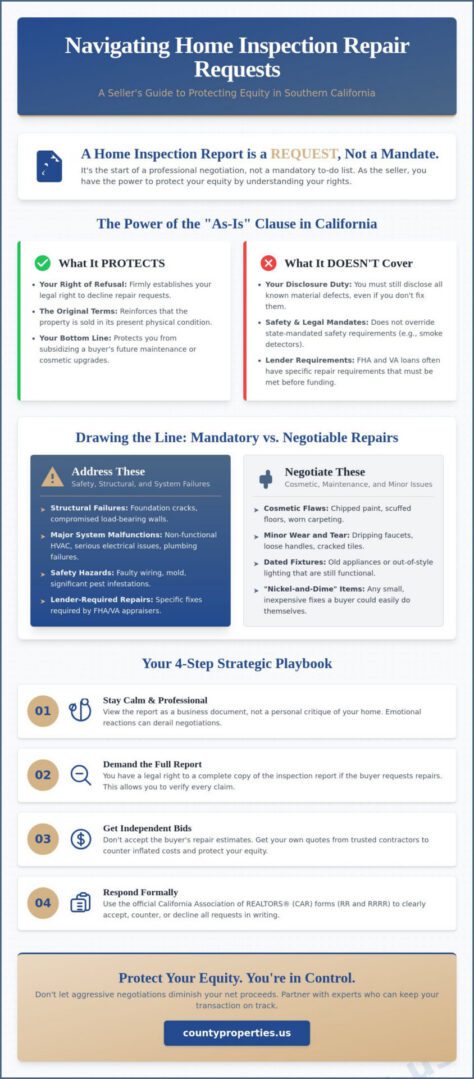
Strategic Responses to a Buyer’s Request for Repairs (RR)
When you receive a Request for Repair, your response should be a methodical business decision rather than an emotional reaction. Buyers often submit high estimates from their own contractors to maximize their leverage. To protect your equity, you need a structured framework for your counteroffer. Learning how to negotiate repairs after home inspection involves using these five strategic steps to maintain control over your net proceeds:
The Tactical Advantage of the Seller Credit
Hiring contractors during a rushed escrow period is often a recipe for disaster. You might face delays, sub-par workmanship, or unexpected cost overruns. Offering a credit is almost always safer because it simplifies the closing process and keeps the timeline on track. It directly reduces the buyer’s out-of-pocket closing costs, which can be more attractive to them than a physical repair. A seller credit at closing effectively transfers all future repair liability to the buyer because they accept the funds in lieu of physical remediation. By choosing this path, you ensure the work is done to the buyer’s personal standards after the sale is finalized.
Handling Unreasonable Buyers and ‘Bad Faith’ Negotiations
Some buyers use the inspection report to “re-trade” the deal, attempting to lower the price they originally agreed to pay. You must recognize when a request moves from a genuine safety concern to a bad-faith negotiation tactic. If the cost of the repairs exceeds the cost of returning to the market and finding a new buyer, it may be time to walk away. Protecting your interests requires a seasoned negotiator who understands the nuances of how to negotiate repairs after home inspection. If you feel overwhelmed by aggressive demands, consider finding the best real estate agent near me to ensure you have a veteran advocate on your side. For personalized assistance with your Southern California sale, you can contact the team at County Properties to secure your equity and close with confidence.
Partnering with County Properties to Protect Your Equity
The inspection phase is often the most fragile part of a real estate transaction. Without the right guidance, a 50-page report can quickly turn a promising sale into a stressful standoff. At County Properties, our Collaborative Approach is designed to prevent these inspection-period fallouts by fostering clear communication between all parties. We believe that professional mastery in Southern California real estate negotiations is about more than just numbers; it’s about keeping the deal together while ensuring you walk away with your equity intact. Our team serves as a steady, guiding presence, focusing on your needs with a methodical and supportive strategy that has been refined over decades of market cycles.
Professional Shielding in Southern California Escrows
One of the most valuable services we provide is acting as a professional shield for our sellers. High-stakes negotiations can become emotional, especially when buyers make aggressive or unrealistic demands. Arnie Levine and his team utilize localized market data to justify refusing minor or cosmetic repair requests. By demonstrating that your property remains competitive in the current market, we help you stand firm on non-essential items. This level of expertise is particularly vital for our Senior Real Estate Transition clients. We understand that navigating repairs during sensitive life transitions requires extra care and empathy. We offer turn-key solutions for seniors, managing the logistics of any mandatory fixes so you can focus on your next chapter without the burden of coordinating contractors or vetting repair bids.
Alternative Solutions: Cash Offers for Complex Properties
Sometimes, an inspection reveals significant damage that is simply not worth the repair headache or the financial investment. If you find yourself in a situation where you can’t afford to fix structural issues or major system failures, you still have powerful options. We specialize in Distressed Property Solutions, helping you evaluate whether a traditional sale or a cash offer is the best path forward for your financial safety. Through our Cash Offer Facilitation, we can help you skip the traditional repair negotiations entirely. This “as-is” route allows for a rapid close, which is often the most financially sound decision for properties with substantial inspection hurdles that would otherwise scare off traditional buyers.
We encourage you to request a no-obligation consultation to review your specific inspection report findings with a seasoned veteran who understands how to negotiate repairs after home inspection in today’s market. Whether we’re shielding you from aggressive buyers or facilitating a quick cash exit, our goal is to ensure you feel secure and successful in your choice of a long-term professional ally. You don’t have to face the inspection phase alone; let our experience guide you to a successful close.
Secure Your Net Proceeds and Close with Confidence
The inspection phase doesn’t have to be a source of stress or a drain on your financial goals. By exercising your legal right of refusal and distinguishing between mandatory safety fixes and negotiable cosmetic requests, you maintain control over your transaction. Utilizing seller credits is a strategic way to limit your post-sale liability while keeping the escrow process moving forward on schedule.
Mastering how to negotiate repairs after home inspection is much easier when you have a seasoned mentor by your side. Our team offers decades of Southern California market experience and serves as specialized Senior Real Estate Transition experts. We are also highly experienced in short sale and distressed property negotiations, ensuring that every seller has a path to success regardless of their property’s condition.
Protect your home equity-contact County Properties for expert seller representation today.
You’ve worked hard to build your home’s value, and you deserve to walk away from the closing table feeling secure and satisfied. We’re ready to act as your dependable guide and ensure your next chapter begins on the strongest possible financial footing.
Frequently Asked Questions
Do I have to give the buyer a copy of the home inspection report?
You are legally required to disclose any prior home inspection reports you’ve received within the last three years under California’s mandatory disclosure laws. If you possess a report from a previous failed escrow, you must provide it to the new buyer. Sharing these documents early in the process establishes transparency and protects you from future claims that you concealed known material facts about the property’s condition.
Can a buyer back out after an inspection if I offer to fix everything they asked for?
Yes, a buyer can still cancel the transaction if their investigation contingency is active. Even if you agree to every single repair request, the buyer has the right to decide that the home’s overall condition isn’t a fit for their needs. This is why it’s vital to work toward a signed Contingency Removal form as quickly as possible. Once that form is signed, the buyer’s deposit typically becomes non-refundable, providing you with the financial security you need to move forward.
What are ‘mandatory’ repairs for a home seller in California?
California law mandates that every residential property sold must have operable smoke detectors in all bedrooms and hallways, carbon monoxide alarms on every level, and a double-strapped water heater for seismic safety. Beyond these specific health and safety items, most other repairs are negotiable. However, if your buyer is using an FHA or VA loan, the lender may require certain structural or safety fixes before they’ll approve the final funding for the sale.
Is it better to fix the problems myself or give the buyer a credit at closing?
Offering a closing cost credit is almost always the better choice for sellers because it immediately terminates your liability for the repair. If you hire contractors yourself, you’re responsible for the quality of the work and any delays that might arise during escrow. A credit allows the buyer to manage the repairs after closing using their own preferred professionals, which prevents disputes over workmanship and keeps your closing timeline on track.
What happens if the inspection finds unpermitted work on my San Diego property?
You must disclose any unpermitted work as soon as it’s identified to remain compliant with California’s disclosure requirements. While unpermitted additions or electrical upgrades can be a hurdle, they don’t have to be deal breakers. You can often resolve these issues by offering a price reduction or a credit that covers the buyer’s future costs for bringing the work up to code or obtaining retroactive permits from the city.
Can I refuse to allow a buyer to bring in a specialist for a follow-up inspection?
You have the right to refuse additional inspectors, but this often causes the buyer to exercise their right to cancel the contract. Most buyers won’t move forward if a general inspector finds signs of foundation cracks or roof damage without a specialist’s assessment. Cooperating with these requests while understanding how to negotiate repairs after home inspection ensures you don’t lose a qualified buyer over a simple request for more information.
Does ‘As-Is’ mean I don’t have to disclose problems that I already know about?
No, the “as-is” clause doesn’t override your legal obligation to disclose all known material facts that could affect the property’s value. In California, you must be honest about past leaks, structural repairs, or neighborhood nuisances. The “as-is” provision simply protects your right to refuse to fix these known issues, but it doesn’t protect you from the legal consequences of failing to mention them in your disclosure package.
How much should I expect to pay for repairs after a typical home inspection?
Repair costs vary by property, but 2026 industry data indicates that buyers often negotiate an average of $14,000 in savings based on an inspector’s findings. Specific issues can carry high price tags, such as mold remediation averaging $660 or asbestos removal inspections at $490. Learning how to negotiate repairs after home inspection with the help of a seasoned professional is the best way to protect your equity from being eroded by these standard negotiation tactics.