

You have signed the papers and the finish line is in sight, but a successful home sale isn’t truly complete until the keys change hands without a single dispute. It’s natural to feel overwhelmed by the sheer volume of logistics, from deciding which items are legally considered fixtures to ensuring the property meets the professional “broom clean” standard. Using a comprehensive checklist for moving out of a sold house is the most reliable way to protect your equity and maintain your peace of mind during this high-stakes transition. We understand that this move represents a significant life milestone, and we’re here to act as your dependable guide through every remaining detail.
You likely feel a mix of excitement for your next chapter and a lingering concern that a missed utility transfer or a forgotten attic box could complicate your final walkthrough. This guide provides a room-by-room roadmap to help you navigate the closing process with total confidence. We will cover essential 2026 updates, including the new FinCEN reporting requirements for specific transactions and the latest USPS identity verification steps for mail forwarding. By following this structured approach, you can ensure a stress-free transition that honors your legal obligations and leaves the new owners with a positive first impression of their home.
Key Takeaways
- Establish a clear 14-day exit strategy to organize logistics and inventory every item negotiated to remain with the property.
- Understand the precise “broom clean” standard to fulfill your legal obligations and ensure a successful final walkthrough for the buyers.
- Utilize our comprehensive checklist for moving out of a sold house to manage local San Diego utility transfers and administrative tasks efficiently.
- Protect your equity by documenting the home’s empty condition with visual evidence before the final key handover.
- Learn how a dedicated real estate partner provides methodical assistance for high-stakes transitions, including specialized support for senior moves.
The 14-Day Countdown: Organizing Your Exit Strategy
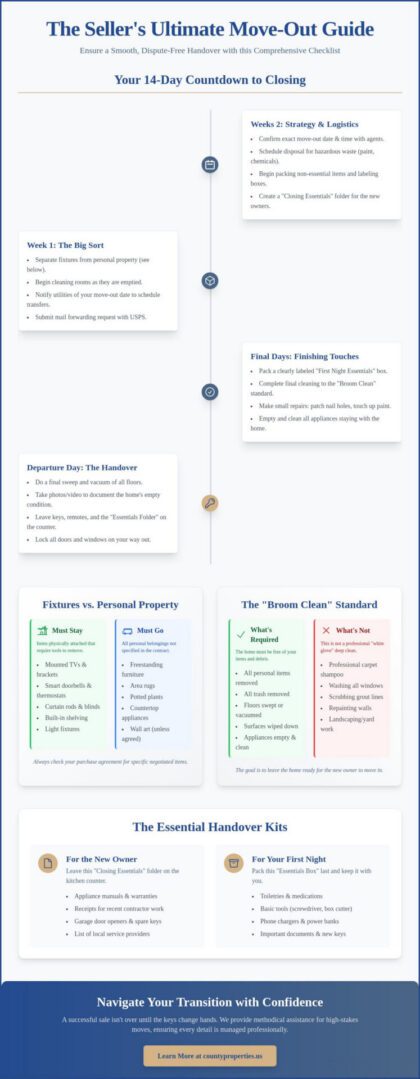
The final two weeks before you hand over the keys are often the most intense. Having a structured checklist for moving out of a sold house ensures you don’t overlook the professional details that protect your equity. Your first step is to confirm the exact move-out time and date with your escrow officer and the buyer’s agent. While the contract provides a baseline, small logistical shifts can happen. Clear communication prevents the stress of a buyer arriving with a moving truck while you’re still loading your last van.
The process of leaving one’s dwelling involves a significant administrative handover. You should create a “Closing Essentials” folder to leave on the kitchen counter. This folder acts as a bridge between you and the new owner. Include appliance manuals, active warranties, and receipts for any contractor work completed during the escrow period. Providing this history demonstrates your care for the property and reduces the likelihood of post-closing questions.
You also need to manage items that can’t go in a standard moving truck. San Diego County has strict guidelines for household hazardous waste. Items like old paint cans, pool chemicals, and garden pesticides shouldn’t be left in the garage or tossed in the trash. Schedule a disposal appointment with a local facility early in your 14-day window. This proactive step keeps your home compliant with local environmental regulations and ensures a clean slate for the buyer.
Separating Fixtures from Personal Property
Confusion over what stays and what goes is a leading cause of final walkthrough disputes. A fixture is any item physically attached to the property that requires tools to remove. This includes things like mounted televisions, smart doorbells, and curtain rods. Review your purchase agreement to inventory every item negotiated to stay. If you’ve excluded specific fixtures, you must replace them with the agreed-upon alternatives before the buyer arrives for their final inspection.
The Essentials Box for Your First Night
The first night in a new home is often chaotic. Pack a separate, clearly labeled box with toiletries, basic tools, chargers, and immediate medications. Keep your sale-related documents and the keys to your new residence in this box so they’re never lost in a sea of cardboard. It’s also helpful to keep a copy of our guide on selling a home in Southern California for reference. Having these items accessible allows you to focus on the achievement of your move rather than searching for a toothbrush or a charger.
The “Broom Clean” Standard: Meeting Your Legal Obligations
In most real estate contracts, the seller is legally obligated to leave the property in “broom clean” condition. While this term can feel subjective, it has a specific professional meaning that protects you during the final walkthrough. Broom clean means the home is entirely free of personal belongings, trash, and debris. You must sweep or vacuum every floor and wipe down all hard surfaces. This standard isn’t about achieving a “white glove” deep clean; it’s about ensuring the buyer doesn’t have to deal with your leftovers. Maintaining a detailed checklist for moving out of a sold house serves as your best defense against post-closing disputes and financial claims.
You must pay special attention to areas that were out of sight during the showing process. Attics, crawl spaces, and the back corners of the garage often harbor forgotten boxes or unwanted chemicals. If an item wasn’t explicitly negotiated to stay in the purchase agreement, it needs to go. Leaving “useful” items like leftover paint or extra floor tiles can sometimes backfire if the buyer views them as trash. Always ask before leaving anything behind. For a broader look at the administrative side of this transition, referencing a professional moving out checklist can help you stay organized as the deadline approaches.
Small repairs also fall under this standard. You should patch and touch up paint on small holes left by picture frames or wall mounts. If you removed a mounted television, ensure the wall is restored to a neutral state. Additionally, any appliances staying with the home, such as the oven or refrigerator, must be cleaned inside and out. If you find the logistics of this transition overwhelming, our team provides expert seller representation to guide you through these final requirements with ease.
The Room-by-Room Cleaning Checklist
- Kitchen: Degrease the stovetop, wipe out the inside of every cabinet, and sanitize the sink area.
- Bathrooms: Sanitize toilets, tubs, and showers. Ensure medicine cabinets and vanities are completely cleared out.
- Living Areas: Dust ceiling fans, wipe down dusty baseboards, and vacuum all carpets to remove surface dirt.
The Final Exterior Sweep
The exterior of your home is the first thing the buyer sees on their final walkthrough. You should mow the lawn one last time and ensure the pool is clear of debris. Check “hidden” spots like the area under the deck or behind the side of the house for forgotten junk. Finally, verify that all outdoor lighting is functional so the new owners can arrive safely after dark. These small steps demonstrate professional mastery and ensure a positive handover.
Utility Transfers and Administrative Handover
Managing the administrative handover is just as critical as packing the last box. You shouldn’t simply cancel your utilities; instead, you must schedule a professional transfer of services. In San Diego, you should contact San Diego Gas & Electric (SDG&E) to set your service end date for the day of closing. This ensures the buyer can seamlessly take over the account without a service interruption. Similarly, notify the City of San Diego Environmental Services or your specific water district about the ownership change. This methodical approach is a staple of any professional checklist for moving out of a sold house, as it prevents billing disputes and ensures the property remains functional during the transition.
Southern California Specific Utility Logistics
In our region, maintaining the exterior is vital. You should coordinate with your real estate agent near me to ensure there are no gaps in service for irrigation systems. A few days without water in the Southern California heat can devastate a mature landscape. Providing a list of your trusted local service providers, such as your pool technician or landscaper, is a gracious gesture that helps the buyer maintain the property’s value. If your home has solar panels, ensure all lease or ownership transfer documents are organized and ready for the final signing at closing. These details are often overlooked but are essential for a truly seamless transition.
The Digital Handover
Today’s homes are more connected than ever. You must reset smart thermostats, smart locks, and garage door openers to their factory settings before you leave. Compile a clear list of codes and temporary passwords for any smart features that stay with the property. Resetting your smart devices protects your personal privacy while allowing the buyer to gain full administrative access to their new home’s technology. This digital cleanup is a modern necessity that ensures the security of your data and the convenience of the next occupant.
The Day of Departure: Final Walkthrough and Key Handover
The final day in your home is a significant life milestone that requires a calm, methodical approach to ensure a successful handover. Your primary task is to perform an exhaustive final walkthrough of every room, closet, and cabinet. It’s surprisingly common for small items to be left behind in high pantry shelves, the bottom of the dishwasher, or the back of a linen closet. By verifying that every space is empty, you fulfill your professional obligation to the buyer and avoid the logistical headache of returning for forgotten belongings. This final sweep is a cornerstone of any effective checklist for moving out of a sold house.
Once the home is completely empty, you should document its condition to protect your equity and prevent post-closing disputes. Take a clear video or a series of photos of every room, including the interior of appliances and the garage. This visual evidence confirms you met the “broom clean” standard and serves as your protection if the buyer claims damage occurred after the sale. Before you exit for the last time, lock all windows and doors and turn off every light. Leave all keys, garage remotes, and gate clickers in a designated spot, such as the kitchen counter, where they’re easily found by the new owner. If you want to ensure your transition is handled with this level of expert care, our seller representation services provide the dependable guidance you need for a stress-free closing.
The Buyer’s Welcome Kit
A successful move-out is as much about neighborly courtesy as it is about legal compliance. We recommend leaving a friendly note for the new owners with tips about the neighborhood, such as the best local coffee shops or the day the trash is collected. Include the “Closing Essentials” folder you prepared during the 14-day countdown, which contains all appliance manuals and warranties. Providing your contact information for the first 48 hours is also a gracious gesture, allowing you to answer any emergency questions about the home’s unique features without involving agents or escrow officers.
Closing the Loop with Escrow
Your final administrative steps involve coordinating with your settlement team to ensure all financial and legal threads are tied. Confirm with your title company that all keys and access codes have been accounted for and documented. You must also verify that your escrow officer has your new forwarding address for any final disbursements or tax documents. As you prepare for your next chapter, reviewing the Southern California housing market trends will help you understand your equity position and make informed decisions for your next purchase. This structured approach ensures you leave your home with total confidence and a clean legal slate.
Navigating the Transition with County Properties
Moving out of a sold home is a complex operation that extends far beyond simple packing and logistics. It involves intricate legal disclosures and the high-stakes environment of Southern California’s escrow process, where even a minor oversight can lead to delays. At County Properties, we view ourselves as your steadfast partner during this significant life transition. Our collaborative, service-centric approach ensures that every detail on your checklist for moving out of a sold house is executed with professional mastery. We provide the expert guidance needed to navigate the final paperwork and ensure your interests are protected until the moment the transaction officially records. Our goal is to transform a potentially overwhelming process into a structured, predictable success.
Senior Transition and Downsizing Support
Senior homeowners often face unique challenges when downsizing from a long-term family residence or moving to assisted living. Our senior real estate specialist services are specifically designed to address these hurdles with deep empathy and methodical care. We recognize that these moves involve both high financial stakes and significant emotional weight. To ease this burden, we coordinate a trusted network of professional organizers and estate sale specialists who understand how to manage a lifetime of belongings. This specialized support reduces the physical and mental stress of the move, providing a steady, guiding presence through a major life milestone. We prioritize your comfort and security throughout the entire relocation process.
Start Your Next Chapter with Confidence
A successful move-out is the final step in securing your financial future and fulfilling your personal aspirations. Whether you are buying your next dream home or transitioning to a new community, we’re here to ensure your next chapter begins on the strongest possible footing. Arnie Levine and the County Properties team pride ourselves on being long-term professional allies who value internal cooperation and client-first outcomes over simple transactions. We believe that professional real estate service should be a supportive partnership that lasts well after the keys change hands. We invite you to contact County Properties for personalized seller representation to experience a truly seamless real estate journey. Start your next chapter with the confidence that comes from having a seasoned veteran in your corner.
Securing Your Successful Transition
A seamless move-out is the final hallmark of a professional home sale. By adhering to a rigorous checklist for moving out of a sold house, you protect your hard-earned equity and ensure that the final walkthrough is a moment of celebration rather than conflict. You’ve worked hard to reach the closing table. Now, meeting the “broom clean” standard and managing the digital handover of your smart home devices will solidify your reputation as a reliable and thoughtful seller. These final steps are not just about finishing a transaction; they’re about honoring the history of your home while preparing for your next achievement.
With decades of experience in Southern California residential sales, our team acts as your dependable guide through every market cycle. Whether you require a San Diego Senior Real Estate Specialist (SRES®) to manage a complex downsizing move or need expert short sale and foreclosure prevention, we offer the professional mastery your situation deserves. We’re committed to your long-term success and financial safety. Let County Properties guide you through your next Southern California real estate transition. You deserve a partner who values your peace of mind as much as you do. We look forward to helping you step into your future with total confidence.
Frequently Asked Questions
What does “broom clean” condition actually mean in a real estate contract?
Broom clean condition means the property is entirely free of debris, floors are swept or vacuumed, and all surfaces are wiped down. It requires you to remove every personal item, including trash and unwanted belongings from the garage, attic, and crawl spaces. While it doesn’t mandate a professional deep clean, it is a legal obligation to ensure the buyer receives an empty and clear home. This standard is a fundamental part of your checklist for moving out of a sold house.
Am I required to fill nail holes before I move out?
You aren’t typically required to fill tiny nail holes from standard picture frames because most contracts view them as normal wear and tear. However, you should patch and touch up the paint if you’ve removed heavy wall anchors, television mounts, or shelving units that left significant marks. Restoring the walls to a neutral state demonstrates professional mastery and helps prevent unnecessary friction during the buyer’s final walkthrough of the empty property.
What happens if I forget to move some items by the closing date?
Any items left behind after the deed is recorded and keys are handed over generally become the legal property of the buyer. You lose the right to enter the home once the transaction is complete, so you shouldn’t assume you can return later. If you realize you’ve forgotten something, contact your real estate agent immediately to negotiate a time with the new owner. Performing an exhaustive final walkthrough of every closet and cabinet is the only way to avoid this risk.
Should I leave the utilities on for the new buyer?
You should schedule a transfer of services rather than a total disconnection to prevent system failures. Scheduling the transfer for the actual day of closing ensures that essential features like irrigation systems, smart home hubs, and security alarms remain active. In Southern California, keeping the water service uninterrupted is vital to protect the landscaping. Providing the buyer with a list of your current providers helps them establish their new accounts without a gap in service.
Which items are legally considered “fixtures” that must stay with the house?
A fixture is any item physically attached to the property by nails, screws, or plumbing. This category includes ceiling fans, built-in shelving, smart doorbells, and window treatments like curtain rods or blinds. These items are legally part of the real estate and must remain with the home unless they were explicitly excluded in your purchase agreement. If you plan to take a specific chandelier or a wall-mounted mirror, you must document that exclusion during the escrow process.
Can the buyer refuse to close if the house isn’t clean enough?
A buyer can delay the closing or request a financial credit if the property fails to meet the “broom clean” standard or the specific terms of your contract. If the home is filled with trash or suffers damage during your move, the final walkthrough can become a significant legal hurdle. Utilizing a structured checklist for moving out of a sold house ensures you meet every professional obligation, protecting your equity and ensuring a smooth, on-time escrow closing.
How do I handle the transfer of a smart home system?
You must reset all smart thermostats, security cameras, and smart locks to their factory settings to protect your personal data. Once the hardware is cleared of your information, compile a list of the device names and any necessary bridge codes for the new owner. This allows the buyer to establish their own administrative accounts while ensuring the home’s technology remains functional. This digital handover is a modern necessity for a secure and professional property transition.
What should I do with hazardous materials like old paint or chemicals?
You shouldn’t leave hazardous materials like old paint, pool chemicals, or pesticides in the house or in the standard trash collection. San Diego County guidelines require these items to be taken to a designated household hazardous waste facility for proper disposal. Leaving these substances behind can be considered a violation of the “broom clean” standard. Schedule a disposal appointment during your final 14-day countdown to ensure the garage and shed are completely clear of all regulated materials.