

In California real estate, radical transparency isn’t a liability; it’s actually your strongest insurance policy against future legal trouble. While it’s natural to worry that admitting to a past roof leak or a noisy neighbor might scuttle your deal, the truth is that hidden defects are what truly kill sales and invite courtroom battles. Mastering the specific disclosure requirements for selling a house in California is the only way to ensure your transition to a new home is as smooth and secure as you deserve.
You likely feel a mix of excitement and anxiety as you prepare to list your property, especially when faced with conflicting advice about what really needs to be reported. We understand that you want to protect your financial future while acting with integrity. That’s why we’ve created this comprehensive 2026 checklist to help you navigate the complex landscape of state mandates with confidence. By following this expert guide, you’ll gain the clarity needed to protect your sale and prevent the heavy burden of post-closing litigation.
We’ll walk you through the essential Transfer Disclosure Statement, examine the latest wildfire and natural hazard requirements, and clarify how to document material facts without fear. With the right preparation, you can turn a mountain of paperwork into a clear path toward your next milestone.
Key Takeaways
- Learn why disclosing every “material fact” is your best defense against post-sale lawsuits and how the Golden Rule of transparency protects your financial safety.
- Master the essential paperwork, including the Transfer Disclosure Statement and Seller Property Questionnaire, to meet all legal disclosure requirements for selling a house in California.
- Identify critical location-specific hazards, such as wildfire severity zones and seismic fault lines, that must be documented in your Natural Hazard Disclosure report.
- Discover how to use our 2026 seller’s checklist to identify potential red flags early through pre-listing walkthroughs and timely environmental reporting.
- Understand how a dependable guide can simplify the complex paperwork maze, providing specialized support for seniors and those managing decades of property history.
Understanding California’s “Full Disclosure” Legal Standard
Meeting the disclosure requirements for selling a house in California begins with a simple, powerful philosophy: transparency is your best defense. California law operates under a “full disclosure” standard. This means you are legally obligated to inform potential buyers of any “material facts” that could affect the property’s value or its desirability to a reasonable person. It isn’t just about being helpful; it’s a fundamental legal requirement designed to ensure a fair and honest transaction for both parties.
We often tell our clients that the Golden Rule of California real estate is “when in doubt, disclose it.” If you find yourself wondering whether a past repair or a local issue is worth mentioning, it almost certainly is. Providing this information upfront doesn’t just fulfill a legal duty; it builds a bridge of trust with the buyer. This transparency often leads to smoother negotiations and a more secure closing process. For those navigating this for the first time, professional seller representation is essential to ensure you are using the most current 2026 forms and meeting every statutory obligation.
What Qualifies as a “Material Fact”?
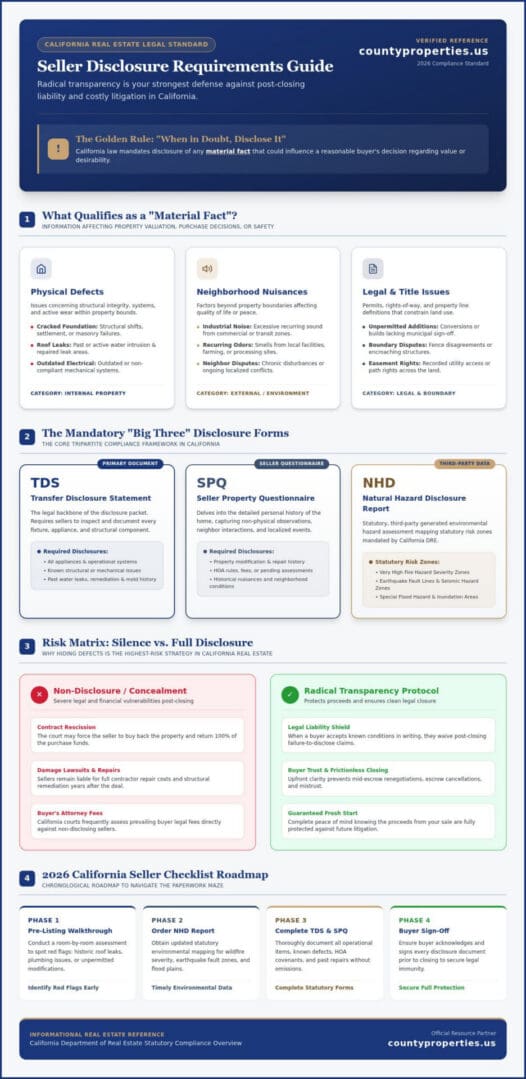
A material fact is any piece of information that might change a buyer’s mind about the purchase or the price they are willing to pay. These facts generally fall into three main categories:
- Physical Defects: This includes significant issues like a cracked foundation, a recurring roof leak, or outdated electrical systems.
- Neighborhood Nuisances: Factors outside your property lines, such as excessive noise from a nearby industrial site or recurring odors from a local facility, must be shared.
- Legal and Title Issues: You must disclose unpermitted additions, boundary disputes with neighbors, or any easements that affect how the land can be used.
Beyond these physical traits, you must also provide a Natural Hazard Disclosure Statement. This document alerts the buyer if the home sits in a zone prone to earthquakes, floods, or wildfires, which are critical considerations in our Southern California landscape.
The Consequences of Non-Disclosure
The risks of staying silent are far higher than the risk of losing a buyer. If a buyer discovers a significant undisclosed issue after the sale, they may seek a rescission of the contract. This essentially forces you to take the house back and return their money. Even if the sale stays intact, you could face expensive lawsuits for damages, including the cost of repairs and the buyer’s legal fees. Honesty is your shield against these high-stakes personal situations. By being thorough now, you protect your financial safety and ensure your move to the next chapter is truly a fresh start.
The Mandatory “Big Three” Disclosure Forms
While the legal standard sets the stage, three specific documents form the core of your compliance strategy. Completing these correctly is the most practical way to satisfy the disclosure requirements for selling a house in California. These forms work in tandem to create a transparent history of your home, reassuring buyers that they are making a sound financial decision and protecting you from future liability.
First, the Natural Hazard Disclosure (NHD) Report is a third-party document that identifies environmental risks. It covers whether your property is in a flood zone, earthquake fault zone, or high fire hazard area. Because these maps change, having a current report is vital for your protection. You can find more detail on these mandates in the official California Department of Real Estate disclosure requirements guide. This report, combined with your personal statements, creates a comprehensive property profile that leaves no room for ambiguity.
Transfer Disclosure Statement (TDS) Essentials
The TDS is the backbone of your disclosure package. It requires you to check off every appliance and system in the house, from the dishwasher to the pool heater, and state whether they are in working order. You must also document known structural or mechanical issues. In our region, we pay close attention to signs of past water damage or mold. Even if a leak was repaired years ago, documenting the event and the solution demonstrates your commitment to honesty. It’s about being a reliable partner in the transaction.
Seller Property Questionnaire (SPQ) Nuances
The SPQ goes deeper than the TDS. It asks about insurance claims, neighborhood noise, and even whether a death occurred on the property within the last three years. For those navigating senior real estate transitions, this form can feel overwhelming because it covers decades of history. We act as your dependable guide during this process, helping you recall and document long-term repairs or modifications. If you feel stuck, our team can help you review your records to ensure nothing is missed.
Providing these documents early in the process often builds buyer confidence and leads to a smoother transaction. If you’re ready to start preparing your home for the market, we invite you to explore our ultimate guide to selling in Southern California for more expert insights.
Location-Specific and Environmental Disclosures
Beyond the general condition of your property, the disclosure requirements for selling a house in California extend deep into the surrounding environment. Southern California’s unique geography means your property profile must address specific natural risks. Earthquake Fault Zones and Seismic Hazard mapping are standard inclusions; however, in 2026, Wildfire High Fire Hazard Severity Zones have become a focal point for buyers and insurers alike. Providing clear information on these zones helps potential buyers understand their future insurance needs and property maintenance obligations early in the process.
If your home is in a flood zone, you must disclose the requirement for specialized flood insurance. Additionally, many newer developments in our region are subject to Mello-Roos or 1915 Bond Act special assessments. These are supplemental taxes used to fund local infrastructure like roads and schools. Being upfront about these costs prevents “sticker shock” during the escrow process and maintains the momentum of your sale. We help our clients identify these assessments early to ensure there are no surprises for the buyer.
Lead-Based Paint and Older Homes
For those selling homes built before 1978, federal law requires compliance with the EPA lead-based paint disclosure rule. You must provide buyers with a specific, federally approved pamphlet titled “Protect Your Family From Lead in Your Home” and disclose any known lead-based paint hazards. San Diego sellers in historic districts need to be particularly vigilant here. These older properties often have layers of history that require careful documentation to ensure you’re meeting both state and federal mandates without missing a single detail.
Megan’s Law and Neighborhood Disclosures
Your disclosure package must also include a mandatory notice regarding Megan’s Law. This notice informs buyers how they can access the statewide database of registered sex offenders. While you aren’t required to research the database yourself, providing the standard notice is a non-negotiable step. It’s about empowering the buyer to do their own due diligence.
Neighborhood-specific factors are equally important. If your property is governed by a Homeowners Association (HOA), you must provide the buyer with current rules, bylaws, and information regarding any pending litigations involving the association. Finally, consider local environmental factors like airport noise or proximity to military installations. For example, if your home is near MCAS Miramar, disclosing the potential for flight path noise is a proactive way to manage buyer expectations. These details might seem small, but they are essential components of the disclosure requirements for selling a house in California that protect you from future claims.
The 2026 California Seller Disclosure Checklist
Successfully meeting the disclosure requirements for selling a house in California requires a methodical approach. We recommend starting this process several weeks before your home hits the market. Early preparation gives you the time to be thorough without the pressure of a pending offer. Our 2026 checklist is designed to help you organize your history and present a transparent property profile to prospective buyers. Following these steps ensures you’re acting with integrity while protecting your financial interests.
- Order your NHD report early: Identifying environmental red flags before you list allows you to address them in your marketing or pricing strategy.
- Perform a “pre-disclosure” walk-through: Walk through your home with your agent to spot items you might have overlooked, like a loose railing or a ceiling stain from a long-fixed leak.
- Gather permits and receipts: Collect documentation for any major work done during your ownership, such as a kitchen remodel or a new HVAC system.
- Review everything with a professional: Before you sign, go over every page with a real estate agent near you to ensure your language is clear and complete.
Step 1: Information Gathering
The first step is to dig into your archives. Find old inspection reports from when you bought the home and gather invoices for any repairs made since then. You should also review your HOA documents and CC&Rs to ensure you’re aware of any recent changes in community rules. Don’t forget to identify “quiet” issues that only appear occasionally. For instance, if you have seasonal drainage problems in the backyard during heavy rains, it’s a material fact that needs to be documented even if the sun is shining when you list.
Step 2: Drafting the Narrative
When you sit down to write, focus on being factual rather than alarmist. You don’t need to use legal jargon. Simply describe what happened, when it happened, and how it was resolved. Providing specific dates and repair details builds immense buyer confidence. We utilize a “Collaborative Approach” where we work alongside you to review your narrative. This ensures nothing is missed and that your disclosures are as accurate as possible. If you want to ensure your paperwork is handled with expert care, you can schedule a consultation with our team today.
How County Properties Simplifies the Disclosure Maze
Navigating the disclosure requirements for selling a house in California shouldn’t feel like a solo journey through a legal maze. At County Properties, we believe that your peace of mind is just as important as the final sale price. Our expert team acts as your Dependable Guide, transforming a mountain of confusing paperwork into a structured, manageable process. We leverage our deep roots in the San Diego and Southern California markets to ensure your property profile is both legally compliant and strategically positioned to win over buyers.
We’ve found that radical transparency is actually a powerful marketing tool. When you provide a thorough and honest disclosure package upfront, you attract serious buyers who feel secure in their choice. This confidence often translates into stronger offers and a significantly lower risk of the deal falling through during the inspection period. Our role is to facilitate this transparency, using our professional mastery to protect your financial safety throughout the transaction.
Senior-Specific Disclosure Guidance
For long-term residents, the prospect of recalling every repair or modification made over thirty or forty years is daunting. We specialize in senior real estate transitions, providing the methodical support needed to document historical property facts with precision. Our team creates a stress-free environment where you can make decisions at your own pace. We provide turn-key solutions that handle the heavy administrative burden, from coordinating with natural hazard reporting services to organizing old permit records. You focus on your next chapter; we’ll handle the complex details of your home’s history.
Ready to Sell with Confidence?
Arnie Levine’s collaborative approach is built on the belief that a successful sale is a team effort. In the 2026 market, professional diligence is your greatest asset in protecting your home equity. We don’t just hand you forms and hope for the best. We sit down with you to ensure every statement is accurate and every mandate of the disclosure requirements for selling a house in California is met. This level of care prevents the anxiety of post-sale litigation and ensures your move is a positive milestone.
Protecting your equity requires a partner who understands the high stakes of a Southern California real estate transaction. If you’re ready to move forward with a team that values integrity and professional mastery, we’re here to help. Contact us today for a personalized consultation on your home’s value and a clear, supportive roadmap for your upcoming sale.
Protect Your Equity with Radical Transparency
Successfully navigating the disclosure requirements for selling a house in California is about more than just checking boxes; it’s about protecting your financial safety and ensuring a seamless transition to your next home. By prioritizing transparency through the TDS, SPQ, and updated environmental reports, you build the trust necessary to attract serious buyers and close your sale without the fear of future litigation. Honesty remains your most effective insurance policy in the 2026 real estate market.
With over 30 years of Southern California market experience, Arnie Levine and our SRES® certified team provide the collaborative, service-centric approach you need for a high-stakes transaction. We act as your dependable guide, helping you navigate every legal mandate with professional mastery and empathy. Contact Arnie Levine and the County Properties team for a secure, expert-led home sale and let us handle the paperwork while you focus on your new beginning.
You have worked hard for your home equity, and we are dedicated to helping you protect it. We look forward to guiding you toward a successful and stress-free closing.
Frequently Asked Questions
Do I need to disclose a death that occurred in the house?
Yes, you must disclose any death that occurred on the property within the last three years. This is a specific requirement under California Civil Code Section 1710.2. While it might feel like a difficult topic to share, being upfront prevents future legal challenges. If the death occurred more than three years ago, you generally don’t have to volunteer the information unless a buyer specifically asks you about it.
What happens if I forget to disclose a past repair?
Forgetting to disclose a past repair can lead to a “failure to disclose” lawsuit if the issue resurfaces. If you realize you missed something, it’s best to provide an amended disclosure immediately. Transparency is your best protection against post-sale litigation. We help our clients review old records to ensure every material fact is captured, keeping your financial safety at the forefront of the transaction.
Is a Natural Hazard Disclosure (NHD) required for every sale in California?
Yes, a Natural Hazard Disclosure (NHD) report is mandatory for nearly every residential property sale in the state. This document is a critical part of the disclosure requirements for selling a house in California. It informs the buyer if the land is in a designated flood, fire, or earthquake zone. Because maps are updated periodically, you’ll need a current report for your specific 2026 transaction to ensure full compliance.
Do I have to disclose issues that I already fixed?
You should disclose significant issues even if they’ve been professionally repaired. For example, a past roof leak that was fixed two years ago is still a material fact. Providing the original repair receipts alongside your disclosure builds immense buyer confidence. It shows you’re a responsible homeowner who maintains the property properly. This transparency often makes buyers feel more secure about the home’s current condition.
Can I sell my house “as-is” to avoid disclosure requirements?
Selling a house “as-is” does not exempt you from state disclosure mandates. An “as-is” clause simply means you won’t pay for repairs; it doesn’t mean you can hide known defects. You’re still legally required to follow the disclosure requirements for selling a house in California. Being honest about the property’s condition upfront is the only way to protect yourself from future claims of misrepresentation or fraud.
Who pays for the disclosure reports in a typical California transaction?
In a typical Southern California transaction, the seller usually pays for the Natural Hazard Disclosure (NHD) report and other standard disclosure documents. However, these costs are technically negotiable between the buyer and seller. We often recommend that sellers order these reports early in the process. Having the information ready allows you to identify potential red flags before your home even hits the market.
How far back do I need to go when disclosing property history?
There isn’t a strict time limit for disclosing physical property defects. If you know about a foundation crack from ten years ago, you should disclose it. While some items like deaths have a three-year limit, material facts regarding the home’s structure or safety should be shared regardless of when they occurred. Our team acts as a dependable guide, helping you sift through decades of history to identify what truly matters.
What should I do if I discover a new issue after I already provided disclosures?
If you discover a new problem after providing your initial paperwork, you must issue an amended disclosure statement. This gives the buyer a new period to review the information and decide how to proceed. It might feel frustrating to update the files, but it’s much safer than hoping the buyer doesn’t notice. Staying proactive and honest throughout the escrow process is the best way to secure your sale.