

If “tired landlord selling rental property San Diego” describes your situation, you may be weighing the relief of moving on against questions about your tenant, timing, and likely net proceeds. The quickest way to leave a rental behind isn’t always the clearest path to a good sale.
Those concerns are understandable. Tenant occupancy can affect how you prepare and present the property, while taxes and transaction costs can make it harder to compare your options. You don’t have to settle every detail before exploring a sale, but a practical plan can help you make informed decisions without rushing.
This step-by-step guide compares selling with a tenant in place, preparing for a vacant sale, and exploring a cash offer. It also covers coordinating showings, estimating proceeds, and raising tax or legal questions with qualified professionals. County Properties represents sellers and can help you evaluate your property and preferred timeline, with guidance focused on your goals.
Key Takeaways
- If you’re a tired landlord selling rental property San Diego, weigh your goals and circumstances before deciding whether selling is the right next step.
- Compare selling with a tenant in place against preparing for a vacant sale. Consider lease terms, access, property condition, and potential buyer interest.
- Gather your lease, repair records, operating expenses, and ownership documents to organize your sale planning.
- Ask a real estate representative how they approach tenant-occupied sales, marketing, communication, and transaction coordination.
- A seller consultation can help you assess possible sale routes and timelines. Cash-offer facilitation may be an option to explore, not a guaranteed outcome.
Tired Landlord Selling Rental Property San Diego: Start With Your Goals
Maintenance calls, tenant communication, vacancies, and a steady stream of decisions can make owning a rental feel like a second job. If the phrase “tired landlord selling rental property San Diego” describes your situation, it may be time to review your options. Exhaustion alone, though, doesn’t mean selling is automatically the right move.
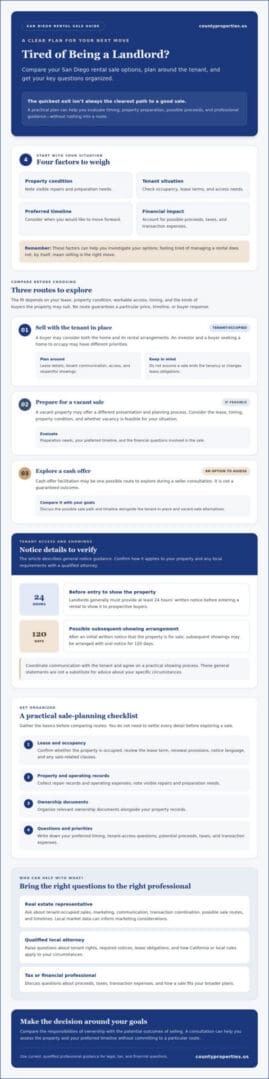
Start by looking at four factors: the property’s condition, the tenant situation, your preferred timeline, and the financial impact of a sale. A real estate professional can help you assess possible sale paths. A qualified tax or financial professional can address questions about proceeds and your broader plans.
How to tell whether selling fits your situation
Ask what’s driving your decision. Is it the time required for upkeep, an upcoming repair, repeated vacancies, or a change in your financial goals? Consider whether you’re responding to a temporary challenge or a longer-term desire to use your time or resources differently. Think about where you want to be in the next few years and whether keeping the property supports that plan.
It may be time to evaluate an exit if:
- Managing repairs and tenant communication no longer fits your schedule.
- Upcoming work or recurring vacancies have changed how you view the property.
- Your financial priorities or plans for the property have shifted.
- You’re ready to compare the responsibilities of ownership with the potential outcomes of selling.
These are reasons to investigate, not proof that you should sell. A listing consultation can help you discuss the property and your preferred timeline without committing to a particular route.
What to clarify before making a decision
Start with the basics: Is the property occupied or vacant? If it’s occupied, is there a current lease, and when does it end? Lease terms and the tenant’s circumstances can affect planning, so review the documents and seek qualified guidance on legal questions. For a general overview of the rights and responsibilities involved, see Landlord-tenant law. It isn’t a substitute for advice about your specific situation.
Next, note your preferred timing, visible repairs or preparation needs, and questions about potential proceeds, taxes, and transaction expenses. A financial or tax professional can assess questions specific to your circumstances. For a broader seller-preparation overview, read this guide to selling a home in Southern California. With these details organized, you’ll be better prepared to compare sale options.
How a Tenant-Occupied Rental Sale Works in San Diego
A tenant doesn’t automatically prevent you from selling. You can explore marketing the property with the tenant in place or waiting until it’s vacant, if that’s feasible. The right approach depends on the lease, the home’s condition, workable access arrangements, your timing, and the kinds of buyers the property may suit. Neither path guarantees a particular price, timeline, or buyer response.
In a tenant-in-place sale, a buyer may evaluate both the property and its rental arrangements. A buyer seeking a home to occupy may have different priorities from an investor considering rental income. These are possible buyer perspectives, not predictions about current San Diego demand. A real estate professional can help you assess marketing considerations using current local market data.
What to review in the lease before listing
Read the lease closely before setting a marketing plan. Review its term, renewal provisions, notice language, and any clauses that address a sale. Don’t assume a sale automatically ends the tenancy or changes the lease obligations. A buyer may acquire the property subject to the existing agreement. Have a qualified local attorney review questions about tenant rights, required notices, and your specific circumstances. California and local rules may apply, and requirements can vary by location.
Plan access and showings carefully
Showings require coordination, especially when the tenant lives in the home. Landlords generally must provide at least 24 hours’ written notice before entering a rental to show it to prospective buyers. After an initial written notice that the property is for sale, subsequent showings may be arranged with oral notice for 120 days. Confirm how these rules apply to your property, along with any local requirements, with a qualified attorney before scheduling access.
Agree on a practical communication process and discuss how to present the home respectfully. A tidy, accessible property may support showings, but the tenant’s privacy and applicable notice rules still matter. If access is limited or the home needs work, those factors may affect whether to market it occupied or consider a vacant sale.
How occupancy can shape buyer appeal
Some buyers may value an existing tenancy and rental income; others may prefer a home they can occupy. The lease, rent terms, property condition, and showing arrangements can help determine which audience may be a fit. Don’t assume vacancy will attract more interest or that having a tenant in place will make a sale difficult. Compare the practical trade-offs with an agent using current neighborhood-level market information.
Tenant planning and tax planning are separate questions. For background on potential capital gains considerations, consult the IRS rules on capital gains and speak with a qualified tax professional about your situation. County Properties can represent sellers of investment properties and help evaluate a sale plan, but it doesn’t provide rental management or legal advice. You can discuss seller representation for your rental as one step in weighing your options.
Compare Your San Diego Rental Sale Options Before Choosing a Route
If you’re a tired landlord selling rental property San Diego, compare the practical trade-offs before choosing how to sell. A traditional listing can be marketed with a tenant in place or after the property becomes vacant, where feasible. Cash-offer facilitation is another route to investigate, but no offer, terms, or timeline are guaranteed.
| Sale route | Preparation and coordination | Potential buyer fit | Questions to weigh |
|---|---|---|---|
| Traditional listing, tenant in place | Coordinate access and presentation around the tenancy. Review the lease and showing arrangements. | May appeal to buyers considering the property as an investment, depending on its details and market conditions. | Can you support showing coordination, and do the lease terms and property condition make this route workable? |
| Traditional listing after vacancy | Plan for any needed cleaning, repairs, or other preparation once the home is vacant. | May suit buyers looking for a home to occupy, as well as investors. | Is vacancy feasible, and do the timing and preparation align with your priorities? |
| Explore a cash-offer route | Ask what information is needed and review the proposed transaction structure. | Buyer fit and terms depend on the specific offer and property. | Compare written terms, contingencies, timing, and estimated net proceeds with other options. |
When a traditional listing may be worth considering
A listing can support broad marketing and thoughtful property presentation, helping you reach different types of buyers. The process may involve preparing the property, coordinating access, and communicating clearly with the tenant. These steps can support an organized marketing effort, but they don’t guarantee a higher sale result or a particular level of interest. To prepare questions for evaluating representation, see this guide to finding a real estate agent near you.
When to explore a cash-offer route
If you want to compare alternatives to a traditional listing or are considering a different transaction structure, you can ask about cash-offer facilitation. County Properties facilitates cash offers, but it doesn’t guarantee an offer or act as a lender. Review any written proposal carefully, including contingencies, timing, and estimated net proceeds. Compare those terms with other available routes before deciding.
For any path, tenant obligations and local requirements may affect the plan. Cornell Law School provides a general overview of U.S. landlord-tenant law. Consult a qualified local attorney about how applicable rules affect your circumstances. A seller-representation discussion with County Properties about your rental sale options can help you evaluate possible routes and your preferred timeline. No single approach is right for every owner.
Prepare Your Rental Sale: A San Diego Landlord’s Action Plan
Organizing a few key details can make your next conversations with real estate, legal, and tax professionals more useful. If you’re a tired landlord selling rental property San Diego, use this sequence to prepare without assuming that every repair, expense, or tenant issue has a one-size-fits-all answer.
- 1. Gather ownership and operating records. Collect available ownership documents, leases and amendments, repair and improvement records, invoices, and operating expense information. Keep everything together and note any gaps so your advisers can help identify what else may be useful.
- 2. Review the lease and note questions. Identify the lease term, renewal provisions, and any language related to a sale or property access. Don’t interpret uncertain clauses on your own. Ask a qualified local attorney about tenant rights, notices, and entry requirements that may apply to your property.
- 3. Walk through the property. Make a practical list of maintenance concerns and presentation needs, such as worn surfaces, deferred upkeep, or areas that may need attention before marketing. This assessment doesn’t determine which repairs are legally required, financially worthwhile, or tax-deductible.
- 4. Organize tax questions before estimating net proceeds. Gather purchase records and available information about capital improvements and depreciation. Ask a qualified tax professional to review your adjusted basis, depreciation history, and potential tax consequences. Don’t rely on a rough sale estimate as a substitute for tax advice.
- 5. Plan tenant communication and access. Prepare a respectful, clear way to discuss possible sale-related activity with the tenant. Base any communication and access plan on the lease and legal requirements verified by a qualified attorney. Don’t assume you can arrange entry or showings on your preferred schedule.
- 6. Discuss the sale plan with a real estate professional. Bring your records, property notes, tenant status, and preferred timeline to a seller-representation discussion. Ask how the condition and occupancy may affect preparation and marketing choices, then compare possible routes with your priorities.
If financial distress or foreclosure risk is part of the situation, explore appropriate options early and review this guide to California foreclosure prevention options. County Properties represents sellers of investment properties, but doesn’t provide property management, legal advice, or tax advice. To discuss your rental’s sale plan and preferred timeline, connect with County Properties about seller representation.
Choose a San Diego Sale Plan With the Right Real Estate Partner
If you’re a tired landlord selling rental property San Diego, the right real estate partner should help you understand your choices, not push you toward a predetermined outcome. Look for someone prepared to discuss the property as an investment, account for the tenant situation, and work with your preferred timeline. Seller representation can help you assess a sale plan and next steps, but it doesn’t replace legal or tax advice.
Questions to ask before choosing seller representation
Use an initial conversation to learn how a prospective representative would approach your situation. Specific, practical answers can help you compare approaches and decide what fits your needs.
- Property and preparation: How would you assess the home’s condition, likely preparation needs, and features that may matter to prospective buyers?
- Tenant and access: How would you account for the tenant’s lease and coordinate sale-related communication and access, while leaving legal questions to a qualified attorney?
- Marketing: How would you explain the marketing approach for a tenant-occupied property compared with a vacant one?
- Communication and coordination: How will you keep me informed, and what support do you provide as the transaction progresses?
- Sale routes: If cash-offer facilitation is an option to explore, how would you present any offer’s written terms and help me compare them with other routes?
Ask for a clear explanation of what the representative will handle and what requires another professional. County Properties represents sellers of residential and investment properties in Southern California, including San Diego, and facilitates cash offers. It doesn’t provide rental management, legal advice, or tax advice, and a cash offer or particular sale result isn’t guaranteed.
Discuss your rental property with County Properties
County Properties’ seller representation, led by Arnie Levine, offers personalized, collaborative guidance. To make a conversation useful, be ready to share the property’s location, whether it’s occupied, the lease timeline, your preferred timing, and your main concerns. You can also bring questions about preparation, marketing, and which sale routes you’d like to evaluate.
The goal is to discuss the property and your priorities, then consider possible next steps together. Asking questions doesn’t commit you to a sale, and no one can promise a specific price, timeline, or financial outcome. If you’d like to explore your options, talk with County Properties about selling your rental.
Take the Next Step on Your Rental Sale Plan
If you’re a tired landlord selling rental property San Diego, a clear plan can turn an overwhelming decision into manageable next steps. Compare selling with a tenant in place against a vacant sale where feasible, and consider how the lease, property condition, and your preferred timeline shape each route.
Organize ownership, repair, lease, and expense records before discussing preparation and potential proceeds. For tenant-rights questions, consult a qualified attorney. For tax questions, speak with a qualified tax professional. The right sale path depends on your circumstances, and you don’t have to choose before you understand your options.
County Properties represents sellers of residential and investment properties, offering collaborative guidance led by Arnie Levine. The team also facilitates cash offers and brings short-sale expertise, without promising an offer or outcome. If you’re ready to explore your property and timeline, discuss your San Diego rental sale options with County Properties.
A thoughtful conversation can help you move forward with greater clarity and confidence, at a pace that fits your goals.
Frequently Asked Questions
Can I sell my San Diego rental property while a tenant is living there?
Yes, a tenant-occupied rental can generally be marketed for sale, but the lease and applicable rules affect how you plan. A buyer may evaluate the property as an investment, while access and presentation need to account for the tenant’s occupancy. Review the lease, coordinate communication and showings appropriately, and ask a qualified local attorney to verify notice and entry requirements for your specific property.
Do I have to wait until my tenant’s lease ends to sell?
Not necessarily. You can explore selling before the lease ends, but don’t assume that listing the property or completing a sale automatically ends the tenancy. A buyer may take ownership subject to the existing lease and its obligations. Before making plans that could affect the tenant’s occupancy, have a qualified local attorney review the lease and explain which options may apply to your circumstances.
How do I sell a rental property in San Diego step by step?
If you’re searching “tired landlord selling rental property San Diego,” start by confirming your goals and preferred timeline. Gather ownership documents, the lease, repair records, and operating expenses. Assess the property’s condition, then discuss whether to market it occupied or consider a vacant sale where feasible. Ask a real estate representative about marketing and transaction coordination, and consult qualified legal and tax professionals about tenant obligations and potential tax consequences.
Should I sell my rental property with the tenant in place or wait until it is vacant?
Compare both routes against your priorities rather than assuming one is always better. Selling with a tenant in place may suit buyers interested in an existing rental, while a vacant property may appeal to buyers seeking a home to occupy. Lease terms, access, condition, vacancy timing, and preparation needs all matter. Discuss likely marketing considerations with a real estate professional using current local market information rather than assumptions.
What happens to the lease when a rental property is sold?
A sale doesn’t automatically cancel the lease. The new owner may take the property subject to the existing rental agreement, including its terms and obligations. The precise effect depends on the lease and applicable law, so review the full agreement and any amendments before setting expectations with a buyer or tenant. A qualified local attorney can advise you about required notices, tenant rights, and how the sale may affect your situation.
What taxes should I consider when selling a rental property?
Potential tax considerations include capital gains, your adjusted tax basis, and depreciation claimed or allowable during ownership. The outcome depends on your records and individual circumstances, so don’t rely on a rough estimate of sale proceeds to determine what you’ll owe. Gather purchase, improvement, and depreciation information, then ask a qualified tax professional to assess potential consequences and whether any tax-planning options may be relevant.
Can a real estate agent manage my rental property while I sell it?
Don’t assume seller representation includes ongoing rental management. A real estate agent may represent you in the sale, but property management is a separate service and isn’t provided by County Properties. Clarify who will handle tenant communication and day-to-day rental responsibilities during the sale process. County Properties represents sellers of residential and investment properties and can help you evaluate sale options, but it doesn’t provide property management, legal advice, or tax advice.