
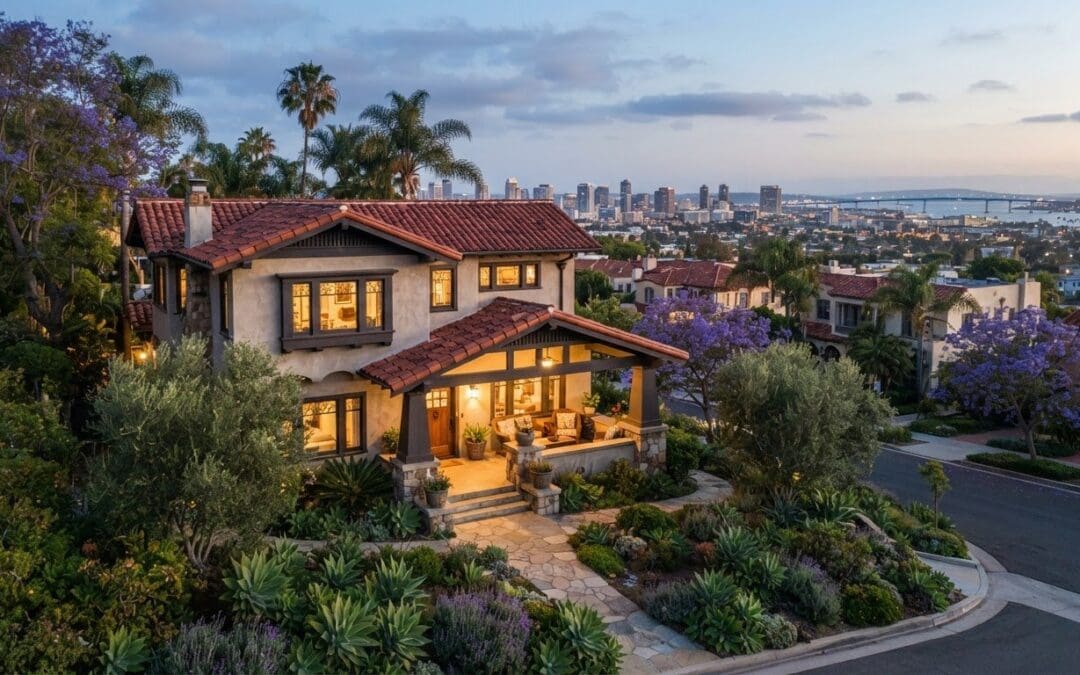
Falling in love with a century-old residence is easy, but successfully securing one requires far more than a standard purchase offer. When you explore the market for historic homes for sale Mission Hills San Diego, you aren’t simply buying square footage; you’re taking custodianship of a distinct architectural legacy. You likely already appreciate the timeless character of early 20th-century Craftsman and Spanish Colonial Revival properties. However, it’s completely natural to feel uneasy about navigating strict municipal preservation rules, uncovering hidden electrical or structural updates, and managing complex property covenants.
You don’t have to face these intricate challenges without clear, reliable direction. This guide helps you master how to identify designated properties, evaluate vintage structural conditions, and capitalize on California Mills Act benefits that can reduce your property taxes by 20% to 70%. Ahead, you’ll discover the neighborhood’s signature architectural styles, key 2026 market insights, and practical strategies to partner with experienced buyer representation for a smooth, well-protected closing.
Key Takeaways
- Identify signature early 20th-century architectural styles, from Craftsman to Spanish Colonial Revival, to accurately assess structural integrity and historical authenticity.
- Learn how to successfully navigate the selective market for historic homes for sale Mission Hills San Diego, including strategies for uncovering off-market and private estate opportunities.
- Explore how the California Mills Act delivers substantial annual property tax savings of 20% to 70% in exchange for ongoing exterior preservation commitments.
- Implement a targeted vintage-property inspection checklist designed to detect hidden foundation, plumbing, and electrical concerns unique to pre-war construction.
- Partner with specialized buyer representation to confidently evaluate local historic preservation guidelines and safeguard your financial interests throughout escrow.
Understanding the Appeal of Historic Homes in Mission Hills San Diego
Established in 1908 through the vision of civic leader George Marston, Mission Hills, San Diego stands as an enduring showcase of Southern California’s finest early twentieth-century residential craftsmanship. Perched on coastal bluffs overlooking Old Town with panoramic vistas across San Diego Bay and lush natural canyons, the neighborhood offers an irreplaceable urban sanctuary. While conventional suburban tracts often struggle with shifting density codes, buyers evaluating historic homes for sale Mission Hills San Diego secure properties shielded by comprehensive municipal preservation planning. These protective zoning measures defend original streetscapes, prevent intrusive out-of-scale construction, and sustain long-term neighborhood equity across market cycles.
The Historic Districts of Mission Hills
The City of San Diego recognizes two primary designated historical zones that protect the neighborhood’s unique architectural legacy:
- Mission Hills Historic District: Established in 2007 with 75 properties and expanded in 2014 to incorporate 99 additional residences, this enclave preserves turn-of-the-century character along Sunset Boulevard and adjacent corridors.
- Fort Stockton Line Historic District: Designated in 2007, this historic corridor protects the character-defining residential cluster that originally developed along the former streetcar line on Fort Stockton Drive.
These specialized municipal overlays govern parcel subdivisions, window treatments, and rooflines. This ensures that canyon-rim estates and tree-lined avenues retain their authentic historic streetscape without the threat of incompatible modern infill.
Master Builders and Noted San Diego Architects
The enduring investment value of local historic properties often stems from the master architects who crafted them. Prominent civic architect William Templeton Johnson, renowned for landmarks like the San Diego Museum of Art and the downtown YMCA, designed significant custom residences throughout the area. Concurrently, master designers such as Richard Requa and Emmor Brooke Weaver introduced refined interpretations of the Prairie School, California Bungalow, and Spanish Revival traditions.
Documented architectural provenance significantly impacts estate valuation in several tangible ways:
- Appraisal Resilience: Documented master-builder homes command premium pricing and attract dedicated private collectors during resale.
- Civic Landmark Status: Homes with confirmed architectural pedigrees enjoy streamlined eligibility before the City of San Diego Historical Resources Board.
- Preserved Artisanship: Original hand-troweled plaster, quarter-sawn oak flooring, and custom metalwork offer irreplaceable craftsmanship that cannot be replicated today.
Iconic Architectural Styles Found in Mission Hills Historic Real Estate
Between 1905 and 1940, Mission Hills became an architectural proving ground where prominent designers translated national design movements into regional masterpieces. When evaluating historic homes for sale Mission Hills San Diego, understanding these original building elements helps you spot intact period craftsmanship versus unpermitted alterations that compromise long-term equity.
Craftsman and Arts and Crafts Bungalows
Craftsman residences define many of the neighborhood’s oldest streetscapes. These homes feature low-pitched gable roofs, wide overhanging eaves with exposed rafter tails, and substantial porch piers accented by clinker brickwork. Interior spaces center on quarter-sawn oak flooring, built-in inglenooks, and custom dining sideboards. Preserving these character-defining details requires diligent exterior maintenance, especially protecting exposed structural timber brackets and cedar siding from coastal sun and moisture.
Spanish Colonial Revival and Mission Style Residences
Surging in popularity throughout the 1920s, Spanish Colonial Revival properties introduce low-pitch clay tile roofs, arched entry arcades, and sculpted stucco parapets. Courtyards, decorative wrought-iron balconies, and vibrant Malibu or Catalina art tiles showcase exceptional artisanal finish work. Sustaining these estates involves specialized preservation of historic lime stucco and gentle masonry maintenance, which remains critical when pursuing property tax relief through the California Mills Act.
Prairie School and Colonial Revival Mansions
Perched along canyon rims, grand Prairie School estates emphasize horizontal proportions, deep eaves, and continuous bands of ribbon windows. Symmetrical Colonial Revival residences contrast this with formal pediments, classical pilasters, and divided-light sash windows. Restoring vintage double-hung window counterweights and authentic decorative moldings demands specialized craft knowledge. Securing dedicated buyer representation helps you evaluate architectural integrity and identify necessary restoration work before submitting an offer on historic homes for sale Mission Hills San Diego.
The California Mills Act: Property Tax Savings for Historic Homes
Standard online real estate portals calculate ongoing carrying costs using standard ad valorem formulas, but acquiring designated historic homes for sale Mission Hills San Diego unlocks a powerful alternative. Under California’s Mills Act, qualified owners exchange strict preservation commitments for substantial reductions in their annual property taxes. Because these agreements stay attached to the parcel, a buyer inherits the active contract alongside its operational duties. Crafting an effective purchasing plan requires integrating these tax structures directly into your broader budget, an approach detailed in our guide to buying a home in Southern California.
How the Mills Act Assessment Formula Works
Rather than assessing property value through recent comparable neighborhood sales, the San Diego County Assessor applies an income capitalization method. This formula determines value based on the property’s potential rental income minus legitimate operating expenses, divided by a state-mandated capitalization rate.
- Substantial Annual Reductions: Enrolled homeowners typically realize between 20% and 70% in ongoing property tax savings.
- Reinvested Savings: The financial differential between the assessed valuation and the market-rate tax bill must fund documented preservation tasks.
Historic Designation Requirements and Contract Obligations
Securing these tax benefits requires a formal designation on the City of San Diego’s local historic register; state or national listings alone do not suffice. Applications undergo detailed review by the City of San Diego Historical Resources Board. Local advocacy groups like the Save Our Heritage Organisation offer invaluable community archives, yet buyers must still evaluate municipal compliance requirements directly.
Every Mills Act agreement is a rolling 10-year legal contract that renews automatically each year unless formal non-renewal notice is filed. In exchange for lower property taxes, owners must maintain a 10-year preservation work plan that complies with the Secretary of the Interior’s Standards for the Treatment of Historic Properties. Exterior renovations, visible window alterations, and facade repairs require specialized municipal permits. Evaluating whether an active contract exists, or determining if unlisted historic homes for sale Mission Hills San Diego possess designation potential, remains an indispensable component of contract negotiations.

Due Diligence Checklist for Buying a Century-Old Mission Hills Home
General home inspections provide a helpful baseline, but century-old properties require a far more rigorous technical examination. When reviewing historic homes for sale Mission Hills San Diego, standard visual assessments frequently overlook the subtle structural shifts and mechanical compromises common to early 20th-century construction. Establishing a thorough, specialized inspection protocol during your contingency window ensures your real estate investment stays financially secure and free from surprise capital expenditures.
Structural, Foundation, and Seismic Assessment
Foundation integrity tops the priority list when assessing older dwellings. Many homes built before 1940 feature unreinforced masonry footings or unbolted cripple walls that require seismic retrofitting to meet modern earthquake safety expectations.
- Substructure Framing: Distinguish between harmless cosmetic settling and active foundation settlement along interior perimeter mudsills.
- Canyon Slope Stability: Evaluate rear retaining walls and drainage footings, particularly on properties bordering Mission Hills’ dramatic coastal bluffs and canyons.
- Timber Integrity: Check crawlspace post-and-pier supports for dry rot, moisture intrusion, or historic pest damage.
Vintage Mechanical, Electrical, and Plumbing Systems
Modern residential living places heavy electrical demands on legacy systems. Insurance providers often deny standard coverage or require costly surcharges if active knob-and-tube wiring remains connected inside wall cavities. Similarly, original galvanized water supply lines corrode internally, restricting flow and reducing water pressure throughout upper-level bathrooms.
Legacy cast-iron sewer lines require dedicated lateral sewer-scope inspections to verify whether invasive tree roots have fractured aged pipes. Integrating quiet, multi-zone ductless heat pump systems allows modern climate control without damaging historic lath-and-plaster ceilings or decorative interior crown moldings.
Municipal Permits, Historical Records, and Title Research
Physical inspections represent only half of your required due diligence. Researching municipal archives at the City of San Diego Development Services Department reveals whether past owners completed kitchen expansions, attic conversions, or garage additions under legitimate building permits. Unpermitted structural changes can trigger compliance notices or jeopardize historic designation standing.
You must also examine recorded title records for scenic preservation easements or restrictive covenants that limit future footprint expansions. To align your acquisition timing with wider regional shifts, study ongoing patterns across the Southern California housing market. Before waiving contingencies on historic homes for sale Mission Hills San Diego, partner with experienced buyer representation to coordinate specialized heritage trades and verify every compliance detail.
Partnering with Experienced Real Estate Representation in Mission Hills
Why Dedicated Local Advocacy Protects Your Interests
Purchasing vintage real estate involves delicate contract negotiations that differ markedly from conventional transactions. When physical inspections reveal deferred maintenance or aging infrastructure, repair requests must respect historic preservation guidelines rather than proposing modern shortcuts that jeopardize architectural authenticity.
Experienced buyer representation provides strategic advantages throughout the escrow period:
- Escrow Negotiation: Structuring repair credits that address mechanical updates without compromising character-defining materials.
- Regulatory Verification: Reviewing historical archives and city preservation records to ensure past remodeling complies with municipal standards.
- Competitive Advantage: Crafting compelling purchase offers that resonate with preservation-minded sellers during multiple-bid situations without waiving vital protective contingencies.
To evaluate potential representation effectively, review our practical guide on how to find the best real estate agent near you.
Taking the Next Step Toward Your Mission Hills Property
Your journey begins by defining your preferred architectural movements, target streetscapes, and preservation goals. Led by Arnie Levine, County Properties delivers client-centered buyer representation backed by decades of specialized residential transaction experience across Southern California. Our collaborative approach ensures you receive steady, methodical assistance from initial search through final closing.
We work closely with you to identify both publicly available and private estate properties, evaluate municipal historic compliance, and protect your long-term equity. Contact County Properties today to begin your tailored search for historic homes for sale Mission Hills San Diego and move forward with absolute confidence.
Securing Your Architectural Legacy in Mission Hills
Owning a designated residence in Mission Hills unites timeless craftsmanship with powerful financial advantages like Mills Act property tax savings. Yet, balancing specialized structural inspections against municipal preservation rules requires methodical care. Successfully acquiring one of these properties means understanding the essential balance between architectural authenticity and structural longevity. Finding the right character residence among the selective historic homes for sale Mission Hills San Diego shouldn’t feel overwhelming.
Backed by decades of trusted Southern California real estate advisory experience, County Properties provides dedicated advocacy for complex architectural and situational transactions. Led by seasoned real estate veteran Arnie Levine, our team acts as your reliable ally through private property discoveries, municipal permit audits, and escrow negotiations. You can step forward into this vibrant community with complete peace of mind. Connect with County Properties for personalized historic home guidance and turn your preservation goals into reality.
Frequently Asked Questions
Is Mission Hills in San Diego designated as a historic district?
Yes, portions of Mission Hills are designated historic districts, while other sections are protected through individual landmark designations. The City of San Diego officially recognizes the Mission Hills Historic District and the Fort Stockton Line Historic District. Outside these boundaries, numerous standalone properties hold independent historic status. When exploring historic homes for sale Mission Hills San Diego, verifying whether a property sits within an overlay or holds individual designation is a vital first step.
Can I remodel the interior of a historic home in Mission Hills?
Yes, you can generally remodel the interior spaces of a historic home because municipal preservation guidelines primarily focus on the exterior facade. City regulations and Mills Act contracts safeguard character-defining exterior elements visible from the public street. Unless specific interior features are explicitly listed in a property’s designation documentation, you’re free to modernize kitchens and bathrooms. Standard municipal building permits remain necessary for structural, plumbing, and electrical upgrades.
How much property tax can I save under the Mills Act in San Diego?
Qualified homeowners typically save between 20% and 70% on their annual property taxes under an active San Diego Mills Act contract. The county assessor calculates taxes using an income capitalization method rather than purchase price comps. Savings depend on prevailing capitalization rates, rental value assessments, and documented property expenses. Because these reductions lower annual carrying costs, enrolled properties provide significant financial advantages that help offset ongoing maintenance.
What happens if a previous owner made unpermitted changes to a historic home?
Unpermitted past changes can trigger municipal code enforcement notices, delay future permits, or jeopardize your eligibility for Mills Act property tax benefits. If prior renovations altered historic exterior fabric without approval, the city may require retroactive permits or restoration to period-appropriate standards. Conducting thorough building permit research during your escrow contingency period protects you from inheriting costly compliance mandates or unresolved structural violations.
Is homeowners insurance more expensive for historic homes in Mission Hills?
Yes, insurance premiums can be higher for vintage homes due to outdated infrastructure and the specialized labor required to replicate period craftsmanship. Standard carriers often restrict coverage if a residence retains active knob-and-tube wiring or unbolted foundations. However, completing targeted safety updates and working with carriers specializing in heritage properties allows you to secure comprehensive, competitively priced coverage. Experienced buyer representation helps you identify necessary insurance contingencies early.
What should I look for during a historic home inspection in San Diego?
Look beyond standard cosmetic blemishes and focus closely on foundation bolting, sewer lateral integrity, and active electrical configurations. You should schedule specialized inspections for crawlspace framing, chimney masonry, and canyon-side slope stability. When evaluating historic homes for sale Mission Hills San Diego, confirming whether prior updates comply with historic preservation standards is just as critical as checking physical systems. This targeted diligence prevents unexpected repair bills later.
Can I add an accessory dwelling unit (ADU) to a historic Mission Hills property?
Yes, California state law allows accessory dwelling units on historic parcels, provided the new construction complies with local preservation guidelines. The City of San Diego requires detached ADUs to remain subordinate in scale and positioned away from the primary street-facing view corridor. Design elements must harmonize with the original architectural style without mimicking historic fabric in a misleading way. Reviewing preliminary architectural designs with municipal staff ensures a smooth permitting path.