
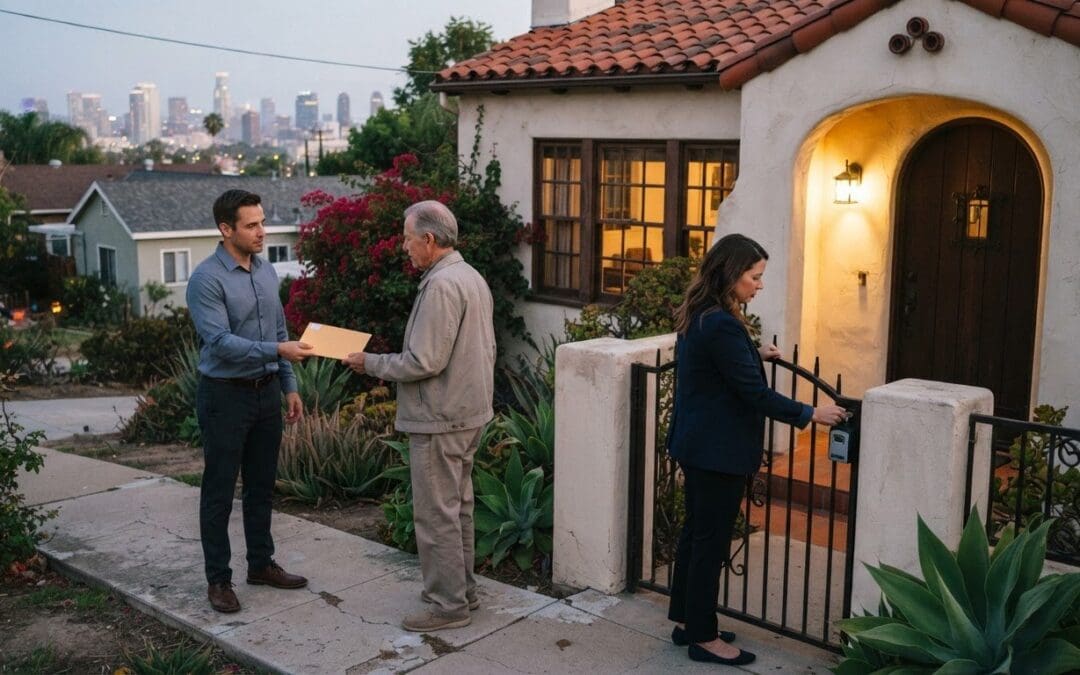
A familiar-looking agent profile can be the most convincing part of a real estate scam. The San Diego real estate scams to avoid in 2026 can involve copied rental listings, people posing as property owners or agents, and urgent requests for money before you’ve confirmed who you’re dealing with. A low price, inconsistent listing details, or pressure to pay quickly are reasons to pause.
It’s reasonable to want a clear way to tell a legitimate transaction from a risky one, especially when a home or rental is at stake. You can reduce the risk by checking the property and the person’s authority, verifying agent contact details through the company’s official website, and confirming payment instructions using a phone number you already trust.
This guide covers warning signs, what to verify before sending money, and how to respond to suspicious requests. You’ll also learn how agent impersonation happens and how careful buyer or seller representation can help keep a transaction on a more reliable path.
Key Takeaways
- Spot warning signs such as copied listing details, unusually low rent, and pressure to act immediately.
- Tour a rental property and confirm who is authorized to rent or sell it before committing funds.
- Protect a transaction by verifying an agent’s contact details and confirming payment instructions through a trusted phone number.
- Learn how impersonators imitate California real estate agents and when representation can help you navigate a property transaction.
1. What is a real estate scam?
A real estate scam uses a false identity, property listing, or payment request to take money or personal information. In San Diego, fake rental listings may copy a real property’s photos and description, then direct applicants to an impostor posing as the landlord or broker. Cyber-enabled fraud accounted for $13.7 billion in losses in 2024, according to the Federal Bureau of Investigation.
Rental scams often involve prices far below those of comparable homes, pressure to pay quickly, or a landlord who won’t arrange a tour. Compare the asking price with similar nearby rentals, then tour the property in person whenever possible. Before applying or paying, confirm that the person is authorized to rent it.
To research a listing, search for the address and compare its price, photos, description, and contact details across websites. Differences may mean that someone copied or altered the listing. Keep the conversation on the original platform while you assess it, ask specific questions, and save messages and agreements. If the property details remain unclear, pause rather than transfer money.
Property tax language can also appear in scam messages. California Proposition 13 generally limits annual increases in a property’s assessed value to no more than 2 percent, subject to specified exceptions, according to the California State Legislature. California’s Homeowners’ Exemption reduces the assessed value of an owner-occupied principal residence by $7,000, according to the California State Board of Equalization. Don’t share sensitive information in response to unsolicited tax-relief messages.
If you already sent money, contact your bank or payment service immediately and ask whether the transfer can be stopped or recalled. Preserve the listing, messages, payment records, and the recipient’s details. San Diego residents can report suspected deepfake scams to the FBI’s Internet Crime Complaint Center (IC3); for other suspected fraud, contact local law enforcement and provide the records. San Diego County warns that impersonators may try to sell a property as if it were their own, so document the person and property involved.
2. Requests for payment before viewing or verifying a property
A request for a deposit before you’ve seen a rental deserves extra scrutiny. Before paying or signing, you or someone you trust should tour the property in person. For a purchase, verify the seller’s authority and the property details before transferring funds. A payment request alone doesn’t prove that the person controls the property.
After a wildfire, unsolicited offers may reach homeowners facing urgent repairs or difficult decisions. Don’t let a deadline in a letter or message rush you into a sale. Ask for the offer terms in writing, identify who is making the offer, and independently verify their authority to act for the buyer. Keep copies of messages and documents, and pause if the sender won’t provide clear details.
Tax-relief messages can also exploit uncertainty. There is no federal IRS Form 1098-SR or federal property tax relief program that freezes or reduces homeowners’ property taxes. The federal government doesn’t determine, cap, or freeze local property tax assessments in California. Treat an unsolicited letter promising a federal freeze as a warning sign, and don’t provide sensitive information in response.
California’s Property Tax Postponement program is administered by the California State Controller. Postponed property taxes must be repaid, and a lien is placed on the property. A message that promises postponed taxes are forgiven doesn’t match those program terms. Seniors receiving such offers can ask a trusted person to review the documents with them before signing or sharing financial details.
Foreclosure rescue and loan modification scammers may promise to stop foreclosure, demand upfront payment, or tell homeowners to stop communicating with their lender. The Mortgage Assistance Relief Services (MARS) Rule bars foreclosure relief companies from charging homeowners until they’ve accepted a written offer from their lender. If you’re facing foreclosure, preserve the letter and payment demands while you assess legitimate next steps, including short sale and foreclosure prevention support.
3. Verifying licenses, ownership, and payment instructions
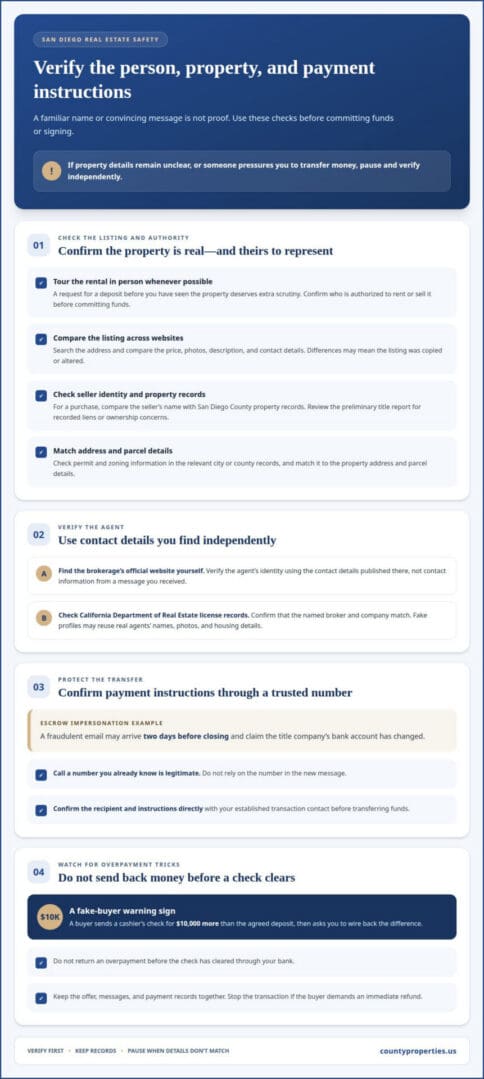
For a San Diego purchase, verify the agent’s identity using contact details from the brokerage’s official website, not a message you received. Check California Department of Real Estate license records, and confirm that the named broker and company match. Fake profiles may reuse legitimate agents’ photos and names, along with real housing details, to appear credible.
Before signing, confirm that the seller is authorized to transfer the property. Compare the seller’s name with ownership information in San Diego County property records, and review the preliminary title report for recorded liens or ownership concerns. Check permit and zoning information in the relevant city or county records, matching the property address and parcel details. These steps can help buyers spot discrepancies before closing.
Escrow impersonators may send a convincing message with revised payment instructions. For example, a fraudulent email might arrive two days before closing and claim that the title company’s bank account has changed. Before transferring funds, call a number you already know is legitimate, not the number in the new message. Confirm the recipient and instructions directly with your established transaction contact.
Fake buyer scams can also target sellers. One example involves a buyer sending a cashier’s check for $10,000 more than the agreed deposit, then asking the owner to wire back the difference. Don’t return an overpayment before the check has cleared through your bank. Keep the offer, messages, and payment records together, and stop the transaction if the buyer demands an immediate refund.
Treat an unexpected property-tax solicitation as unverified. Don’t provide Social Security numbers, banking details, or property documents through its links or reply address. Independently find the relevant government office’s official contact information and ask whether the solicitation is legitimate. If a document appears to show a deed transfer you didn’t authorize, preserve it and promptly contact local law enforcement. San Diego County warns that impersonators may try to sell a property as if they owned it.
4. Impersonation of California real estate agents
Scammers can impersonate California agents by copying a real name, profile photo, or brokerage branding. A consumer may receive a convincing rental or purchase message from an account the real agent doesn’t control. Among San Diego real estate scams to avoid 2026, agent impersonation can be especially deceptive because a familiar face may make an urgent payment request seem legitimate.
Before applying, signing, or sharing personal information, find the agent’s phone number and email on the brokerage’s official website. Contact the agent using those details, not a number or link supplied in a suspicious message. Confirm the property and the agent’s role directly with the brokerage. If an email address differs by even one character, pause and verify it through a separate channel.
Watch for sudden payment changes, pressure to transfer funds, generic answers, or demands to leave a reputable platform. Scammers may also use edited audio or video to impersonate agents or sellers. Deepfake scams increased 40% year-over-year. For San Diego real estate scams to avoid 2026, treat unexpected requests for savings or personal information as a warning, even when a familiar voice appears to make them.
California and San Diego protections work best alongside identity checks. Verify an agent’s contact details through the brokerage’s official site, and confirm the person is authorized to rent, manage, or sell the property before signing or paying. San Diego County warns that impersonators may try to sell a property as if they owned it. A profile or claimed license alone doesn’t establish authority over a specific home.
If an impersonator requests money, stop the conversation, preserve messages and account details, and notify the real brokerage through its official contact channel. Report suspected deepfake scams to the FBI’s Internet Crime Complaint Center (IC3). If you’re preparing to buy, explore buyer representation support as you evaluate the people and terms involved.
County Properties: Senior Real Estate Transition
County Properties helps older adults and their families navigate real estate decisions through its Senior Real Estate Transition service. If you’re considering a move, selling a longtime home, or evaluating a purchase, steady transaction guidance can help you slow down, review the details, and make informed decisions instead of responding to pressure from an unfamiliar person.
Seller Representation supports you through the selling process, while Buyer Representation can guide you when purchasing a home. If financial strain or foreclosure concerns are affecting your options, Short Sale and Foreclosure Prevention may be relevant. These services address real estate decisions and transactions, not legal advice or tax assistance.
When you’re ready to discuss a senior-related move or property transaction, contact County Properties.
Build a Safer Process for Your Next Move
Make your next property decision with a verification routine you control. Before a transaction begins, decide how you’ll confirm important changes, whom you’ll contact through a trusted channel, and which documents you’ll keep together. Pausing before you act can give you time to distinguish a legitimate deadline from pressure designed to rush you.
Use this guide to recognize San Diego real estate scams to avoid in 2026, then carry those habits into each new conversation and decision. If you’re buying, selling, or facing foreclosure concerns, experienced real estate representation can help you navigate the transaction and consider your options. County Properties offers Buyer Representation, Seller Representation, and Short Sale and Foreclosure Prevention.
Contact County Properties today to discuss your real estate needs. Take the next step at your pace, with a thoughtful plan for the move ahead.
Frequently Asked Questions
What is a real estate scam?
A real estate scam is a deceptive attempt to obtain money, property, or sensitive information by misrepresenting a transaction. It may involve a real address and copied photos, or an impostor claiming to represent an owner, agent, or government office. Focus on the specific claim: who is asking you to act, what they want, and whether the request fits the transaction.
What can you do to protect yourself?
Set a verification routine before discussing payment or sharing documents. Keep independently confirmed contact details for the brokerage, escrow, and seller, and use them if a new message changes the instructions. For a high-stakes decision, ask someone you trust to review the request with you. Keep signed documents and original messages together in a transaction folder so you can compare the details.
What real estate scams are common in San Diego in 2026?
Common warning signs include fake rental ads, people posing as property owners or agents, fraudulent closing instructions, and unsolicited tax-relief promises. Some scams collect deposits for a property the advertiser cannot rent; others use a supposed purchase or refund to redirect funds. Assess each request by independently confirming the person’s role, authority over the property, and reason for payment.
How does San Diego home purchase wire fraud work, and how can buyers verify wiring instructions?
Wire fraud often involves a spoofed or compromised email that appears to come from someone involved in closing, then substitutes the scammer’s account details. Don’t rely on an email thread or its phone number to approve a change. Call your established escrow contact using a number you saved independently, and confirm the recipient and instructions before sending funds. If the money has already been transferred, contact your bank promptly.