
Government foreclosure-prevention help is available, and acting quickly can help you understand your choices. Options for seniors facing foreclosure in California include calling HUD-approved housing counselors at 800-569-4287, contacting your mortgage servicer, and exploring county resources. HUD-approved counselors provide free foreclosure-prevention services.
It’s understandable to feel pressure when mortgage payments become difficult, especially on a fixed income or after unexpected expenses. But a rushed decision can create new risks. Foreclosure scams may promise to save your home while demanding fees or urging you to sign documents you don’t understand.
This guide explains how to seek government assistance, when a reverse mortgage may be relevant, and where to find foreclosure-prevention support in Los Angeles County. You’ll also learn how to spot real estate fraud and weigh keeping or selling your home. The right path depends on your loan, finances, and priorities, so begin by gathering notices and contacting your servicer and a housing counselor. Clear information can help you make your next decision with greater confidence.
Key Takeaways
- Review available foreclosure-prevention options promptly, including the California deadline for curing a default before a scheduled sale.
- Consider whether a reverse mortgage fits your financial needs and plans for the home before treating it as a solution.
- Los Angeles County homeowners can explore free foreclosure-prevention support and help with lender communication.
- Recognize pressure tactics and promises of guaranteed rescue as warning signs before signing documents or paying for foreclosure help.
1. Are there government resources available for foreclosure prevention?
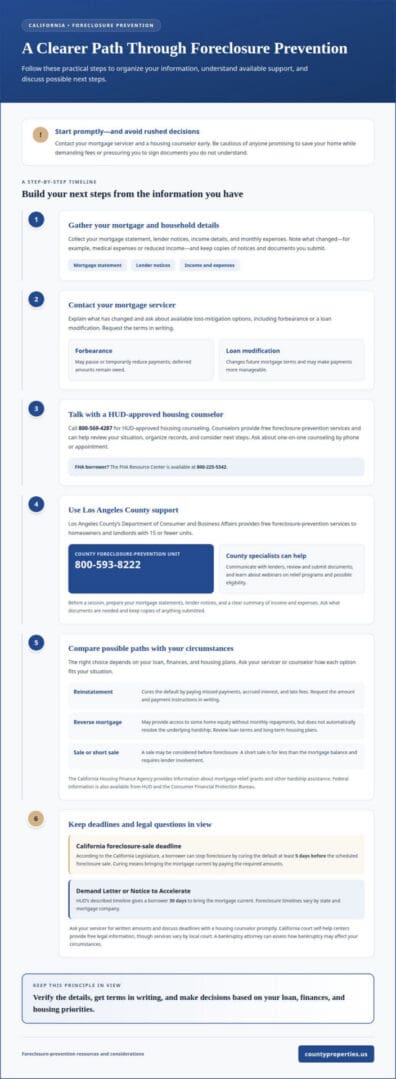
Homeowners having trouble with mortgage payments can call HUD-approved housing counselors at 800-569-4287. These counselors provide free foreclosure-prevention services, including help reviewing your situation and considering next steps. Contact your mortgage servicer promptly, too, and explain what changed, such as medical expenses or reduced income. Early communication gives you a chance to ask about available loss-mitigation options before the process advances.
For HUD-certified housing counseling, use the HUD housing counselor directory to find an approved agency serving your area. Ask about one-on-one counseling by phone or appointment, and have your mortgage statement, lender notices, income details, and monthly expenses ready. A counselor can help organize these records and build a budget that prioritizes housing costs. If you’re an FHA borrower, the FHA Resource Center is available at 800-225-5342.
California homeowners also have a specific deadline to understand: according to California Legislature, a borrower can stop foreclosure by curing the default at least 5 days before the scheduled foreclosure sale. Curing means bringing the mortgage current by paying the required amounts. Ask your servicer for a written breakdown and discuss the deadline with a housing counselor as soon as possible.
Can a California senior sell a home or pursue a short sale before foreclosure? Yes. A sale may be considered before the foreclosure sale. A short sale means selling for less than the mortgage balance and requires lender involvement. A counselor can help you understand how either option fits your housing budget and timeline.
At a foreclosure sale, a property may be sold after the borrower defaults. Ownership and next steps then depend on the sale process. For information about individual rights, California court self-help centers provide free legal information, though services vary by local court. Bankruptcy is a separate legal process that can affect foreclosure decisions. A court self-help center can explain available legal information, while a bankruptcy attorney can assess your debts, income, and case stage.
2. Reverse mortgages
Among the options for seniors facing foreclosure in California, a reverse mortgage may provide access to some home equity without monthly repayments. This may help address a cash-flow gap, but it does not automatically resolve the underlying hardship. Consider how using equity affects your long-term housing plans, and review the loan terms before deciding whether this route suits you.
The California Housing Finance Agency provides information about mortgage relief grants and other hardship assistance available in California. If income changes or unexpected expenses make payments difficult, gather your mortgage statement, servicer notices, and current budget. These records can help you explain your situation and explore available assistance.
Contact your mortgage lender or loan servicer promptly. Explain what has changed, ask about forbearance or a loan modification, and request the terms in writing. Forbearance may pause or temporarily reduce payments, but the deferred amounts remain owed. A modification changes future mortgage terms and may make payments more manageable.
Mortgage reinstatement means curing the default so the existing agreement resumes. It requires paying missed payments, accrued interest, and late fees. Ask your servicer for a written reinstatement amount and payment instructions, then compare that amount with your available funds or a possible repayment plan.
When weighing options for seniors facing foreclosure in California, consider both the loan status and your housing goals. A borrower receiving a Demand Letter or Notice to Accelerate has 30 days to bring the mortgage current, according to HUD’s described timeline. Foreclosure timelines vary by state and mortgage company. If selling becomes part of your plan, consider how that choice fits your next housing needs.
3. County-specific foreclosure prevention resources
Los Angeles County offers a local starting point for homeowners seeking foreclosure prevention. According to the Los Angeles County Department of Consumer and Business Affairs, it provides free foreclosure-prevention services to homeowners and landlords with 15 or fewer units. Los Angeles County residents can call its foreclosure-prevention unit at 800-593-8222, according to the Department. Specialists can help homeowners communicate with lenders and review and submit documents. The department also offers webinars covering relief programs and possible eligibility.
Before calling, gather your mortgage statements, lender notices, and a clear summary of your income and expenses. This preparation can help keep a phone or in-person counseling session focused on your immediate concerns. Ask which documents the counselor needs, what information to send the lender, and whether a relief program may fit your circumstances. Keep copies of submitted notices and documents so you can track responses and next steps.
Federal resources can complement county support. HUD provides foreclosure-prevention information and advises borrowers struggling with mortgage payments to contact their lender and a HUD-approved housing counseling agency. The Consumer Financial Protection Bureau also offers information for people concerned about missed mortgage payments. These resources can help you prepare questions before discussing repayment options with your servicer.
If property-tax bills are adding pressure, include them in your household budget discussion with a counselor. The California Housing Finance Agency provides information about mortgage relief grants and other hardship assistance available in California. Its information concerns mortgage relief; county counseling can help you organize the financial details affecting your housing costs. Ask the counselor how those costs fit alongside your mortgage and what assistance to explore.
4. Avoiding foreclosure scams and real estate fraud
Financial trouble can make a promise to stop foreclosure sound compelling, especially when your income cannot cover mortgage expenses. Treat guaranteed-result claims or pressure to act immediately as reasons to pause. HUD warns that for-profit foreclosure-prevention companies may charge fees equal to two or three months’ mortgage payments. A large fee does not prove that a company can change your loan or prevent a sale. Contact your servicer directly before paying anyone who claims to negotiate for you.
Protect your property and personal information in every real estate conversation. Don’t sign a deed, transfer ownership, or leave documents blank because someone says it’s temporary. Read every document and make sure you understand whether it changes ownership, adds debt, or authorizes someone to act for you. Keep copies of notices, contracts, and payment records. If a caller demands immediate payment through an unfamiliar method, stop and contact your mortgage servicer using a trusted statement or account record.
The Los Angeles County Department of Consumer and Business Affairs advises homeowners to consider both home-retention and liquidation options while taking precautions against scams and real estate fraud. Retention aims to keep the home; liquidation means considering a sale. Ask the county’s foreclosure-prevention unit about its services and how to submit documents. Keep a written record of calls, names, dates, and promised follow-up. These details can help you spot conflicting claims and communicate clearly with your lender.
Before sharing financial details, ask who the person represents and what specific action they will take. Compare any proposed solution with information from your servicer or a HUD-approved counselor. Don’t let an offer to buy your home rush you into signing; review the terms and how the sale would affect your housing plans. If you’re weighing a sale to address foreclosure, discuss your property-sale options with a real estate professional before committing to documents or transferring ownership.
County Properties: Short Sale and Foreclosure Prevention
County Properties helps homeowners consider real estate options when mortgage trouble makes keeping a home difficult. Its Short Sale and Foreclosure Prevention service can help you explore a sale-related path, including whether a short sale suits your circumstances. A short sale involves lender approval when a home sells for less than the mortgage balance.
If moving is part of your plans, Senior Real Estate Transition offers guidance through the property decision and sale process. Seller Representation supports homeowners who decide to sell, while Buyer Representation can help if you’re looking for another home. These services focus on real estate decisions, not lending or legal advice.
Choose a next step that fits your plans
Choosing among the options for seniors facing foreclosure in California starts with deciding what matters most: keeping your home, preparing to move, or selling. Write down your priorities and any timing concerns before making a property decision. This can help you have a focused conversation and weigh how each real estate path may affect your next chapter.
If you’re considering a sale, County Properties offers Short Sale and Foreclosure Prevention and Seller Representation. If you plan to move and buy another home, Buyer Representation can support that transaction. These services address real estate decisions; mortgage and legal questions belong with the appropriate housing counselor, servicer, or legal professional.
You don’t have to settle every decision at once. Begin with the choice in front of you, and seek guidance that respects your goals and circumstances. Contact County Properties for help discussing your real estate options and the path you want to take.
Frequently Asked Questions
Are there government resources available for foreclosure prevention?
Yes. HUD-approved housing counselors offer free foreclosure-prevention counseling, and HUD’s counselor directory helps you locate an approved agency. For a phone appointment, call 800-569-4287. If you have an FHA-insured mortgage, the FHA Resource Center can address FHA loan questions at 800-225-5342. A useful first step is to prepare your mortgage account details and notices, then ask the counselor which documents to discuss with your servicer.
What options can California seniors use to stop or avoid foreclosure?
Options include asking your servicer about a repayment plan, forbearance, or loan modification, and considering whether selling the home fits your needs. A reverse mortgage may provide access to home equity without monthly repayments. California borrowers may also cure a default before a scheduled sale. A housing counselor can help you organize these choices around your income, expenses, loan status, and preference to remain in the home.
How can seniors apply for a California mortgage forbearance or loan modification?
Contact your loan servicer, explain your financial hardship, and ask about its application process and required documents. Be ready to describe changes in income or expenses and provide the records requested. Forbearance temporarily pauses or reduces payments, but deferred amounts remain owed. A loan modification changes future mortgage terms. Review any proposed terms carefully and ask how payments and past-due balances would be handled.
How does a reverse mortgage help seniors facing foreclosure, and what are its costs and risks?
A reverse mortgage lets a senior convert some home equity into cash without monthly repayments, which may help with a short-term cash-flow problem. It also uses equity that could otherwise support future housing needs or a later sale. Before proceeding, review the written terms, including fees, interest, repayment conditions, and effects on available equity. Compare those obligations with your budget and plans for the property.
Where can California seniors get free foreclosure counseling or legal aid?
HUD-approved housing counseling agencies provide free foreclosure-prevention counseling; call 800-569-4287 to find help. In Los Angeles County, the Department of Consumer and Business Affairs offers foreclosure-prevention services and can be reached at 800-593-8222. For legal information, California court self-help centers offer free assistance, though services differ by court. Contact the local court center to learn what information it provides for your situation.
How can seniors report and avoid foreclosure rescue scams in California?
Keep copies of messages, contracts, payment records, and the names of people who contacted you. The Los Angeles County Department of Consumer and Business Affairs provides foreclosure-prevention information and urges homeowners to guard against scams and real estate fraud. Contact the department for local guidance about your concern. Avoid signing documents under pressure, transferring ownership based on verbal assurances, or paying anyone who guarantees a foreclosure outcome.