
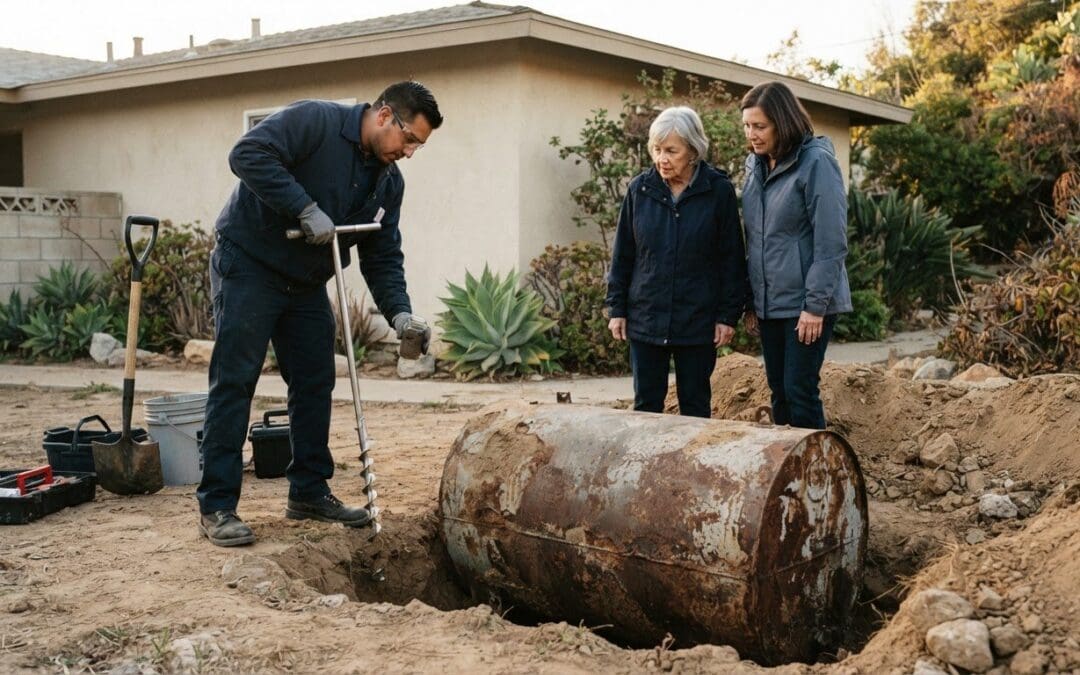
A buried oil tank doesn’t automatically put a California home off the market. You can usually sell with the tank still in place, whether it has been decommissioned or not, but clear disclosure and applicable local requirements matter. Selling a home with an underground oil tank in California starts with understanding the tank’s condition, especially whether there are signs of a leak.
It’s understandable to worry that a hidden tank could lead to unexpected cleanup, negotiations, or delays. The first step is to understand what warning signs can indicate and how testing can help determine whether contamination may be present.
This article explains clues that may point to a leak, how tank removal compares with filling and abandoning a tank in place, and which records can help you prepare for a sale. Addressing the issue before listing gives you more time to make informed decisions and explain the property clearly to prospective buyers.
Key Takeaways
- Learn which signs may point to an underground tank leak and how soil testing can help clarify the risk.
- Understand how removal and in-place abandonment differ, and what factors can shape buyer negotiations.
- Prepare for a smoother sale by addressing tank questions early and organizing relevant records before listing.
- See how seller representation can help you plan the transaction and communicate clearly with prospective buyers.
Oil tank decommissioning: Remove the tank or have it filled?
A California home can usually be sold with a buried tank, whether decommissioned or not, but clear disclosure and local requirements matter. The tank’s condition, inspection findings, and documentation can affect the sale price, escrow discussions, and buyer negotiations.
Leaving the Tank in Place
Leaving a tank in place means it remains underground, either active or decommissioned, instead of being excavated. This can avoid removal before listing, but buyers may consider the tank’s condition and possible contamination when deciding what to offer. A buyer concerned about future work could negotiate a price adjustment or ask you to address a specific issue before closing. Inspection findings and offer terms give both sides a basis for discussion.
Inspections and Decommissioning Records
A buyer’s inspection can document visible tank features and identify concerns that may need further investigation. If you have decommissioning records, they can explain what work was done and give buyers a clearer history of the property. Keep reports, receipts, and other records together and make them available during sale discussions. Buyers can then consider the documented work alongside inspection findings, rather than relying on assumptions about a buried tank.
Insurance and Financing Concerns
Insurance and mortgage financing can become part of negotiations when buyers seek clarity about a tank’s status. Buyers can discuss tank-related questions with their insurer and lender while reviewing inspection results and decommissioning records. If the lender requests additional documentation, the parties can discuss how to handle that within the transaction. For example, they might negotiate a price adjustment or agree on a defined task before closing. Clear terms help keep tank concerns separate from other offer conditions.
How Do I Know if The Underground Oil Tank Is Leaking?
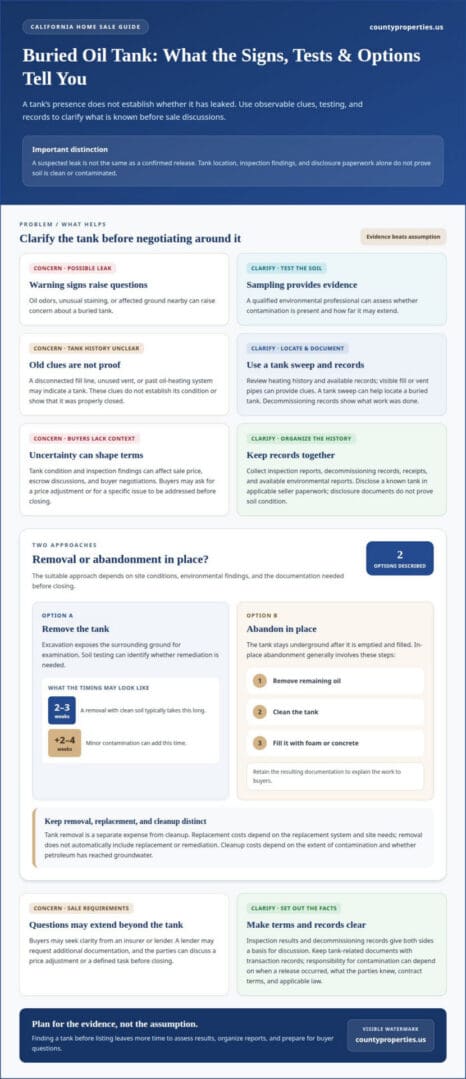
A buried tank’s location alone can’t show whether it has leaked. Oil odors, unusual staining, or affected ground nearby can raise concerns, but soil sampling provides evidence to assess possible contamination.
California sellers can document a known tank in applicable seller disclosure paperwork and provide available environmental reports. Tank records and inspection findings help buyers understand what is known, but disclosure documents don’t prove that soil is clean or contaminated.
Responsibility for contamination after a sale can depend on when the release occurred, what the parties knew, contract terms, and applicable law. A property transfer alone doesn’t establish who must pay for cleanup, so keep tank-related documents with the transaction records.
A suspected leak and a confirmed release are not the same. Whether you must report a release to a California or local environmental agency depends on the circumstances and applicable requirements. Don’t assume rules from other states apply in California.
Testing is a practical next step. A qualified environmental professional can use the results to assess whether contamination is present and how far it may extend.
Cleanup costs depend on the extent of contamination and whether petroleum has reached groundwater. These are market estimates, not a quote for a specific property.
Tank removal is a separate expense from cleanup. Replacement costs depend on the replacement system and site needs, so don’t assume removal includes replacement or remediation. A real estate agent can help organize the inspection timeline and documentation for buyer discussions.
Tank removal, in-place abandonment, and remediation
Removing a buried tank exposes the surrounding ground for inspection. In-place abandonment leaves the tank underground after it is emptied and filled. The right approach depends on site conditions, environmental findings, and the documentation needed before closing.
Checking for Buried Tanks
Look for evidence of an active or abandoned heating system before moving ahead with sale preparations. Start with the property’s heating history and available records, then note visible features such as a fill or vent pipe near the house. A past switch from oil heat can explain why a tank remains, even if the current system uses another fuel.
A tank sweep can help locate buried oil tanks when records and visible clues leave questions. Arrange it early enough to allow time to assess the results and decide whether to remove or abandon the tank in place. Finding a tank before listing gives you more time to organize reports and prepare for buyer questions before escrow.
Identifying an Abandoned Tank
An abandoned tank is no longer used for heating, but its underground presence may still affect a real estate transaction. Look for a disconnected fill line, an unused vent, or records showing the home once relied on oil heat. These clues may indicate a tank, but they don’t establish its condition or prove it was properly closed.
For example, an old heating system with no current oil service may prompt a tank search. A tank sweep can help locate it, while decommissioning records can show whether work was done. Keep the distinction clear: evidence that a tank was abandoned does not prove the surrounding soil is free of contamination.
In-Place Abandonment Process and Costs
In-place abandonment generally involves removing remaining oil, cleaning the tank, and filling it with foam or concrete. Retain the resulting documentation so you can explain the work to buyers and support clear discussions during closing.
Removing a tank allows the excavation area to be examined, and soil testing can identify whether remediation is needed. A removal with clean soil typically takes two to three weeks; minor contamination can add two to four weeks. Early assessment helps you plan the listing and closing schedule.
Preparing to sell a home with a buried tank
Start before listing, rather than waiting for a buyer’s inspection to raise tank concerns. Order a tank sweep to locate a buried tank, then use the findings to plan removal, in-place abandonment, or further environmental assessment. This gives you time to assemble records and decide how to explain the issue. For owners selling a home with an underground oil tank in California, early preparation can make the property’s history easier to discuss.
Timing matters. Sellers may wait two to four weeks to schedule an oil tank removal contractor during spring and summer. If removal or remediation may be needed, allow for that scheduling window before setting a target listing date. A late discovery during escrow can leave less time to review findings, discuss options, and agree on next steps.
Create one organized tank file before showings begin. Include location or inspection reports, soil test results, receipts, decommissioning records, and remediation documents. If the tank was decommissioned, include records describing the work instead of relying on a verbal summary. This gives buyers a useful starting point and helps keep tank questions separate from unrelated property concerns.
Use the findings to plan the transaction. If a sweep identifies a tank but testing shows no contamination, share the reports and explain whether you plan to remove it or leave it in place. If testing identifies contamination, keep the assessment and cleanup records together, then discuss how the issue affects offer terms and timing. Don’t present an untested tank as clean or suggest that decommissioning alone resolves possible environmental liability. An attorney can advise on legal questions about liability or contract language.
Choose a specific action before marketing: gather records, schedule the sweep, or arrange assessment. Then give your real estate representative the file and your preferred approach to buyer questions. Plan your home sale with County Properties when you’re ready to align the tank issue with your listing strategy.
County Properties
County Properties can guide you through the real estate decisions involved in selling a home with a buried tank. With Seller Representation, you can work through listing strategy, buyer questions, offer terms, and timing while keeping tank reports and records organized for the transaction. The team guides the sale; tank inspections and environmental remediation are separate services.
If a move is part of a larger life change, County Properties’ Senior Real Estate Transition service can support the real estate side of that process. If you’re weighing a sale alongside financial difficulty, the team also provides Short Sale and Foreclosure Prevention guidance. The right next step depends on your property plans and transaction details.
Contact County Properties to discuss your home sale and the questions you’re weighing.
Move Forward With a Clear Sale Plan
Make the tank part of your transaction plan rather than an unexpected issue late in escrow. Decide what information you’ll share with buyers, how you’ll handle new questions, and who will coordinate decisions about the property sale as the process moves forward. A consistent approach can keep conversations focused on the home and the terms of the sale.
Selling a home with an underground oil tank in California can involve choices that affect your timing and negotiating position. You don’t have to make every decision at once. A thoughtful plan helps you address each issue in sequence and move toward your next home or life transition with greater clarity.
For support with the real estate side of your plans, contact County Properties for guidance. Take the next step when you’re ready, and move forward with a plan that reflects your priorities.
Frequently Asked Questions
Can you sell a house with a buried oil tank?
Yes, a California home can usually be sold with a buried oil tank, whether it’s decommissioned or not. The tank’s status, inspection findings, and local requirements can affect buyer discussions and offer terms. One buyer may accept the tank with records, while another may negotiate a price reduction or request further assessment. Explain what you know and keep relevant property records available.
Do you legally have to remove a buried oil tank before selling?
The information here does not establish a general rule requiring removal before every California home sale. A home can usually be sold with a tank still underground, but state and local requirements may affect what is acceptable for that property. Removal and in-place abandonment are different options, and buyers may have preferences. Check applicable requirements for the property before deciding how to handle the tank.
Can a buried oil tank block the buyer’s mortgage?
A buried tank doesn’t automatically prevent a buyer from obtaining a mortgage, but it can come up during underwriting. A lender may review inspection findings, evidence of contamination, or tank records when assessing the property. A request for additional documentation, for example, could affect the transaction schedule. Discuss tank-related questions early so the buyer can address them during the financing process.
Do I have to disclose a tank that was already removed?
Removing a tank doesn’t erase its history at the property. Include known information about the former tank in applicable seller disclosure paperwork, and retain removal records, soil results, and any remediation documents. A record showing where excavation occurred, for example, can help answer a buyer’s questions about that part of the lot. Disclose known facts accurately, rather than treating removal alone as proof that no contamination occurred.
How deep are oil tanks usually buried?
Underground oil tanks are usually buried about 1 to 3 feet below ground. That depth can make a tank difficult to identify during a casual walk around the property, particularly if landscaping or later construction covers its location. A visible fill or vent pipe may offer a clue, but it doesn’t establish the tank’s exact position. A tank sweep can help locate buried equipment before listing.
How much does a leaking tank cost to cure?
The extent of contamination and whether petroleum has reached groundwater shape the work required. These ranges describe cleanup, not tank removal or soil testing, which are separate project costs.