

A failed loan doesn’t always mean starting the sale over. If you’re wondering what happens if a buyer’s financing falls through at the last minute, the deal may be delayed or end. You can consider extending the closing, turning to a backup offer, or relisting. Whether the buyer can recover earnest money depends on the financing contingency and the circumstances of the withdrawal.
It’s unsettling when a sale is close to closing and the buyer’s financing becomes uncertain. The loan type and underwriting stage can affect the next steps, while the purchase agreement sets out each party’s options. Here’s how conventional, FHA, and VA financing may factor into a failed sale, what sellers can consider, and how a backup offer might help keep a transaction moving.
Key Takeaways
- Loan type and underwriting progress can shape how a financing setback affects the sale and whether a short extension could help.
- Review the financing contingency and the circumstances of the buyer’s withdrawal to understand what may happen to the earnest money.
- A backup offer may give you a path forward without immediately relisting, but its terms still matter.
- Appraisal gaps, underwriting issues, and changes to a buyer’s finances can threaten closing; some deals may be preserved through negotiation.
Conventional, FHA, and VA loan considerations
If financing falters before closing, the buyer should contact the lender right away, identify the obstacle, and ask what might restore approval. They should also notify their real estate agent, review the financing contingency deadline, and discuss possible next steps with the seller.
Approval Timelines and Last-Minute Denials
Loan approval is a process that can remain unresolved until final underwriting, sometimes shortly before closing. That timing matters because pre-approval isn’t a guarantee of funding. Lender decisions may occur from Day 1 to roughly Day 21, while a financing contingency timeframe is typically 25 to 30 days. A lender may review credit and employment again near closing, so a job change, new debt, or credit shift can trigger denial.
Appraisal, Underwriting, and Rate Lock Failures
Appraisal, underwriting, and rate-lock problems can change the loan amount or terms available to the buyer. A low appraisal may mean the lender won’t fund the full agreed price, leaving the parties to address the gap. Underwriting may stall over unexplained deposits or undocumented gift funds. A rate-lock problem can affect financing terms, so the buyer should ask the lender what options remain before closing.
Loan type can affect the path to approval. Conventional buyers may face different requirements from FHA and VA buyers, whose loans have specific appraisal and underwriting requirements. That distinction matters if the property’s appraised value or the loan file raises concerns late in the process. An FHA or VA appraisal issue, for example, may need to be resolved before the lender can proceed. A conventional loan still depends on the buyer meeting underwriting requirements.
After a denial notice, the buyer should ask the lender for the specific reason, whether missing documents or a correctable issue caused it, and what time remains. They can then promptly update their agent and discuss whether an extension, revised financing terms, or another solution is practical. Sellers can weigh the buyer’s progress and the contract terms before deciding how to respond.
What can a seller do if a buyer’s financing falls through?
Start with the purchase agreement: its financing contingency and deadlines guide the parties’ next steps. Then determine whether the buyer’s loan problem is temporary or prevents closing.
Earnest Money Deposits
Earnest money is the buyer’s deposit showing commitment to the purchase. If financing fails, what happens to the deposit depends on the agreement and why the buyer withdraws. A larger deposit alone doesn’t prove the buyer can complete the purchase or guarantee stronger finances.
Assess the buyer’s readiness by looking at financing progress, not deposit size alone. Pre-approval is an early assessment; later underwriting milestones can show that the lender has reviewed more of the file. If the loan is delayed, ask for a clear update on the obstacle and whether the lender sees a path forward. This can help you weigh an extension against returning the home to the market.
Financing Contingency Protections
A financing contingency sets out conditions under which a buyer may cancel if they can’t secure a mortgage within the agreed timeframe. If the buyer meets the contingency’s requirements, they may recover earnest money. If they withdraw without a valid reason under the agreement, the seller may be entitled to keep it.
Review the contract’s deadlines and notice requirements before treating the deposit as yours. If the buyer and seller disagree about releasing it, both may need to sign a release or use mediation. Keep communications and transaction documents organized, and don’t promise the deposit to either party before the dispute is resolved.
If financing fails, consider the practical choices together: allow more time when the buyer has a credible financing path, or prepare to relist if the sale cannot proceed. Reassess whether price, inspection concerns, or transaction timing contributed to the failed deal. Share relevant facts with future buyers, and review new offers for financing progress rather than relying only on pre-approval. For guidance managing the sale and evaluating next steps, support with seller representation can help you move forward with a clear plan.
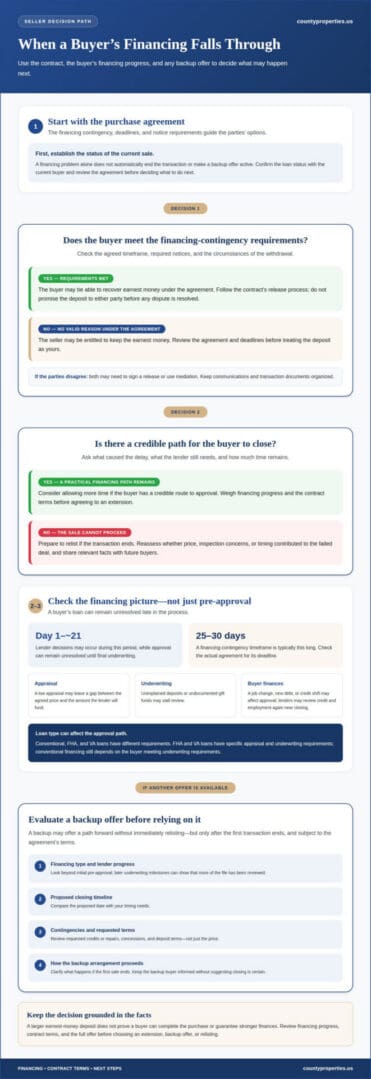
Backup offers after a buyer’s financing fails
A backup offer gives the seller another interested buyer to consider if the current sale ends. If a second offer is available, the seller may weigh accepting it rather than relisting immediately. This can reduce the time spent looking for another buyer, but the backup offer’s terms and financing progress still need careful review.
First, establish whether the existing transaction has actually ended. A financing problem alone doesn’t automatically make another offer active. Review the purchase agreement and communicate with the current buyer about the loan status and possible path to closing. Meanwhile, keep the backup buyer informed without suggesting that closing is certain.
Compare the backup offer’s practical terms, not just its price. Consider its financing contingency, proposed closing timeline, requested credits or repairs, and the buyer’s progress beyond pre-approval. A buyer who has passed key underwriting milestones may offer a clearer financing picture than someone with only an initial pre-approval. Neither factor replaces careful review of the full offer.
- Confirm the backup buyer’s financing type and lender progress.
- Compare the proposed closing date with your timing needs.
- Review contingencies, requested concessions, and deposit terms.
- Clarify how the backup arrangement proceeds if the first sale ends.
These details help you understand what you’re agreeing to before relying on the backup offer. If the first buyer’s lender needs more time, for example, you might consider an extension while keeping the alternative offer in view. If the first sale terminates, the backup may be a next option, subject to the agreement’s terms.
Ask your real estate representative to coordinate updates and organize the offer documents. Clear communication helps prevent confusion about whether the first sale remains active or the backup is moving forward. If no backup offer suits your needs, relisting is another option. The right choice depends on the current contract, the backup’s terms, and the financing information available for each buyer.
What happens if buyer financing fails?
A low appraisal can leave the lender unwilling to fund the full agreed purchase price. The buyer and seller then need to address the difference before closing can proceed. They might renegotiate the price, discuss credits or repairs, adjust financing terms, or extend closing. For example, a seller might agree to a lower price while the buyer revisits the loan amount with the lender. Understanding what happens if a buyer’s financing falls through at the last minute can help sellers assess these options calmly. Any revised agreement should be documented through the proper contract process.
Underwriting problems can also prevent funding, even after earlier progress. Before releasing funds, the lender reviews the buyer’s financial file and property details. Large unexplained deposits or undocumented gift funds can raise questions about the source of closing money. A pending ownership dispute, lien, or paperwork error can also interrupt the transaction. The next step is to identify the unresolved issue and determine whether the buyer can address it before the contractual closing date.
A rate-lock problem can affect the financing terms the buyer expected. If the lock expires before closing, the lender may need to reassess available terms, which could change the buyer’s payment or qualification. The buyer should get a clear update from the lender about revised terms and timing. The seller can then weigh whether an extension gives the buyer a workable path to closing or whether another plan is needed.
These problems don’t always end a sale. Depending on the obstacle and contract, the parties can consider a revised price, seller credits, repairs, an extension, or different financing terms. An extension is useful only if the buyer has a defined path forward. If the lender can’t resolve the issue, the seller can proceed under the contract and consider another offer or relisting. To understand what happens if a buyer’s financing falls through at the last minute, assess the buyer’s options alongside your own timeline and priorities.
County Properties: Buyer Representation
County Properties helps buyers and sellers assess their real estate options when financing disrupts a transaction. Seller Representation can help you consider whether to extend closing, move forward with a backup offer, or relist. If your loan has fallen through as a buyer, Buyer Representation can help you reassess your purchase plans and consider how to proceed.
For sellers facing a major change in housing or personal circumstances, Senior Real Estate Transition offers guidance during the move. The right next step depends on your role in the sale and the options available under your agreement. County Properties can help you work through these real estate decisions with a clear, supportive approach.
Contact County Properties to discuss your situation and next steps.
Choose a Clear Path Forward
A disrupted sale can change your plans, but it can also prompt a fresh look at what you need from your next real estate move. If you’re still weighing what happens if a buyer’s financing falls through at the last minute, focus on the decision ahead: continue the sale, pursue another offer, or adjust your plans as a buyer. A steady, informed approach can help you move forward with greater clarity.
County Properties offers Seller Representation and Buyer Representation to support clients through their transactions. For homeowners facing financial hardship, Short Sale and Foreclosure Prevention may also be relevant. Each situation calls for attention to your goals and the real estate options available to you.
Take the next step with a conversation about your circumstances and priorities. Contact County Properties for guidance as you consider your path forward. You can approach your next decision with care and move toward the outcome that best fits your needs.
Frequently Asked Questions
When does this typically happen?
Financing problems can emerge during underwriting or shortly before closing, when the lender reviews the buyer’s file again. A lender decision may arrive from Day 1 to roughly Day 21, but final underwriting can happen later. For example, a buyer who seemed on track may learn near closing that a job or credit change affects loan approval.
Can the Deal Be Saved?
Yes, the parties may be able to preserve a sale if the financing issue has a workable solution. If the lender needs more time to review a document, for example, the buyer can provide it and the seller can consider an extension. If the appraisal creates a funding gap, the parties may revisit the price or other terms. The buyer’s financing status and the contract deadlines shape the available options.
What Happens If a Real Estate Deal Falls Through at the Last Minute?
If the buyer can’t close, the sale may end, leaving the seller to consider another offer or relist. The buyer and seller must address their contract obligations, including any financing contingency and earnest money. A late cancellation can also affect moving arrangements, scheduled services, or the seller’s planned purchase. Clarifying the transaction status promptly helps each party make practical plans without treating an uncertain closing as complete.
What Is the Best Path Forward for Home Sellers in These Situations?
Base your next move on the buyer’s actual progress with the lender, the agreement, and any alternative offers. A buyer with a specific underwriting issue and a clear resolution path, for instance, is in a different position from one whose loan has been denied. Keep future buyers informed about material transaction changes, and consider whether the offer terms or unresolved property concerns contributed to the setback.
Why might a buyer lose their financing?
A lender can change its decision if the buyer’s financial circumstances or loan file changes. Losing a job, moving to lower-paid work, taking on new debt, or making late payments can affect qualification. Large unexplained deposits may also prompt underwriting questions. A low appraisal can reduce the amount the lender is willing to fund, creating a gap between the loan and the agreed price.
What happens to a home purchase contract if the buyer’s mortgage financing falls through before closing?
The contract doesn’t dictate a single outcome; its terms and the buyer’s actions matter. A financing contingency may allow the buyer to cancel and recover earnest money if they can’t secure a mortgage within the specified period. Without a valid contractual basis for withdrawing, the seller may be entitled to the deposit. If the parties dispute its release, they may need to sign a release or use mediation.