
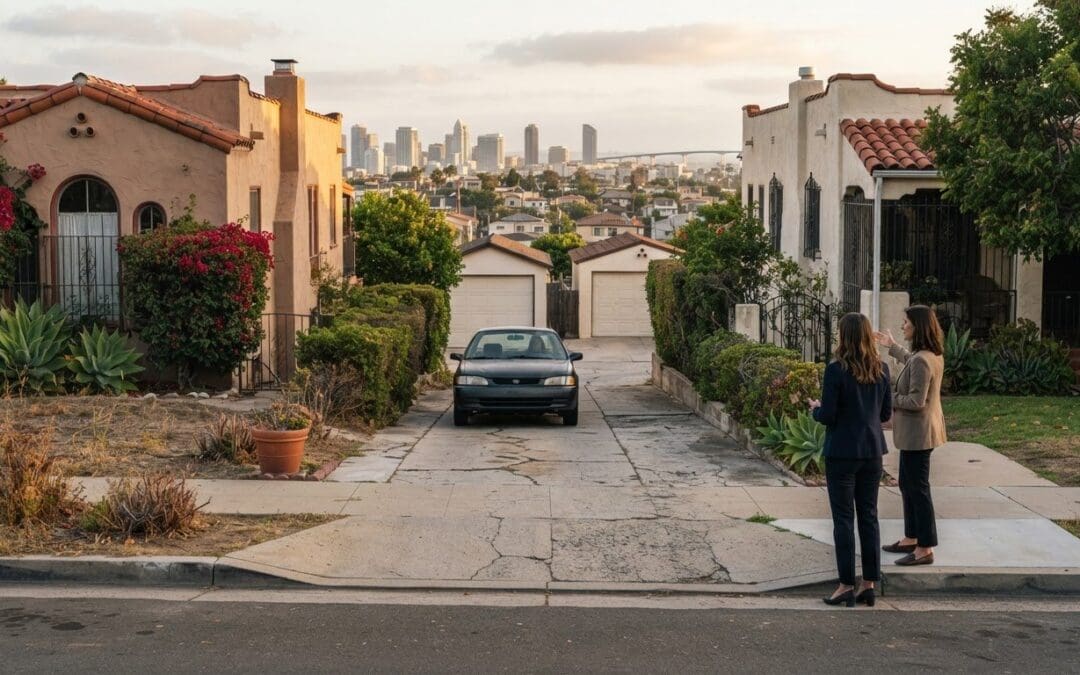
A shared driveway can affect your home’s sale price, but it doesn’t automatically make the property harder to sell. Homes with shared driveways are estimated to sell 3% to 10% below comparable homes with private driveways, although local market conditions and the terms of the arrangement matter. Knowing how to sell a house with a shared driveway means presenting clear access rights and responsibilities so buyers can understand what they’re purchasing.
It’s reasonable to worry that shared access could raise questions about privacy, parking, or future maintenance. Clear easement documents and a written maintenance agreement help buyers assess those concerns, while comparable sales provide a better basis for pricing than an automatic discount. This article explains how ownership and easement terms affect a sale, which agreement details matter, and how to present the property and its shared driveway to buyers.
Key Takeaways
- A written easement can set out who may use the driveway and how maintenance and repair responsibilities are shared.
- Easement and seller-disclosure rules differ by state, so local requirements can shape the documents buyers receive.
- A shared driveway doesn’t automatically reduce a home’s appeal; neighborhood norms and clear access rights influence how buyers view it.
- Use nearby comparable properties and the driveway’s specific terms to develop a pricing strategy that reflects the home’s market.
1. Are shared driveway agreements legally important?
A shared driveway may be jointly owned, owned by one homeowner with an easement for others, or governed by a written agreement. An easement grants a defined right to use land for access without transferring ownership. It is often created through an agreement between the affected property owners. Use a land survey and property records to describe the driveway’s location, then identify which parcels have access rights.
Put the terms in writing before listing the home. The agreement should identify the driveway route, permitted uses, access rights, restrictions, and how disputes will be handled. Record it with the county office responsible for property records. A recorded agreement gives buyers, agents, and lenders a document to review. Without one, some lenders may not approve a buyer’s loan for a home with shared access.
A separate maintenance agreement can explain how owners will manage routine work, repairs, and improvements. Spell out how work is approved and expenses are divided, so each homeowner understands their responsibilities. Include practical details such as:
- How maintenance and repair costs are allocated between owners.
- Who handles snow and ice removal, and when it must be done.
- How owners approve paving, drainage work, or other improvements.
- What happens if an owner doesn’t pay an agreed share.
The written agreement can clarify how costs are allocated and future repairs approved. These details reduce uncertainty about expenses, parking, and repair timing. Clear documents also help buyers understand the arrangement before making an offer, rather than discovering unclear responsibilities during the transaction.
2. Who Benefits from a Shared Driveway Easement?
A shared driveway may be jointly owned, or one owner may grant a neighbor an easement. An appurtenant easement benefits a specific property and generally transfers with it when sold. The legal rights depend on ownership records and easement terms, which may define access, use restrictions, and repair responsibilities. In the United States, state common law and statutes govern easements, so the applicable rules vary by state.
Disclosure requirements also vary. Seller disclosure requirements for shared-driveway easements can vary by location. Florida sellers must disclose known encumbrances, including relevant easements. Seller disclosure requirements can vary by location, so buyers should review the applicable disclosures for the property. Your real estate agent can explain the recorded arrangement and make relevant documents available to buyers.
In the listing, state that driveway access is shared, identify the easement or ownership arrangement, and summarize documented maintenance responsibilities. Mention material access restrictions or unresolved disputes so buyers understand the practical terms. Local zoning, permitting, and access rules depend on location. Creating a separate curb cut may require a survey, zoning review, neighbor negotiations, and municipal approvals.
Dividing the driveway or buying out easement rights isn’t a quick fix. Before closing, sellers can document a dispute, negotiate written terms with the neighbor, and have an attorney review proposed changes. A maintenance agreement can clarify repair duties and reduce uncertainty for both properties.
Clear, complete listing details help buyers assess the arrangement. If you want support presenting the home’s access terms and sale details, seller representation can guide the transaction.
3. Do shared driveways lower property value?
A shared driveway doesn’t automatically reduce a home’s value. Its effect depends on neighborhood expectations, documented access, usable parking, and buyer concerns. Sharing may be less of a drawback where nearby properties commonly have shared driveways and both homes have legal access. Buyers may be more cautious when ownership or access rights are unclear.
Some lenders may not approve a buyer’s loan if a shared driveway lacks a recorded legal document. A lender may ask for evidence of access during financing review. A title insurer’s requirements depend on its review of the property’s title. A current title report can identify recorded easements, while a property survey can show the driveway’s location in relation to each parcel.
Before listing, gather the title report, survey, easement, and maintenance records. Compare these documents with actual driveway use, including parking and responsibility for repairs. If the survey and recorded documents appear inconsistent, address the discrepancy before closing. A real estate attorney can review questions about ownership or easement terms and help clarify the documents.
Disputes can affect marketability because buyers may worry about blocked access, parking conflicts, or unresolved repair costs. A written record of the issue and any agreed resolution helps buyers assess the situation. For pricing, ask a real estate agent to compare nearby sales with similar access arrangements, rather than relying only on homes with private driveways. If shared access is typical on a street, comparable properties with shared driveways may offer more useful valuation evidence than homes with separate entrances.
4. Shared-driveway effects on sale price
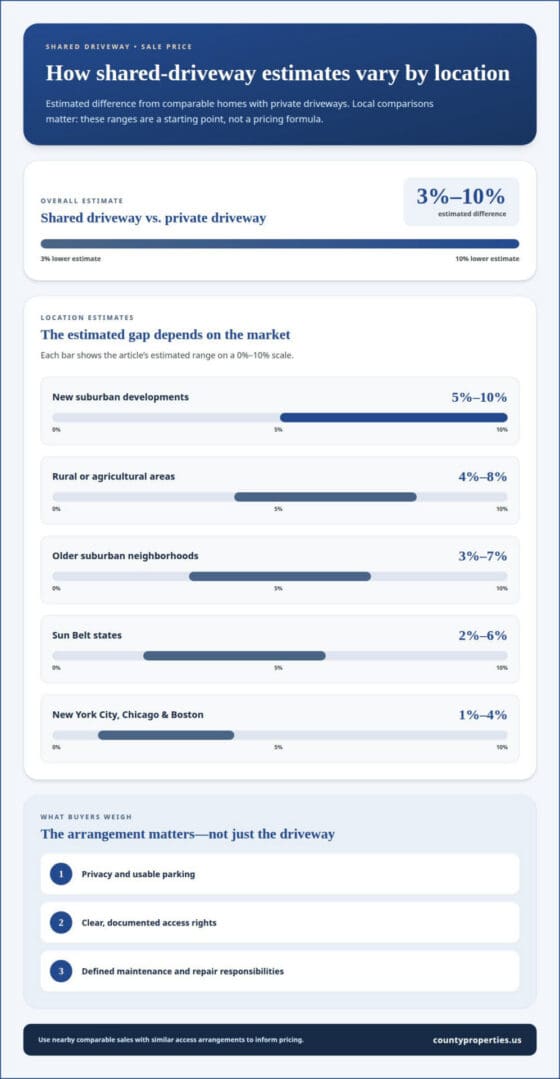
A shared driveway can influence offers, but the arrangement alone doesn’t set a fixed discount. Estimates place shared-driveway homes 3% to 10% below comparable homes with private driveways. That range is a starting point, not a pricing formula. Buyers weigh the practical value of shared access against privacy, parking, and clearly defined responsibilities.
Location changes the comparison. In dense cities such as New York City, Chicago, and Boston, estimates put the difference at 1% to 4%. Older suburban neighborhoods show estimates of 3% to 7%, while new suburban developments show 5% to 10%. Rural or agricultural areas show 4% to 8%, and Sun Belt states show 2% to 6%. These ranges underline why local comparable sales matter more than a national rule.
When deciding how to sell a house with a shared driveway, compare homes with similar lot layouts, driveway access, and parking capacity. A nearby sale with a private driveway may be a weak comparison if shared access is common in your neighborhood. Review comparable sales alongside the agreement’s terms, driveway condition, and documented repair responsibilities. This gives buyers a clearer basis for evaluating the property and helps explain the asking price.
Knowing how to sell a house with a shared driveway also means anticipating buyers’ questions. Written terms can clarify access rights and cost-sharing responsibilities, reducing uncertainty about repairs or improvements. An undocumented arrangement may raise concerns about access or disputes, affecting buyer interest and negotiations. Addressing these concerns before selling helps keep attention on the home’s overall value.
If you’re weighing a cash-offer route alongside a market sale, explore cash offer facilitation as part of your decision. The right comparison considers your property’s features, local sales, and driveway arrangement together.
County Properties: Short Sale and Foreclosure Prevention
County Properties can support your home sale through Seller Representation, including guidance on presenting shared-driveway arrangements clearly to buyers. If financial pressure or foreclosure concerns also affect your plans, its Short Sale and Foreclosure Prevention services may be relevant. A shared driveway alone doesn’t make a sale a short sale. The key question is whether your financial circumstances call for a different path.
Bring your driveway documents and selling priorities to the conversation so the next steps reflect both the property details and your situation. Contact County Properties to discuss selling your home.
Make Your Next Move With a Clear Plan
If you’re deciding how to sell a house with a shared driveway, start by identifying what matters most in your move: timing, flexibility, or a smooth transition. That priority gives you a useful framework for weighing options and deciding what to do next. You don’t need to have every detail settled before starting the conversation.
Consider how the sale fits your broader plans, including where you’ll go next and what support would make the transition easier. Discussing those goals helps keep decisions focused on your needs, not just the transaction. A thoughtful plan can also make it easier to approach the sale confidently and communicate clearly as circumstances change.
County Properties can help you talk through your real estate options and identify a sensible next step. Discuss your next move with County Properties, and take the next stage at a pace that feels right for you.
Frequently Asked Questions
How does a shared driveway affect the price of a home?
A shared driveway can influence offers through buyer perception and comparable sales, but it doesn’t create a standard price adjustment. Compare nearby properties with similar lot layouts, parking capacity, and access arrangements. Then consider how common shared driveways are in the neighborhood. A home with practical, dependable access may be viewed differently from one with unclear usage or added coordination.
Do shared driveways lower property value?
Not automatically. The effect depends on how buyers view the arrangement alongside the home’s other features and local market expectations. A shared driveway may be less of a concern where it’s common and works well for residents. Limited parking, difficult access, or ongoing neighbor tension can make a property less appealing, even when ownership records are clear.
Are shared driveway agreements legally important?
Yes. Recorded documents can show which property has access rights and whether those rights continue when a property changes hands. Buyers should understand how the written terms affect their intended use, including any restrictions or shared obligations. An informal understanding may leave future owners with different expectations, so the recorded title documents and actual arrangement should be consistent.
Can Shared Driveway Maintenance Actually Be a Financial Advantage?
It can be, because owners share upkeep instead of maintaining separate access routes. Shared work may include gravel replacement, drainage improvements, or snow removal. In compact neighborhoods, a shared driveway can also use space efficiently while preserving more yard area. The advantage depends on how owners coordinate work and divide costs, not simply on sharing the pavement.
Can a neighbor block a shared driveway?
A neighbor with shared access rights generally can’t consistently prevent another authorized user from using the driveway. A temporary obstruction and an ongoing access dispute are different situations, so the written terms and local law matter. Keep a record of recurring blockages and review the agreement’s access provisions. If the conflict continues, an attorney can explain available legal options.
Can the new buyer divide the driveway?
A buyer may be able to pursue a separate driveway, but dividing shared access requires more than changing how vehicles use the space. The process may involve a property survey, zoning review, discussions with the neighbor, and municipal approvals. Lot layout and existing access rights can affect what is feasible. Buyers shouldn’t assume they can create a separate entrance as part of the purchase.