
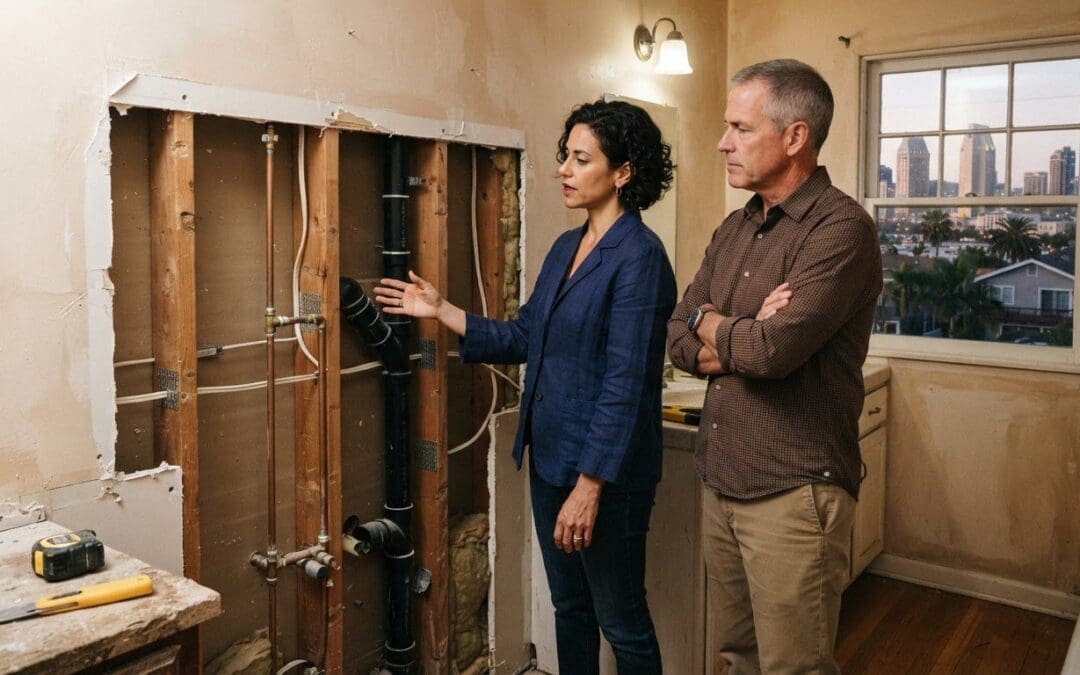
A permit fee is only part of the cost to legalize unpermitted work in San Diego. The total depends on the project’s scope, hidden conditions, plans and engineering, inspections, and any repairs needed to meet code.
It’s understandable to worry about an unexpected notice or how unpermitted work could affect a future sale. This guide explains what can drive legalization costs, what to do if code enforcement has contacted you, and how permit status may affect a sale or appraisal. It also covers a streamlined path for certain older unpermitted ADUs and JADUs, so you can understand which rules may apply before deciding how to proceed.
Key Takeaways
- Learn how permit fees, inspections, plans, and corrective work can shape the total bill.
- Understand why a code enforcement notice calls for a timely, organized response.
- See how opening concealed areas may reveal repairs that affect both budget and schedule.
- Find out how permit records, seller disclosures, and appraisal treatment can influence a property transaction.
How Much Does It Cost to Legalize Unpermitted Work in San Diego?
Retroactive permit fees are only one part of legalization costs. Repairs, plans, inspections, and code upgrades can substantially change the total.
Retroactive Permit Fees and Corrective Costs
A retroactive permit authorizes existing construction after review, while corrective costs cover work needed to meet applicable standards.
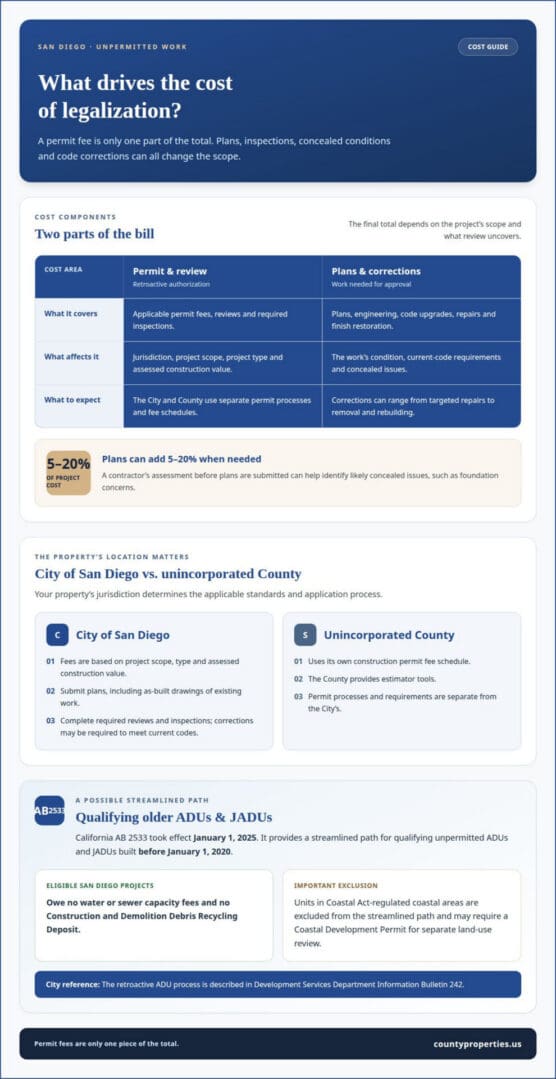
Plans can add 5-20 percent to total project costs when needed. A contractor’s assessment can help identify likely concealed issues, such as foundation concerns, before plans are submitted.
City and County Legalization Requirements
Legalization requirements differ because the City of San Diego and unincorporated San Diego County have separate permit processes and fee schedules. The City bases fees on project scope, type, and assessed construction value. The County has its own construction permit fee schedule and estimator tools. Your property’s jurisdiction determines the applicable standards and application process.
In the City, owners submit plans, including as-built drawings of existing work, pay applicable fees, and complete required reviews and inspections. The City may require corrections to meet current codes, so plans should identify needed repairs before finishes are restored.
California AB 2533 took effect January 1, 2025, and provides a streamlined path for qualifying unpermitted ADUs and JADUs built before January 1, 2020. Eligible San Diego projects owe no water or sewer capacity fees and no Construction and Demolition Debris Recycling Deposit. The City describes its retroactive ADU process in Development Services Department Information Bulletin 242.
The streamlined path excludes units in Coastal Act-regulated coastal areas. Those projects may require a Coastal Development Permit, adding a separate land-use review. California Legislative Information states that AB 968 applies to qualifying sellers who acquired a one- to four-unit home within the prior 18 months and requires expanded disclosure of improvements made during their ownership.
What if code enforcement has already contacted me?
Take a City of San Diego notice seriously and respond by its stated deadline. The notice and any inspection findings identify the work that needs attention.
Notices and Compliance Steps
A code enforcement notice describes a suspected violation and the action needed to address it. Meet the stated deadlines, since an unanswered notice can lead to further enforcement.
Read the entire notice first, including the affected areas, response deadline, and department contact instructions. Match each concern to the work involved, such as an unpermitted addition or plumbing change, and gather related plans and records. If an inspection is required, arrange access. Don’t assume that filing a permit application alone closes the case: the department may require approval and completed corrections.
Inspections and Code Corrections
A City inspection helps determine whether existing construction meets applicable safety and building standards. It may also reveal concealed conditions that plans or finished surfaces do not show.
For example, an addition may need review of its structure, electrical work, plumbing, and connection to the existing home. San Diego requires retroactively permitted work to meet current code, which may be stricter than the standards in effect when construction took place. Inspection findings guide the correction plan. Work may need repair, alteration, or removal and rebuilding before approval. Coordinate permits and inspections so finished surfaces don’t conceal work that still needs review.
Penalties for Unpermitted Construction
Yes. Unpermitted construction in San Diego may lead to code enforcement action, fines, penalties, and criminal prosecution. Consequences depend on the violation and how the property owner responds to the City’s requirements.
For an unpermitted ADU, the City of San Diego can require the unit to be vacated and either brought into compliance or demolished. A notice is therefore more than a request for paperwork: it can affect occupancy and the work required to resolve the case. If enforcement concerns are prompting a property move, seller representation can support the sale process while compliance is addressed separately.
Corrective work and opening concealed construction
Legalization may involve more than documenting existing work. Concealed framing, wiring, or plumbing may need inspection before the City of San Diego can assess compliance.
As-Built Drawings and Corrective Plans
As-built drawings show construction as it exists; corrective plans identify changes needed for permit approval. Together, they help reviewers compare the work with required standards and determine what must be opened or repaired.
For example, drawings for a garage conversion can document its living area, openings, and electrical layout. If those details can’t be confirmed visually, selective removal of finishes may expose framing or wiring for inspection. San Diego accepts as-built submittals for retroactive approval of unpermitted units, giving the department a record to review alongside proposed corrections.
Plans should link each observed violation to a practical repair. If electrical corrections and wall repairs affect the same area, coordinating the work can reduce repeated demolition and finish restoration.
Meeting Current Building Codes
Corrective work brings unpermitted construction into compliance with current requirements. San Diego reviews retroactive work under current codes, which may differ from the standards in effect when the original work was completed.
If work can’t meet current San Diego building codes, it may need correction or removal and rebuilding. The required solution depends on the violation. A structural issue, for example, may require engineering and repairs before approval, while an electrical defect may call for targeted corrections.
Opening concealed areas can reveal conditions that expand the scope. Costs may include evaluation, plans, engineering, selective opening, corrections, inspections, and finish restoration. Prioritize health and safety concerns, structural problems, and active water or electrical issues. Coordinate related corrections before restoring finishes.
Effects of unpermitted work on home sales and appraisals
An unpermitted addition can complicate a sale because buyers may compare the home’s visible features with its permit history. California sellers of most one- to four-unit homes must disclose known unpermitted additions or alterations on the Transfer Disclosure Statement under Civil Code §1102. A garage conversion, kitchen expansion, or structural change may therefore need clear disclosure during the transaction.
Permit status can also affect an appraisal. Unpermitted living space may be treated differently from permitted space in an appraisal. For example, a 500-square-foot garage conversion may not count as permitted living area in that calculation, even if it is finished and used as a bedroom or family room. That distinction can affect how the property is assessed and compared with other homes.
San Diego buyers and their agents routinely review permit histories during due diligence. If records don’t match an addition or conversion, buyers may request documentation or a price adjustment, or reconsider the purchase. A lender may also require unpermitted work to be resolved before funding a mortgage or home equity loan, creating another possible hurdle before closing.
Some owners choose to legalize work before listing; others sell with the issue unresolved. A seller-side estimate puts the adjustment for selling a San Diego property as-is at 5 to 15% compared with permitted work, but the amount varies. Structural concerns, enforcement notices, needed demolition, and the scope of a kitchen or garage project can all shape buyer assessments and negotiations.
Before setting a sale strategy, organize available permit records and identify which improvements are documented. Consider how unresolved work could affect disclosure, appraisal, financing, and buyer confidence. Addressing these questions early can help you plan sale timing and terms with fewer surprises.
If a move is part of a major life transition, explore Senior Real Estate Transition support and discuss your next move with County Properties.
County Properties
County Properties can help you plan the real estate decisions that follow an unpermitted-work issue. If you’re preparing to sell, Seller Representation can help you consider how permit status, disclosures, and buyer concerns fit into your transaction. If you’re purchasing, Buyer Representation can help you assess property information and keep permit questions in view as you evaluate the home.
For owners facing financial pressure, Short Sale and Foreclosure Prevention may be relevant. Senior Real Estate Transition can support planning when a home change is part of a larger life transition. These services focus on real estate decisions, not permit approvals or construction corrections.
If you’re weighing a sale or purchase, contact County Properties to discuss your next step.
Choose Your Next Step With Confidence
Deciding what to do with a home that has unpermitted work involves more than permits. Your plans to sell, buy, or stay can shape the real estate decisions ahead. The cost to legalize unpermitted work in San Diego is one part of the decision; timing, disclosure, financing, and your preferred path forward matter too.
County Properties helps you consider these choices through Seller Representation, Buyer Representation, and Short Sale and Foreclosure Prevention. This real estate guidance can support transaction planning, while permit approvals and construction corrections remain separate matters. A conversation about your goals can help you identify the right next move without pressure.
Contact County Properties to discuss your home and the real estate decision in front of you. You can take the next step at a pace that feels right for your situation.
Frequently Asked Questions
What Does a Retroactive Permit Cost?
The permit fee varies with project scope, type, and assessed construction value. Budget separately for plans and inspections if required. For example, a project involving concealed electrical work may need inspection before the City can approve it, adding costs beyond the permit itself.
Is it cheaper to fix everything at once or in phases?
Coordinating related corrections can reduce duplicated demolition, inspection scheduling, and finish repairs. If electrical and framing issues affect the same wall, for example, planning both corrections together may avoid reopening the finished area later. Phasing may still make sense for work that must be prioritized for health or safety, but the sequence should account for shared systems and required inspections.
Should I legalize before listing or disclose and sell as-is?
Legalizing before listing may help address permit questions before buyers evaluate the property, while selling as-is means disclosing known unpermitted work and negotiating with buyers. Allow at least 60 days when considering legalization before a sale. Your choice can depend on the repair scope, sale timing, financing concerns, and whether a buyer is prepared to take on unresolved work.
What are as-built plans and why do I need them?
As-built plans document existing construction rather than an intended design. They help reviewers understand how an unpermitted room, addition, or accessory unit was actually built. If dimensions or concealed features differ from original plans, an accurate drawing gives the permit review a clearer record. For example, a garage conversion plan can show the current layout and openings.
What are the risks of leaving unpermitted work as is?
Leaving unpermitted work unresolved can create enforcement, insurance, occupancy, and transaction risks. After a claim involving an unpermitted structure, an insurer may deny coverage, reduce a payout, or cancel a policy. In San Diego, an unpermitted ADU can’t be legally rented, and the City may require it to be vacated. Buyers or lenders may also raise permit issues during a sale.
What does it cost to legalize unpermitted work in San Diego?
The cost to legalize unpermitted work in San Diego depends on the project, and the permit fee is only one part of the total. Plans, engineering, concealed conditions, inspections, and finish restoration can add costs. A bathroom addition and a minor electrical correction involve very different scopes.