

Is the dream of owning a home in the Golden State actually dead, or are you just looking at the wrong map? You’ve likely spent years watching home prices climb while trying to save for a down payment that feels like a moving target. It’s exhausting to feel like you’re doing everything right and still falling behind in your quest to become a first time home buyer california residents can actually afford.
We understand that the fear of making a thirty-year financial mistake is real, especially when state grants and loan programs seem to change every season. This guide provides the clarity you need to move forward with absolute confidence. We’ll show you exactly how to master the 2026 market using a “financial stack” strategy that combines state assistance with local expertise.
You’re about to discover a clear roadmap to homeownership. We’ll preview the latest CalHFA requirements, explore down payment assistance programs like “Dream for All,” and outline the methodical steps our team uses to secure homes in Southern California’s most competitive neighborhoods.
Key Takeaways
- Learn why “first-time” status is broader than you think and how to navigate the specific inventory trends of the 2026 Southern California market.
- Discover how to build a powerful “financial stack” by combining state grants and CalHFA programs tailored for a first time home buyer california requires to bridge the affordability gap.
- Master a methodical two-phase roadmap that moves from financial fortification and credit auditing to securing the right lender for complex state-specific assistance.
- Protect your long-term financial safety by learning how to navigate the appraisal gap and calculate the true total cost of ownership, including maintenance and taxes.
- Understand the advantage of a collaborative, service-centric partner who can identify off-market opportunities and guide you through high-stakes transitions with ease.
Understanding the 2026 California First-Time Home Buyer Landscape
Entering the market as a first time home buyer california resident in 2026 requires a blend of optimism and tactical preparation. You aren’t just looking for a roof over your head; you’re pursuing a long-term wealth-building strategy that has historically outpaced many other investment types. The emotional shift from the anxiety of unpredictable rent hikes to the security of a fixed-rate mortgage is profound. It’s about more than just equity; it’s about finally having a place that is truly yours.
Who Qualifies as a First-Time Buyer?
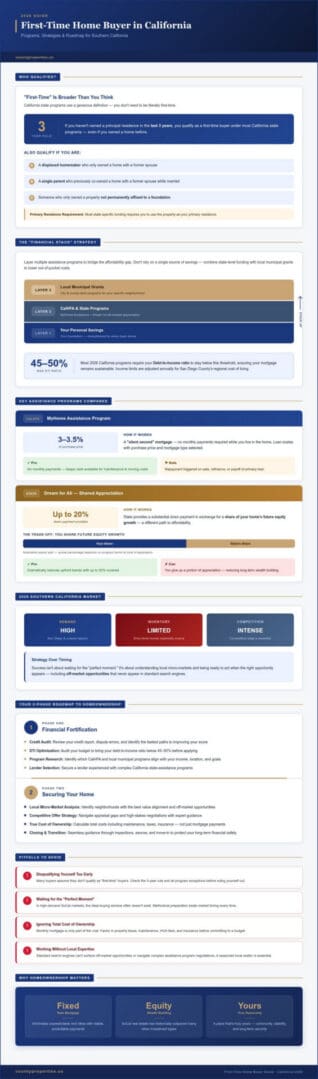
Many potential homeowners disqualify themselves because they believe the “first-time” label is literal. In the eyes of most California state programs, you’re often considered a first-time buyer if you haven’t owned a principal residence at any point in the last three years. This 3-year rule opens doors for many people who previously owned but have been renting for a few years. There are also critical exceptions designed to support those in transition. You may still qualify if you are:
- A displaced homemaker who only owned a home with a former spouse.
- A single parent who previously owned a home with a former spouse while married.
- An individual who has only owned a property that wasn’t permanently affixed to a foundation.
Your residency status also plays a major role. Most state-specific funding requires you to use the property as your primary residence. This ensures that the assistance programs reach individuals who are committed to becoming part of the local community fabric.
Southern California Market Realities in 2026
The 2026 market in San Diego and surrounding coastal regions continues to see high demand paired with limited inventory. While interest rate shifts have changed the way buyers approach their budgets, the core value of Southern California real estate remains steadfast. Success in this environment isn’t about waiting for a perfect moment that might never come; it’s about understanding local micro-markets and being ready to act when the right opportunity appears.
Because entry-level homes are in such high demand, you need a competitive edge. This is where having a seasoned realtor to buy a home becomes your greatest asset. An experienced guide doesn’t just show you houses. They help you identify off-market opportunities and navigate complex negotiations that a standard search engine simply can’t provide. By focusing on methodical planning and collaborative success, you can move from the sidelines into a home that meets your needs and secures your financial future.
California Down Payment Assistance and Grant Programs
Success as a first time home buyer california resident in 2026 often depends on a strategy we call the “financial stack.” You don’t have to rely on a single source of savings to reach your goal. Instead, you can layer multiple assistance programs to bridge the gap between your current savings and the cost of entry. This methodical approach combines state-level funding with local municipal grants, effectively lowering your out-of-pocket costs while maintaining your financial safety.
For 2026, eligibility for these programs is tied closely to local income limits and debt-to-income (DTI) requirements. In San Diego County, these limits are adjusted annually to reflect our regional cost of living. Most programs generally require a DTI ratio below 45% to 50%, ensuring that your new mortgage remains sustainable over the long term. By understanding these benchmarks early, you can audit your budget and position yourself for approval before you even begin touring homes.
The CalHFA MyHome Assistance Program
The CalHFA MyHome Assistance program is a deferred-payment junior loan for down payments. It functions as a “silent second” mortgage, meaning you aren’t required to make monthly payments on this portion of your financing while you live in the home. The loan amount typically scales up to 3% or 3.5% of the purchase price, depending on the primary mortgage type you select. Repayment only becomes necessary when you sell the property, refinance your first mortgage, or pay off the primary loan in full. This structure provides a vital safety net, allowing you to keep more cash in your pocket for initial home maintenance and moving expenses.
Shared Appreciation Loans: Pros and Cons
Shared appreciation programs, such as the “Dream for All” initiative, offer a different path to affordability. These programs provide a substantial down payment, often up to 20%, in exchange for a share of your home’s future equity growth. This is a powerful tool for buyers who face high monthly payments, as the larger down payment significantly reduces your primary mortgage balance.
- Pros: Lower monthly mortgage payments and immediate access to high-value markets.
- Cons: You’ll eventually pay back the original loan plus a percentage of the home’s value increase.
If you prioritize immediate affordability and want to enter the market sooner, shared appreciation can be a game-changer. However, if your goal is to retain 100% of your future equity, traditional deferred-payment grants might be the better fit. Consulting with a dependable guide for first-time buyers can help you determine which program aligns with your long-term personal goals and financial security.
A Step-by-Step Roadmap to Your First Home
Becoming a successful first time home buyer california resident requires a structured approach. You don’t want to wander into the market blindly. Our roadmap is designed to move you through five distinct phases, ensuring you’re protected at every turn. By treating this as a methodical progression, you replace anxiety with a sense of professional competence.
- Phase 1: Financial Fortification. Audit your credit and build your “financial stack” as we discussed earlier.
- Phase 2: The Pre-Approval Pivot. Secure a lender who is certified to handle CalHFA and other state-specific grants.
- Phase 3: The Collaborative Search. Partner with a mentor who identifies off-market opportunities and local value.
- Phase 4: Winning the Bid. Craft a 2026-ready offer that balances price with attractive, clean terms.
- Phase 5: Escrow and Closing. Navigate the mandatory California inspections and finalize your funding.
Preparing Your Credit and Budget
Your journey starts with numbers. To secure the best interest rates in California, aim for a “Golden Credit Score” of 740 or higher. This score acts as a key that unlocks lower monthly payments and better loan terms. Preparing for your journey as a first time home buyer california means looking beyond the sticker price. It’s vital to use a mortgage calculator to find your “True North” monthly payment. This isn’t just what the bank says you can afford; it’s what fits your actual lifestyle. Don’t forget to account for hidden costs like HOA fees, Mello-Roos assessments, and California property tax rates, which can vary significantly by neighborhood.
Navigating the California Escrow Process
The California escrow period is unique. It’s a neutral third-party process that ensures all conditions of the sale are met before money and title change hands. During this time, you’ll receive mandatory disclosures where the seller must tell you everything they know about the property’s condition. This is your time to be methodical. Your real estate agent near me plays a critical role here. They manage your contingencies, such as the appraisal and home inspection, to ensure you aren’t forced into a deal that doesn’t meet your safety standards. This collaborative guidance ensures you reach the finish line with your financial security intact.
Avoiding Common Pitfalls for First-Time Buyers
The path to your first home is rarely a straight line. While the excitement of finding the right property is high, the final stages of the journey are where most obstacles appear. As a first time home buyer california resident, you must remain vigilant during the transition from “offer accepted” to “keys in hand.” Being aware of these common traps allows you to protect your investment and maintain your financial safety throughout the process.
The Reality of Appraisal Gaps in 2026
In a competitive market, you might find yourself in an “appraisal gap” situation. This happens when the bank’s professional appraiser values the home at a lower price than your agreed-upon purchase amount. Because lenders only provide financing based on the appraised value, you’re responsible for covering the difference. In 2026, appraisals often lag behind the actual speed of market demand in Southern California. You have three primary ways to handle this:
- Negotiation: Your agent can present comparable sales data to the seller to request a price reduction.
- Cash Difference: You pay the gap out of your own pocket if your “financial stack” allows for it.
- Meet in the Middle: Both parties agree to split the difference to keep the deal moving forward.
Insurance Challenges in the California Market
Securing a homeowners policy is no longer a formality in California. Due to regional risks like fire zones and flood plains, many traditional carriers have limited their new policies. You should never wait until the end of escrow to look for coverage. We recommend obtaining an insurance quote before you even remove your contingencies. If traditional insurance isn’t available for your specific property, you may need to look into the California FAIR Plan as a last resort. This ensures you aren’t left with a home you can’t actually protect.
Beyond insurance, you must account for the “Total Cost of Ownership.” This includes recurring maintenance, property taxes, and potential HOA assessments. A common mistake is focusing solely on the mortgage payment while ignoring the $5,000 to $10,000 you might need annually for upkeep. Additionally, follow the “Don’t Buy a Car” rule. Making any major purchase or opening new credit lines during escrow can disqualify your loan at the very last minute. Your credit profile must remain frozen in time until the deed is recorded.
Navigating these complexities is much safer when you have a seasoned professional by your side. If you’re ready to build a strategy that avoids these costly mistakes, partner with a dependable buyer representative who understands the nuances of the 2026 market.
Why a Collaborative Partner is Essential in 2026
The 2026 market is more than a list of properties on a screen. It is a complex ecosystem of legal requirements, financial hurdles, and competitive negotiations. Successfully becoming a first time home buyer california resident requires more than just an internet connection; it requires a steadfast partner who prioritizes your long-term security. At County Properties, we move away from the high-pressure sales tactics that often define the industry. We replace them with a service-centric model that views your home purchase as a significant life milestone rather than a simple transaction.
Our collaborative approach allows us to identify off-market opportunities that never hit the public portals. In Southern California’s tight inventory environment, this access is often the difference between finding a home and continuing to rent. An expert real estate agent acts as the central coordinator for your entire team. We manage the flow of information between your lender, the home inspectors, and the escrow officers, ensuring that no detail is overlooked and no deadline is missed.
The County Properties Collaborative Approach
We believe that financial safety is the foundation of a successful purchase. Our team leverages decades of veteran experience to help you navigate the specific market cycles of 2026. Because we have deep-rooted connections to the San Diego and Southern California communities, we understand the nuances of local neighborhoods that data alone cannot capture. We aren’t just looking for your first house; we are building a relationship that supports your future real estate goals as your life and needs evolve. For instance, if you eventually consider a custom construction project or a complete tear-down, you can find out more about the typical costs involved in a knockdown rebuild.
Your Next Steps Toward Homeownership
Taking the first step doesn’t have to be overwhelming. You can begin by preparing a “Homebuyer Toolkit” that includes your recent tax returns, bank statements, and pay stubs. Having these documents ready allows us to move quickly when the right opportunity appears. Once you have your paperwork in order, we invite you to schedule a no-pressure consultation. This is a time for us to listen to your specific needs, address your concerns about being a first time home buyer california, and begin crafting your personalized strategy.
Homeownership is a marathon, not a sprint, and we are here for every mile.
Securing Your Future in the California Housing Market
Becoming a successful first time home buyer california resident in 2026 is a significant achievement that requires both a methodical strategy and reliable support. You now understand how to build a powerful financial stack using state grants and how to navigate the specific escrow hurdles unique to our region. By avoiding common pitfalls like appraisal gaps and insurance delays, you protect your long-term financial safety and peace of mind.
When you’re ready to move from planning to action, our team is here to facilitate your progress. Start your Southern California home search with a trusted partner today. Your goal of homeownership is a rewarding marathon, and we’re ready to help you cross the finish line with absolute confidence.
Frequently Asked Questions
What is the minimum credit score for a first-time home buyer in California in 2026?
Most California state assistance programs require a minimum credit score of 640 or 660. However, aiming for a score of 740 or higher is ideal to secure the most competitive interest rates. Your score acts as a primary indicator of your financial reliability to lenders. We recommend auditing your credit report at least six months before you begin your search as a first time home buyer california resident to ensure accuracy and address any potential issues.
Can I combine CalHFA grants with an FHA loan?
Yes, you can combine CalHFA assistance with an FHA loan. CalHFA offers specific programs designed to work seamlessly with FHA, VA, and conventional financing. This flexibility allows you to layer down payment assistance on top of the low down payment requirements of an FHA loan. It is a core part of the “financial stack” strategy that helps many buyers bridge the affordability gap in competitive markets like San Diego.
How much do I really need for a down payment in Southern California?
The amount you need varies based on your loan type and the assistance programs you utilize. While a traditional 20% down payment is a common benchmark, many first-time buyers enter the market with as little as 3% or 3.5% down. When you successfully utilize California state grants or shared appreciation programs, your actual out-of-pocket cost can be significantly lower. We help you calculate these specific figures based on current Southern California home prices.
Are there income limits for California first-time home buyer programs?
Yes, almost all programs for a first time home buyer california residents use have specific income limits based on the county where you are purchasing. These limits are adjusted annually to reflect local economic conditions and cost of living. For example, San Diego County limits are typically higher than those in more rural areas. We verify the current 2026 CalHFA income limits for your specific household size to ensure you meet all eligibility requirements.
What is Mello-Roos and how does it affect my monthly payment?
Mello-Roos is a special tax assessment used to fund local infrastructure like schools, parks, and roads in newer California developments. This tax is added to your annual property tax bill and can increase your monthly housing costs by several hundred dollars. It’s essential to identify if a property has a Mello-Roos assessment early in your search. We include these figures in your budget audit to ensure your total monthly payment remains sustainable.
How long does the home buying process usually take in California?
The entire journey typically takes between three to six months from initial planning to closing. Once you find a home and your offer is accepted, the California escrow period usually lasts between 30 and 45 days. This timeframe allows for mandatory inspections, appraisals, and final loan underwriting. Starting your preparation early by gathering documents and securing pre-approval helps ensure a smoother, more predictable transition into your new home.
What happens if I sell my home before the grant is repaid?
If you sell your home, the assistance loan or grant repayment is typically triggered immediately. Most CalHFA junior loans are deferred, meaning you don’t make monthly payments, but the balance is due upon the sale, transfer, or refinancing of the property. For shared appreciation programs, you would also owe a percentage of the home’s value increase at that time. We review these specific repayment triggers with you to protect your long-term financial safety.
Does County Properties help with finding lenders who accept state grants?
Yes, we actively coordinate with a network of lenders who are specifically certified to handle CalHFA and other state-level assistance programs. Not all lenders have the expertise to manage these complex “financial stacks,” so finding the right partner is critical. As your buyer representative, we ensure your lender and real estate team are perfectly aligned. This collaborative approach minimizes delays and increases the likelihood of a successful, stress-free closing.