

Trying to keep an encroachment quiet can create more trouble than addressing it openly. If you’re wondering how to sell a house with an encroachment issue, start by establishing what may cross the boundary, where the boundary lies, and which property is affected.
It’s understandable to worry that buyers, lenders, or title insurers may hesitate when a property has a boundary concern. The concern alone doesn’t determine which sale strategy to choose. Clear records and informed conversations can help you understand the situation and prepare for buyer questions without promising a particular outcome.
This guide explains how to check whether an encroachment exists, gather useful documents, and compare practical paths, such as discussing an agreement with your neighbor or getting professional advice about possible legal options. You’ll also learn why disclosure requirements should be checked for your specific situation. A real estate agent can help organize sale information and communicate with prospective buyers, while surveyors and legal professionals address boundary and legal questions. Involving the right professionals helps you make decisions based on facts rather than guesswork.
Key Takeaways
- Confirm the property boundary before treating a nearby fence, structure, or other improvement as an encroachment.
- Gather relevant property records and professional findings so you can discuss the issue using documented information.
- Compare possible paths, including a written agreement, removal, or selling with transparent disclosure, based on your circumstances.
- Learn how to sell a house with an encroachment issue by preparing a clear pre-listing file and consulting qualified professionals about your next steps.
- A seller’s agent can help coordinate records, marketing, and buyer communication without replacing legal or surveying professionals.
How an Encroachment Can Affect Selling Your House
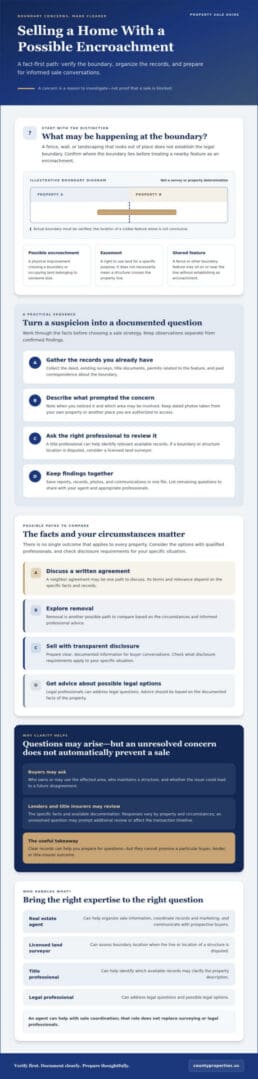
A fence that appears to sit over a property line can raise questions, but appearance alone doesn’t prove an encroachment. An encroachment generally involves a physical improvement crossing a boundary or occupying land belonging to someone else. It could affect your property, a neighbor’s property, or both, depending on where the actual boundary lies.
What counts as an encroachment on a property?
Examples may include a fence or wall that crosses the boundary, a roof overhang extending onto neighboring land, or a driveway or landscaping occupying part of another property. For a foundational overview of what an encroachment is, including structural examples, see Wikipedia.
Not every feature near a boundary is an encroachment. An easement is a right to use land for a specific purpose; it doesn’t necessarily mean a structure crosses the property line. A shared fence or other boundary feature may sit on or near the line without establishing that either owner has encroached. A written agreement may also permit a particular use. The boundary, relevant records, and terms of any agreement all matter.
Why can an encroachment concern buyers or title professionals?
Uncertainty can lead buyers to ask who owns or may use the affected area, who maintains a structure, and whether the issue could lead to a future disagreement. Lenders and title insurers may also review the facts and available documentation, but their responses vary by property and circumstances. An unresolved question may prompt additional review or affect the transaction timeline, but it doesn’t automatically prevent a sale.
Verify the boundary before assuming an apparent encroachment will either block your sale or be easy to resolve. A survey or other professional review may clarify whether an improvement crosses a property line, while title records and agreements can provide important context. Until the facts are clearer, don’t treat a fence line, landscaping edge, or visual estimate as a legal boundary.
This distinction matters when you consider how to sell a house with an encroachment issue. A confirmed encroachment, a documented right to use land, and a shared feature can raise different questions and may call for different sale preparations. Buyers, lenders, and title insurers assess the specific facts and records, so don’t assume one outcome applies to every property. Clear information gives you and your real estate and other qualified professionals a sounder basis for discussing next steps.
How to Verify an Encroachment Before Listing Your House
Before choosing a sale strategy, turn a suspected boundary problem into a documented question. The legal definition of encroachment can provide general context, but it can’t confirm where your property line sits. Verification requires a careful review of records and, when needed, professional assessment of the specific site.
Work through these steps in order:
- Gather records. Collect your deed, any existing surveys, title documents, permits related to the feature, and past correspondence about the boundary.
- Describe the concern. Note what prompted your concern, when you first noticed it, and which area may be involved. Take dated photographs from your own property or another place you’re authorized to access.
- Seek professional review. Ask a title professional which available records may help clarify the property description. If the boundary or location of a structure is disputed, consider a licensed land surveyor.
- Keep the findings together. Save reports, relevant records, photographs, and communications in one file. Note any remaining questions so you can share them with your agent and appropriate professionals.
Which records should you gather first?
Start with documents you already have, including the deed, prior surveys, title paperwork, permits, and letters or emails exchanged with a neighbor about the boundary. Older maps, deeds, permits, and visible markers can offer useful clues, but they may not settle the question on their own. Share what you find with a title professional and ask which records are relevant to the property description.
Keep a simple timeline, too. Write down when you noticed the concern and what you observed, then preserve dated photos without entering a neighbor’s property. This creates a factual record without treating an unverified line or marker as conclusive.
When should you consult a surveyor or real estate attorney?
A licensed land surveyor can assess the boundary location when the line or a physical encroachment is in dispute. Survey scope, timing, and cost depend on the property and the work required, so ask what the proposed review will cover before proceeding. Consult a real estate attorney about contested ownership, neighbor negotiations, or questions about property rights.
Until boundaries and rights are clearer, don’t move a fence or alter a structure. A change could create a new disagreement or complicate the review. Your real estate agent can coordinate sale records and buyer communication, but can’t provide legal advice or replace a surveyor. If you’re preparing to sell, seller representation and sale coordination can help organize the transaction while you work with the appropriate specialists.
Compare Your Options for Selling a House With an Encroachment
Once you have a clearer picture of the boundary, weigh whether to investigate further, seek an agreement, remove the encroaching feature, or proceed with the issue documented and disclosed. The right path depends on what the review confirms, how the affected area is used, your neighbor’s response, and the time available before listing. No single option guarantees that a buyer, lender, or title insurer will respond a certain way.
Can an agreement with a neighbor address the issue?
If both owners are willing, they may explore a written arrangement that addresses use, access, or maintenance. Informal permission may differ from a legally reviewed agreement: it may not clearly explain the terms or what happens if either property changes hands. Ask a qualified real estate attorney whether an agreement should be drafted, signed by particular parties, or recorded, and whether it may transfer to future owners. Requirements and lender considerations depend on the circumstances.
When might removal or a disclosed sale make more sense?
Removal may be worth considering if the feature can be changed without creating access, safety, permitting, or property-use problems. Get relevant professional input before estimating the work or changing anything. If removal is impractical, costly, or unwanted, selling with transparent disclosure may remain an option. Disclosure doesn’t automatically mean a buyer will reject the property, but buyers may request records or further review, which can affect the transaction timeline.
Use this comparison to frame discussions with your advisers:
| Option | Documentation to consider | Dependencies and questions for advisers |
|---|---|---|
| Verify first | Survey or other professional findings, relevant property records | What does the review establish, and what remains uncertain? How might the review affect listing timing? |
| Seek a written agreement | Proposed terms, signed agreement, and any applicable recording information | What terms protect each owner? Does the agreement address future owners, and should it be recorded? |
| Remove or alter the feature | Professional assessments, permits if applicable, and records of completed work | Is the work feasible? Could it affect access, use, or neighboring property? |
| Proceed with disclosure | Available findings, relevant communications, and sale disclosures | What must be disclosed in your situation? What additional review might a buyer request? |
When deciding how to sell a house with an encroachment issue, compare the options with your agent and qualified legal or surveying professionals. A documented, transparent plan can help you explain what is known and what still needs review, without assuming removal is always necessary or that disclosure ends the conversation.
Prepare a California Home Sale With an Encroachment
A well-organized file helps your transaction professionals work from the same information and gives you a clear basis for buyer discussions. Before listing, gather the records you’ve collected so far, including survey materials, title documents, relevant permits, neighbor communications, photographs, and professional findings. Keep copies of dated documents and distinguish confirmed measurements from concerns that remain unresolved.
How should you organize records and communicate with buyers?
Arrange the file by type or date, and add a brief note explaining what each item shows. Keep observations separate from conclusions: a photo may document where a fence appears to sit, but it doesn’t establish the legal boundary. Avoid minimizing a concern or making unsupported claims about ownership, rights, or responsibility. Share known material facts with your listing agent and qualified California legal counsel so you can plan accurate, consistent communication.
If a buyer or title professional asks a question, don’t guess. Coordinate the response with your agent and attorney, and provide relevant documents where appropriate. Clear answers can identify what’s confirmed, what’s still under review, and which professional is best placed to address the remaining question.
What should you ask your California transaction professionals?
- Ask legal counsel: Which California disclosure forms and issue-specific obligations apply to your circumstances? How should you describe the known facts accurately, and are there applicable deadlines to track?
- Ask the title professional: How might the documented issue affect title review, and what information is available about potential coverage? Don’t assume an agreement or other resolution will receive a particular response.
- Ask your listing agent: How should verified information be presented during marketing, and how can buyer questions be coordinated with your attorney and title professional?
California disclosure requirements can depend on the facts, so confirm current forms, deadlines, and obligations with qualified counsel rather than relying on a general checklist. Your real estate agent can coordinate records, marketing, and transaction communication, but doesn’t replace legal advice or professional boundary review.
For additional context on preparing a property for the market, explore County Properties’ Southern California home-selling guidance. Organized records and coordinated communication can help you approach the sale with greater clarity.
Choose Your Next Steps With a Real Estate Partner
A clear plan can make a complicated sale easier to manage. Start by confirming what’s known about the boundary, then consult the appropriate surveying, legal, and title professionals. With their input, choose a documented path and work with qualified California counsel to prepare applicable disclosures. This sequence keeps decisions grounded in the facts as you plan the sale.
How can a listing agent support an encroachment sale?
Your listing agent can help coordinate sale-related communication with your surveyor, attorney, and title professional, organize relevant records, and track marketing and transaction milestones. Verified information also helps the agent respond to buyer questions clearly, distinguishing established facts from issues still under review.
An agent can guide the sale process, but can’t determine boundary rights, provide legal advice, or promise that a buyer, lender, or title insurer will accept a particular resolution. If you’re choosing an agent, look for someone who communicates carefully, respects professional roles, and can explain how they’ll coordinate information during the transaction.
What information should you bring to an initial consultation?
A focused first conversation is easier when you have the basics at hand. Bring the property location, a short description of the suspected boundary concern, available surveys and title records, and relevant communications with your neighbor. Note what has been confirmed and what remains uncertain. Also share any target sale date, relocation plans, or other timing needs that could affect preparation.
These details help a seller’s representative understand the transaction and discuss how records, marketing, buyer communication, and key milestones may be coordinated. If you’re comparing professionals, ask how they handle complex sale information and work alongside legal and surveying experts. County Properties represents sellers in Southern California, including San Diego, and can discuss the sale process without substituting for legal or surveying advice.
If you’re considering how to sell a house with an encroachment issue, you don’t need every question resolved before starting a conversation. Bring the information you have, explain what you’re trying to establish, and identify the professional guidance you still need. To discuss your property and sale documentation with County Properties, discuss your home sale with County Properties.
Move Forward With a Clear, Documented Sale Plan
Understanding how to sell a house with an encroachment issue starts with separating what’s suspected from what’s confirmed. Verify the boundary, organize relevant records, and consult qualified surveying, legal, and title professionals about questions within their expertise. Then compare your options, prepare accurate disclosures with appropriate guidance, and plan how to answer buyer questions transparently.
An encroachment doesn’t automatically mean you can’t sell. A documented path can help you make informed decisions and move through the transaction with greater clarity, though buyer, lender, and title insurer responses depend on the specific facts.
County Properties provides seller representation for residential and commercial properties, with personalized guidance across Southern California, including San Diego. If you’re ready to discuss your property and sale plans, discuss your home sale with County Properties. With the right information and a real estate partner, you can take your next step with confidence.
Frequently Asked Questions
Can you sell a house with an encroachment issue?
Yes, often, a potential encroachment doesn’t automatically make a home unsellable. To understand how to sell a house with an encroachment issue, first confirm the property boundary and what, if anything, crosses it. Then review documentation, disclosure, and possible solutions with qualified professionals. Buyers, lenders, and title insurers may assess the facts differently, so no single approach guarantees acceptance or a particular transaction outcome.
How do I prove there is an encroachment on my property?
Start by gathering your deed, existing surveys, title documents, permits, and relevant correspondence. These records can provide context, but they may not conclusively establish the current boundary. A licensed land surveyor can assess the boundary question and document findings within the agreed scope of work. If ownership or property rights are disputed, consult a California real estate attorney about how to proceed based on your circumstances.
Do I have to disclose an encroachment when selling in California?
Disclosure obligations depend on the known facts, the property, and applicable California requirements. Don’t assume you can omit a concern because its location or legal status is uncertain. Gather the information you have, then ask a California real estate attorney which disclosures apply and how to describe the facts accurately. Your listing agent can help coordinate transaction communication, but can’t provide legal advice or decide your disclosure obligations.
Can an encroachment stop a buyer from getting title insurance?
An encroachment may prompt questions during title review, but the outcome depends on the specific issue, available records, any proposed resolution, and the title insurer’s assessment. Don’t assume coverage will be denied or approved. Ask the title professional to review relevant documents and explain possible transaction-specific implications. A surveyor may help clarify the boundary, while an attorney can address questions about ownership or rights.
Should I remove an encroaching fence before selling my house?
Don’t move a fence before confirming the boundary and understanding any relevant rights, agreements, or local requirements. Acting on appearance alone could create a new dispute or fail to address the actual concern. First seek qualified surveying advice, then discuss possible removal, a documented agreement, or a sale with transparent disclosure with your attorney and real estate professional. The best next step depends on the facts and the property.
Can I sell my house before resolving a neighbor boundary dispute?
A sale may still be possible, but an unresolved dispute can lead to questions from buyers and other transaction professionals. Collect relevant records, consult appropriate professionals about the boundary and disclosure, and coordinate with your agent on communicating confirmed facts. Buyers may evaluate the issue differently, so explain what’s known and what remains uncertain. Don’t promise that a particular agreement or resolution will satisfy a buyer, lender, or title insurer.
What documents should I gather before listing a house with an encroachment?
Gather your deed, existing surveys, title materials, relevant permits, dated photographs, written agreements, and communications with your neighbor. Keep copies of professional findings, too. Organize the file so it distinguishes confirmed details from questions still under review. Your attorney, surveyor, and title professional can help identify additional records relevant to your circumstances. A well-organized file makes it easier to respond accurately without overstating what any document establishes.