

Can you sell a California home before a property line dispute is resolved? An unresolved disagreement doesn’t automatically make a sale impossible, but unclear boundaries and incomplete records can raise questions for buyers. If you’re researching “selling a house with a property line dispute California,” start by establishing what you know and gathering the documents that support it.
It’s understandable to worry that a neighbor’s claim could delay your sale, unsettle buyers, or leave you unsure what to disclose. You don’t need to make legal assumptions or determine the boundary yourself. A licensed land surveyor can assess boundary evidence, while a California real estate attorney can advise you about the dispute and disclosure questions.
This guide explains how to document the disagreement, review relevant records, and consider options such as discussion, mediation, or legal action. You’ll also learn how seller representation can help organize sale planning and communication, while surveying and legal decisions remain with the appropriate professionals. A clear record of the facts can help you plan informed next steps.
Key Takeaways
- For selling a house with a property line dispute California, organize the records before taking a position on the boundary.
- Deeds, county recorder documents, and assessor maps can offer different clues. Check local records carefully and understand what each document can establish.
- Compare informal discussion, a professional survey, legal consultation, and delaying a listing decision based on the questions each can help answer.
- Prepare a clear chronology and document folder to support informed conversations with your agent and advisers.
- An agent, licensed surveyor, and California real estate attorney have different roles in sale planning, boundary assessment, and legal guidance.
Selling a House With a Property Line Dispute in California: Start With What You Know
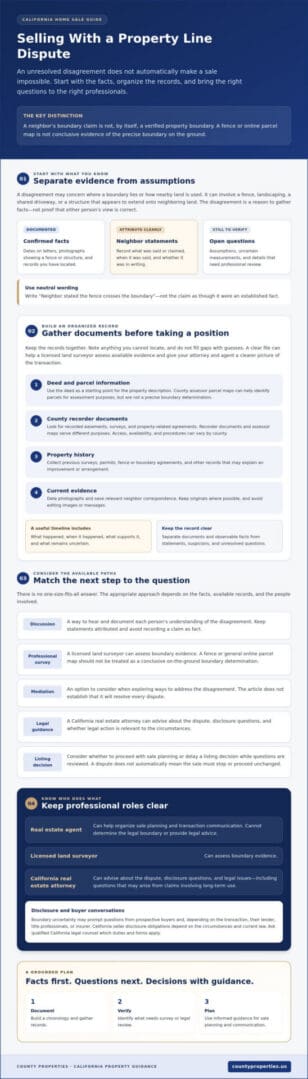
A property line dispute is a disagreement about where a boundary lies or how an area near it may be used. It might involve a fence, landscaping that crosses a boundary, use of a shared driveway, or a structure that appears to extend onto neighboring land. The disagreement is a reason to gather facts, not proof that either person’s view is correct.
What counts as a property boundary disagreement?
A neighbor’s objection may point to a genuine question, but it isn’t the same as a professional survey or a legal determination of the boundary. A fence may have been placed for convenience, and an online parcel map can help locate a property generally without establishing a precise boundary on the ground. Don’t treat either as conclusive. Claims involving long-term use may raise questions about adverse possession, but whether that doctrine applies to your situation is a question for a California real estate attorney.
Begin with a written timeline. Separate what you can document from what someone has said or what you suspect:
- Confirmed facts: Dates on letters, photographs showing a fence or structure, and records you have located.
- Neighbor statements: What the neighbor said or claimed, when they said it, and whether the statement was in writing.
- Open questions: Assumptions, uncertain measurements, and details that still need professional review.
Use neutral wording. “Neighbor stated the fence crosses the boundary” is clearer and more useful than recording the claim as an established fact.
Why the disagreement matters when selling in California
Uncertainty may prompt questions from prospective buyers and, depending on the transaction, their lender, title professionals, or insurer. The concern could involve a fence location, use of a driveway, or a claim affecting part of the lot. How those questions affect a sale depends on the facts, available records, and parties involved.
A disputed boundary claim is not, by itself, a verified property boundary. Keep that distinction clear in your records and conversations. California seller disclosure obligations depend on the circumstances and current law, so ask qualified California legal counsel which duties and forms apply to your sale. An agent can help organize transaction communication but cannot determine the legal boundary or provide legal advice.
If you’re considering selling a house with a property line dispute California, don’t assume the sale can proceed unchanged or that it must stop. The next steps depend on what the records show, whether the disagreement can be clarified, and the guidance of appropriate professionals. Document what you know first, then identify what still needs verification.
Gather California Property Records Before Taking a Position
Before deciding what the boundary is or how to address the disagreement, assemble the records you already have. An organized file helps a licensed land surveyor assess available evidence and gives your attorney and real estate agent a clearer picture of the transaction.
Which records and evidence should a seller collect?
Start with your deed and available parcel records, then work through this sequence. Keep the documents together and make a note of anything you haven’t been able to locate.
- Find your deed and parcel information. Use the deed as a starting point for the property description. County assessor parcel maps can help identify parcels for assessment purposes, but they shouldn’t be treated as a precise boundary determination.
- Check county recorder documents. Look for recorded easements, surveys, and property-related agreements. Recorder documents and assessor maps serve different purposes. Access, record availability, and procedures can vary, so verify details with the appropriate county office.
- Gather property history. Include previous surveys, permits, fence or boundary agreements, and other documents that may explain how an improvement or arrangement came about.
- Preserve current evidence. Date photographs and save relevant neighbor correspondence, including messages about the disagreement or attempts to resolve it. Keep originals where possible and avoid editing images or messages.
Don’t fill gaps with guesses. If a document is missing, note that it is missing. An online parcel map alone may not answer where a boundary lies on the ground. While the issue is being assessed, avoid moving a fence, removing a structure, or presenting an uncertain measurement as fact. Changes can complicate the record and discussions with your neighbor.
When to consult a licensed land surveyor
If the records don’t clarify the boundary, a licensed land surveyor can evaluate available evidence and perform surveying work. Before commissioning a survey, ask what records the surveyor needs, what work is included, what deliverables you’ll receive, and what limitations may affect the results. Confirm that the proposed scope addresses the specific boundary question you have.
A survey can provide important technical information, but it isn’t a guaranteed legal ruling and doesn’t replace advice from a California real estate attorney. If you’re selling a house with a property line dispute California, keep your records organized for the professionals helping assess the issue and plan the transaction. For Southern California sellers, seller representation and sale planning can help coordinate real estate steps, while surveying and legal questions remain with the appropriate experts.
Compare Your Options for Handling a Neighbor Boundary Dispute Before Listing
There isn’t one required path for every boundary disagreement. The next step depends on the records, the nature of the neighbor’s claim, and how the uncertainty may affect a sale. A dispute doesn’t automatically mean you must resolve every issue before marketing, but make listing decisions with a clear understanding of the facts and appropriate professional guidance.
| Option | Purpose and appropriate professional | Questions to ask |
|---|---|---|
| Further informal discussion | Clarify the neighbor’s concern and exchange relevant information. You can communicate directly if the conversation remains respectful and productive. | What specific area or use is disputed? Can each person share supporting records? Is a neutral professional needed? |
| Professional survey | Have a licensed land surveyor assess boundary evidence and perform surveying work. | What records and location will the work cover? What will the deliverables show, and what are their limitations? |
| Attorney consultation | Ask a California real estate attorney about rights, potential claims, agreements, and disclosure questions. | What legal issues may apply? What should be documented or avoided before further discussions or a sale? |
| Pause the listing decision | Allow time to gather information and consult an agent and relevant experts before setting a marketing plan. | What remains uncertain? Could that uncertainty affect buyer conversations or the proposed sale plan? |
Mediation may be an option when both sides are willing to work toward a resolution with help from a neutral third party. Legal proceedings may also be considered in some situations. Ask a California real estate attorney whether either approach fits your circumstances. Neither is automatically necessary or appropriate in every dispute.
When neighbor communication may help, and when to pause
Keep communication factual, respectful, and focused on understanding the other person’s concern. Save relevant messages and note important conversations. If an exchange becomes threatening, contentious, or legally sensitive, pause direct negotiation and seek appropriate advice. Don’t make admissions, agree to move a boundary feature, or sign an agreement before you understand the implications.
When California legal advice becomes important
Consult a California real estate attorney when you need guidance about legal rights, potential claims, agreements, or disclosure questions. A real estate agent can help plan the transaction and coordinate sale-related communication, but can’t determine legal rights or provide legal advice.
Real estate representation guides the sale; legal advice addresses your rights and obligations. If you’re selling a house with a property line dispute California, work with the appropriate professionals to decide whether to gather more information, address the disagreement, or proceed with a carefully planned listing.
Prepare Sale Disclosures and Buyer Conversations Without Guesswork
A clear, consistent account of the dispute helps your agent and professional advisers understand what is known and what remains uncertain. Prepare a dated chronology and a document folder with relevant surveys, written objections, agreements, photographs, and communications about possible resolution. Note the source and date for each item, and label unresolved questions rather than filling gaps with assumptions.
Describe the situation in neutral terms. For example: “The neighbor’s written message dated [date] disputes the fence location; the boundary has not been confirmed.” Avoid minimizing the concern, speculating about who is legally right, or presenting an allegation as established fact. Questions from buyers, lenders, title professionals, and insurers vary with the circumstances, so don’t assume a particular transaction outcome.
How to discuss the dispute with your listing agent
Share relevant records early, including written objections, existing surveys, agreements, and communications that are still in progress. Ask how the known facts may affect marketing, buyer questions, and transaction coordination. Your agent can help organize sale planning and communication, but shouldn’t be asked to interpret legal rights or determine the boundary.
What to verify before completing California seller forms
California disclosure duties and applicable forms depend on the facts and current law. Before answering a form question involving the dispute, a disputed fact, or a possible legal duty, consult a qualified California real estate attorney. Confirm which current forms and instructions apply rather than relying on older online summaries or assuming a form captures every relevant detail.
Keep your account consistent across conversations and documents. If a buyer asks whether a boundary has been confirmed, distinguish the neighbor’s claim from any professional assessment or legal determination you actually have. Don’t describe an unresolved point as settled or omit relevant information based on an assumption about what a buyer, lender, or insurer will ask.
For broader preparation beyond the boundary issue, review this Southern California home-selling guide. If you’re selling a house with a property line dispute California, County Properties can help organize sale planning and transaction communication through seller representation, while legal questions remain with qualified counsel.
Build a Sale Plan With the Right California Property Professionals
Once you’ve gathered the records and identified what remains uncertain, use them to build a practical plan. The goal isn’t to force a quick answer. It’s to decide who should review the issue, what needs to be confirmed, and how it may affect sale preparation.
- Organize the records. Bring together deeds, surveys, correspondence, agreements, photographs, and a brief chronology. Mark open questions instead of treating them as settled facts.
- Consult the right specialists. A licensed land surveyor handles surveying work and boundary evidence. A California real estate attorney advises on legal rights, potential claims, agreements, and disclosure questions.
- Confirm disclosure steps. Ask qualified legal counsel which current California disclosure duties and forms apply to your circumstances.
- Plan marketing with your agent. Once you understand the known facts and open issues, discuss how to prepare the sale and communicate accurately with prospective buyers. Timing depends on your situation, so don’t assume a resolution or listing schedule.
Questions to ask before choosing your next step
Bring practical questions to each conversation. What evidence would help clarify the issue? Who is qualified to review it? Which questions require legal advice? Ask how unresolved facts should be documented and communicated during the transaction, and what timing considerations may affect your choices. These discussions can help you plan without promising when, or whether, the boundary concern will be resolved.
Coordinate real estate guidance with specialist advice
Your agent’s role is to support sale planning, marketing, and transaction communication, not to survey the property or interpret legal rights. With your permission, a seller’s agent can help coordinate communication among you and the professionals you choose, keeping the sale process organized while specialist advice informs decisions outside the agent’s role. If you’re evaluating representation, this guide to finding a real estate agent offers broader considerations.
County Properties represents sellers in Southern California and can help organize real estate steps as you prepare for a sale. The agency doesn’t provide surveying or legal advice, and its service area should not be assumed to cover all of California. For selling a house with a property line dispute California, organize your records first, then discuss sale planning with a real estate professional alongside advice from the appropriate specialists.
If you’re ready to discuss the real estate side of your plan, connect with a seller representation professional. Your records and questions are a practical place to begin.
Move Forward With a Clear, Informed Sale Plan
A property line disagreement doesn’t establish where the legal boundary lies or determine what your sale plan should be. Start by organizing records and separating documented facts from claims and unanswered questions. Then consult a licensed surveyor for surveying work and a California real estate attorney for advice on legal rights and disclosure duties.
For selling a house with a property line dispute California, accurate communication matters. Confirm which current disclosure requirements and forms apply to your situation, and work with your agent to plan the transaction without treating uncertain details as settled. The appropriate steps depend on your property and the information available.
County Properties provides personalized seller representation in Southern California through a collaborative real estate team led by Arnie Levine. The team can help organize sale planning and communication, while legal and surveying questions remain with the appropriate specialists.
When you’re ready to discuss the real estate side of your next steps, talk with County Properties about planning your Southern California home sale. Organized information and guidance from the right professionals can help you move forward with greater clarity.
Frequently Asked Questions
Can I sell my house in California if there is a property line dispute?
Yes, a property line dispute doesn’t automatically make a California home sale impossible, but the facts and transaction requirements matter. If you’re researching “selling a house with a property line dispute California,” gather relevant deeds, surveys, correspondence, and agreements, then ask a California real estate attorney about legal questions and disclosure duties. Your real estate agent can help plan the sale but can’t determine the boundary or provide legal advice.
Do I need to resolve a property line dispute before listing my California home?
Not necessarily. Don’t assume every dispute must be resolved before listing, or that you can ignore an unresolved issue. Ask a California real estate attorney how your circumstances affect legal questions and disclosure duties, then discuss sale planning with your agent. Depending on the property and transaction, buyers, lenders, title professionals, or insurers may ask questions. The practical next step depends on the facts and guidance you receive.
How do I find out where my property line is in California?
Start by gathering your deed, prior surveys, recorded documents, and property-related agreements. County parcel maps may provide useful context, but don’t treat an online map as a precise boundary determination. A licensed land surveyor can evaluate available evidence and explain the scope and limitations of their work. If the disagreement involves legal rights, a potential claim, or an agreement with your neighbor, consult a California real estate attorney.
Do I have to disclose a property line dispute when selling a house in California?
Your disclosure obligations depend on the circumstances and current California requirements, so confirm them with a qualified California real estate attorney. Don’t conceal information you know about or rely on an older online checklist to decide what a particular form requires. Share relevant records with your attorney and agent, and ask counsel how to complete current seller forms accurately. Your agent can help coordinate the transaction but can’t provide a legal determination.
Can a survey settle a property line dispute with my neighbor?
A survey can provide professional information about boundary evidence, but it doesn’t automatically resolve every legal disagreement. Ask a licensed land surveyor which records they’ll review, what the surveying work will establish, and what limitations apply. If your neighbor disputes the findings or the disagreement concerns legal rights, consult a California real estate attorney about possible next steps. Keep the survey’s findings distinct from any legal conclusion about ownership or rights.
Will a property line dispute delay the sale of my California home?
It may affect buyer questions, document review, or transaction coordination, but the impact varies with the property and transaction. Don’t assume a delay is certain or rely on a particular timeline. Organize relevant records early, seek surveying or legal advice when appropriate, and tell your listing agent what you know. If a buyer, lender, title professional, or insurer raises questions, ask the relevant transaction professionals to explain the property-specific issue.
Should I talk to my neighbor or hire a lawyer first about a boundary dispute?
If communication feels safe and constructive, a calm, factual conversation may help clarify what each person believes. Keep copies of relevant messages, and avoid making commitments about the boundary without appropriate advice. If the exchange becomes contentious, involves threats or legal claims, or could affect your sale, consult a California real estate attorney before continuing negotiations. A licensed land surveyor may also help assess where the boundary lies.