

Selling a home during a divorce in San Diego involves practical sale decisions alongside questions about ownership, approvals, and proceeds. You may be wondering whether both spouses need to agree or sign, how sale proceeds will be handled, and how to make decisions when communication is strained. The answers depend on your circumstances. Before committing to a plan, ask a California family-law attorney to advise you on property rights, agreements, and court orders.
This guide compares a sale with a buyout, a deferred sale, or other options, and explains why estimating net proceeds and tracking expenses matter. It also outlines how to organize pricing, preparation, marketing, offers, and transaction updates through a clear, documented process. A real estate agent can coordinate the property sale, while your attorney advises on legal decisions. With defined roles and recorded decisions, you can move forward with a more practical plan and appropriate professional support.
Key Takeaways
- For selling a home during a divorce in San Diego, confirm ownership, decision-making authority, and any applicable court orders with a California family-law attorney before taking sale steps.
- Compare selling, a buyout, and waiting by weighing timing, control, ongoing responsibilities, and the professional advice each option may require.
- Use a clear sequence for the sale: confirm authority, agree on a process, prepare the property, review pricing, approve marketing and showings, then coordinate offers and closing.
- Base pricing discussions on relevant San Diego comparable properties and current market evidence, and make sure both parties understand the proposed process.
- Gather key documents, consult counsel, and interview seller representatives to identify a neutral approach to pricing, marketing, offers, and transaction updates.
Selling a Home During a Divorce in San Diego: Start With the Decisions
Uncertainty is normal. A home sale brings together practical real estate decisions and questions about ownership, authority, timing, and how proceeds should be handled. This guide focuses on the real estate process, not legal advice. Before either spouse makes commitments, ask a California family-law attorney how your circumstances and any applicable court orders affect the property.
California is commonly described as a community property state, but marital status alone doesn’t determine who holds title, who may authorize a sale, or how proceeds should be distributed. The deed, financial history, agreements, and court documents may all matter. Your attorney can advise on the legal questions; a seller representative can help coordinate pricing, marketing, offers, and transaction updates.
What to confirm before discussing a San Diego home sale
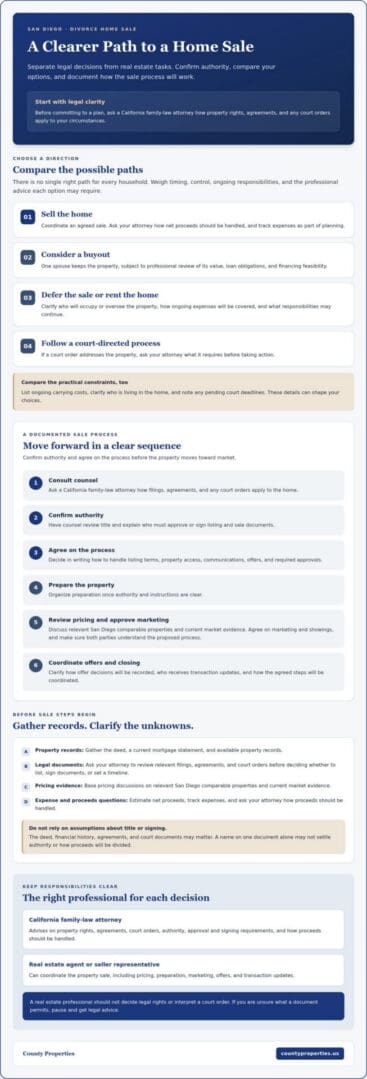
Start with documents, not assumptions. Gather the deed, a current mortgage statement, and available property records. These can help your professionals understand how title is recorded, what loan information needs review, and what details still need clarification. A name on one document alone may not settle questions about decision-making authority or how proceeds will be divided.
Ask your attorney to review relevant filings, agreements, and court orders before deciding whether to list, sign documents, or set a timeline. If you’re unsure what a document permits, pause and get legal advice rather than relying on an informal understanding between spouses.
Which home-sale outcome might fit your situation?
There’s no single right path for every household. Discuss which option best fits your legal, financial, and practical circumstances:
- Sell the home: Coordinate an agreed sale, then ask your attorney how net proceeds should be handled.
- Consider a buyout: One spouse keeps the property, subject to review of its value, loan obligations, and financing feasibility with qualified professionals.
- Defer the sale or rent the home: Review who will occupy or oversee the property, how ongoing expenses will be covered, and what responsibilities may continue.
- Follow a court-directed process: If a court order addresses the property, ask your attorney what it requires before taking action.
Check timing separately. List ongoing carrying costs, clarify who is living in the home, and note any pending court deadlines. These practical constraints can shape your choices, but a real estate professional shouldn’t decide legal rights or interpret an order. Once you’ve confirmed your authority and discussed the available paths with counsel, you can set a sale plan with clearer roles and fewer assumptions.
How to Coordinate a San Diego Divorce Home Sale Without Overstepping
A cooperative sale is easier to coordinate when legal decisions and real estate tasks have clear boundaries. Before listing, use this sequence to confirm who can authorize each step and how both sellers will receive updates. A defined process can reduce confusion without putting the agent in the position of resolving legal disagreements.
- Consult counsel. Ask a California family-law attorney how your filings, agreements, and any court orders apply to the home.
- Confirm authority. Have counsel review title and explain who must approve or sign listing and sale documents.
- Agree on the process. Decide in writing how you’ll handle listing terms, property access, communications, offers, and required approvals.
- List only when ready. Once authority and instructions are clear, your agent can coordinate the agreed real estate steps.
California divorce filings may involve restraining orders that affect property transactions. Don’t rely on general guidance or assume an order does or doesn’t apply to your circumstances. Ask your attorney to review the current rules and documents specific to your case before authorizing a listing or another transaction step.
Who needs to approve or sign the sale?
Don’t assume one spouse can independently authorize every step, or that both spouses must sign every document. Requirements can depend on title, court orders, agreements, and the transaction documents. Have your attorneys review those details and clarify approval and signing requirements before the listing begins. Agree as well on who receives updates and how offer decisions will be recorded, creating a shared reference rather than relying on separate recollections.
How a neutral agent can support both sellers
For selling a home during a divorce in San Diego, practical ground rules can keep the transaction organized even when communication is difficult. Agree on one shared communication channel, or another method both parties accept, and ask that updates go to each seller consistently. The agent can document instructions and present offers according to the agreed procedure.
The agent’s role is to coordinate the real estate transaction, including pricing discussions, marketing, offers, and transaction updates. It doesn’t include interpreting legal rights, deciding settlement terms, or resolving disagreements about approval. If you disagree about authority, proceeds, or whether to accept an offer, raise the issue with your attorneys or mediator rather than asking the agent to choose a side.
If both parties are ready to discuss a coordinated listing process, seller representation and transaction guidance from County Properties may help organize the real estate steps. Legal questions should remain with your attorney.
Sell, Buy Out, or Wait? Compare Your San Diego Home Options
Deciding what happens to the home involves more than comparing possible sale prices. Consider who will make decisions, how quickly each option could move forward, and who will manage the property and its costs in the meantime. The comparison below is a planning tool, not a legal or financial determination. Your circumstances and any applicable orders may change what’s available.
| Option | Control | Timing | Ongoing responsibilities | Professional advice to seek |
|---|---|---|---|---|
| Sell | Follow the approvals and signing process confirmed by counsel. | Depends on preparation, market response, and transaction steps. | Clarify who handles occupancy, upkeep, and expenses until closing. | Attorney for authority and proceeds; agent for sale coordination; tax professional for tax questions. |
| Buyout | One spouse may retain the home if the arrangement is workable and properly addressed. | Depends on valuation, agreement, and financing review. | Consider who will assume housing costs and mortgage responsibilities. | Attorney, qualified valuation professional, and mortgage or lending professional. |
| Defer the sale | Future decisions need to be clearly agreed or addressed through the applicable process. | Sale is postponed to a later date or condition. | Set expectations for maintenance, insurance, occupancy, and expenses during the delay. | Attorney and financial or tax professionals, as relevant. |
| Rent the property | Agree on who makes property decisions and how income and expenses are handled. | Timing depends on readiness and the parties’ plan. | Account for upkeep, insurance, occupancy, and ongoing obligations. | Attorney, tax professional, and qualified real estate or financial professionals. |
| Court-directed process | Follow the applicable order; don’t assume the spouses control every step. | Guided by the order and case circumstances. | Confirm who is responsible for the home while the process continues. | Attorney for interpretation and next steps. |
What a sale proceeds estimate can, and cannot, tell you
A real estate agent can prepare a net sheet to estimate what might remain from a sale. Typical inputs include an estimated sale price, mortgage payoff information, and anticipated transaction expenses. Use it to compare scenarios, not as a final closing statement, a legal division of assets, or a settlement calculation. Actual figures can change as the transaction progresses.
Ask your attorney how proceeds should be addressed in your situation, and consult a tax professional about potential tax treatment. A preliminary estimate can inform those conversations, but it can’t decide either question.
When a buyout, rental, or delayed sale merits review
Before choosing to keep, rent, or hold the home, assess whether either spouse can manage the housing costs and mortgage responsibilities, and who will cover maintenance and insurance. Clarify occupancy and how decisions will be made during any delay. A buyout may require a current valuation and a separate review of financing feasibility by qualified professionals. Get advice from the appropriate professionals on legal, lending, and tax implications before relying on an option.
For selling a home during a divorce in San Diego, a proceeds estimate and this options comparison can help frame the discussion. They’re starting points for informed professional advice, not promises about what either spouse will receive.
Prepare and List the Property: A Practical San Diego Sale Checklist
Once the parties have confirmed they can proceed and agreed on a process, put the sale steps in a shared plan. Clear approvals and predictable updates make the practical work easier to manage. For a broader overview of the process, see this Southern California home-selling guide.
- Prepare the property. Walk through the home and agree on priority repairs, staging, and what should be removed or stored. Set expectations for who approves the work and how related decisions will be recorded.
- Review pricing. Ask the agent to assess relevant comparable San Diego properties and current market evidence. Discuss how the home’s condition, location, and features compare before approving a pricing strategy.
- Approve marketing. Review the listing information, photos, and marketing plan together. Confirm who needs to approve materials and how changes will be handled before the listing goes live.
- Plan access and showings. Agree on how appointments will be requested, who will provide access, and how much notice is needed. A shared approach helps avoid last-minute confusion for sellers and prospective buyers.
- Set offer procedures. Decide how offers will be delivered to both parties, how deadlines will be tracked, and when counsel should be consulted. Don’t assume one spouse’s preference is an agreed decision.
- Coordinate closing. Track transaction milestones and required documents with the agent and relevant closing professionals. Refer questions about settlement terms or instructions for distributing proceeds to the attorneys.
Set up transparent communication before the listing goes live
Before marketing begins, confirm that both parties will receive listing documents, showing feedback, and offer details through an agreed communication channel. Decide how questions or time-sensitive decisions will be escalated to counsel, and keep written records of approvals, agreed changes, and key milestones. For selling a home during a divorce in San Diego, a shared record helps everyone refer to the same instructions instead of relying on separate conversations or memories.
Put practical details in writing, including access arrangements, repair approvals, staging decisions, and offer deadlines. The agent can follow those instructions and coordinate the real estate work, but shouldn’t interpret court orders or determine either party’s legal rights.
Evaluate offers and manage the closing process
Review each offer with the agent, considering its terms, contingencies, financing, and proposed timing. Ask questions about the real estate implications, then follow the agreed procedure for decisions and approvals. Legal settlement questions and instructions about proceeds belong with the parties’ attorneys.
If you’re choosing representation, this guide to choosing a real estate agent offers questions to consider. To discuss coordinated seller representation for your property, County Properties can provide transaction guidance while your attorney advises on legal matters.
Choose Your Next Step With a San Diego Seller Representative
You don’t need to settle every legal question before organizing your next steps, but you should understand who can authorize a sale and what process applies. For selling a home during a divorce in San Diego, start by gathering property documents, consulting your California family-law attorney, and agreeing how real estate decisions and updates will be handled. Then interview agents together if possible.
Before speaking with an agent, gather the deed, current mortgage information, available court documents, and any written agreements about the home. Ask counsel to clarify authority, approvals, and restrictions that could affect a listing or sale. Then outline the communication and decision-making process you want the agent to follow. This preparation keeps legal decisions with your attorney and sale coordination with your real estate representative.
Questions to ask before hiring a real estate agent
Choose someone who can explain the transaction process clearly and respect the communication rules you set. During interviews, consider asking:
- How will you keep both parties informed, and how will you record instructions and approvals?
- What experience do you have with comparable San Diego property types, such as single-family homes or condos, and how do you approach local marketing?
- How will you present pricing information and offers so both parties can review them through the agreed process?
- If we disagree about a listing decision or approval, how will you pause and refer the issue to our attorneys?
Discuss expectations openly. A representative can coordinate property preparation, pricing discussions, marketing, showings, offers, and transaction updates. They shouldn’t decide property rights, interpret legal orders, or determine settlement terms. Those questions belong with your attorneys.
How County Properties can help with the real estate process
County Properties represents home sellers in Southern California, including owners of single-family homes and condos. Led by Arnie Levine, the team offers personalized, collaborative transaction guidance. You and your spouse can discuss whether a shared listing process fits your circumstances, including how communication, marketing, pricing discussions, and offer handling should work. The agent’s role is to coordinate the real estate transaction, not provide legal or financial advice or promise a particular sale outcome.
If you’re ready to discuss seller representation and what a coordinated process could look like, start a conversation about selling your San Diego home.
Move Forward With a Clear, Shared Plan
Selling a home during a divorce in San Diego can feel complicated, but separating legal decisions from real estate tasks can make the process more manageable. Confirm your authority and obligations with a California family-law attorney, then compare selling, a buyout, or waiting based on your circumstances. If a sale is the right path, agree on how you’ll handle communication, property access, approvals, and offer decisions before listing.
A seller representative can coordinate pricing discussions, marketing, offers, and transaction updates. That role is separate from legal advice and decisions about property rights or settlement terms. County Properties provides residential seller representation across Southern California, with personalized, collaborative transaction guidance.
If you and your spouse are ready to discuss a coordinated real estate process, discuss a clear, collaborative plan for selling your San Diego home. With appropriate professional support and a shared process, you can take the next step with greater clarity.
Frequently Asked Questions
Can one spouse sell a house during a divorce in California?
Possibly, but whether one spouse can authorize a sale depends on the home’s title, any agreements between the spouses, and applicable court orders. The fact that a divorce is underway doesn’t by itself answer who may list or sign documents. Before listing the property, signing an agreement, or accepting an offer, ask a California family-law attorney to review your documents and explain what authority applies to your case.
Do both spouses have to agree to sell a house during a divorce?
Not necessarily in every situation, but cooperation can make the real estate process easier to coordinate. The legal requirements depend on the circumstances, including how title is held, whether court orders apply, and what the filed divorce papers say. Don’t assume that one spouse can authorize every step, or that both must approve every decision. Ask a California family-law attorney for guidance specific to your documents and case.
What happens to the proceeds when a San Diego home sells during a divorce?
The agent doesn’t decide how sale proceeds are divided. A real estate net sheet can estimate transaction figures, such as an anticipated sale price, mortgage payoff, and expected expenses, but it doesn’t determine either spouse’s share. Distribution depends on applicable legal agreements or court decisions. Before closing, ask your attorneys to provide written, approved instructions for handling proceeds so the transaction professionals know how to proceed.
Is it better to sell a house or buy out a spouse during divorce?
Neither option is best for every couple. A sale may provide liquidity and end shared housing responsibilities, while a buyout may let one spouse remain in the home but requires review of value, financing, and continuing costs. Compare housing needs, timing, mortgage responsibilities, and maintenance before choosing. A qualified valuation professional, lending professional, attorney, and tax professional can advise on the parts of the decision within their expertise.
Can we sell our house after divorce papers are filed in California?
Filing divorce papers can affect decisions about property, so don’t assume a sale can proceed without review. Applicable restraining orders or court orders may affect a transaction, and their meaning depends on the specific documents and circumstances. Don’t rely on a general explanation to interpret an order. Before authorizing a listing, signing documents, or accepting an offer, ask a California family-law attorney to review your case.
How is home equity calculated when a couple sells during divorce?
Estimated equity starts with an estimated property value minus relevant secured debt, such as the mortgage balance. That figure isn’t the same as final proceeds: transaction expenses can reduce the amount remaining, and legal agreements or court decisions may affect distribution. A real estate net sheet can estimate sale-related figures, but it isn’t a settlement calculation. Ask your attorney how equity should be addressed in your circumstances.
Should divorcing spouses use one real estate agent to sell their San Diego home?
One representative may coordinate a jointly agreed sale, but whether that arrangement fits depends on both parties’ consent, communication, and any potential conflicts. If it feels workable, interview agents together and ask how each spouse will receive updates, review offers, and document instructions. A real estate agent coordinates the transaction, not legal rights or settlement terms. Take disputes about authority or approval to your attorneys or a mediator.