

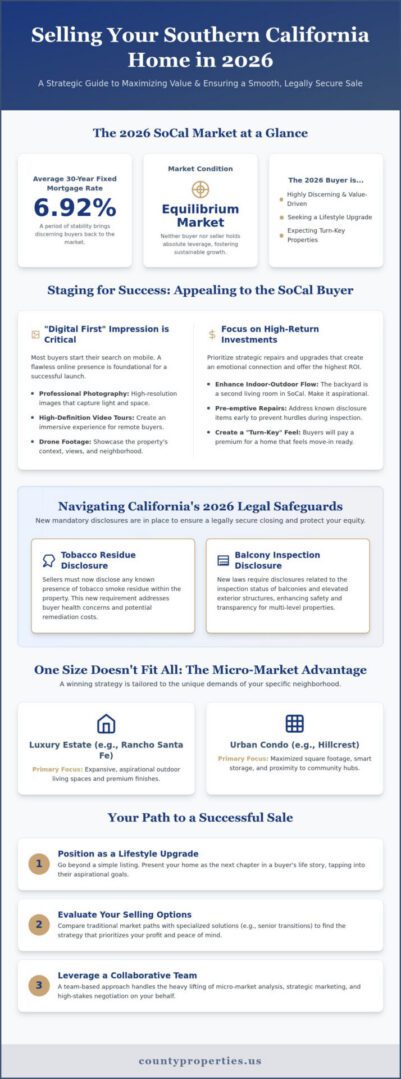
Selling a home in Southern California in 2026 is a high-stakes performance where the legal fine print is just as vital as the curb appeal. You’ve likely noticed that today’s buyers are more discerning than ever, especially with 30-year fixed mortgage rates averaging 6.92% across the state. It’s completely normal to feel a bit overwhelmed by the combination of high competition in San Diego neighborhoods and the heavy lifting required for a major life transition. Implementing the right home staging tips for southern california sellers can transform that stress into a strategic advantage.
We’re here to help you manage this transition with confidence and clarity. This guide provides the expert staging strategies and localized insights you need to maximize your home’s value while ensuring you meet every new 2026 requirement, including the latest tobacco residue and balcony inspection disclosures. We’ll walk through how to present an aspirational lifestyle to buyers, handle the complexities of a shifting economy, and secure a smooth, legally sound closing that protects your hard-earned equity.
Key Takeaways
- Understand the 2026 San Diego market landscape to position your property as a lifestyle upgrade rather than just a real estate listing.
- Implement high-ROI repairs and essential home staging tips for southern california sellers that tap into the aspirational psychology of modern West Coast buyers.
- Navigate California’s rigorous 2026 disclosure requirements, including new rules for tobacco residue and balcony inspections, to ensure a legally secure closing.
- Compare traditional market paths with specialized senior transition solutions to find a strategy that prioritizes both your financial profit and personal peace of mind.
- Discover how a collaborative, team-based approach to representation handles the heavy lifting of marketing and high-stakes negotiation on your behalf.
Navigating the Southern California Real Estate Market in 2026
Success in the 2026 real estate market requires a departure from the frantic bidding wars of the early 2020s. We’ve entered a period of relative stability where interest rates have leveled out around 6.92% for California borrowers. This predictability has brought buyers back to the table, but they’re arriving with higher expectations and a sharper eye for value. They aren’t just looking for four walls and a roof. They’re seeking a specific lifestyle transition that aligns with their long-term goals. To capture their attention, you must treat your sale as a professional presentation of that lifestyle.
National real estate aggregates often paint a misleading picture by grouping San Diego and Riverside counties with vastly different markets like those in the Midwest. Relying on generic data can lead to pricing errors or missed opportunities. In our region, the persistent California’s housing shortage continues to provide a safety net for property values, even as inventory levels fluctuate. Integrating professional home staging tips for southern california sellers into your strategy ensures your home stands out as the premium choice in a market where quality is the primary driver of demand.
2026 Forecast: What Sellers Should Expect
Current inventory levels across San Diego and Riverside remain lean, though we’re seeing a slight increase in listings as homeowners finally move forward with delayed life plans. The 2026 market is best described as an equilibrium market where neither buyer nor seller holds absolute leverage, resulting in steady, sustainable price growth. You can explore more detailed projections in our latest review of Southern California housing market trends. Sellers who prepare their homes meticulously will find that buyers are ready to commit, provided the property feels turn-key and legally transparent.
Micro-Market Nuances: From Rancho Santa Fe to Hillcrest
San Diego is a collection of distinct micro-markets, each demanding a tailored approach. A coastal luxury estate in Rancho Santa Fe requires a completely different staging philosophy than a vibrant urban condo in Hillcrest. While the luxury buyer expects expansive, aspirational outdoor living spaces, the urban buyer is often focused on maximizing square footage and proximity to community hubs. Neighborhood-specific demand dictates everything from your initial list price to the specific home staging tips for southern california sellers you should prioritize. We focus on these street-level details because a one-size-fits-all approach doesn’t work in a region as diverse as ours. Understanding these nuances allows you to speak directly to the most likely buyer for your specific zip code.
Essential Home Staging Tips for Southern California Sellers
Preparing your property for a 2026 sale requires more than just a fresh coat of paint. It demands a strategic alignment with the aspirational lifestyle local buyers are willing to pay a premium for. Effective home staging tips for southern california sellers focus on creating an emotional connection from the second a prospect views your listing online. Because most buyers begin their search on mobile devices, your “digital first” impression must be flawless. Professional photography, high-definition video tours, and even drone footage of the surrounding neighborhood are no longer optional extras; they’re foundational requirements for a successful launch.
Our team views staging as a psychological tool to help buyers visualize their future. This process works best when it’s integrated with a comprehensive plan, such as the ultimate guide to selling a home in Southern California. We recommend prioritizing repairs that offer the highest return on investment, particularly those that address official disclosure requirements early in the process. Fixing a known issue now prevents it from becoming a major hurdle during the high-stakes inspection period later.
If you’re feeling overwhelmed by the logistics of preparing your space, you might consider a personalized consultation to help prioritize your efforts.
High-Impact Upgrades for the SoCal Aesthetic
The most significant gap in standard staging advice is the failure to address indoor-outdoor flow. In San Diego and Riverside counties, the backyard is often treated as a second living room. To maximize value, ensure your staging creates a seamless transition between these spaces. Use cohesive color palettes and similar furniture styles to blur the line between the interior and the patio. Additionally, prioritize drought-tolerant landscaping. Modern buyers demand curb appeal that’s both beautiful and sustainable, favoring native plants and smart irrigation systems that reduce long-term maintenance costs and utility bills.
Pricing Strategy: Beyond the Zillow Estimate
While digital estimates provide a starting point, they frequently miss the mark on unique neighborhood features or recent custom upgrades. Zillow’s algorithms often struggle with San Diego’s diverse zip codes, where values can shift significantly from one block to the next. Overpricing in 2026 is a risky move that can lead to your listing becoming “stale” in a discerning market. We rely on a detailed Comparative Market Analysis (CMA) to find your home’s sweet spot. This data-driven approach accounts for micro-market nuances, ensuring your price reflects the true value of your staged, turn-key property.
California Disclosures and Legal Safeguards
Staging creates the visual dream, but your legal disclosures protect the financial reality of your sale. In the 2026 market, transparency isn’t just a courtesy; it’s your strongest defense against post-sale litigation. California remains one of the strictest states regarding seller transparency. While you apply visual home staging tips for southern california sellers to attract interest, you must also provide a clear, written history of the property through the Transfer Disclosure Statement (TDS) and the Natural Hazard Disclosure (NHD). These documents ensure that your buyer is fully aware of the home’s condition and any external risks before the deal is finalized.
The “Material Fact” rule is the cornerstone of this process. If a piece of information could influence a buyer’s decision or the price they’re willing to pay, you’re legally obligated to disclose it. This includes everything from past water damage to neighborhood nuisances. Reviewing current California housing market data helps you understand how buyers are reacting to these legal hurdles. We act as your dependable guide throughout this paperwork, ensuring that your financial safety is never compromised by an overlooked detail or a missed signature.
Navigating Environmental and Climate Mandates
Southern California properties are subject to specific environmental disclosures that buyers take very seriously. You must disclose if your home sits in a high fire hazard severity zone, a seismic fault zone, or a designated flood plain. Under California law, a seller must disclose all known material facts that affect the value or desirability of the property. We often recommend that our clients perform professional inspections before listing. This strategy acts as a form of “defensive staging,” allowing you to address repairs or adjust your price before a buyer’s inspector finds a surprise that could derail your escrow.
The Closing Process: Escrow and Title Insurance
Escrow serves as the neutral third party that manages the exchange of funds and documents. In San Diego County, customary seller costs include the state transfer tax of $1.10 per $1,000 of the sale price, along with title insurance and escrow fees. Your final net proceeds will also be impacted by prorated property taxes, which vary depending on your specific tax rate and any local assessments. In the current 2026 climate, the typical timeline from an accepted offer to a funded sale spans approximately 30 to 45 days. We monitor every milestone of this timeline to ensure your transition is as smooth and predictable as possible.
Evaluating Your Selling Options: Traditional vs. Specialized Paths
Deciding how to sell your home is just as critical as the presentation of the property itself. While the home staging tips for southern california sellers we’ve discussed are vital for a traditional market listing, not every homeowner has the luxury of time or the desire to manage a public sale. Your 2026 financial goals should be the primary compass for this decision. If you seek to maximize your net profit, a traditional listing remains the gold standard. However, if you’re navigating a high-stakes life transition, a specialized path might provide the financial safety and peace of mind you need.
The Senior Real Estate Transition
Downsizing after decades in a family home is an emotional and logistical challenge that requires more than just a standard agent. This is why you need a Senior Real Estate Specialist (SRES®) who understands the intricacies of these complex moves. We provide turn-key solutions that handle the heavy lifting, from managing a lifetime of belongings to coordinating with estate planners. Our goal is to ensure you move with dignity, ensuring your next lifestyle needs are met without the stress of managing a major construction or staging project on your own.
Distressed Property and Cash Solutions
Life can sometimes present unforeseen financial hurdles that make a traditional sale difficult. In these moments, recognizing when a short sale is the most responsible exit can protect your credit and your future. We offer comprehensive resources for foreclosure prevention in California to help you navigate these high-stakes exits with an experienced mentor by your side. For those who need to move immediately, we facilitate cash offer solutions. This path allows for an “as-is” sale, bypassing the need for repairs or the typical home staging tips for southern california sellers while still ensuring a legally sound closing process. If you are unsure which path fits your needs, discuss your unique selling situation with our team today.
The County Properties Advantage: Collaborative Expert Guidance
Choosing the right representation in 2026 is about more than just finding someone to put a sign in your yard. It’s about securing a long-term professional ally who views your success through a service-centric lens. The Arnie Levine philosophy centers on the belief that every client deserves a dedicated partner rather than a simple transaction coordinator. While many agencies rely on a “lone wolf” model where one person handles every detail, we utilize a collaborative team approach. This ensures that specialized experts are managing your marketing, legal disclosures, and high-stakes negotiations simultaneously, providing a level of oversight that a single agent simply can’t match.
Our deep-rooted community connection across San Diego and Riverside counties allows us to provide localized insights that national platforms often overlook. We don’t just see a property; we see a home that is part of a specific regional fabric. By integrating professional home staging tips for southern california sellers with our team’s collective experience, we position your property to thrive in even the most competitive market cycles. This collaborative spirit is the foundation of our business model, ensuring that your personal goals remain our primary focus from the initial consultation to the final funding of your sale.
A Supportive Ally for Complex Transitions
We understand that selling a home often accompanies a major life transition, such as downsizing or managing a senior relocation. Our team handles the heavy lifting of staging, legalities, and multi-channel marketing so you don’t have to. We are committed to your financial safety, ensuring that every disclosure is accurate and every contract is sound. Our past success in San Diego’s most desirable neighborhoods stems from this methodical, empathetic approach. We act as your dependable guide, navigating the technical complexities of the 2026 market while you focus on the personal aspects of your move.
Next Steps: Your Personalized 2026 Strategy
Starting your next chapter shouldn’t feel like a leap into the unknown. We begin every relationship with a professional home valuation that goes far beyond a digital estimate. During this initial phase, we’ll discuss specific home staging tips for southern california sellers that apply to your unique floor plan and neighborhood. From there, we build a custom marketing plan tailored to your property’s strengths. You can move forward with confidence, knowing you have a seasoned mentor and a collaborative team dedicated to your long-term peace of mind. Let’s work together to maximize your home’s value and ensure a seamless closing process.
Take the Next Step Toward Your Successful Sale
Achieving a premium price in the 2026 market requires a precise blend of aspirational presentation and rigorous legal preparation. By focusing on the unique indoor-outdoor flow of your property and staying ahead of California’s strict disclosure mandates, you position yourself for a smooth and profitable closing. Applying the right home staging tips for southern california sellers is just the beginning of a larger strategy designed to protect your equity and ensure your long-term financial safety.
Led by Arnie Levine, our team brings over 30 years of localized Southern California expertise to your side. As Certified Senior Real Estate Specialists, we understand that every move is more than just a transaction; it’s a significant life milestone. Our collaborative team approach ensures you have a dependable guide through every inspection, disclosure, and negotiation. We handle the heavy lifting so you can move forward with confidence and peace of mind.
Are you ready to see how your home compares to the current market? Request Your Personalized 2026 Home Valuation and Consultation today. We look forward to being your steadfast partner in this journey and helping you reach your next destination with ease.
Frequently Asked Questions
Is 2026 a good year to sell a home in Southern California?
Yes, 2026 is a favorable year for sellers because the market has reached a state of equilibrium with stable interest rates. With California mortgage rates hovering around 6.92%, buyer demand is consistent and predictable. Tight inventory levels across San Diego and Riverside counties continue to support property values, making it an excellent time to capitalize on your home’s equity.
What are the mandatory disclosures when selling a house in California?
Sellers must provide several key documents, including the Transfer Disclosure Statement (TDS) and the Natural Hazard Disclosure (NHD) report. As of January 2026, you’re also required to disclose any known tobacco or nicotine residue and whether marketing photos were digitally altered. If your home is in an HOA, you must now include the most recent balcony inspection report in your disclosure package.
How much are realtor fees and closing costs for sellers in San Diego?
Total closing costs for sellers in California typically range between 6% and 9% of the home’s final sale price. This figure includes real estate commissions and non-commission costs, which average approximately 2.72%. You should also account for the state transfer tax, which is $1.10 for every $1,000 of the sale price, along with title insurance and escrow fees customary to San Diego County.
Can I sell my California home without a lawyer?
Yes, it’s common and legal to sell your home in California without hiring an attorney. Licensed real estate brokers and neutral escrow officers handle the complex paperwork, title transfers, and fund disbursements that lawyers manage in other states. Our collaborative team acts as your dependable guide through these technical steps, ensuring your financial safety is prioritized without the added expense of legal counsel.
What is the fastest way to sell my house in Southern California?
The fastest route to a completed sale is through cash offer facilitation, which can often close in under two weeks. This method bypasses the lengthy mortgage underwriting process and appraisal requirements. If you prefer a traditional market sale, using professional home staging tips for southern california sellers is the most effective way to attract motivated buyers and minimize your total time on the market.
How does a short sale differ from a traditional home sale?
A short sale occurs when your lender agrees to accept a payoff that is less than the balance remaining on your mortgage. This is a specialized financial exit used to prevent foreclosure when property values have shifted. In contrast, a traditional sale happens when the home sells for more than the debt owed, allowing the seller to retain the net proceeds after closing.
What specialized services are available for seniors selling their homes?
Seniors can benefit from working with a Certified Senior Real Estate Specialist (SRES®) who understands the unique emotional and logistical needs of downsizing. These services include turn-key solutions for managing a lifetime of belongings and coordinating with transition planners. Our team focuses on providing a supportive, empathetic environment that ensures seniors and their families navigate this major life milestone with dignity and ease.
How do I determine the market value of my home in a changing economy?
The most reliable way to determine value is through a professional Comparative Market Analysis (CMA) performed by a local expert. Unlike automated online estimates, a CMA accounts for micro-market nuances, recent custom upgrades, and specific neighborhood demand. This data-driven approach ensures your list price reflects the true value of your property in the current 2026 economic climate, protecting you from the risks of underpricing or overpricing.