

What if the Section 8 voucher attached to your rental property was actually its strongest selling point rather than a bureaucratic hurdle? Many local landlords view government-assisted tenancies as a liability during a sale, fearing that one wrong move with a notification letter could lead to legal delays or lost equity. You’ve worked hard to build your portfolio, and it’s natural to feel anxious when navigating the San Diego housing authority when selling, especially with the complexities of the 2025 Affordable Housing Preservation Ordinance now in play.
We understand the pressure of balancing your financial goals with your responsibilities as a housing provider. You deserve a transition that is both profitable and compliant, regardless of whether your property falls under the City’s SDHC or the County’s HACSD jurisdiction. This guide provides a clear roadmap to master these complexities so you can sell with confidence and peace of mind.
We’ll clarify the specific notice periods required by local authorities, explain how to transfer HAP contracts to new owners, and show you how to position your property to attract buyers who value guaranteed rental income. You’ll learn exactly how to manage the Right of First Refusal and ensure your sale moves forward on your timeline.
Key Takeaways
- Identify whether the San Diego Housing Commission (SDHC) or the County Authority (HACSD) governs your property to ensure you follow the correct local protocols.
- Master the essential timelines for navigating the San Diego housing authority when selling, including the mandatory 60-day notification period for ownership changes.
- Determine if selling to an investor seeking “turn-key” Section 8 income or an owner-occupant better aligns with your financial goals and the tenant’s rights.
- Streamline your closing process by gathering the necessary SDHC Change of Ownership packet, including the W-9 and recorded Grant Deed, well in advance.
- Leverage expert seller representation to handle complex administrative requirements, ensuring a smooth transition that protects both your property value and your peace of mind.
Understanding the San Diego Housing Commission (SDHC) vs. County Authority (HACSD)
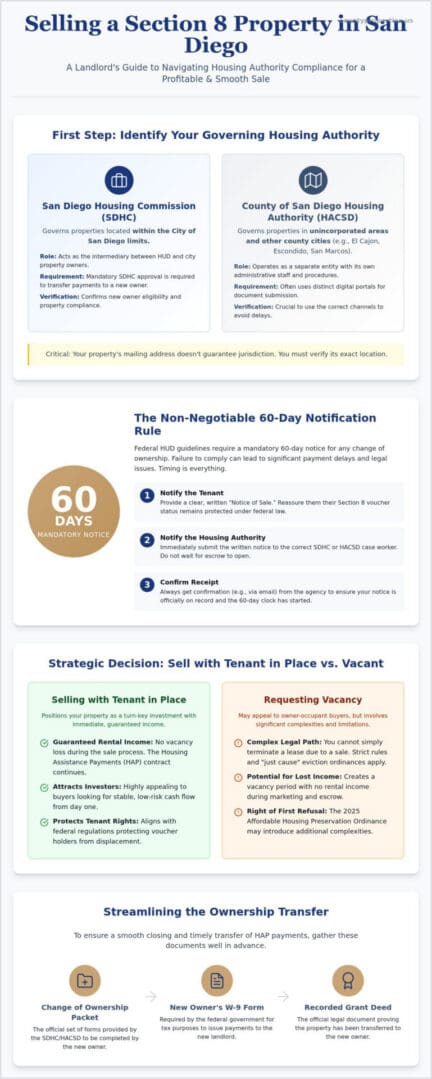
The first step in a successful sale involves identifying exactly which agency oversees your tenant’s voucher. This distinction is critical because the City of San Diego and the broader County operate under different sets of rules and administrative structures. You can’t assume that a San Diego mailing address automatically places you under the City’s jurisdiction. Instead, you must verify your property’s exact location relative to city limits and zip codes to determine your point of contact. The Housing Assistance Payments (HAP) contract serves as the core legal agreement you’ll need to manage, as it binds the housing authority, the landlord, and the tenant together through federal subsidies.
While both agencies follow federal HUD guidelines, they function as separate entities. The Government of San Diego County manages the HACSD, while the SDHC serves the municipality. Successfully navigating the San Diego housing authority when selling requires knowing which office holds your specific paperwork from day one. This clarity prevents the administrative friction that often arises when owners misidentify their governing body.
The Role of the San Diego Housing Commission
The SDHC acts as the vital intermediary between the federal Department of Housing and Urban Development (HUD) and local property owners within the City of San Diego. Their mission centers on maintaining a stable supply of affordable housing while ensuring every unit meets strict safety and habitability standards. When you decide to sell a property with an active Section 8 tenant, the SDHC’s approval becomes a mandatory milestone. They must verify that the new owner is eligible to receive federal funds and that the property remains compliant before they’ll authorize the transfer of payments.
The County of San Diego Housing Authority (HACSD) Jurisdiction
If your property is located in unincorporated areas or suburban cities like El Cajon, Escondido, or San Marcos, you’ll work with the HACSD. This agency operates with its own administrative staff and distinct contact procedures that differ from the City’s commission. Managing a sale here often involves using specific digital portals for document submission that aren’t shared with the SDHC. Our team, led by Arnie Levine, works as a senior real estate specialist to ensure your agent uses the correct channels. Our expertise in navigating the San Diego housing authority when selling ensures that every form reaches the right desk at the right time.
Notice Requirements and Federal Regulations for San Diego Sellers
Compliance is the foundation of a smooth transaction. Federal HUD guidelines ensure voucher holders aren’t displaced without cause during a property transfer. You don’t have the right to simply terminate a lease because you’re listing the home. Instead, success depends on navigating the San Diego housing authority when selling by adhering to strict notification windows. These rules protect the tenant’s stability while ensuring you continue to receive subsidized payments throughout the marketing period.
San Diego landlords must provide a mandatory 60-day notice for any change of ownership or management. This timeline is non-negotiable. If you fail to document the “Notice of Sale” correctly, you risk significant payment delays or even legal repercussions from local housing authorities. It’s a high-stakes process where timing is everything.
The 60-Day Notification Rule
Efficiently managing this timeline requires a methodical approach. First, notify the tenant in writing of your intent to sell. This letter should be clear and empathetic, explaining that their voucher status remains protected under federal law. Second, submit this written notice to the SDHC or HACSD case worker immediately. Don’t wait for escrow to open; early communication is your best defense against administrative backlogs. Finally, always confirm receipt with the agency. A simple email confirmation ensures the HAP payments continue without interruption during the escrow period.
For multifamily properties with five or more units, the City of San Diego’s Affordable Housing Preservation Ordinance adds another layer. Since March 29, 2025, owners must submit a “Notice of Intent to Sell” at least three months before listing. This gives qualified entities a right of first refusal, a detail often overlooked by those unfamiliar with navigating the San Diego housing authority when selling. If your goal is a vacant sale, local ordinances may require even more time for tenant relocation assistance and proper legal filings.
Protecting Your Rental Income During the Sale
One of the most common mistakes landlords make is “stopping” the HAP contract too early. This can lead to a gap in payments that is difficult to recover. The Housing Authority manages the transition of the direct deposit from the seller to the buyer, but the contract itself should remain active until the deed is recorded. You must coordinate closely with your escrow officer to prorate the final Housing Authority payment based on the closing date. This ensures you receive every dollar earned up to the moment of transfer. The buyer’s W-9 and recorded Grant Deed are the final pieces of the puzzle that trigger the payment transfer. Seeking professional seller representation can help you manage these moving parts while you focus on your next investment.
Selling with Tenants in Place vs. Requesting Vacancy: A Strategic Comparison
Deciding whether to keep your tenant in place or deliver a vacant property is a pivotal choice that shapes your entire marketing strategy. In the 2026 San Diego market, Section 8 status can be a powerful asset if you target the right buyer pool. When you’re navigating the San Diego housing authority when selling, you’ll find that investors often view government-subsidized rent as a “gold standard” for financial stability. By keeping the tenant, you offer a turn-key investment that generates reliable cash flow from the very first day of new ownership.
Conversely, selling to an owner-occupant presents more administrative hurdles. Most traditional buyers using conventional or FHA financing require the property to be vacant at the close of escrow. This path involves stricter legal timelines and potential relocation costs that can eat into your net proceeds. Using proven selling a home in southern california strategies allows you to weigh these options based on your specific financial goals and the current demand in your neighborhood. Section 8 status rarely increases market days in today’s climate; in fact, it often speeds up the process for multi-unit properties because savvy buyers appreciate the pre-vetted nature of the tenancy.
The Investor Appeal: Guaranteed Government Rent
San Diego investors frequently seek out Section 8 properties because they provide a level of financial safety that market-rate rentals sometimes lack. The government’s portion of the rent is direct-deposited like clockwork, regardless of broader economic shifts. You should highlight that the home is “inspection-ready,” as it has already met the housing authority’s rigorous safety standards. This reduces the buyer’s fear of hidden maintenance issues and positions the property as a high-yield asset with minimal vacancy risk.
Navigating Vacancy and Tenant Relocation
If you choose to target an owner-occupant, you must follow the legal process for asking a voucher holder to move. The San Diego Tenant Protection Act of 2026 mandates specific “just cause” reasons for termination, such as a buyer intending to use the home as their primary residence. This process requires careful coordination with the housing authority case worker to ensure the tenant has ample time to find a new home. In some cases, a “Cash for Keys” agreement is the most efficient way to negotiate a voluntary move-out. This collaborative approach respects the tenant’s needs while clearing the path for your sale. Navigating the San Diego housing authority when selling effectively means understanding these interpersonal dynamics just as well as the legal forms.
Step-by-Step Guide to the Transfer of Ownership Process
Securing a buyer is only half the battle; the technical transfer of the Housing Assistance Payment (HAP) contract requires its own dedicated strategy. This administrative phase is where many transactions encounter friction, but it doesn’t have to be complicated. Success in navigating the San Diego housing authority when selling relies on the precise coordination of legal documents and agency forms. The housing authority won’t redirect payments to a new owner until they have a recorded Grant Deed and a completed W-9 form in their possession. These documents act as the official trigger for the agency to update their financial records and resume direct deposits without a gap in income.
Completing the SDHC Paperwork Packet
The San Diego Housing Commission requires a specific “Landlord Change of Ownership” packet to finalize the transition. This comprehensive bundle includes the Assignment of HAP Contract, a fresh W-9 for the buyer, and a Direct Deposit Authorization form. Mismatched names on tax forms or outdated bank information are common errors that lead to immediate payment suspensions during the sale. Seller Representation at County Properties includes managing these specific forms to ensure total compliance. We also verify that the new buyer is willing to undergo the mandatory background check required for all participating landlords, which prevents the contract from being terminated at the last minute.
The Final Housing Quality Standards (HQS) Inspection
A change in ownership often triggers a new Housing Quality Standards (HQS) inspection. The housing authority wants to ensure the property still meets federal safety guidelines before the new owner takes over the HAP contract. You should treat this like a pre-sale home inspection, focusing on functional items like smoke detectors, water heaters, and secure window locks. Addressing these “fail” items before the agency inspector arrives is the best way to prevent costly escrow delays. A smooth walkthrough keeps the timeline on track and reassures the buyer that they’re inheriting a well-maintained, high-yield asset. If you find the administrative burden of these requirements overwhelming, our team provides expert seller representation to guide you through every signature and site visit.
How County Properties Simplifies Complex San Diego Real Estate Transactions
Selling a subsidized rental property shouldn’t feel like an administrative nightmare. At County Properties, we specialize in the complex situational challenges that come with government-assisted tenancies. We act as your steady, dependable guide, ensuring that every regulatory box is checked so you can focus on your next life milestone. Our team understands that for many long-term landlords, selling a property is more than just a transaction; it’s the culmination of years of hard work and investment. We take pride in protecting that legacy through expert seller representation.
Arnie Levine brings decades of localized experience to every sale. As a senior real estate specialist, he provides tailored support for landlords transitioning into retirement who need a high level of care and professional mastery. We take the lead in navigating the San Diego housing authority when selling, managing the delicate interpersonal dynamics between you, your tenant, and the agency case worker. Our goal is to ensure that the transition is respectful, compliant, and financially rewarding for all parties involved.
Expert Coordination for San Diego Landlords
We maintain direct lines of communication with both the SDHC and HACSD to ensure all deadlines are met. This proactive approach prevents the common pitfalls of missed notifications or suspended payments. We don’t just list your property; we build custom marketing strategies that highlight the unique value of your active voucher contract to qualified investors. Our commitment to collaborative, service-centric representation means we are always working in your best interest, facilitating progress through every stage of the escrow process. We handle the heavy lifting of paperwork and agency follow-ups so you don’t have to spend hours on hold with the housing authority.
Your Next Steps Toward a Successful Sale
Your journey toward a successful sale begins with a clear understanding of your property’s market value in the context of its rental income. We provide professional valuations that account for the stability of government subsidies, ensuring you don’t leave money on the table. You can rely on us to provide methodical assistance that prioritizes your financial safety and long-term goals. We invite you to schedule a consultation to review your specific HAP contract terms and develop a roadmap for your transition.
- Request a comprehensive home valuation tailored to subsidized rental properties.
- Review your current tenant agreements and housing authority obligations with our team.
- Develop a custom marketing plan that targets buyers looking for guaranteed government income.
By choosing a partner who understands the nuances of navigating the San Diego housing authority when selling, you gain peace of mind and a clear path to success. We are here to act as your steadfast ally during this significant life transition. Trust County Properties to navigate your San Diego Housing Authority sale today.
Master Your San Diego Property Transition with Confidence
Successful property sales in Southern California require more than just a buyer; they require a deep understanding of local regulatory frameworks. By distinguishing between SDHC and HACSD jurisdictions and strictly following the 60-day notification rules, you protect your financial interests and your tenant’s stability. Selling a subsidized rental is a strategic opportunity to attract investors who value the reliability of government-guaranteed income.
You don’t have to manage these complex administrative requirements alone. Navigating the San Diego housing authority when selling is much simpler with a seasoned ally by your side. With over 30 years of Southern California real estate experience and specialized expertise in Senior Real Estate Transitions, Arnie Levine and the County Properties team provide the methodical support you need. We specialize in SDHC and HACSD protocols to ensure your paperwork moves as fast as your sale.
Contact County Properties for an Expert Consultation on Your San Diego Sale
Your successful sale is within reach. We’re ready to help you achieve a smooth, profitable transition that honors your years of investment and hard work.
Frequently Asked Questions
Can I sell my house in San Diego if I have a Section 8 tenant?
Yes, you can sell your property at any time while a Section 8 tenant is in residence. The voucher program doesn’t restrict your right to transfer ownership or list the home on the open market. However, you must comply with federal HUD guidelines and local notification rules to ensure the buyer can successfully take over the rent payments. This often makes the property an attractive turn-key investment for buyers seeking steady cash flow.
Do I have to tell the San Diego Housing Commission I am selling?
Yes, notifying the housing authority is a mandatory step in the selling process. You must provide a written “Notice of Sale” to the San Diego Housing Commission or the County authority at least 60 days before the ownership change. For multifamily properties under the 2025 Affordable Housing Preservation Ordinance, you may need to provide a three-month notice of intent to sell to allow for a legal right of first refusal.
What happens to the Section 8 contract when a property is sold?
The existing Housing Assistance Payment (HAP) contract is typically reassigned to the new owner during the escrow process. While the seller’s specific agreement ends at the close of escrow, the agency facilitates a transfer to the buyer. This ensures the tenant remains housed without a gap in assistance and the new landlord begins receiving direct deposits once the recorded Grant Deed is processed by the agency.
Can the new owner evict a Section 8 tenant after buying the house?
No, a new owner cannot evict a tenant simply because they purchased the home. Under the San Diego Tenant Protection Act of 2026, landlords must have “just cause” to terminate a tenancy. If the buyer intends to occupy the home as their primary residence, this qualifies as a just cause. However, they must still provide the proper legal notice periods and potentially relocation assistance as required by local law.
How long does the SDHC take to process a change of ownership?
The SDHC typically takes between 30 and 60 days to fully process a change of ownership. This timeline depends heavily on the buyer’s speed in submitting the required “Landlord Change of Ownership” packet. Delays often happen if the recorded Grant Deed or the buyer’s W-9 form is missing. Efficiently navigating the San Diego housing authority when selling requires staying proactive with these administrative requirements to avoid payment suspensions.
Will selling a house with a Section 8 tenant lower my property value?
Selling with a Section 8 tenant doesn’t inherently lower your property value. In many cases, it increases appeal for investors who prioritize guaranteed income and low vacancy rates. While it might deter some owner-occupant buyers who want immediate move-in, the “inspection-ready” status of the home often offsets this. The key is marketing the property to the right audience who understands the long-term benefits of the voucher program.
Do I need a special real estate agent to sell a Section 8 property in San Diego?
You don’t legally need a specialized agent, but working with a professional experienced in navigating the San Diego housing authority when selling is a significant advantage. These transactions involve specific federal and local timelines that general agents often overlook. An expert like Arnie Levine manages the coordination between case workers, tenants, and buyers to ensure your rental income is protected and your closing stays on schedule.
What paperwork is required by the HACSD for a property sale?
The HACSD requires a specific set of documents to transition the HAP contract to a new owner. You must provide the name and address of the buyer, a written request for contract reassignment, and a copy of the recorded Grant Deed. The buyer must also submit a W-9 form and direct deposit authorization. Early communication with the HACSD ensures that the rental assistance payments continue without interruption for the new landlord.