

What if the details that make your gated community appealing are also the first things buyers ask about? Selling a home in a gated community in San Diego means presenting more than the property itself. Buyers may want to understand HOA dues, community rules, amenities, and how visitor entry works. Organize these details early so they build buyer confidence instead of slowing decisions.
You may be wondering which HOA records to gather, whether fees or restrictions could affect buyer interest, and how to arrange showings while following gate procedures and respecting residents’ privacy. A clear plan helps you address these questions early and present the home and community accurately.
This guide covers preparing HOA documents, setting a thoughtful price, marketing the home and its community, coordinating controlled-entry showings, and responding to offers. You’ll learn how to anticipate buyer questions and keep the sale organized with collaborative seller representation from listing preparation through the transaction.
Key Takeaways
- Plan for community access, HOA information, and shared amenities from the start of your home sale.
- Organize available governing documents, meeting information, budgets, rules, and required disclosures to answer buyer questions clearly.
- When selling a home in a gated community in San Diego, compare your property with relevant recent sales and current competition, including community context.
- Set a consistent showing process that accounts for appointment approval, gate entry, and residents’ privacy.
- Work with a seller representative who can guide preparation, marketing, offer decisions, and closing with attentive communication.
Selling San Diego Gated Homes: What Makes it Different?
Selling a home in a gated community in San Diego is manageable with early planning and clear communication. Along with preparing and presenting the home, plan to answer questions about visitor entry, what the HOA covers, and which shared amenities are part of the community.
Those details vary across San Diego communities. One may offer shared recreational spaces, while another may focus on maintaining common areas. Fees, rules, services, and responsibilities differ, too. Share community-specific information so buyers can understand what applies to this property rather than relying on assumptions.
What buyers may want to understand about the community
Buyers may consider the home alongside the community’s documented features. Expect questions about HOA fees, rules, shared amenities, and which maintenance responsibilities belong to the association or the homeowner. An HOA is a governing body for a common-interest community; this homeowner association overview provides background on how associations operate.
Keep descriptions factual. Share documented information about amenities and rules, but don’t present a gated entrance as a guarantee of security or promise future resale value. Buyers may value a feature differently, so distinguish what the records establish from what someone might infer about lifestyle or investment potential.
Why controlled access changes showing preparation
Gate procedures can affect appointment coordination, visitor entry, and how much notice a showing requires. Requirements differ by community, so build the applicable steps into the showing plan instead of assuming visitors can enter as they would at an unrestricted property.
Prepare accurate access instructions with your listing team. Share the approved entry process, necessary appointment details, and relevant community rules with the people coordinating visits. Clear instructions help prevent confusion at the gate and make arrival easier for prospective buyers.
Respect residents while arranging showings. Follow the community’s applicable procedures and protect neighbors’ privacy. Keep access codes and other sensitive entry details out of public-facing marketing, and share necessary instructions through appropriate showing channels.
Preparation turns community details into clear, useful buyer information. Treat access, HOA records, and shared features as part of the sale plan so you can answer questions confidently and present the home in its full, verifiable context.
Prepare HOA Records and California Disclosures Before Listing
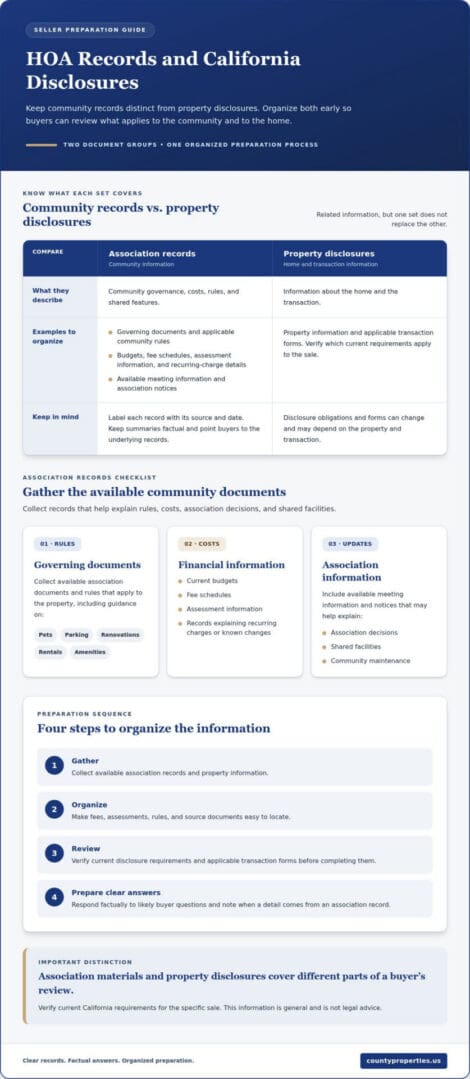
Organizing records before your home goes on the market gives you time to spot gaps, clarify recurring costs, and prepare consistent answers. When selling a home in a gated community in San Diego, keep association records distinct from property disclosures. They address related but different parts of a buyer’s review. California requirements can depend on the property and transaction, so verify current forms and obligations before relying on a checklist.
Which HOA documents and details should sellers organize?
Gather the records available to you, then label each document with its source and date. Association documents are not the same as a summary you prepare to explain them. Keep any summary factual and direct buyers to the underlying records for official details.
- Governing documents and rules: Collect available association documents and community rules, including guidance on pets, parking, renovations, rentals, and amenities that applies to the property.
- Financial information: Organize current budgets, fee schedules, assessment information, and records explaining recurring charges or known changes.
- Association updates: Include available meeting information and notices that may explain decisions, shared facilities, or community maintenance.
Quotable takeaway: Organize the HOA’s governing documents, meeting information, budget and fee details, assessment records, and applicable community rules, then verify current disclosure requirements before listing.
How California disclosures fit into the preparation process
Property and community records help buyers understand different aspects of the sale. Association materials describe community governance, costs, and rules; property disclosures address information about the home and transaction. Don’t assume one set of documents replaces the other. California disclosure obligations and forms can change and may depend on the circumstances, so verify the current requirements for your sale. This section is general information, not legal advice.
Use a simple preparation sequence:
- Gather available association records and property information.
- Organize fees, assessments, rules, and source documents so details are easy to locate.
- Review current disclosure requirements and applicable transaction forms before completing them.
- Prepare concise, factual answers to likely buyer questions, noting when a detail comes from an association record.
For a wider view of the sale process, see this Southern California home-selling guide. County Properties provides personalized, collaborative guidance to help sellers coordinate preparation and transaction decisions around their property’s circumstances through seller representation.
Price and Market a San Diego Gated-Community Home with Context
Pricing works best when it reflects both the home and the setting buyers are evaluating. When selling a home in a gated community in San Diego, compare properties by location, condition, size, features, and community context, then review current competition before settling on a list price. No single feature, including a gate or shared amenity, guarantees a particular value or sale result.
Which comparable homes provide the most useful pricing context?
Start with recent nearby sales that resemble your property in type, size, condition, and features. A home in the same community can offer especially relevant context, but differences in location within the neighborhood, upgrades, and association amenities still matter. Review active listings, too. They show the alternatives buyers can consider now, although asking prices don’t establish what a home ultimately sells for.
Nearby non-gated homes can help illustrate broader location or property-type patterns, but may not be direct comparisons if community services, shared features, fees, or access arrangements differ. Weigh the similarities and differences rather than applying a simple premium or discount. If you use broader market statistics, identify the source and date so buyers can see the period they describe. For additional regional context, explore the 2026 Southern California housing market forecast.
How to present community features without overpromising
Make community details in listing materials useful and verifiable. Describe amenities only as supported by current records, state recurring HOA costs accurately, and summarize relevant rules without implying that every buyer can use a feature in the same way. Use precise language for access arrangements. For example, describe the documented visitor-entry process rather than promising privacy or security.
A comparison table can help separate property attributes from community information and show buyers which differences may matter:
| Comparison point | What to review | Buyer-relevant difference |
|---|---|---|
| Property | Size, condition, layout, and features | How closely the home matches recent nearby sales |
| Community | Documented amenities, access, and HOA costs | What services or shared features accompany the home |
| Market position | Relevant closed sales and active listings | How the home compares with recent results and current alternatives |
Use the comparison to guide a thoughtful pricing discussion, not to claim that one community feature determines value. A personalized review of the property, its condition, and available market evidence can help position the listing clearly and set realistic expectations.
Coordinate Showings, Buyer Questions, and Offers in a Controlled-Access Community
In a gated community, an organized showing plan helps prospective buyers arrive smoothly while respecting residents and community procedures. When selling a home in a gated community in San Diego, coordinate appointment requests and entry instructions through your listing team, and tailor the process to the rules that apply to your property.
How can sellers make gated-community showings easier?
Before the first appointment, clarify how visitors are approved and admitted. Give the listing team accurate instructions, including any steps visitors must follow at the entrance. Keep instructions current and use the established showing process instead of posting sensitive access information in public listing materials.
Determine which spaces may be shown. The home and any private outdoor areas are distinct from shared amenities, which may have their own use or access rules. Confirm the applicable procedures before including a pool, clubhouse, or other common space in a tour. Protect residents’ privacy by avoiding identifiable personal details and ensuring visitors follow community expectations.
Prepare concise answers to common questions. Distinguish the current HOA fee from any separate costs, describe rules and amenities using available records, and explain which documents buyers can review. If you don’t know an answer, don’t guess. Identify the relevant record and use it to provide an accurate response.
How should sellers assess offers beyond the headline number?
The offer price matters, but it’s only one part of the proposed transaction. Compare each offer’s written terms with your priorities and circumstances, and consider how contingencies, financing, and requested timing may affect the path to closing.
- Contingencies: Review the conditions included in the offer and the timeframes attached to them.
- Financing: Consider the stated financing approach and terms without assuming approval or timing beyond what’s documented.
- Timing: Compare the proposed closing date and other requested dates with your plans.
- Other terms: Review written requests and commitments, and weigh them alongside the price.
The strongest fit depends on what matters most to you, not just the headline number. Your seller representative can help you compare offers consistently, identify points to clarify, and keep negotiations grounded in documented facts and your preferred outcome.
For collaborative guidance coordinating showings and evaluating offers, explore personalized seller representation.
Complete the Sale with a Clear Plan and the Right San Diego Partner
A steady plan keeps the sale moving from listing preparation through closing. Selling a home in a gated community in San Diego involves coordinating property and HOA records, positioning the home for buyers, arranging community access, reviewing offer terms, and tracking the steps that follow an accepted offer. Keeping those pieces connected makes decisions clearer and helps reduce last-minute confusion.
What should sellers keep organized through closing?
Keep a current, easy-to-follow record of the transaction. Organize documents and decisions by category so you and your transaction team can find the latest information quickly.
- HOA and disclosure materials: Retain the association records and property disclosure documents shared during the sale, including updates or clarifications.
- Offer and negotiation terms: Keep written offers, counteroffers, accepted terms, and related communications together.
- Deadlines and responsibilities: Track agreed dates, requested documents, and who is responsible for each next step with your transaction team.
Requirements can vary with the details of a transaction. Keep transaction-specific questions with the appropriate qualified professional, and use current written terms to guide decisions rather than relying on memory or informal assumptions.
How personalized seller representation supports the process
Thoughtful seller representation brings preparation, marketing, buyer communication, and offer decisions into one coordinated process. County Properties represents residential sellers across Southern California with personalized, collaborative guidance. Its comprehensive marketing programs help present the property, while attentive transaction guidance keeps the home’s and community’s circumstances in view as the sale progresses.
If you’re comparing representation, this guide to choosing a real estate agent can help you consider the communication and support that matter to you.
With clear records, a considered marketing approach, and a partner coordinating transaction details, you can move forward with greater confidence. Talk with County Properties about selling your home.
Move Forward with a Clear, Confident Sale Plan
Selling a home in a gated community in San Diego becomes more manageable when you treat HOA details and access procedures as part of the sale from the beginning. Organized records help you answer buyer questions, while relevant comparable sales and accurate descriptions of community features support thoughtful pricing and marketing.
As you move toward closing, keep documents, agreed terms, communications, and deadlines organized. A collaborative seller representative can help coordinate marketing, showing logistics, buyer questions, and offer decisions while keeping your priorities at the center of the process.
County Properties offers personalized guidance for Southern California sellers, comprehensive residential marketing programs, and collaborative, service-centered support. Each sale has its own circumstances, and attentive guidance can help you approach yours with a clear plan.
Talk with County Properties about selling your San Diego home and take the next step with confidence.
Frequently Asked Questions
Does selling a home in a gated community in San Diego take longer?
Not necessarily, but community-specific steps can add coordination to the sale. You may need to arrange gate entry for showings, gather HOA information, and respond to questions about fees, rules, and amenities. Planning these details early can help avoid preventable delays. Timing still depends on the property, buyer, transaction terms, and other circumstances, so no particular time frame can be assumed.
What HOA documents should I gather before listing my San Diego home?
Gather the association records available to you, such as governing documents, community rules, budgets, fee schedules, assessment information, and meeting materials. Include applicable rules about pets, parking, renovations, rentals, or amenities. Keep association-provided documents separate from any summary you prepare, and note when records were issued. An organized set helps you answer questions accurately and identify missing or outdated information before listing.
Can HOA fees or community rules affect a home sale?
Yes. Fees and rules can shape a buyer’s understanding of ongoing ownership costs and how the property may be used. A buyer may ask about recurring dues, parking rules, or restrictions involving rentals or renovations. The effect on interest depends on the buyer and the specific community. Present current, documented details clearly, and don’t generalize about rules or fees from another HOA.
How do showings work in a gated community?
Showings are coordinated around the community’s applicable entry procedures. Your listing team can manage appointment requests and share accurate visitor instructions through the appropriate channels. Clarify which areas are private and whether shared amenities may be included in a tour. Follow community rules, protect residents’ privacy, and keep sensitive access information out of public listing materials. Procedures differ by community, so use the instructions that apply to your property.
What California disclosures may apply when selling a home in an HOA community?
Disclosure requirements depend on the property and transaction, and HOA records are only one part of the information buyers may receive. Property-related disclosures and association documents serve different purposes, so don’t assume one replaces the other. California requirements and forms can change; verify the current obligations for your specific sale before completing paperwork. This general information isn’t legal advice, and applicable details should be confirmed for the transaction.
How should I price a home in a San Diego gated community?
Base your pricing discussion on relevant recent sales and current competition. Compare location, property type, size, condition, features, and community setting. Sales within the same community may offer useful context, while nearby non-gated homes may differ in amenities, fees, or services. Review the similarities and differences rather than assuming gated access creates a fixed premium. Market data should be current and tied to a named source and date.
Can buyers review HOA documents before making an offer?
Buyers may be able to review available HOA records before making an offer, depending on what has been gathered and how the documents are shared. Organizing governing documents, budgets, rules, fee information, and relevant updates in advance can support informed questions. The timing, contents, and process for providing association materials can vary by transaction, so don’t promise a complete package unless it’s available. Keep records current and clearly identify their source.