
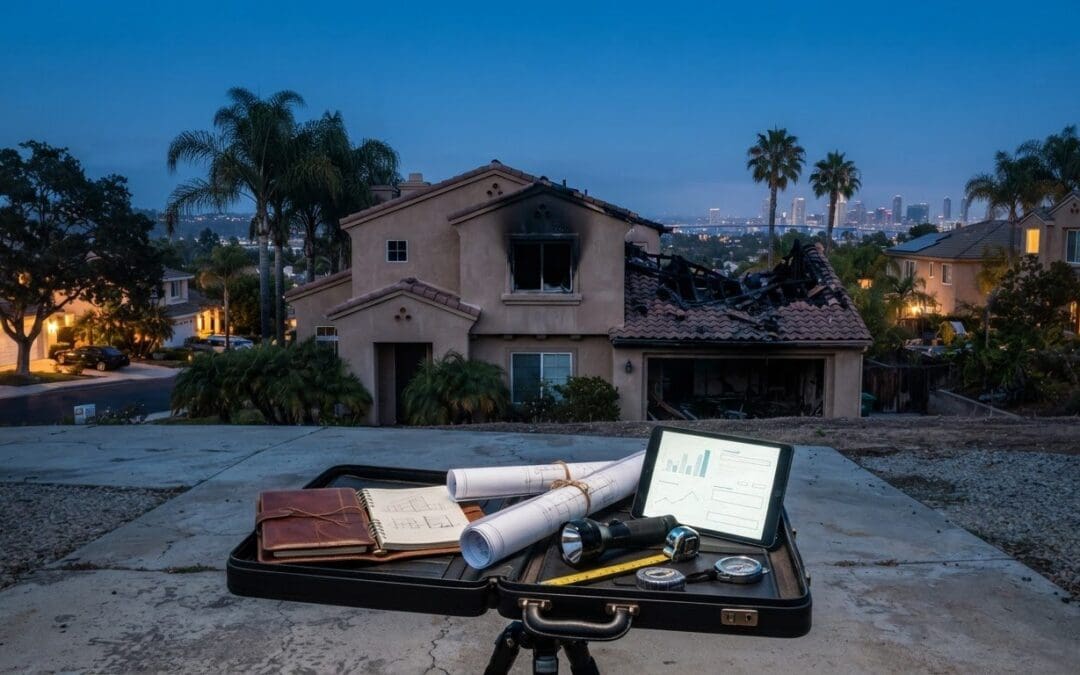
The visible damage isn’t always the biggest factor in what a fire-damaged house is worth. If you’re asking, “how much does fire damage devalue a house,” there’s no reliable percentage that applies to every property. The impact depends on what burned, whether smoke or structural damage remains, the scope and cost of repairs, and how confident buyers feel about the home’s condition.
It’s understandable to wonder whether to repair before selling or list the property as-is, especially while sorting through insurance paperwork and damage records. This guide explains the factors behind a property-specific valuation and how to compare the two selling paths without relying on a one-size-fits-all estimate.
You’ll also learn what documentation to gather, which qualified professionals can assess repair and insurance questions, and why disclosure responsibilities deserve careful attention. A local real estate professional can provide market perspective on likely buyer interest and comparable properties. Restoration, insurance, and legal questions should go to the appropriate specialists. With clear information, you can weigh your options more confidently.
Key Takeaways
- There’s no single percentage that answers how much fire damage devalues a house. The impact depends on damage, repairability, documentation, and local buyer demand.
- Direct flame damage isn’t the only concern. Smoke, soot, heat, and water can also affect a home’s condition and how buyers assess it.
- Compare an as-is sale with repairing first by weighing the work involved, remaining uncertainties, and potential buyer pool.
- Gather pre-fire property details, photos, insurance communications, and repair records before speaking with relevant professionals.
- Ask a real estate professional about market positioning and buyer considerations. Seek qualified restoration, insurance, and legal input for matters outside real estate.
How Much Does Fire Damage Devalue a House? Why There Is No Single Percentage
Fire damage can reduce a home’s market value, but the amount depends on the scope of damage, completed repairs, available records, and local buyer demand. A flat percentage can’t reliably estimate every property. A contained fire with documented repairs is different from a home with unresolved structural concerns, lingering smoke effects, or extensive water damage from firefighting.
Fire-related value loss is the difference between what a property may sell for in its fire-damaged condition and what a comparable property could sell for without that damage. The difference reflects more than physical repairs. Buyers may also account for uncertainty, time, and perceived risk. The eventual sale price depends on the market and the offers a seller receives.
What does fire damage devaluation mean for a home sale?
Condition and marketability can influence buyer offers and an appraiser’s opinion of value. Repair cost is one important consideration, but it doesn’t automatically equal the reduction in market value. A repair estimate describes the work required; a valuation considers how buyers may respond to the property compared with similar homes.
A useful assessment needs property-specific details and relevant comparable sales. Photos, inspection findings, repair records, and information about the home’s condition before the fire can help clarify what changed and what has been addressed.
Why do two fire-damaged houses lose different amounts of value?
Consider a contained kitchen fire that affects one area, compared with a fire that damages structural components and spreads smoke through several rooms. The second home may raise broader questions about safety, repair scope, and hidden damage. Building assemblies are designed and evaluated for their ability to withstand fire for specified periods. The concept of a fire-resistance rating helps explain why damage to different materials and components can have different implications.
The comparison still depends on context. Location, property type, condition before the fire, and competing listings can all shape buyer interest. A repaired home with clear documentation may be viewed differently from a similar home with incomplete records, but local comparable sales are needed to understand how those differences affect market value.
If you’re researching how much does fire damage devalue a house, treat general estimates as a starting point, not a valuation. Separate three questions: What was damaged? What repairs remain or have been completed? How are similar properties performing in your local market? Qualified property assessments and current sales evidence provide a more dependable basis for comparing your options.
What Determines a Fire-Damaged House’s Value After the Fire?
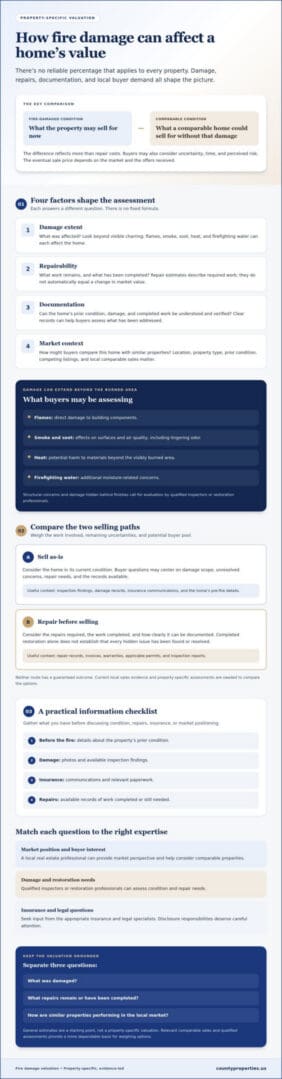
A useful assessment looks at four connected factors: damage extent, repairability, documentation, and market context. Each answers a different question: What was affected? What work remains? Can completed work be verified? How might buyers compare this home with other options? There’s no fixed formula that turns these details into a reliable value estimate.
Damage can include more than visible charring. Flames may damage building components directly. Smoke and soot can affect surfaces and air quality, heat can harm materials beyond the burned area, and firefighting water can create additional moisture-related concerns. A U.S. Congress Joint Economic Committee report recognizes diminished real estate values among the economic costs of wildfires. That broad finding doesn’t predict the value impact for any one property.
How damage scope and completed repairs influence buyer confidence
Structural concerns, lingering smoke odor, and damage hidden behind finishes need evaluation by qualified inspectors or restoration professionals. Their role is to assess condition and repair needs, not predict a sale price. A real estate agent can help interpret market context, but shouldn’t substitute for a technical assessment. Even completed restoration doesn’t establish by itself that every hidden issue has been found or resolved.
Keep records that explain the work, such as permits where applicable, invoices, warranties, inspection reports, and completion documentation. Clear records help buyers understand what was repaired and what remains uncertain. Missing paperwork can make it harder to answer questions or compare the home with properties whose condition is more readily documented.
How location, comparable sales, and disclosure affect marketability
Relevant comparable sales should reflect the home’s location, property type, condition, and sale timing. A broad regional trend can’t replace nearby evidence. San Diego and Southern California provide useful market context, but the right comparison depends on the property’s specific neighborhood and competing listings.
Disclosure can also influence buyer confidence and the sale process. California requirements may apply to a property’s fire history, including after repairs. The details depend on the circumstances, so confirm them with a qualified California real estate or legal professional. Keep accurate records and ask that professional how to handle your situation.
If you’re weighing the marketability of a fire-damaged home, a real estate professional can review comparable sales and likely buyer questions alongside qualified condition assessments. Explore seller representation in Southern California for property-specific market perspective.
Sell As-Is or Repair First? Compare the Options After Fire Damage
There isn’t one right route for every homeowner. An as-is sale may reduce the work you need to coordinate, while repairing first may make the home more accessible to buyers seeking a move-in-ready property. Compare the likely effort, remaining uncertainty, and potential buyer pool, then weigh those factors against a property-specific market assessment.
| Consideration | Sell as-is | Repair before listing |
|---|---|---|
| Effort | Less repair coordination, though you’ll still need to organize available records and manage buyer questions. | Requires coordinating assessments, repairs, and documentation before listing. |
| Uncertainty | Buyers may account for unknown conditions, repair scope, and the inspections they’ll want. | Assessments and completed work may reduce some uncertainty, but repairs don’t guarantee every concern is resolved or every cost is recovered. |
| Potential buyer pool | May appeal to buyers prepared to evaluate and take on a property needing work. | May appeal to buyers seeking a home with repairs completed, depending on condition and local demand. |
Insurance coverage, claim handling, and decisions about repair funds depend on the specific policy and insurer. Review your policy and claim communications with your insurer before committing to a course of action. A cash offer is another possible route, but it isn’t guaranteed to be available or the best fit. Compare its terms with other options instead of assuming it’s automatically faster or more favorable.
When might selling a fire-damaged house as-is make sense?
An as-is sale may be worth considering if you have limited capacity to oversee repairs, face time constraints, or prefer not to coordinate the work. Buyers may weigh the unknowns, expected repair scope, and whether they can access the property for inspections. Before discussing terms, gather damage assessments, insurance communications, property records, and any repair documents you have. This helps you describe what’s known without making assumptions about unresolved issues.
When should you consider repairing before listing?
Repairing first may be an option when qualified assessments clarify the work involved and you’re able to manage the process. Compare written repair estimates with a market assessment based on relevant local sales before deciding. Don’t assume the sale price will rise by the full cost of repairs. The result depends on the home, completed work, and buyer demand. Discuss your claim and coverage with your insurer, and consult appropriate qualified or licensed professionals about the work and your circumstances.
To decide how much does fire damage devalue a house in your situation, compare both paths using the same property details and market evidence. A real estate professional can help assess positioning and likely buyer questions, while restoration and insurance professionals address condition and coverage.
How to Estimate the Value Impact: A Practical Homeowner Checklist
A useful estimate brings together two separate assessments: professionals evaluate the home’s condition and repair needs, while a real estate professional considers its market position. Neither replaces the other. If you’re trying to determine how much does fire damage devalue a house, work through these steps and keep the evidence organized.
What records should you gather before seeking a valuation?
Collect what you have, even if the file is incomplete. These records can help professionals understand the home before the fire, what happened afterward, and which questions remain open.
- Pre-fire listing details, photos, and records of the home’s condition before the incident.
- Photos of the damage, inspection findings, and written repair estimates.
- Insurance communications and relevant policy documents.
- Permits where applicable, invoices, warranties, and records of completed repairs.
- A timeline noting the fire, mitigation work, repairs, and any remaining concerns.
Store copies securely, protect personal or financial information, and share documents only with professionals who need them for their role.
Who can help assess damage, coverage, and market value?
Different professionals answer different questions. Restoration or inspection professionals can evaluate condition and repair scope. Your insurer can explain policy-specific coverage and claim procedures. A real estate professional can review relevant comparable sales and help you anticipate buyer questions. Don’t assume coverage or treat a market estimate as a technical assessment.
Use this question checklist to guide those conversations:
- For restoration or inspection professionals: Which areas and materials were assessed? What damage or repair needs remain uncertain? What records will document the findings and completed work?
- For your insurer: Which policy provisions and claim procedures apply to my situation? What documentation do you need, and how should I discuss proposed repairs or a possible sale?
- For a real estate professional: Which comparable sales best reflect my property’s location, type, and condition? What questions might buyers raise? How could an as-is sale compare with listing after repairs?
Once you have condition information and local market evidence, you can compare options with a clearer view of what is known and what still needs professional input. For broader selling context, review this guide to selling a home in Southern California. A real estate professional can help assess market positioning without estimating restoration needs or making insurance decisions for you.
Selling a Fire-Damaged House in Southern California: Plan Your Next Step
A clear sale plan starts with what’s known, not with a rushed decision to repair or sell. Follow applicable safety guidance and get qualified input before entering or assessing affected areas. Then document the home’s condition, clarify your options, and evaluate how the property may fit the local market. This sequence helps you make better-informed decisions while keeping restoration, insurance, and real estate questions in the right hands.
What should a fire-damage sale plan include?
Before choosing a strategy, write down the property’s current condition, the records available, your preferred timeline, and how much repair coordination you can take on. Note which professional assessments or written estimates you still need. Keep buyer-facing information accurate and consistent with your records, and confirm disclosure questions with a qualified California real estate or legal professional.
- Establish safety: Follow guidance from the appropriate authorities and qualified professionals before accessing affected areas.
- Document condition: Organize photos, assessments, repair records, and a list of concerns that haven’t been resolved.
- Clarify your options: Review insurance and claim questions with your insurer, and identify any estimates or assessments you need before deciding whether to repair.
- Assess marketability: Consider the home’s location, condition, comparable properties, and your capacity to manage repairs or a sale.
How can a real estate professional help you compare your choices?
A seller’s agent can discuss relevant comparable properties, likely buyer questions, and how the home might be positioned for an as-is sale or after repairs. That market perspective can help you compare possible paths, but it isn’t an estimate of restoration needs or a promise of a sale price. Restoration and inspection professionals assess condition and repair scope. Your insurer addresses policy and claim questions. Engineering or legal issues require the appropriate qualified professionals.
If you’re still asking how much does fire damage devalue a house, use a property-specific market assessment as one part of your decision, alongside condition information and insurance guidance. Current California disclosure requirements can depend on your situation, so confirm them with a qualified professional before listing or discussing the property with prospective buyers.
County Properties offers seller representation and personalized real estate guidance in Southern California. Talk with the team about your property’s sale options and a practical next step.
Make Your Next Move With Clear Information
There’s no single figure that answers how much does fire damage devalue a house. Your property’s value depends on its condition, repairability, documentation, and local market evidence. Comparing an as-is sale with repairing before listing can help you weigh the work involved, remaining uncertainty, and potential buyer interest.
Start by organizing the records you have and getting input from the right professionals. Restoration or inspection specialists can assess condition, your insurer can explain policy-specific questions, and a real estate professional can help evaluate comparable sales and buyer considerations. Together, these perspectives can give you a more grounded basis for deciding how to proceed.
County Properties provides personalized seller representation in Southern California, including collaborative guidance for distressed-property situations. Discuss your property and selling options with County Properties to explore a path that reflects your needs. With reliable information and the right support, you can move forward one step at a time.
Frequently Asked Questions
How much does fire damage devalue a house?
There’s no dependable percentage that applies to every property. The value impact depends on the extent of structural, smoke, soot, and water damage, the repairs completed and documented, the home’s pre-fire condition, and local market conditions. To estimate how much does fire damage devalue a house, combine qualified condition assessments with comparable sales that fit the property. A generic online estimate can’t account for those details.
Does smoke damage lower a house’s value even if there was no major fire damage?
It can affect buyer confidence and marketability, even without extensive flame damage. Odor, residue, or possible hidden effects may lead buyers to ask for more information or professional evaluation. The impact depends on the extent of the smoke damage and whether qualified professionals have assessed and addressed it. Keep assessment findings and cleanup records. A real estate professional can help explain how buyers may view the documented condition locally.
Is it better to sell a fire-damaged house as-is or repair it first?
Neither option is best for every homeowner. Compare the documented repair scope, your available resources and timing, insurance circumstances, and likely buyer concerns. An as-is sale may mean less repair coordination, while completed repairs may make the home’s condition easier for buyers to understand. Ask qualified professionals to assess the property, then compare both paths using market information specific to your home and area.
Can you sell a house with fire damage in California?
A fire-damaged property may be marketed for sale, but you should understand applicable disclosure responsibilities and provide accurate information about known conditions. Requirements can depend on the circumstances and may change, so a general article isn’t legal advice. Before listing or negotiating, confirm current California requirements with a qualified California real estate or legal professional. Keep relevant property and repair records available to support accurate discussions.
How do insurance claims affect the value of a fire-damaged house?
An insurance claim doesn’t, by itself, determine a home’s market value. Your policy, claim status, repair decisions, and documentation depend on your circumstances. Buyers may ask about completed work and known remaining damage, so keep relevant records organized and share them appropriately. Ask your insurer about coverage and claim procedures, and consult qualified repair and real estate professionals for questions within their respective areas.
What documents should I keep after a house fire?
Keep photographs, inspection findings, restoration and repair estimates, invoices, permits where applicable, insurance communications, and records of completed work. Organize copies by date and store them securely. A timeline of the fire, mitigation, repairs, and outstanding concerns can help professionals understand the property’s history and help you answer buyer questions consistently. Ask each relevant professional whether additional records are useful for your property or the work completed.
Should I get an appraisal for a fire-damaged house?
An appraisal may be useful, depending on your property and the purpose of the valuation. Tell the appraiser about the fire and provide available condition and repair records. A real estate agent’s comparative market analysis is different from an appraisal, so don’t treat the two as interchangeable. Ask a qualified valuation professional which assessment fits your needs, and consider a real estate agent’s input on comparable sales and likely buyer questions.