

With nearly 80% of Southern California homes expected to face termite activity at some point, the question of who pays for termite inspection in San Diego isn’t just a minor detail; it’s a critical financial decision. You’re likely feeling the pressure of a ticking escrow clock while wondering if a surprise repair bill will eat into your equity or stall your purchase. It’s completely normal to feel anxious about how California Residential Purchase Agreement terms affect your bottom line, especially when high-stakes property values are on the line.
We understand that handling these complex legal requirements can feel overwhelming during a major life transition. This 2026 guide will demystify local customs, current VA and FHA loan requirements, and the latest negotiation strategies to ensure you aren’t left with an unexpected bill. We’ll break down the differences between Section 1 and Section 2 responsibilities and show you how to manage these costs to ensure a smooth, successful closing. By the end of this article, you’ll have the expert knowledge needed to protect your investment and move forward with confidence.
Key Takeaways
- Understand that while local custom often suggests the seller covers the cost, the California Residential Purchase Agreement makes determining who pays for termite inspection in San Diego a negotiable item in every transaction.
- Learn the critical distinction between Section 1 active infestations and Section 2 preventative measures to prioritize the specific repairs that lenders typically require for a successful closing.
- Navigate the specialized requirements for VA and FHA loans, including recent policy updates that offer more flexibility in how inspection fees are handled in competitive markets.
- Discover how proactive pre-listing inspections and the strategic use of seller credits can prevent stressful escrow delays and protect your property value during negotiations.
- Gain clarity on the Wood Destroying Organism (WDO) reporting process to ensure your final completion report satisfies all lender and title requirements for a smooth transition.
Who Traditionally Pays for Termite Inspection in San Diego?
Deciding who pays for termite inspection in San Diego is a pivotal moment in your escrow process. Historically, the burden of the initial Wood Destroying Organism (WDO) report fell squarely on the seller’s shoulders. This tradition stems from a desire to provide a clear title and a sound structure to the buyer. However, modern real estate dynamics have shifted this responsibility from a fixed rule to a flexible negotiation point. Today, the party responsible for the bill depends entirely on the leverage each side holds during the offer phase.
In San Diego real estate, the termite inspection cost is determined by the specific terms negotiated in the purchase contract, though sellers often cover it to entice buyers.
The Role of the California Residential Purchase Agreement (RPA)
The California Residential Purchase Agreement (RPA) serves as your roadmap through these negotiations. It treats the wood destroying pest and organism inspection as a specific checkbox item. You shouldn’t assume that an “as-is” sale automatically removes the need for a report. Even if a seller refuses to pay for repairs, many lenders still require the inspection to fund the loan. Selecting the right boxes in the RPA ensures that everyone understands their financial obligations before the transaction moves too far along. This clarity prevents stressful last-minute delays that can threaten your closing date.
San Diego Market Norms vs. Legal Requirements
San Diego County presents unique challenges due to our coastal climate, which termites find particularly inviting. While California law doesn’t strictly mandate a termite inspection for every sale, most lenders view it as a non-negotiable requirement. This specialized check is distinct from a general home inspection, which focuses on the overall systems of the house. In our local market, an unwritten rule often prevails; sellers are typically expected to provide a Section 1 clearance. This means the seller pays to eliminate active infestations, ensuring you receive a home that is structurally sound and free of pests.
Understanding who pays for termite inspection in San Diego requires a look at both the contract and the current economic climate. In a competitive seller’s market, you might see buyers offering to pay for the inspection and even repairs to make their bid stand out. Conversely, in a buyer’s market, sellers often foot the bill and complete all repairs to attract serious interest. Having a seasoned guide to navigate these nuances helps you secure the best possible terms for your specific situation. We focus on these details so you can concentrate on the excitement of your next chapter.
Understanding Section 1 vs. Section 2 Termite Repairs
Your termite report is more than just a list of pests; it’s a legal document that categorizes findings into Section 1 and Section 2. These designations are established by the California Structural Pest Control Board and directly impact your closing costs. Understanding these differences helps you determine who pays for termite inspection in San Diego repairs and how to structure your final agreement. The distinction ensures that both parties know which issues are immediate deal breakers and which are simply future maintenance tasks.
A “Termite Clearance” is the ultimate goal of this process. This document confirms that all Section 1 items have been professionally addressed. Title companies and lenders rely on this clearance to ensure the property’s structural integrity before transferring ownership. Without it, your escrow process could come to a grinding halt, as most financial institutions won’t risk their investment on a damaged structure.
Section 1: The Seller’s Typical Responsibility
Section 1 items are active wood-destroying threats that require immediate attention. These findings include live infestations of subterranean termites, drywood termites, or evidence of active fungus and wood rot. According to the University of California IPM, different species require specific eradication strategies, such as whole house fumigation or targeted local treatments. Section 1 is the removal of active wood-destroying threats required for most loan approvals. Because these issues affect the current value and safety of the home, sellers are traditionally expected to pay for these clearances to satisfy lender requirements. This ensures the buyer receives a home free of active biological threats.
Section 2: Preventative Measures and Negotiations
Section 2 items identify conditions that don’t show active infestation but are likely to lead to one in the future. Common examples in San Diego include earth-to-wood contact, faulty grade levels, or excessive moisture in crawlspaces. These are generally considered preventative maintenance. While sellers aren’t typically obligated to pay for Section 2 repairs, buyers sometimes use these findings to negotiate for seller credits or a reduction in the sales price. Having expert seller representation is vital here to protect your equity from being chipped away by minor maintenance requests. If you’re unsure how to respond to a buyer’s repair request, we can help you evaluate your best options to keep the sale moving forward smoothly and securely.
Termite Inspections for VA and FHA Loans
Government-backed loans introduce a specialized set of rules that significantly influence who pays for termite inspection in San Diego. For the thousands of military families and first-time buyers in our community, these regulations ensure the home is safe and structurally sound before the government guarantees the debt. While traditional conventional loans offer more flexibility, VA and FHA loans treat wood-destroying organism (WDO) clearances as essential safeguards for the veteran and the taxpayer alike.
These loans often shift the financial burden almost entirely to the seller. Because these programs aim to protect the buyer’s limited liquid capital, lenders frequently require that the property be free of active infestations before the keys change hands. This requirement can create a high-stakes environment during escrow if you haven’t prepared for the specific mandates of these loan types.
The VA Termite Inspection Mandate
San Diego is officially designated as a high-risk area for termites, making a professional WDO inspection mandatory for every VA home loan. Our local military community must navigate specific rules regarding fee structures. Historically, the “No-Pay” rule prohibited veterans from paying for the termite inspection fee itself. While VA Circular 26-22-11 updated this policy in June 2022 to allow VA borrowers to pay for the report, San Diego market customs often still see the seller, the lender, or the real estate agent covering this cost to remain competitive.
The VA requires a “Clear Section 1” report before funding. This means any active infestations or drywood termite damage must be professionally repaired and certified. If you’re a seller working with a VA buyer, you should expect to handle these costs to ensure the veteran can move into a secure home without immediate repair bills. We’ve seen many transactions close smoothly because the parties understood these requirements early in the process.
FHA Appraisals and Termite Signs
FHA guidelines are slightly different but equally impactful. An FHA loan doesn’t always mandate a termite inspection by default; however, the FHA appraiser acts as the eyes of the lender. If the appraiser observes any evidence of active infestation, previous termite damage, or conditions conducive to wood rot, they will flag the property. This trigger makes a professional inspection and subsequent clearance a requirement for the loan to proceed.
- Repair Timelines: All flagged repairs must be completed and inspected before the appraiser performs their final walkthrough.
- Strategic Advice: We strongly recommend that sellers obtain a pre-listing inspection. Identifying a $150 issue early prevents a $5,000 surprise that could derail your escrow just days before closing.
- Lender Overlays: Even if the appraiser doesn’t flag an issue, many San Diego lenders have “overlays” that require a termite report regardless of the FHA’s base requirements due to our local climate.
Navigating these government requirements requires a collaborative approach between buyers, sellers, and their representatives. By understanding that these rules exist to protect the long-term value of the home, you can approach negotiations with a sense of security and professional mastery.
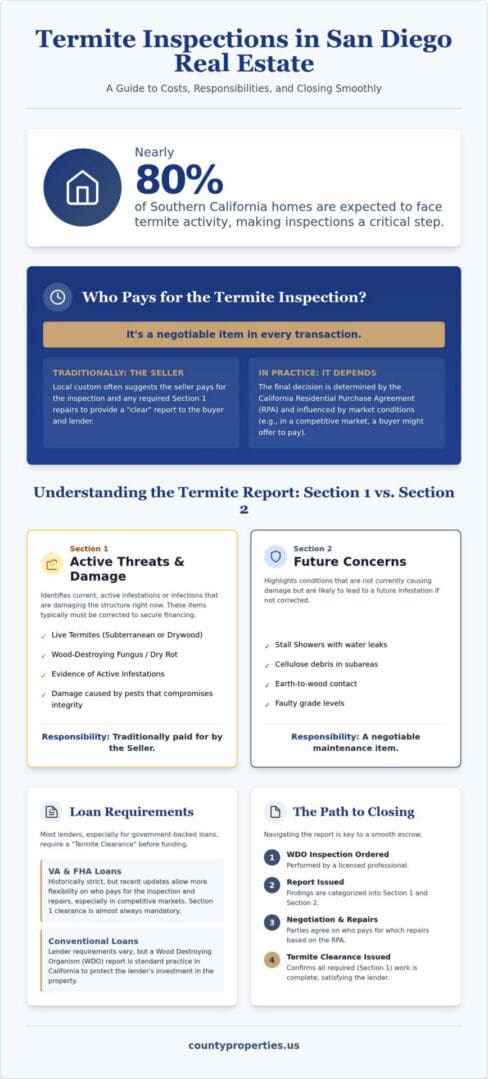
Strategic Negotiation: How Sellers Can Save Money
Negotiating termite costs doesn’t have to be a zero-sum game where the seller always loses. While the question of who pays for termite inspection in San Diego often points toward the seller, the actual dollar amount you spend is frequently within your control. Smart sellers use specific, proactive strategies to prevent repair bills from spiraling out of control during the high-pressure environment of escrow. By taking charge of the narrative early, you protect your equity and ensure the transaction remains on your terms.
One common misconception is that an “As-Is” sale exempts a seller from termite responsibilities. In Southern California, even if you state the home is being sold without repairs, a buyer’s lender may still demand a Section 1 clearance before funding the loan. Instead of fighting the requirement, successful sellers use strategic credits or pre-inspections to manage these expectations without breaking the bank.
The Power of the Pre-Listing Termite Report
Removing the “unknown” factor is the most effective way to save money. We often recommend that our clients invest in a pre-listing inspection. Paying approximately $150 for a report before your home hits the market can save you $5,000 or more in the long run. When a buyer’s inspector identifies issues first, their repair estimates are often inflated; however, when you identify the issues yourself, you have the luxury of time to gather multiple bids and choose a cost-effective, reliable contractor.
This transparency also builds incredible trust with potential buyers. By providing a full termite report upfront, you eliminate the fear of hidden damage. Buyers are less likely to aggressively negotiate for massive price reductions when they see you’ve already done the legwork to identify and price out necessary treatments.
Negotiating the Request for Repair (RR)
The Request for Repair phase is where many sellers feel the most stress. Buyers often submit a “wish list” that mixes essential Section 1 repairs with optional Section 2 maintenance. You must distinguish between “must-do” items required for loan funding and “nice-to-do” items that are simply part of owning a home. Arnie Levine’s expertise as a senior real estate specialist is particularly valuable here, as he helps seniors and long-term homeowners navigate these aggressive demands with a steady hand.
In many cases, offering a “Seller Credit” in lieu of actual repairs can simplify the closing process. This allows the buyer to handle the work after escrow closes while you avoid the hassle of managing contractors during your move. If you want to protect your equity from unreasonable repair demands, having a seasoned veteran on your side is essential. We stand firm when market trends favor the seller, ensuring you only pay for what is truly necessary to close the deal.
Closing Escrow: The Termite Completion Report
The journey from the initial offer to the final handshake involves several moving parts, but few are as critical as the termite completion report. While the initial Wood Destroying Organism (WDO) report identifies the problems, the completion report proves they’ve been solved. This document is the final “Clear” certificate that your lender and the title company require before they authorize the release of funds. Without this piece of paper, your escrow remains in limbo, regardless of how well you negotiated the initial terms.
Timing is everything in a San Diego real estate transaction. You should aim to have the inspection performed within the first 10 days of escrow. This window allows ample time for contractors to perform any necessary Section 1 work and for the inspector to return for a final check. Waiting until the final week of a 30-day escrow is a recipe for anxiety and potential funding delays. As we’ve discussed, the decision of who pays for termite inspection in San Diego is settled in the purchase agreement, but the execution of that agreement happens here in the closing phase.
The Completion Report and Funding
Lenders look for a specific statement in the final certificate: that all Section 1 items have been corrected. If repairs aren’t finished by the scheduled closing date, the lender may refuse to fund the loan, or the parties might have to agree to an escrow holdback, which can be legally complex. To keep the process methodical and supportive, the pest control company is typically paid directly through escrow funds. This ensures the contractor is satisfied and the seller doesn’t have to provide out-of-pocket cash before they receive their sale proceeds.
Long-Term Peace of Mind for San Diego Homeowners
Buying a home in Southern California requires a keen eye for termite history and structural maintenance. A clean completion report isn’t just a hurdle to clear; it’s a valuable asset. Many reputable pest control companies offer transferable warranties on their work. This provides the new owner with financial safety and peace of mind for months or even years after the sale, making it a significant selling point for your property.
Managing these high-stakes details requires a collaborative team effort. Trusting a seasoned real estate agent near me to oversee the timeline and the paperwork allows you to focus on your next chapter. We act as your dependable guide, ensuring every checkbox is marked and every report is filed so your transition is as smooth and positive as possible.
Secure Your Move with Expert Termite Strategy
Navigating the complexities of wood-destroying organism reports shouldn’t stand in the way of your next life milestone. You’ve learned that determining who pays for termite inspection in San Diego is a matter of strategic negotiation and understanding specific loan requirements. By distinguishing between active Section 1 threats and preventative Section 2 maintenance, you’ll protect your equity and ensure a smooth escrow process. Proactive steps, like obtaining a pre-listing report, transform a potential hurdle into a transparent selling point.
With over 30 years of San Diego real estate mastery, our team specializes in guiding you through these high-stakes transitions. Whether you need specialized senior real estate transition support or a collaborative approach to complex escrow negotiations, we’re your dependable ally. We handle the technical details so you can focus on the excitement of your new chapter. Take the first step toward a successful, stress-free closing today.
Get a Professional Home Valuation and Termite Strategy Session
Frequently Asked Questions
Is a termite inspection required by law in San Diego?
California state law does not mandate a termite inspection for every real estate transfer. However, most lenders require a Wood Destroying Organism (WDO) report before they will fund a mortgage in high-risk areas like San Diego. Additionally, the California Residential Purchase Agreement includes specific terms that usually make the inspection a contractual requirement. While not legally required by the state, it is a practical necessity for almost every traditional home sale.
Can a buyer pay for the termite inspection on a VA loan in California?
Yes, VA buyers in California are now permitted to pay for their own termite inspection fees. This change occurred in June 2022 under VA Circular 26-22-11, reversing a long-standing rule that forced sellers or agents to cover the cost. While the veteran can now pay, the question of who pays for termite inspection in San Diego remains a negotiable item that your agent can address during the offer process.
How much does a termite inspection cost in San Diego in 2026?
A formal Wood Destroying Organism (WDO) report required for escrow typically costs between $75 and $150 in the San Diego market. While some pest control companies offer “free” inspections, these are usually quotes for service rather than the official documentation needed by your lender. Investing in a professional report ensures you have the certified evidence required to satisfy title and funding requirements without any stressful last-minute delays.
What happens if termites are found during the home inspection?
If an inspector finds evidence of wood-destroying pests, they will categorize the findings into Section 1 active issues or Section 2 conducive conditions. The buyer and seller then enter a negotiation phase known as the Request for Repair. Typically, the seller is asked to clear Section 1 items to ensure the home is structurally sound before closing. We help you navigate these findings to reach a fair agreement that keeps the escrow moving forward.
Does the seller have to pay for termite tenting?
The responsibility for termite tenting is entirely negotiable in the purchase contract, though San Diego custom often places this cost on the seller. Since tenting is used to treat active infestations categorized as Section 1, most lenders require it to be completed before they will fund the loan. If you’re a seller, you might choose to pay for the treatment directly or offer a credit to the buyer to handle it after the sale concludes.
Can I sell my San Diego house “as-is” without a termite clearance?
You can list a home “as-is,” but this doesn’t always exempt you from providing a termite clearance to the buyer. Most traditional lenders require a Section 1 clearance regardless of the “as-is” status of the contract to protect their investment. If your buyer is using a VA or FHA loan, the clearance is almost always a non-negotiable requirement for funding. In cash sales, however, you have much more flexibility to skip the inspection entirely.
How long is a termite inspection report valid for escrow?
A termite inspection report and the subsequent clearance letter are generally considered valid for 90 days in a standard California real estate transaction. If your escrow is unusually long or if the sale falls through and a new buyer emerges after three months, you will likely need a fresh inspection. Keeping your report current ensures that the lender and title company have up-to-date information regarding the property’s condition for a smooth closing.
Is termite damage covered by California homeowners insurance?
Standard homeowners insurance policies in California do not cover termite damage or treatment costs. Insurance companies view termite activity as a preventable maintenance issue rather than a sudden, accidental peril like a fire or storm. This makes the termite inspection during the sale process even more critical. It’s your primary opportunity to ensure the property is sound before you take on the long-term financial responsibilities of homeownership in our region.