

What if a problem you discovered after closing was already reflected in the home’s history, but not in the paperwork you received? Understanding what sellers must disclose when selling a house in California can help you frame the question. But finding a problem after closing does not, by itself, prove that information was omitted.
If you’re unsure which documents matter or where to begin, preserve the records and build a clear timeline. Then compare what you found with the written disclosures and other transaction documents. This organized review can help you identify what is known, what remains unclear, and which questions need professional guidance.
This article explains what California disclosure documents generally cover and which records may help you review a suspected omission, including disclosure forms, inspection reports, repair records, messages, and escrow documents. You’ll also find practical steps for organizing information and deciding whether to raise questions with a real estate professional or seek legal advice. This is general information, not legal advice. Your options depend on the facts of your transaction.
Key Takeaways
- Learn what sellers must disclose when selling a house in California and which transaction documents, including the Transfer Disclosure Statement and Natural Hazard Disclosure, may help you review a concern.
- Preserve original disclosures, inspection reports, repair records, messages, and escrow paperwork. Create a dated record of what you observed.
- Compare the suspected issue with the written disclosures and available repair history. An “as-is” term alone does not establish whether a disclosure problem occurred.
- Organize the evidence, consider an appropriate condition assessment, and seek case-specific legal advice before signing releases or making accusations.
- A real estate team can help with real estate transaction questions and coordinate appropriate resources. Legal conclusions belong with a qualified attorney.
What California home sellers must disclose, and why it matters after closing
Seller disclosures share information with a buyer about a property’s condition and other matters relevant to the sale. If you discover a possible problem after closing, the disclosure file is a practical starting point. It can show what the seller reported, what questions were asked, and whether supporting records were included. It cannot, on its own, determine whether an answer was incomplete or a legal duty applied.
Two documents buyers commonly look for are the Transfer Disclosure Statement (TDS) and the Natural Hazard Disclosure (NHD). The TDS records a seller’s disclosures about the property. An NHD report summarizes information about specified mapped hazard areas. Their role depends on the transaction, and the complete file may include other forms, addenda, and supporting records. Use the documents to establish what was communicated, not as a substitute for advice about your circumstances.
A disclosure concern is a question about whether relevant information was omitted, inaccurate, or unclear. It is not, by itself, proof of fraud. After closing, compare the condition you found with the statements and records from the sale. The fact that a condition exists does not establish what the seller knew or represented before the transaction.
Which California disclosure documents should a buyer locate?
Gather the full transaction file rather than reviewing only the TDS or NHD. Look for signed disclosure forms, any seller questionnaire, addenda, inspection reports, and communications about the property’s condition. Forms and document names can vary by sale, so keep the versions you received, including attachments and later updates. If you consult California Department of Real Estate materials, confirm the document title and relevance. An official reference may explain paperwork, but it cannot determine what happened in your transaction.
What kinds of property issues may raise disclosure questions?
A known physical condition, a hazard affecting the property, or an earlier repair may raise questions. Examples include work addressing a leak or structural concern. These examples do not automatically establish that a specific fact had to be disclosed. Consider what the seller was asked, what the seller stated, and whether transaction records document the condition or repair. Duties depend on current law and the facts, so do not treat a checklist as a legal conclusion.
To assess what sellers must disclose when selling a house in California, keep your review tied to the actual transaction. Requirements, exemptions, forms, and timing can depend on the property and sale. A discrepancy may warrant closer attention, but it needs to be considered alongside the full record and the circumstances in which information was shared. Identify the relevant document, note the exact statement or unanswered question, and preserve records that provide context. That gives you a clear starting point for the evidence-preservation steps below.
How to preserve evidence of a suspected California disclosure problem
A careful record can help you understand what changed, what was communicated during the sale, and when you first noticed the issue. Start by preserving information rather than assigning blame. Keep relevant materials in their original form, make a separate working copy if you need to add notes, and record where each item came from.
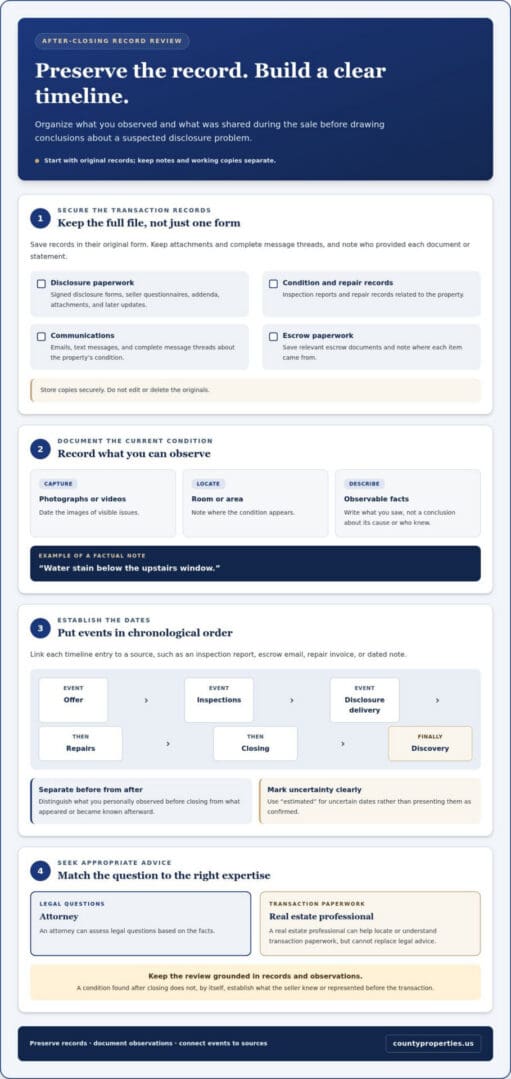
A timeline connects the property’s condition, your discovery, and the statements made during the transaction. Work through these steps in order:
- Secure the transaction records. Save original disclosure forms, seller questionnaires, inspection reports, repair records, emails, text messages, and escrow paperwork. Keep attachments and complete message threads, and note who provided each document or statement. Store copies securely without editing or deleting the originals.
- Document the current condition. Take dated photographs or videos of visible issues, noting the room or location and what you observed. Describe facts, such as “water stain below the upstairs window,” rather than drawing conclusions about the cause or who knew about it.
- Establish the dates. Use available records to list the offer, inspections, disclosure delivery, repairs, closing, and discovery. Distinguish what you personally observed before closing from what appeared or became known afterward. Mark uncertain dates as estimates rather than presenting them as confirmed.
- Seek appropriate advice. Once you have organized the records, an attorney can assess legal questions based on the facts. A real estate professional can help you locate or understand transaction paperwork, but cannot replace legal advice.
Build a timeline from purchase to discovery
Put events in chronological order and link each entry to its source, such as an inspection report, escrow email, repair invoice, or dated note. Preserve original digital files when possible. Renaming, editing, or forwarding a message can separate it from its context. If you’re reviewing what sellers must disclose when selling a house in California, the California Department of Real Estate’s “Disclosures in Real Property Transactions” is a useful general reference, but it does not decide how the law applies to your sale.
Document the condition without jumping to conclusions
Keep your own observations separate from professional findings. For example, record when and where you saw dampness, then preserve any later assessment or repair documentation as a separate item. Do not alter or discard potentially relevant photographs, records, or messages. Avoid posting them publicly, since online posts can expose private details and make it harder to maintain a calm, factual record.
If you’re unsure how documents from a real estate transaction fit together, County Properties’ real estate transaction guidance can help you organize available records and identify appropriate resources. Preserve the records first, then assess the evidence and your next steps with the right professional.
How to distinguish suspected fraud from an error, repair, or as-is sale
A difference between a home’s condition and a disclosure deserves careful review, but it may have several explanations. A seller may have omitted a condition they knew about, given an inaccurate answer, misunderstood a question, or described a repair that did not resolve the issue. Damage may also have developed after closing. The records need to help distinguish among these possibilities.
A discrepancy warrants review, but it does not alone establish intent or legal liability. Separate evidence that a condition exists from evidence about what the seller knew, said, or did before closing. A current leak, for example, confirms a present condition, but does not by itself show when the leak began or whether it was known during the sale.
What does an inconsistency between a disclosure and the home show?
Compare the exact disclosure wording with dated inspection findings, repair records, and your observations. Check whether each record concerns the same location and condition, and whether it relates to the same period. A report about a repaired leak in one room, for instance, may not address water damage later found elsewhere. The California Association of REALTORS® (C.A.R.) Standard Forms page can help you recognize forms used in transactions, but a form alone cannot explain conflicting facts.
Consider different explanations without treating any one as established:
- Known condition omitted: Records or communications may indicate the issue was known before the sale, which merits closer examination.
- Inaccurate answer or misunderstanding: The question’s wording, the seller’s response, and surrounding communications may clarify whether the answer was incomplete or based on a different understanding.
- Documented repair: Invoices or follow-up records may show that work was done, though they do not necessarily establish that the underlying issue was fully resolved.
- Later damage: Evidence that the condition appeared after closing may point to a different explanation from a pre-existing, known problem.
Does an as-is sale settle a suspected nondisclosure?
An “as-is” term and a disclosure concern are related to the sale, but they are separate questions. The contract language may describe the agreed condition of the property or the parties’ repair expectations. It does not automatically prove or disprove that information was properly disclosed. Do not rely on the phrase alone to decide what sellers must disclose when selling a house in California or what remedies may apply. A qualified California real estate attorney can review the contract and facts for case-specific guidance.
For a clearer assessment, match each concern to the relevant disclosure statement, date, location, and supporting record. Avoid calling an inconsistency fraud before the details have been evaluated. If you need help locating or understanding transaction documents, County Properties’ real estate transaction guidance can help you organize the record and identify appropriate resources.
What to Do After Finding a Disclosure Discrepancy
A discrepancy can feel urgent, especially when it involves a costly repair or a condition that affects your home. You do not have to decide immediately what it means. First, turn what you’ve gathered into a clear summary, then direct each question to the right person.
- Organize the records. Group transaction documents, communications, condition photographs, and repair or assessment records by date. Note the specific statement or answer that appears inconsistent with what you found, and list facts that still need clarification.
- Obtain an appropriate condition assessment. If the cause, extent, or timing of a physical issue is unclear, an assessment by a qualified professional familiar with that type of condition may help establish what is present now. Keep written findings separate from your own observations.
- Get case-specific legal advice. A qualified California real estate attorney can review the disclosures, contract, timeline, and other facts to discuss legal questions and possible options.
Before you understand your options, avoid making threats, signing a release, or discarding potentially relevant records. A release or other agreement may affect your position, so have legal documents reviewed before signing. Keep communication measured and factual. Describe the condition and the records you are trying to reconcile without accusing anyone of intentional conduct before the facts have been assessed.
Who can help review the transaction and the property?
The real estate agent involved in the transaction may be able to help locate records and explain procedures or communications from the sale. An agent cannot determine whether fraud occurred or provide legal representation. For questions about duties, claims, or legal options, consult a qualified California real estate attorney. A real estate team can help you understand transaction records and coordinate appropriate resources without making legal conclusions.
Why should buyers act promptly without rushing to accuse?
Acting promptly can make it easier to gather clear records and reconstruct when a condition appeared or what was said during the transaction. But there is no single deadline that applies to every possible claim. Timing may depend on the facts, the parties involved, and the legal basis being considered. Ask an attorney to assess deadlines under current law. Do not rely on a general article or assume that waiting is harmless.
It’s reasonable to feel concerned when new information does not seem to match the sale paperwork. Treat that concern as a reason to investigate, not as a conclusion. For broader context on transaction planning and the selling process, County Properties’ guide to selling a home in Southern California provides a helpful point of reference. If you’d like help locating or understanding real estate transaction records, connect with County Properties for transaction guidance. What sellers must disclose when selling a house in California is a fact-specific question, and legal advice should come from an attorney who can review your circumstances.
How a real estate team can support a buyer after closing
A concern after closing can leave you sorting through unfamiliar forms while trying to understand what happened. A real estate team can help make the process more manageable by helping you locate available transaction records, explain where documents fit in the sequence of the sale, and identify appropriate resources for questions beyond real estate procedure.
County Properties is a real estate agency, not a lender or attorney, and does not provide legal representation. The team can help with real estate transaction questions and coordinate access to legal-advice resources, but cannot determine whether fraud occurred, interpret your rights, or promise a particular outcome. Those legal questions belong with a qualified attorney who can consider the full facts.
What transaction support can a real estate agent provide?
An agent may help you find paperwork and clarify practical steps in a real estate transaction. For example, the agent can help identify which documents relate to an offer, inspection, disclosure, or closing, and organize questions that remain unanswered. For a broader overview of working with an agent, County Properties’ guide to finding a real estate agent near you explains factors to consider in that relationship.
To make an initial conversation productive, prepare a short timeline and gather the records most closely connected to your concern. These might include the relevant disclosure pages, inspection or repair documents, and the date you noticed the condition. A concise summary keeps the conversation focused on what the transaction file shows, rather than assumptions about intent.
How to take a calm next step in Southern California
In San Diego County and across Southern California, familiarity with local real estate transactions can help put paperwork and process questions into context. County Properties’ collaborative team approach is guided by founder Arnie Levine, who brings 36 years of Southern California real estate experience. That background supports practical real estate guidance, not legal determinations or a promised case result.
If you’re reviewing what sellers must disclose when selling a house in California, distinguish the questions a real estate team can help organize from those that require legal advice. Bring your timeline, relevant documents, and specific questions to the conversation. County Properties can help with real estate transaction questions and coordinate appropriate resources, while a qualified attorney can advise you on legal options.
If you’d like to discuss real estate transaction questions, contact County Properties for transaction guidance. A clear, steady review of the records can help you decide what to ask next without rushing to conclusions.
Move Forward With a Clear Plan
Your next step is to identify what needs clarification, not to settle every question at once. A real estate professional may help you locate transaction documents or understand their place in the process. Bring questions about legal duties, deadlines, or potential claims to a qualified California attorney. Keeping those roles distinct helps you seek focused guidance without turning an unresolved discrepancy into a conclusion.
If you’re still assessing what sellers must disclose when selling a house in California, organize your records around the specific issue and the question you want answered. County Properties is a family-owned real estate team established in 1995, offering collaborative guidance to clients through real estate transactions. The team can help you understand available transaction records and coordinate appropriate resources, but legal advice must come from an attorney familiar with your circumstances.
Talk with County Properties about your Southern California real estate questions and identify a practical next step. You can move forward thoughtfully, with the right support for each part of the process.
Frequently Asked Questions
What should I do first if I suspect a seller hid a problem with the house?
First, preserve the records that show what was reported and when you discovered the condition. Keep signed disclosures, the purchase contract, inspection reports, repair documents, and relevant messages together. Photograph the issue and note when you first observed it. For example, distinguish a stain you noticed after moving in from one mentioned in an earlier inspection. Consider an appropriate condition assessment and seek case-specific legal guidance before making accusations.
Can I sue a California home seller for not disclosing a defect?
You may have legal options in some circumstances, but finding a defect after closing does not by itself establish fraud or liability. A lawyer may need to consider what the seller knew, the exact wording of the disclosures, when the condition arose, the contract, and other evidence. A repair invoice, for instance, may help establish that work occurred without answering whether the seller’s disclosure was misleading. Ask a qualified California real estate attorney to assess your specific facts.
Does an as-is home sale mean the seller does not have to disclose problems?
No single phrase in a contract should be treated as resolving every disclosure question. An as-is term may relate to the agreed condition or repair expectations, while what sellers must disclose when selling a house in California depends on the transaction, known facts, and applicable law. Compare the signed contract and disclosure documents instead of relying on a summary of the clause. A qualified California real estate attorney can review the language and circumstances before you draw a conclusion.
How long do I have to report suspected disclosure fraud in California?
Do not assume one universal deadline applies to every situation. Timing can depend on the legal claim, when relevant information was discovered, and other details of the transaction. Preserve records and speak with a qualified California real estate attorney promptly, even if you’re still gathering information. Ask the attorney to identify and verify any deadlines that may apply under current law. Do not rely on an online estimate or wait for certainty before seeking guidance.
What evidence can help show a seller knew about a home defect?
Records that may provide context include completed disclosures, inspection findings, repair invoices, permits, and dated communications about the condition. Their significance depends on details such as who created the record, what location it concerns, and when it was made. An invoice, for example, could document work without proving what the seller knew about a separate or later issue. Keep originals where possible and let a qualified attorney assess how each item relates to the sale.
Should I contact the seller directly after finding a possible undisclosed problem?
Before contacting the seller, organize your concerns and consider getting legal advice about how to communicate. If you send a message, stick to verifiable details, such as the condition’s location and the document you’re asking about, and save a copy of the exchange. Avoid threats, public accusations, or signing a proposed resolution before understanding its terms. A real estate agent may help locate transaction paperwork, while legal strategy should be discussed with a qualified California real estate attorney.