

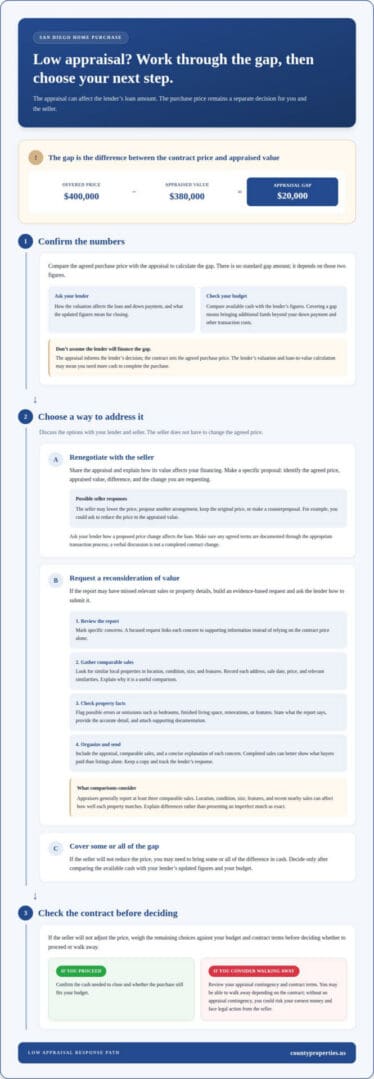
A low appraisal doesn’t automatically end a San Diego home purchase. The practical answer to “What if my home appraisal is low in San Diego?” is that you can try to renegotiate, cover some or all of the gap, or request a value review. If a home offered at $400,000 appraises at $380,000, the $20,000 difference still needs a solution.
It’s understandable to feel caught off guard: an appraisal can affect how much a lender will lend, while the purchase price remains a separate decision for you and the seller. You may be able to walk away, depending on your contract. But if you do so without an appraisal contingency, you could risk your earnest money and face legal action from the seller.
This guide explains what happens if you can’t cover the gap, how to negotiate or support a value review with comparable sales, and what to consider before walking away. You’ll get a clearer picture of your options and the contract details that matter as you decide what to do next.
Key Takeaways
- Work out the appraisal gap and compare the cash needed to close with your budget before deciding whether to proceed.
- You can negotiate with the seller, but the seller doesn’t have to change the agreed price.
- Support a reconsideration request with comparable local sales that strengthen your view of the home’s value.
- Review your appraisal contingency and contract terms before walking away, since the consequences can differ.
1. What happens if I can’t cover the appraisal gap?
If you’re asking, “What if my home appraisal is low in San Diego?” start by comparing the contract price with the appraised value. The difference is the appraisal gap. For example, a home offered at $400,000 that appraises at $380,000 leaves a $20,000 gap. You and the seller must decide how to address it before moving forward as planned.
How much appraisal gap coverage do San Diego homebuyers typically need? There’s no standard amount: it depends on the difference between the contract price and the appraised value. If the seller won’t reduce the price, you may need to cover some or all of the gap in cash. Before deciding what you can contribute, ask your lender how the valuation affects your loan and down payment.
Covering the gap in cash means bringing additional funds to closing, beyond your down payment and other transaction costs. Compare your available cash with the lender’s updated figures, then consider whether the purchase still fits your budget. Don’t assume the lender will finance the gap: the appraisal informs its lending decision, while your contract sets the agreed purchase price.
How do lenders calculate the loan amount after a low appraisal? The lender uses the appraised value in its property valuation, then applies the loan terms and loan-to-value calculation. The result may mean you need to contribute more cash to complete the purchase.
What comparable sales and local market factors affect San Diego home appraisals? Appraisers generally report at least three comparable sales and consider how closely each matches the home. Location, condition, size, features, and recent nearby sales can all affect the comparison. If the report seems inaccurate, gather relevant local sales to support a possible review.
What happens when a home appraisal is lower than the purchase price in San Diego? The lender may limit its loan based on the lower value, leaving the buyer and seller to consider their options. If you’re asking, “What if my home appraisal is low in San Diego?” start by assessing the cash gap, discussing the terms, or reviewing the contract. Cash buyers don’t rely on a lender’s appraisal to set a loan amount, though they may still use a valuation to assess the price.
2. Renegotiating the purchase price
A low appraisal can reopen the price discussion, but it doesn’t require the seller to renegotiate. The seller may agree to lower the price, propose another arrangement, or keep the original contract price. Start by sharing the appraisal and explaining how its value affects your financing. Keep the conversation focused on the valuation and practical next steps.
Prepare a specific proposal before approaching the seller. Identify the appraised value, the agreed price, and the difference. Then decide what change you’re requesting and why it could help both sides move forward. For example, you could ask the seller to reduce the price to the appraised value. The seller may accept, decline, or make a counterproposal.
An appraisal may come in below the contract price if the comparable sales point to a lower value. Differences in the home’s condition, features, location, or recent nearby sales can affect how well those comparisons fit. A distinctive property may be harder to compare with nearby homes. Review the appraisal’s reasoning and identify specific details that could support a different position in negotiations.
Keep your financing timeline and contract terms in view as you discuss options. Ask your lender how a proposed price change would affect the loan, then share relevant information with the seller. Don’t treat a verbal discussion as a completed change: make sure any agreed terms are documented through the appropriate transaction process. If the seller won’t adjust the price, weigh your remaining choices against your budget and contract before deciding whether to proceed.
Clear, evidence-based communication can make your request easier to assess, even though the seller makes the final decision. Focus on what the appraisal says, what you can manage, and which proposed terms would keep the purchase workable. A measured negotiation gives both sides room to respond without assuming the original price must change.
3. Requesting a reconsideration of value
If the appraisal overlooks relevant San Diego sales or property details, organize your evidence before requesting a reconsideration of value. Start with the appraisal report and mark specific points you believe need review. A clear request links each concern to supporting information rather than simply saying the price feels too low.
Gather comparable sales in the area that support your view of the home’s value. Choose properties similar in location, condition, size, and features. For each sale, record its address, sale date, price, and relevant similarities. Explain why it’s a useful comparison, especially if the appraisal used a different area or overlooked a closer match.
Next, compare the report with the home itself. Note factual details that may be missing or inaccurate, such as the number of bedrooms, finished living space, renovations, or property features. Be specific about each correction: identify what the report states, provide the accurate information, and attach documentation to support it.
Send your organized evidence to the lender and ask how to submit a reconsideration request. Include the appraisal, comparable sales, and a concise explanation of each concern. Avoid relying on listings alone when completed sales can better show what buyers paid for similar homes. Keep a copy of your materials and track the lender’s response.
A focused package helps distinguish verifiable errors from differences in judgment. If a comparable sale differs in condition or location, explain the difference instead of presenting it as an exact match. A San Diego home with unusual features may need especially clear comparisons. The review focuses on evidence directly related to the property and its market, not simply the contract price. Use your request to correct the record and support a more accurate valuation.
4. Walking away with an appraisal contingency
An appraisal contingency may give you a contractual way to cancel if the valuation falls short. How the California appraisal contingency works, including its deadlines, depends on the wording and dates in your signed purchase agreement. Read the appraisal provision and follow its notice requirements before deciding to cancel.
Start by finding the appraisal contingency in your contract. Check whether it sets a minimum appraisal value, explains what happens after a low valuation, and gives a deadline for action. The wording matters: don’t assume you can cancel simply because the appraisal is below the purchase price.
Compare the appraisal result with the contingency terms. If your contract allows cancellation under those circumstances, follow its required process and deliver any notice within the stated period. Keep a copy of the appraisal, written notice, and related communications. Missing a deadline or failing to follow the specified steps can affect your contractual options.
If you’re weighing cancellation against continuing, consider the consequences for your purchase and deposit. A low appraisal may prompt you to negotiate or request a value review, but those discussions don’t automatically extend a contract deadline. Track the dates in your agreement as the conversations continue.
Without an appraisal contingency, walking away can carry greater financial and legal risk. You could forfeit your earnest money and face legal action from the seller. Before sending a cancellation notice, read the relevant contract provisions carefully and distinguish the appraisal contingency from other contingencies. They may cover different circumstances, so don’t treat one provision as a substitute for another.
If you decide to pursue a different property using a cash purchase, explore cash offer facilitation as another route. Whether you proceed or cancel, let the written agreement guide your next move, and keep each notice and deadline documented.
An appraisal contingency may allow cancellation if a low appraisal meets the conditions in the contract and you follow the required notice procedure. The deadline is the period specified in the signed agreement. Negotiations don’t automatically pause or extend it.
County Properties: Seller Representation
County Properties provides Seller Representation when a buyer requests a price change after a low appraisal. As a seller, you can assess the offer against the appraisal, your transaction goals, and the buyer’s proposed next steps before responding. You aren’t required to accept a lower price. A clear review can help you decide whether to negotiate or keep the agreed terms.
If you’re weighing a sale alongside a major life change, County Properties’ Senior Real Estate Transition service can help connect your property decision with that transition. County Properties also offers Short Sale and Foreclosure Prevention for homeowners facing those challenges. The right path depends on your situation and priorities.
Contact County Properties to discuss your home sale and the options you’re considering.
Make your next move with a clear plan
If you’re asking, “What if my home appraisal is low in San Diego?” start with your priorities, not pressure. Decide what matters most: protecting your budget, preserving the purchase, or keeping a sale on track. Write down the outcome you can accept and the questions you still need answered. Having a clear limit can help you make a deliberate choice while conversations are underway, rather than reacting to each new proposal.
Your next step can be a focused discussion about the transaction and the path that best fits your goals. County Properties can provide real estate guidance through the choices ahead, whether you’re buying or selling. Contact County Properties for guidance and discuss your situation with a team that can help you move forward thoughtfully. You can take the next step with a steadier plan and greater confidence in the decision you make.
Frequently Asked Questions
What happens if I can’t cover the appraisal gap?
If you can’t bring the additional cash, discuss other options under your contract before the transaction moves forward. You might ask the seller to adjust the price, propose sharing the difference, or review whether your agreement gives you a way to cancel. Tell your lender what’s changed and ask how each option would affect the transaction. Don’t commit funds until you understand the impact on your budget.
Can you challenge a low appraisal?
Yes. Ask your lender about submitting a reconsideration of value and provide evidence that addresses the appraisal. Strong support includes relevant closed sales and specific corrections to property details, not simply a statement that the value should be higher. Keep your request factual and organized. For example, explain why a closer comparable sale better reflects the home’s location, condition, or features.
Do sellers have to lower the price after a low appraisal?
No. A low appraisal doesn’t require the seller to reduce the agreed price. The seller can consider a proposed change, decline it, or respond with different terms. Your next step depends on your contract and whether you can proceed at the current price. Keep communications clear, and make sure any agreed change is documented through the transaction process.
What can be done about a low appraisal?
Review the report for errors, gather comparable sales, and ask the lender about a reconsideration request. You can also discuss a price adjustment or another arrangement with the seller. Compare each option with your available funds and contract terms before choosing. For example, a corrected bedroom count may support a review, while an accurate report may point toward negotiating instead.
What do appraisers look for?
Appraisers assess the home’s characteristics and compare it with relevant sales. They consider location, condition, size, layout, and features, then evaluate how similar properties relate to the home being appraised. A renovated kitchen or unusual floor plan matters in context, not on its own. The report explains how the property details and selected sales support the appraiser’s opinion of value.
What does a low appraisal mean?
A low appraisal means the appraiser’s opinion of the home’s value is below the agreed purchase price. It can affect mortgage financing because the lender uses the appraisal in its lending decision. It doesn’t automatically change the contract price or end the transaction. The buyer and seller need to consider their agreement and decide whether to adjust the terms, continue, or pursue another available option.