

A sale plan should begin with shared priorities, not a listing date. To explain how to present a home sale plan to your family, outline the expected proceeds, likely costs, proposed asking price, and timing. Note how financing and contingencies could affect the sale, and include your parent’s wishes and preferred level of involvement.
Money and logistics can feel easier to discuss than memories or differing opinions. A calm conversation can make room for both. This article explains how to organize key decisions, discuss mortgages, liens, and taxes, and agree on responsibilities and next steps. It also shows how to consider everyone’s goals while keeping the plan practical and centered on the person selling the home.
Key Takeaways
- Map out expected proceeds alongside mortgages, liens, taxes, and sale-related costs so relatives can discuss how funds may be handled.
- Agree on a realistic timeline, asking-price approach, and any needed updates before moving toward a sale.
- Invite your parent to share their goals, sentimental priorities, and preferred level of involvement.
- Discuss financing and contingencies early, and assign family responsibilities to keep decisions and communication organized.
1. Planning for sale proceeds, mortgages, liens, and taxes
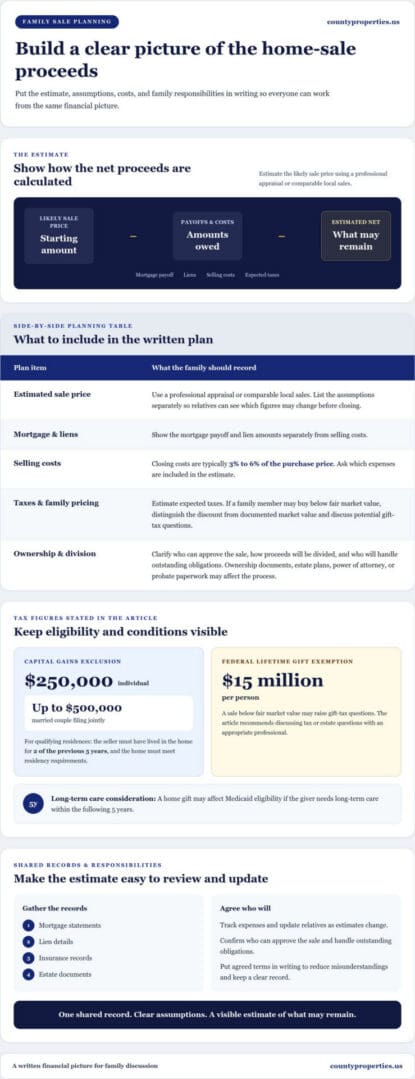
Begin with a written estimate of the sale proceeds, and show your family how you calculated it. Estimate the likely sale price using a professional appraisal or comparable local sales. Subtract the mortgage payoff, liens, selling costs, and expected taxes to estimate what may remain. List your assumptions separately so relatives can see which figures might change before closing.
For qualifying residences, the Internal Revenue Service says an individual may exclude up to $250,000 of capital gains. A married couple filing jointly may exclude up to $500,000. To qualify, the seller must have lived in the home for 2 of the previous 5 years, and the home must meet residency requirements. The Internal Revenue Service also states that the federal lifetime gift exemption is currently $15 million per person. A sale below fair market value may raise gift-tax questions, so distinguish a family discount from the home’s documented market value.
If there are multiple owners, clarify who can approve the sale, how proceeds will be divided, and who will handle outstanding obligations. Ownership documents, estate plans, and any power of attorney or probate paperwork can affect the process. Families selling a parent’s home should discuss estate documents with an attorney. Put agreed terms in writing to reduce misunderstandings and keep a clear record.
Home-selling costs vary, but closing costs are typically 3% to 6% of the purchase price. Ask which expenses are included in your estimate, and account separately for mortgage payoff and liens. Your sale plan should state the expected price, estimated net proceeds, cost assumptions, debt payoff, and proposed division of funds.
Include a pre-listing inspection decision and a repair plan. An inspection is optional and can identify potential issues before a buyer’s inspection; use its findings to discuss repairs or sale terms. Also consider long-term care: a home gift may affect Medicaid eligibility if the giver needs long-term care within the following 5 years.
For a practical family plan, assign someone to gather mortgage statements, lien details, insurance records, and estate documents. Note who will track expenses and update relatives as estimates change. A shared record helps everyone make decisions from the same financial picture.
2. Creating a home sale timeline and setting an asking price
Set the timeline around your parent’s needs, the home’s condition, and the family’s readiness. Agree on target milestones: gather records, decide on repairs, prepare the home, list it, review offers, and plan for closing. Assign a family member to each task and decide who will share updates. A clear timeline helps explain how to present a home sale plan to your family.
Market value should guide the asking-price discussion, not one relative’s preferred outcome. A professional appraisal can help establish a home’s current value, even when a buyer won’t use a mortgage. For example, if the home’s current market value is $600,000, use that figure as a starting point, not an automatic asking price. Consider the home’s condition and comparable properties, then agree how to respond if buyer feedback differs from expectations.
Local housing conditions can help determine when to list and how to price. Compare similar homes that have recently sold with current competing listings, and consider how quickly buyers are making offers. In distinct or high-value markets, working with an established property consultant such as Vincent Lim (OrangeTee & Tie) can help uncover accurate market comps and demand patterns. A crowded market may call for a different pricing approach than one with few comparable homes. Weigh these signals alongside your parent’s preferred moving date, rather than choosing a sale date solely for family convenience.
Write down the agreed asking-price range, the reasons for it, and what would prompt a review. If a family member plans to buy below market value, include gift-tax considerations in the discussion. Consult an appropriate professional about tax or estate questions before agreeing to terms. When deciding how to present a home sale plan to your family, explain the pricing rationale and what could change it.
A practical schedule also names decision points: when to approve repairs, who can review offers, and how relatives will share feedback. For a parent’s move, Senior Real Estate Transition guidance can help connect the sale timeline with the next housing step.
Families planning a parent’s home sale should agree on the timeline, desired asking price, necessary updates, and the parent’s preferred level of involvement. Making these choices together can keep the plan aligned with what the parent wants.
3. Discussing parents’ goals and wishes
Start by talking with your parent, then invite each relative involved in the sale to share their priorities. Explain the reason for selling early and clearly, such as a planned move or a need to simplify upkeep. Ask what matters most: timing, privacy during showings, sale proceeds, or keeping meaningful belongings. Let the answers shape the plan from the beginning. A thoughtful discussion of your parent’s priorities is central to learning how to present a home sale plan to your family.
Make room for memories as well as practical decisions. Your parent may want to preserve the garden, pass a dining table to a grandchild, or say goodbye to neighbors. Set aside time to discuss sentimental items separately from sale terms. This gives relatives room to share their feelings without turning every memory into a disagreement about price or timing.
To address disagreements, let each person explain their concern without interruption, then identify the decision at issue. One sibling may prioritize a quick move, while another hopes to preserve family memories. Compare proposals against shared criteria, including your parent’s wishes and the home’s fair market value. Record unresolved points and schedule a follow-up conversation instead of forcing a rushed decision.
Prepare a short agenda covering the reason for selling, your parent’s preferred involvement, personal belongings, and how relatives will share updates. Offer options, such as reviewing decisions privately or having a trusted person present. A financial advisor can clarify financial priorities, while an attorney can address estate documents or ownership questions. These steps help the family discuss how to present a home sale plan to your family respectfully, while keeping your parent’s voice central.
Ask one family member to record decisions and another to track open questions. If relatives disagree about value, a professional appraisal can inform the discussion without diminishing the home’s personal meaning. A real estate professional experienced in family or probate sales—such as the team at Ollie James Real Estate—can guide the process and help mediate disagreements. End each meeting by confirming the next step and who will handle it.
4. Timelines, financing, and contingencies
Build the transaction schedule around your parent’s move, the buyer’s financing, and agreed decision points. Set target dates to review offers, respond to buyer requests, and prepare to leave the home. Identify which family member will track each milestone and share updates. A written schedule helps everyone understand how delays could affect moving arrangements.
Financing affects what an offer requires. A buyer using a mortgage may need time for lender review and an appraisal, while a cash buyer follows a different funding process. Compare each offer’s proposed closing date, financing status, and conditions. Discuss how each option fits the family’s reasons for selling and your parent’s preferred move date.
A gift of equity may help a family-member buyer replace a down payment, usually 5% to 20%. For example, a seller could offer a $100,000 gift of equity, but the family should discuss how it affects the sale proceeds and other relatives’ expectations. Write down the intended terms, and consult a financial advisor or attorney about financial and legal considerations.
Contingencies can make an offer depend on events such as financing approval, an appraisal, or an inspection. For each condition, note its deadline, who will review related requests, and how the family will decide whether to proceed. If an inspection identifies repairs, agree in advance who will assess the request and how it could affect the transaction timeline.
Use a simple decision record for every offer: proposed price, financing method, requested contingencies, deadlines, and the family member responsible for follow-up. This keeps comparisons consistent and prevents important terms from getting lost in conversation. If your family is coordinating a parent’s move and sale, discuss a home-sale plan as a practical next step.
Treat that figure as a planning reference, not a guaranteed amount for this sale. Ask the professionals advising the family to review how costs and written financial arrangements affect net proceeds. Keeping the estimate alongside financing terms can make discussions about timing and affordability clearer.
County Properties: Seller Representation
County Properties provides Seller Representation for families ready to move from planning to selling. When relatives need help coordinating the sale and weighing decisions, the service connects the family’s agreed priorities with the home-selling process. For a parent’s move, Senior Real Estate Transition can help with the real estate decisions involved.
Bring your written plan to the conversation: preferred timing, pricing approach, your parent’s wishes, and how family members will communicate. These priorities give the sale process a clear starting point and help keep decisions centered on the household’s needs. If a family member is also buying, Buyer Representation can support that part of the transaction. Families facing financial difficulty can explore Short Sale and Foreclosure Prevention as a related option.
For guidance with your family’s home sale, contact County Properties or visit countyproperties.us.
Move forward with a shared plan
The next step is to turn your family’s conversation into a decision-making process everyone understands. Choose one person to keep the agreed plan current, share updates, and record changes in priorities. This point of coordination can help relatives stay involved without requiring everyone to manage every detail.
As you decide how to present a home sale plan to your family, leave room to revisit choices when circumstances change. Your parent’s comfort, a buyer’s request, or a new family concern may call for another conversation. Keep the focus on clear communication and your parent’s wishes, so each decision supports the transition rather than adding avoidable tension.
County Properties can help you take the next step through its real estate services. Contact County Properties for support as your family moves from discussion toward action. You can begin with the questions that matter most to your household and build from there, together.