

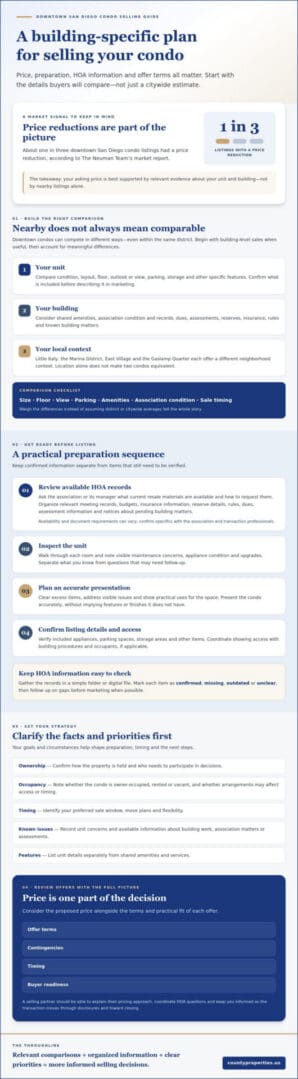
About one in three downtown San Diego condo listings has a price reduction, according to The Neuman Team’s September 2026 market report. That’s a reminder that selling a condo in downtown San Diego takes more than picking a number from nearby listings. Your building’s HOA finances, assessments, amenities, and your unit’s specific features can all shape buyer interest.
A practical, building-specific plan can help you prepare and support your asking price with relevant evidence. This guide explains how to compare your condo with the right local listings and sales, organize HOA records and disclosures, and present your unit’s features clearly. You’ll also learn what to consider when reviewing offers and moving toward closing.
Downtown condos don’t all compete in the same market, even when they’re close together. From getting your documents in order to evaluating buyer feedback, each step can help you make more informed decisions. County Properties provides personalized seller representation and collaborative guidance to help you navigate your transaction.
Key Takeaways
- For selling a condo in downtown San Diego, build your plan around your unit’s features and the details buyers will compare.
- Gather available HOA records and review your condo’s condition before deciding it’s ready to list.
- Compare sales thoughtfully, weighing differences in size, floor, view, parking, amenities, and sale timing.
- Consider offer terms, contingencies, timing, and buyer readiness alongside the proposed price.
- Choose a selling partner who can explain their pricing approach, coordinate HOA questions, and keep you informed.
Why selling a condo in downtown San Diego takes a building-specific plan
You deserve a clear plan before putting your condo on the market. Selling a condo in downtown San Diego involves more than choosing a price from a citywide estimate. A sound approach connects your unit’s features and building information to relevant comparisons, then carries that preparation through marketing, offers, disclosures, and closing.
Start by separating what belongs to your unit from what buyers share with other owners. Condition, layout, floor, outlook, and parking can distinguish one condo from another. Building amenities and association records help buyers assess the broader ownership experience. A downtown or citywide average can provide context, but it won’t show how buyers may compare your unit with similar homes in its building.
How downtown districts and buildings shape buyer comparisons
Little Italy, the Marina District, East Village, and the Gaslamp Quarter each offer a different neighborhood context. The downtown San Diego overview describes the area’s neighborhoods, but location alone doesn’t make two condos equivalent. Nearby units can still differ in layout, view, floor, parking, amenities, and association condition. Start with building-level sales when useful, then account for meaningful differences instead of assuming district averages tell the whole story.
What a seller should clarify before choosing a sale strategy
Your priorities help determine what preparation and timing make sense. Before setting expectations, establish the facts you can share with a real estate professional:
- Ownership: Confirm how the property is held and who needs to participate in decisions.
- Occupancy: Note whether the condo is owner-occupied, rented, or vacant, and whether any arrangements may affect access or timing.
- Timing: Identify your preferred sale window, move plans, and flexibility.
- Known issues: Record concerns about the unit and any available information about building work, association matters, or assessments.
- Features: List unit details such as floor, outlook, parking, storage, and condition separately from shared amenities and services.
If a personal move or senior transition is part of your decision, consider how much time and coordination you need alongside the sale. County Properties offers senior real estate transition support when it fits a seller’s circumstances. With your goals and building information clear, you can develop a tailored plan for valuation, preparation, marketing, offer review, and closing.
Prepare your downtown San Diego condo and HOA information before listing
Getting organized before your condo goes on the market can make buyer questions easier to address and help you identify details that need follow-up. Use this sequence to prepare the unit and its records. Keep confirmed information separate from items you still need to verify.
- 1. Review available records. Ask the homeowners association or its manager which current resale materials are available and how to request them. Gather relevant meeting records, budgets, insurance information, reserve details, rules, dues, assessment information, and notices about pending building matters. Availability and document requirements can vary, so confirm specifics with the association and the professionals involved in your transaction.
- 2. Inspect the unit. Walk through each room and note visible maintenance concerns, appliance condition, and upgrades. Separate what you know from questions that may need an association representative, escrow team, or qualified professional to answer.
- 3. Plan the presentation. Make rooms easy to understand and photograph by clearing excess items, addressing visible issues, and showing practical uses for the space. Keep the presentation accurate, without implying features or finishes the condo doesn’t have.
- 4. Confirm listing details. Verify which appliances, parking spaces, storage areas, and other items are included. Coordinate showing access with building procedures and occupants, if applicable, and check the details before they appear in marketing materials.
Which HOA and building records should sellers organize?
Start with what the association can provide, then keep the records together in a simple folder or digital file. Organize information about dues, assessments, reserves, insurance, rules, meeting discussions, and known building projects. Mark each item as confirmed, missing, outdated, or unclear. Follow up on gaps before marketing when possible, and don’t present assumptions as verified facts. If a document’s meaning or significance is uncertain, ask the appropriate qualified professional rather than interpreting it yourself.
How to make a condo ready for photos and showings
Buyers need to see the unit’s condition and how its rooms function. Address straightforward, visible maintenance, tidy surfaces, and make sure access instructions account for building entry procedures. Be ready to describe upgrades and included items precisely. If details such as appliance age or parking arrangements are uncertain, verify them before answering buyer questions.
A well-organized preparation file can support clearer communication when selling a condo in downtown San Diego. If you’d value a collaborative guide for your sale, learn more about condo seller representation from County Properties.
Price and market a downtown San Diego condo using relevant comparisons
A defensible asking price starts with evidence that resembles your condo, not a single downtown average. Recent closed sales in the same building can be useful because those units share an association and many location features. Still, they’re context, not a formula. Differences in floor, condition, outlook, and sale timing affect how closely another sale compares with yours.
Use nearby buildings as secondary context when same-building sales are limited or don’t match your unit. Note differences in amenities, parking arrangements, and association information before drawing conclusions. Keep closed-sale prices, current listing prices, and automated estimates clearly labeled. An asking price shows what a seller hopes to receive, not necessarily what a buyer has paid.
Which condo comparables are most useful to review?
Start with the most similar, reliable sales in your building, then consider nearby properties that offer a reasonable comparison. Review each property’s details and sale timing, and ask how major differences should affect your expectations. A simple comparison can make the reasoning easier to follow:
| Factor | What to compare |
|---|---|
| Location and size | Building, immediate surroundings, layout, and interior area |
| Floor and view | Relative height, outlook, natural light, and privacy |
| Condition | Visible upkeep, finishes, and documented upgrades |
| Parking and storage | What is assigned, included, or available to the unit |
| Amenities and association | Shared features and relevant differences in building records |
| Sale timing | When the property was listed or sold, and whether it closed |
How to present a condo to downtown buyers
Build the listing around accurate, specific details. Use clear photography and descriptions that show the layout, natural light, views, and condition without overstating them. Explain which parking or storage features belong to the unit and which are shared amenities. A coordinated marketing plan can align price, presentation, and listing details, but it can’t promise a certain number of buyers or a particular result.
When setting your asking price, weigh comparable evidence alongside your priorities, including preferred timing and flexibility. Then consider how your condo will appear beside current competing listings. If buyers ask questions or interest is limited, use that feedback to reassess the evidence and strategy rather than relying on a citywide figure alone. This measured approach makes selling a condo in downtown San Diego more informed, with a clear rationale behind both price and presentation.
Navigate condo offers, disclosures, and HOA questions without surprises
An offer is more than its headline price. For a condo sale, the terms can affect your flexibility, timing, and confidence in reaching closing. Review each proposal against your priorities and ask your real estate representative to explain the transaction steps. For legal or tax questions, consult an appropriately qualified professional.
How to evaluate an offer beyond its headline number
Compare the complete terms, including whether the buyer proposes cash or financing, the contingencies, deposit provisions, and requested dates. Consider how much flexibility each offer leaves you and whether its schedule fits your move or next purchase. A higher price may come with terms that don’t suit your circumstances, while another offer may better match your priorities. Review the written terms carefully before deciding how to respond.
After you accept an offer, your agent, escrow team, buyer, and association may each have a role in moving information and transaction steps forward. Your agent can help coordinate communications and explain the process, while escrow handles its part of the transaction. The association or its management may provide building information or respond to document requests. Confirm who is responsible for each request and when a response is needed.
What happens when buyers review the HOA and building?
Buyers may ask about association records, insurance information, building condition, planned work, and known assessments. Use the records you’ve gathered to separate confirmed facts from items that need clarification. If a buyer asks about an assessment or project and the information is incomplete, follow up with the association or its management instead of guessing. Keep responses consistent and share relevant updates with your representative.
Disclosure forms, documents, and timing can depend on the transaction and current requirements. Don’t assume a particular HOA record or form is mandatory without checking what applies to your sale. Your agent and escrow team can help coordinate the process, and you can consult a qualified professional about legal questions. Clear communication helps everyone track outstanding questions without overstating what the records say.
To make selling a condo in downtown San Diego more manageable, compare the full offer, track building-related questions, and verify uncertain details with the right source. For personalized seller representation and guidance through your condo sale, discuss your condo sale with County Properties.
Choose a selling partner and follow the next steps to list your condo
A thoughtful selling partner can help turn unit and building information into a clear plan, without promising a specific price or timeline. Before listing, clarify what matters most to you, review the building information, assess how the condo will be presented, and agree on how you’ll communicate throughout the sale. This gives you a shared framework for decisions as questions arise.
Questions to ask before choosing a condo listing agent
Use your first conversation to understand how the agent approaches a building-specific sale. Ask how they identify relevant comparable sales and account for differences between units. Clarify who will coordinate association document requests, photography, showing arrangements, and offer communication. Discuss key decision points, how often you can expect updates, and how you’ll review buyer feedback or changes to the plan.
Look for a process you can follow, not just confident promises. A useful plan should connect the evidence about your building and unit to a pricing rationale, marketing approach, and communication rhythm. You should feel comfortable raising concerns about timing, occupancy, association questions, or your next move. The goal is a collaborative working relationship that keeps your priorities central.
A practical first conversation with County Properties
To make an initial discussion more specific, share the building and unit details you know, including layout, floor, view, parking or storage, and relevant association information. Explain whether the condo is occupied, your preferred timing, and what you hope to accomplish. You don’t need every answer in advance. A clear list of known facts and open questions is a useful starting point.
County Properties provides personalized seller representation for residential properties, including condos, with collaborative guidance from a team led by Arnie Levine. The team can discuss your goals and a tailored next-step plan without guaranteeing a particular outcome. If senior transition support is relevant to your move, mention that so the conversation reflects your circumstances.
Choosing the right support can bring structure to selling a condo in downtown San Diego, from reviewing building information to preparing for listing decisions. Start a conversation about selling your condo with County Properties and share your property details and priorities.
Take the next step with a clear condo-selling plan
Selling a condo in downtown San Diego is easier to approach when your decisions are grounded in your specific unit and building. Use relevant comparable sales to shape pricing expectations, organize available HOA information before listing, and compare offers by their terms and fit with your plans, not just their headline price.
A thoughtful selling partner can help connect those steps, from preparing the listing to addressing buyer questions and moving toward closing. County Properties provides personalized seller representation for residential properties, including condos, through a collaborative team led by Arnie Levine. If your move involves a senior transition or a distressed-property situation, the team’s related services may also be relevant to your circumstances.
Share your building and unit details, timing preferences, and priorities to start a practical conversation about what comes next. Discuss your downtown condo sale with County Properties and explore a plan tailored to your situation. With clear information and steady guidance, you can move forward with greater confidence.
Frequently Asked Questions
How do I sell a condo in downtown San Diego?
Start by clarifying your goals and gathering information about your unit and association. Review relevant comparable sales, prepare the condo for marketing, and agree on a listing strategy with your real estate representative. When you receive an offer, coordinate buyer questions and document requests with your agent, escrow team, and association. Confirm which current California requirements apply to your transaction with qualified professionals rather than relying on assumptions.
What documents do I need to sell a downtown San Diego condo?
The documents that apply depend on your property, association, and transaction. Begin by organizing available association records, including information about dues, assessments, insurance, rules, and building matters. You can also collect records of improvements and details about items included in the sale. Ask the association or its manager how to obtain current materials, then have your real estate and escrow professionals confirm which disclosures and other documents are relevant.
How is a downtown San Diego condo valued?
A useful valuation considers recent closed sales, especially comparable units in the same building when reliable examples are available. Differences in size, floor, condition, view, parking, storage, amenities, and sale timing affect how closely another condo compares with yours. Nearby buildings may add context, but their features and association details may differ. Ask an agent to explain the sales, adjustments, and assumptions behind a suggested pricing range.
Can I sell my condo if the HOA has a pending assessment?
A pending or confirmed assessment doesn’t, by itself, determine whether or how you can sell. Its status, timing, amount, available association information, and the offer terms may shape buyer questions or negotiations. Request accurate details from the association or its manager, then share them with your agent and escrow team. For advice about legal or tax consequences in your circumstances, consult a qualified legal or tax professional.
How long does it take to sell a condo in downtown San Diego?
Timing varies with the unit, pricing strategy, buyer interest, offer terms, financing, association document availability, and other transaction details. The time a condo is listed and the period from accepting an offer to closing are separate parts of the process. Ask an agent to discuss current local conditions and factors that could affect your schedule. Avoid treating a single citywide estimate as a reliable prediction for your specific sale.
Should I make repairs before selling my downtown condo?
Consider visible condition, safety concerns, buyer expectations, and the likely value of each improvement before arranging work. Addressing straightforward maintenance and presenting clean, functional rooms can help buyers assess the unit. Ask an agent which priorities make sense for your condo and comparable listings. For repair scope, cost, or technical requirements, consult qualified contractors. Keep records of completed improvements and describe them accurately in listing information.
How do buyers evaluate a downtown San Diego condo building?
Buyers may consider the building’s location, amenities, maintenance, association finances, insurance information, rules, and available details about assessments or planned work. They’ll also weigh the individual condo’s layout, condition, view, parking, and storage. Organize current information and coordinate requests with the association or its manager so questions can be answered accurately. Disclosure requirements can vary, so confirm which obligations apply with qualified professionals before relying on a particular form or deadline.