

In California’s transparent 2026 real estate market, a “ticking time bomb” in your walls doesn’t have to be a deal-breaker for your sale. You might feel a sense of dread when you think about those gray plastic lines; it’s completely natural to worry that selling a home with polybutylene pipes California will lead to canceled contracts or slashed asking prices. You’ve worked hard to build equity in your property, and the thought of a plumbing inspection derailing your plans is enough to keep any homeowner awake at night.
We understand the anxiety that comes with strict disclosure laws and the challenge of finding buyers who can secure insurance for older systems. This article provides a clear, professional roadmap to manage these hurdles without sacrificing your financial goals. You’ll learn how to approach the legal requirements with confidence and decide whether a full repipe or a strategic credit is the right move for your specific situation. We are going to break down the logistics of modern financing and show you exactly how to protect your investment through a smooth, successful closing.
Key Takeaways
- Understand why polybutylene’s reaction to California’s treated water makes it a critical material fact that must be disclosed to potential buyers.
- Learn how to navigate the Transfer Disclosure Statement (TDS) correctly to fulfill your legal obligations and prevent future liability.
- Evaluate the financial impact of different strategies for selling a home with polybutylene pipes California, including the choice between a full repipe or a seller credit.
- Discover how to use professional inspections and multiple contractor quotes as leverage to protect your home equity during price negotiations.
- See how a collaborative, expert-led approach can simplify complex disclosures and ensure a smooth closing without last-minute credit demands.
What is Polybutylene Plumbing and Why Does it Matter in California?
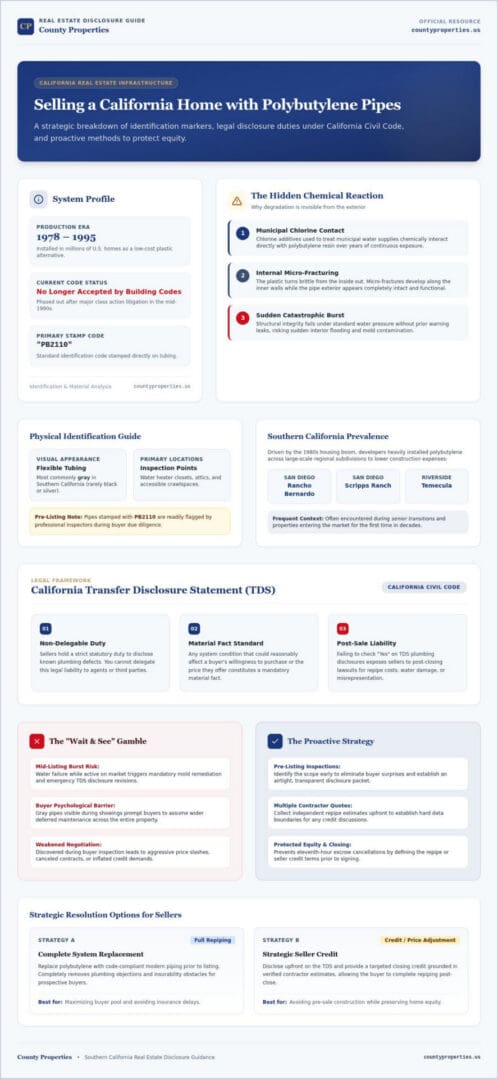
Polybutylene is a form of plastic resin that was once hailed as the “pipe of the future” because it was cheap, flexible, and easy to install. Between 1978 and 1995, it was used in millions of homes across the United States. In our local market, these pipes are usually easy to spot because of their distinct gray color. However, what seemed like a cost-effective solution forty years ago has become a significant hurdle for those selling a home with polybutylene pipes California. These systems are no longer accepted by building codes, and their presence can complicate even the most straightforward real estate transaction.
The primary issue involves a chemical reaction between the polybutylene plumbing and the chlorine used to treat municipal water supplies. Over time, the chlorine causes the plastic to become brittle from the inside out. Micro-fractures develop that eventually lead to sudden, catastrophic bursts. Because the degradation happens internally, a pipe can look perfectly fine on the exterior just moments before it fails. By 2026, buyers and home inspectors have become highly educated on these risks. They often view “poly” pipes as an immediate liability that requires a proactive strategy to address.
You can usually identify these pipes by checking your water heater closet or looking into the attic and crawlspace. Look for flexible gray tubing, often stamped with the code “PB2110.” While some pipes were manufactured in black or silver, gray is the most common variant found in Southern California residential properties. If you see these lines, it’s time to evaluate how they will impact your sale.
The History of Polybutylene in Southern California
San Diego and Riverside counties saw a massive housing boom during the 1980s. Developers frequently used polybutylene in large scale projects throughout areas like Rancho Bernardo, Scripps Ranch, and Temecula to keep construction costs low. While the material was phased out following massive class action lawsuits in the mid 1990s, many of these systems remain in place today. We often see these pipes in homes that are now part of senior transitions, where original owners are preparing to sell for the first time in decades.
Why ‘Wait and See’ is a Risky Strategy for Sellers
Ignoring these pipes until an inspector finds them is a gamble that rarely pays off when selling a home with polybutylene pipes California. If a pipe bursts while your home is active on the market, the resulting water damage can trigger mold remediation requirements and force you to update your legal disclosures. This creates a stressful situation that can scare away motivated buyers. Beyond the physical risk, the sight of gray pipes during a showing creates an immediate psychological barrier. Buyers start wondering what other maintenance has been deferred, which often leads to aggressive price negotiations or demands for excessive credits at the last minute.
The Legal and Financial Hurdles of Selling with ‘Poly’ Pipes
California’s real estate market is built on the foundation of transparency. When you are selling a home with polybutylene pipes California, you encounter specific legal obligations that differ from properties with copper or PEX systems. State law requires you to be proactive. Waiting for the buyer’s inspector to find the pipes isn’t just a bad strategy; it can lead to serious legal consequences after the sale is finalized. You’re responsible for ensuring the buyer has a clear picture of the home’s infrastructure before they sign on the dotted line.
California Civil Code and Your Liability
The Transfer Disclosure Statement (TDS) is the most critical document in your sales package. Under California Civil Code, you have a non-delegable duty to disclose any known plumbing defects. Even if your pipes have never leaked, the industry-wide history of failures makes their presence a significant detail. A material fact is any information that would reasonably influence a buyer’s decision to purchase or the price they are willing to pay for the home.
Failing to check the “Yes” box regarding plumbing issues on your disclosure forms can open the door to post-sale lawsuits for misrepresentation or fraud. Buyers who discover the pipes after closing may seek damages for the cost of a full repipe and any resulting water damage. We recommend a “disclose everything” approach to protect your home equity and your peace of mind. If you need assistance managing these complex forms, a seasoned real estate ally can provide the methodical support you need.
The Buyer’s Financing and Insurance Struggle
The biggest hurdle in 2026 isn’t just the buyer’s opinion; it’s the gatekeepers of the deal. Many California insurance companies now refuse to issue new homeowners’ policies on properties with polybutylene plumbing. Without an active insurance binder, most lenders won’t fund a mortgage. This creates a “gap” that can kill a deal just days before it’s scheduled to close. If the buyer can’t get insurance, they can’t get a loan, and your sale will likely collapse.
Government-backed loans come with their own set of challenges. Appraisers following HUD guidelines on defective plumbing and FHA loan eligibility are trained to look for signs of system failure or high-risk materials. If the appraiser flags the plumbing, the lender may require a full repipe before the loan is approved. This naturally shrinks your pool of potential buyers to those with cash or those using specialized renovation loans, which often results in lower offers. Understanding these financial barriers early allows you to choose a sales strategy that keeps the transaction on track.
Three Strategies for Selling a Home with Polybutylene Pipes
Deciding how to handle aging plumbing is a pivotal moment in your sales journey. While some buyers are scared away by the mere mention of plastic resin, others see it as a manageable detail if the price is right. Successfully selling a home with polybutylene pipes California requires you to choose a path that balances your need for speed with your goal of maximizing net proceeds. Every property is unique, and the right choice often depends on your current financial liquidity and the specific demands of your local Southern California neighborhood.
Strategy 1: Pre-Sale Remediation (The Repipe)
Taking the initiative to replace the plumbing before your first open house is the most assertive way to protect your equity. By installing modern PEX systems, you turn a major liability into a selling point. This approach maximizes your buyer pool because it removes the insurance and financing “red flags” that stop many deals in their tracks. While it requires upfront capital and involves a few weeks of construction dust, it allows you to list at the top of the market and move through the inspection period with total confidence. This is frequently the best move for sellers who want a traditional, high-value closing.
Strategy 2: The ‘Price-In’ Approach
If you prefer not to manage a construction project, you can choose to “price-in” the plumbing issue. This involves listing the home at a slightly lower price point or offering a formal seller credit at closing to cover the buyer’s future repipe costs. This strategy keeps your cash in your pocket during the listing period and maintains total transparency from day one. However, you must be aware that this path limits your audience. Buyers with small down payments may find that their lenders won’t allow a large enough credit to solve the problem, or they may struggle to find an insurer willing to take on the risk. Success here requires a professional partner who knows how to structure these credits to satisfy strict 2026 lending requirements.
Strategy 3: Facilitating a Cash Offer
For some families, the logistical burden of repairs or the uncertainty of the open market is too much to handle during a difficult life transition. In these cases, a cash sale provides the ultimate level of certainty. You can skip the inspections, the appraisals, and the long wait for loan approvals. Our team at County Properties helps facilitate cash offers for sellers who prioritize a swift, guaranteed exit. While the net price may be lower than a traditional sale, you save significantly on commissions, closing costs, and the holding costs of a property that might otherwise sit on the market. It is a methodical way to trade a portion of equity for immediate peace of mind.
Evaluating your ROI involves more than just looking at a contractor’s quote. We look at the “math problem” of your sale by comparing your potential high-water mark after a repipe against the speed and ease of an as-is transaction. In many high-demand coastal markets, the investment in new pipes pays for itself by attracting multiple offers. In other situations, a strategic credit is the more efficient way to cross the finish line.
Step-by-Step: How to Sell Your Home with PB Pipes Successfully
Success in the 2026 California market depends on how you control the narrative of your sale. If you wait for a buyer’s inspector to discover the plumbing, you’re immediately placed on the defensive. By following a structured, proactive plan, you can turn a potential deal-killer into a transparent and manageable part of the transaction. A methodical approach ensures that you protect your home equity while providing the security that modern buyers demand.
- Professional Inspection: Don’t rely solely on a general home inspector. Hire a licensed plumber to map the entire system and confirm the specific type of fittings used.
- Firm Bids: Secure 2 to 3 firm quotes for a full PEX repipe. These documents serve as your primary negotiation tool and prevent buyers from overestimating repair costs.
- Market Consultation: Work with a real estate agent near me who has specific experience with material disclosures in Southern California.
- Disclosure Package: Prepare your Transfer Disclosure Statement (TDS) before the home goes live. Mentioning the pipes upfront builds immediate trust with serious, qualified buyers.
- Strategic Marketing: Frame the plumbing as a known quantity with a clear solution already mapped out, whether through a pre-sale fix or a structured credit.
Gathering Your Data Early
Having a repipe quote in hand prevents the “inspection shock” that often leads to canceled contracts. When a buyer discovers gray pipes without context, their imagination often inflates the cost of the repair. Presenting a firm bid from a reputable local contractor grounds the conversation in reality and keeps negotiations professional. Transparency is the best defense against lowball offers because it removes the fear of the unknown that buyers use to justify deep discounts. It shows you’re a responsible seller who has already done the heavy lifting.
Marketing the ‘Problem’ as a ‘Solved Solution’
Your listing description should be honest but focused on the overall value of the property. Instead of burying the disclosure, highlight it alongside other significant upgrades like a recent roof replacement or energy-efficient windows. In Southern California, many buyers are looking for homes in established neighborhoods where polybutylene is a known factor. By showing that you’ve already done the legwork to price the home correctly or provide a repipe credit, you appeal to pragmatic buyers who value a smooth escrow. If you’re ready to create a custom plan for your home, our team provides the expert seller representation you need to close with confidence.
Why Expert Representation is Critical for Complex Disclosures
Handling material disclosures is one of the most high-stakes moments for any property owner. When you’re selling a home with polybutylene pipes California, the margin for error is slim. You need more than just a listing agent; you need a steady guide who understands the intersection of building science, state law, and buyer psychology. A professional partner ensures that your disclosure package is bulletproof, protecting you from future liability while keeping your home equity intact.
Our collaborative team approach is specifically designed to reduce seller stress during the inspection period. We act as your primary advocate, managing communication between contractors, inspectors, and potential buyers. This level of oversight is especially vital for those undergoing senior real estate transitions, where the goal is a dignified and financially secure move. By positioning Arnie Levine and the team as your ally, you gain access to a methodical support system that has navigated every market cycle since the 1980s.
The Southern California housing market remains highly competitive, but 2026 buyers are more cautious about infrastructure than ever before. Successfully selling a home with polybutylene pipes California requires a nuanced understanding of these local trends. We don’t just put a sign in the yard; we create a solution-oriented narrative that addresses the plumbing head-on, ensuring that your property stands out for its transparency and value rather than its age.
The Arnie Levine Difference: Service-First Real Estate
We believe in a service-first culture that treats every client like a member of our community. For families facing difficult transitions or seniors looking to downsize, we provide the resources to handle “as-is” sales with complete dignity. Our team focuses on preventing financial loss by providing the data and professional network you need to make informed decisions about repiping or offering credits. It’s about fulfilling your long-term goals through a committed, professional relationship that prioritizes your safety and success.
Next Steps for California Sellers
If you’re ready to move forward, the first step is gathering accurate data about your property’s current value and condition. We provide a professional valuation that accounts for your specific plumbing situation, giving you a realistic baseline for your sale. From there, we’ll sit down to weigh the potential ROI of a pre-sale repipe against the speed of a strategic seller credit. Contact County Properties today for a personalized strategy session and let us help you navigate your next chapter with confidence.
Securing Your Home Equity through Strategic Disclosure
You now have a clear roadmap for handling one of the most complex material disclosures in the 2026 market. By identifying your plumbing system early and obtaining firm remediation quotes, you transform a hidden liability into a transparent math problem. Whether you choose a full PEX repipe to maximize your buyer pool or a strategic seller credit to save time, your success depends on controlling the narrative from day one. Transparency isn’t just a legal requirement; it’s your best defense against lowball offers.
Successfully selling a home with polybutylene pipes California requires a partner who understands the nuances of Southern California’s strict disclosure requirements. With over 30 years of local expertise and a specialized Senior Real Estate Specialist (SRES®) certification, our team has a proven track record of guiding families through these high-stakes transitions. We provide the methodical support you need to ensure a smooth closing without last minute credit demands.
Take the first step toward a successful sale today. Request a Professional Home Valuation and Strategic Consultation with Arnie Levine and the County Properties team. You can move forward with confidence, knowing your financial future is in the hands of a seasoned and dependable ally.
Frequently Asked Questions
Is it illegal to sell a house with polybutylene pipes in California?
It is perfectly legal to sell a property with these pipes as long as you follow state disclosure requirements. California law focuses on transparency rather than prohibiting specific materials. You must inform potential buyers of the system’s presence using the Transfer Disclosure Statement. This allows the buyer to make an informed decision regarding the purchase price or future maintenance needs. Skipping this step is where legal risks actually begin.
Will homeowners insurance cover a polybutylene pipe leak in 2026?
Coverage depends on your specific policy language; however, many California insurers now exclude damage caused by known defective materials. By 2026, most major carriers have tightened their guidelines significantly. While an existing policy might cover a sudden burst, a new buyer will likely face denials when trying to secure a policy for the home. This makes the plumbing a critical factor in the buyer’s ability to close the deal.
Can a buyer get an FHA loan for a home with polybutylene plumbing?
Buyers can technically obtain FHA financing, but the property must meet strict safety and soundness standards. If an FHA appraiser identifies active leaks or signs of system failure, they will likely require a full repipe before the loan is funded. Because these pipes are considered a high risk material, lenders often scrutinize the plumbing more closely than they would with copper or PEX systems.
How much does it cost to repipe a house in Southern California?
Costs for a full repipe vary based on several logistical factors rather than a flat rate. The total square footage of your home, the number of bathrooms, and whether the home sits on a slab or has a crawlspace all influence the final price. Additionally, the complexity of the drywall repair and the choice of modern materials like PEX will play a role in the contractor’s bid.
Do I have to disclose polybutylene pipes if they have never leaked?
Yes, you must disclose the presence of polybutylene even if you haven’t experienced a single leak. Under California Civil Code, these pipes are considered a material fact because their history of failure impacts the home’s value and insurability. Disclosing this information upfront protects you from future lawsuits. It’s a key part of successfully selling a home with polybutylene pipes California while maintaining your professional integrity.
What is the best replacement for polybutylene pipes in California homes?
PEX is currently the industry standard for repiping Southern California homes. It’s highly resistant to the chlorine found in municipal water and offers more flexibility than traditional copper. This flexibility allows plumbers to “fish” the lines through walls, which significantly reduces the amount of drywall damage and repair work needed. Most buyers in 2026 specifically look for PEX as the preferred modern solution.
Can I sell my house for cash if it has polybutylene pipes?
You can absolutely sell your property for cash to an investor or professional buyer. Cash buyers typically waive traditional inspections and aren’t reliant on homeowners insurance to close the deal. This makes it an excellent option if you want to avoid the stress of repairs or complex negotiations. County Properties specializes in cash offer facilitation to help you exit the property quickly and with total certainty.
How do polybutylene pipes affect my home’s market value in San Diego?
In the San Diego market, these pipes usually result in a price adjustment equivalent to the cost of a modern replacement. Buyers often view the plumbing as a deferred maintenance item that they will eventually have to pay for. When selling a home with polybutylene pipes California, your market value stays higher if you provide firm contractor quotes. This prevents buyers from overestimating the risk and demanding excessive price drops.