

What if the most dangerous part of your home sale isn’t a leaky roof, but a missing signature on a disclosure form? In the 2026 real estate market, what you don’t say can cost you far more than a lower offer ever could. We understand the anxiety that comes with listing your property. You’re likely worried that being too honest about defects will drive buyers away, yet the fear of a post-sale lawsuit keeps you up at night. It’s a difficult balance to strike when you’re trying to reach a major life milestone while managing complex legal paperwork.
The truth is that radical transparency is your best defense against future legal trouble. By fully embracing your seller disclosure responsibilities in California, you aren’t just following the law; you’re securing your financial safety and ensuring a clean break from the property. We’ve designed this guide to help you move forward with the confidence of a seasoned professional. We will walk you through the latest 2026 standards, including the new requirements for tobacco residue, AI-altered listing photos, and gas appliance disclosures. You’ll gain a clear understanding of the Transfer Disclosure Statement (TDS) and Natural Hazard Disclosure (NHD) forms, giving you the tools to close your sale without the lingering shadow of litigation.
Key Takeaways
- Understand the legal framework of seller disclosure responsibilities in California to ensure you meet the “Material Fact” standard and avoid post-closing lawsuits.
- Master the essential paperwork, including the Transfer Disclosure Statement and Natural Hazard Disclosure, to accurately report your property’s condition and environmental risks.
- Identify specific Southern California requirements, such as wildfire zone disclosures and Mello-Roos assessments, that are critical for San Diego area transactions.
- Learn why “over-disclosure” is actually your strongest financial shield and how professional inspections can build buyer trust while protecting your interests.
- Discover how collaborative, expert guidance can transform a complex legal process into a smooth, litigation-free transition to your next life milestone.
Understanding the Foundation of California Disclosure Law
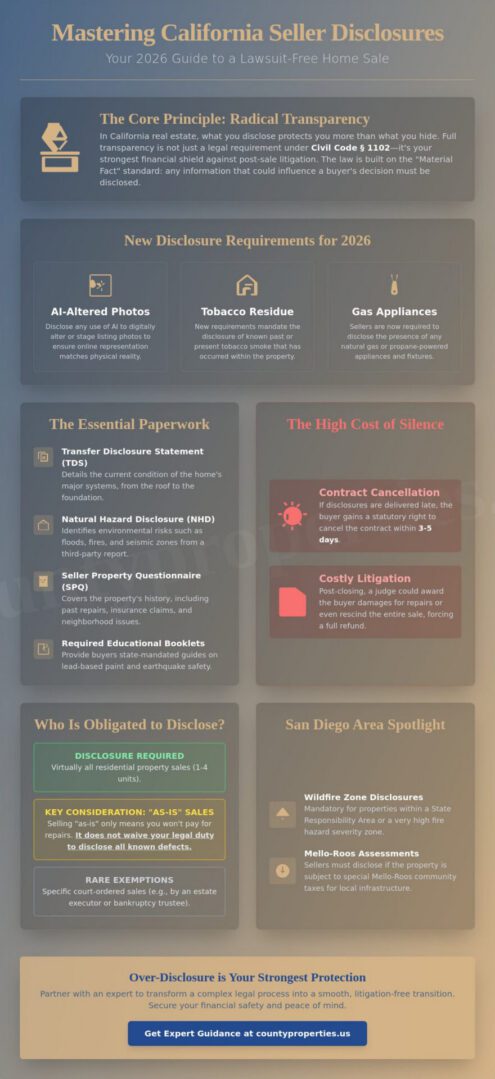
California real estate law operates on a foundation of radical transparency. Your seller disclosure responsibilities in California are anchored by Civil Code Section 1102, a statutory framework that requires you to provide a written statement regarding the condition of your property. This isn’t just a bureaucratic hurdle. It’s a vital legal shield that protects both you and the buyer from future disputes. By 2026, these laws have become even more precise, reflecting a modern market where digital integrity is just as critical as physical inspections. New regulations now require you to disclose if listing photos have been altered using AI, ensuring the home’s online persona matches its physical reality.
The core of this legal duty is the “Material Fact” standard. A material fact is any piece of information regarding a property’s physical condition or history that could reasonably influence a buyer’s decision to purchase the home or the price they are willing to offer. This standard prioritizes the buyer’s perception over your personal opinion of the home’s quirks. While honest oversight can sometimes be corrected, active concealment, which is the intentional hiding of a known issue, is where most legal trouble begins. Being proactive and collaborative in your disclosures ensures that your sale remains secure long after the keys have changed hands.
Who is Required to Disclose?
Most residential transactions involving one to four units must comply with these comprehensive disclosure rules. You might think selling a home “as-is” relieves you of these duties, but that’s a common misconception. In California, an “as-is” sale only means you won’t pay for repairs; it does not waive your legal obligation to disclose every known defect. While specific exemptions exist for certain court-ordered sales, such as those handled by a trustee or an executor of an estate, these are narrow. For the vast majority of sellers, providing a Natural Hazard Disclosure Statement and a completed Transfer Disclosure Statement (TDS) is a non-negotiable part of the process.
The Consequences of Non-Disclosure
The risks of cutting corners are significant and can manifest quickly. If you fail to deliver the required disclosures on time, you grant the buyer a powerful legal “out.” According to California law, if the TDS is delivered after the purchase agreement is signed, the buyer has a statutory right to cancel the contract within three days of personal delivery or five days if the documents were mailed or sent electronically. Beyond a cancelled sale, you could face post-closing litigation where a judge might award the buyer damages for the cost of repairs or even rescind the entire sale. We believe that professional mastery of these rules is the only way to guarantee the peace of mind you deserve during such a significant life transition.
The Essential Paperwork: TDS, NHD, and Beyond
The paperwork phase is where your legal obligations become tangible. Your seller disclosure responsibilities in California center on the Transfer Disclosure Statement (TDS). This document is your opportunity to list the condition of every major system in the home, from the water heater to the pool pump. It’s essential to consult California’s official disclosure guide to understand the full scope of these requirements. Alongside the TDS, you’ll provide a Natural Hazard Disclosure (NHD) report. This third party document maps out risks like seismic activity and flood zones. You’re also required to deliver educational booklets on lead based paint and earthquake safety to ensure the buyer is fully informed.
The Seller Property Questionnaire (SPQ) serves as a vital supplement to these standard forms. While the TDS focuses on the current state of the property, the SPQ dives into the history. It covers past insurance claims, deaths on the property within the last three years, and neighborhood noise issues. Providing these documents early builds a bridge of trust with your buyer. It shows you’re a responsible owner who values a transparent transaction.
Filling Out the Transfer Disclosure Statement (TDS)
Honesty is your best strategy when completing the TDS. You should never leave a question blank or simply check “I don’t know” if the information is accessible. Check your files. Review old repair invoices. If you fixed a leaky roof two years ago, you still need to disclose it. Buyers appreciate knowing that a problem was professionally addressed rather than hidden. Your agent can review the form for completeness, but they cannot fill it out for you. The legal weight of these statements rests on your shoulders as the owner.
Supplemental Disclosures for 2026
Modern homes bring modern responsibilities. In 2026, you must disclose smart home infrastructure, including active security cameras and data privacy settings. Buyers need to know if they’re being recorded during tours and how to take over digital accounts. Solar lease agreements or Power Purchase Agreements (PPA) also require absolute transparency. These contracts often carry long term financial obligations that a buyer must be willing to assume. If you live in a community with an HOA, you must provide the latest CC&Rs and financial health reports. If you’re feeling overwhelmed by the volume of paperwork, our team at County Properties can help you organize these files methodically to ensure nothing is missed.
Local Southern California and San Diego Specifics
Living in San Diego offers a unique lifestyle, but it also brings specific geographic obligations. Your seller disclosure responsibilities in California take on a more localized flavor when you’re dealing with our unique terrain and infrastructure. While statewide forms cover the basics, Southern California sellers must account for regional factors that can significantly impact a buyer’s future enjoyment of the property. For example, homes located in high risk fire areas require specific attention to AB 38 compliance. As of 2026, specialized wildfire disclosure reports, which confirm defensible space and home hardening standards, are a standard part of the transaction for properties in these zones.
Infrastructure and taxes also play a major role in local disclosures. Many newer developments in San Diego County are part of Mello-Roos districts. These are special tax assessments used to fund community facilities like schools and parks. You must clearly disclose these ongoing financial obligations to potential buyers. Additionally, if your property is near the shore, it may fall under the jurisdiction of the California Coastal Commission. This can place strict limitations on future property improvements or remodels. Proximity to our military bases is another key factor. If your home is near MCAS Miramar or Naval Air Station North Island, you are required to disclose the military flight paths and the potential for significant aircraft noise.
Environmental Hazards in San Diego County
Our local geography presents specific environmental challenges that require transparency. Radon gas can accumulate in certain inland canyons, and soil stability remains a constant concern for homes built on our iconic hillsides. Beyond physical hazards, California law requires you to disclose any death that occurred on the premises within the last three years. This is a sensitive topic that requires a methodical approach. As a dedicated local expert, County Properties understands these San Diego neighborhood nuances deeply, helping you navigate these complex conversations with empathy and professional mastery.
Senior Transitions and Inherited Properties
We often facilitate sales for heirs who have never lived in the property they are now selling. While you might have limited personal knowledge of the home’s history, you still have a legal duty to disclose any material facts you do know. For seniors transitioning into assisted living or downsizing, the disclosure process can feel overwhelming during an already difficult life milestone. We invite you to explore our Senior Real Estate Specialist guide to see how we provide tailored assistance that prioritizes your comfort and legal safety during these high stakes moves.
Common Pitfalls: How to Disclose Without Scaring Buyers
It’s natural to feel a sense of hesitation when preparing your home for the market. You’ve likely spent years caring for your property, and the idea of listing its “flaws” can feel counterintuitive. However, managing your seller disclosure responsibilities in California isn’t about highlighting failures. It’s about providing a clear roadmap for the next owner. We’ve found that when you frame a past repair as part of a diligent maintenance history, you actually build significant buyer confidence. A buyer who sees a detailed list of past improvements feels secure knowing the home has been under the watch of a responsible, proactive owner.
The “Over-Disclosure” rule is your most reliable professional ally. If you’re debating whether an old water stain from five years ago is worth mentioning, the answer is always yes. Writing it out removes the element of surprise and prevents the buyer from feeling blindsided later. When a buyer discovers an issue on their own during their inspection, they often begin to wonder what else you might be hiding. By being the one to bring it to light first, you maintain control of the narrative and project an image of total honesty.
The Psychology of Transparency
Buyers in the 2026 market value certainty above almost everything else. They’re often willing to pay a premium for a home with a documented history because it reduces their perceived financial risk. A disclosed defect is a known variable, while an undisclosed one is a legal liability. We often recommend a pre-listing inspection to our clients to validate their disclosures. This proactive step allows you to address or disclose issues before a buyer even steps through the front door, preventing stressful mid-escrow price re-negotiations. Even sensitive topics, like a death on the property within the last three years, can be handled with grace and legal accuracy when you approach them with transparency from the start.
Avoiding the “Oops” Factor
One of the most common mistakes we see is relying on oral disclosures. If you mentioned a property quirk to a buyer during a tour but didn’t put it in writing, it doesn’t legally protect you. Every detail must be documented in the official paperwork to be valid. If a new issue arises while you’re in escrow, such as a sudden plumbing leak or a neighbor starting a massive construction project, you must update your disclosures immediately. This includes neighborhood nuisances like persistent noise or upcoming local assessments. Navigating these nuances requires a steady, experienced hand to ensure your sale remains secure. If you’re ready to list your home with complete peace of mind, contact us for expert seller representation today.
Partnering with an Expert for a Secure Sale
Our service model is built on a foundation of empathy and reliability. We recognize that many of our clients are navigating high stakes life changes, such as downsizing a family estate or moving into a senior living community. These transitions require more than just technical knowledge; they demand a collaborative team player who values your unique journey. We act as your dependable guide, focusing on clear communication and supportive assistance throughout the entire process. This collaborative ethos ensures that your sale isn’t just a transaction, but a successful milestone achieved through professional mastery.
The Arnie Levine Advantage
Arnie Levine brings decades of specialized experience to every San Diego residential and commercial sale. His veteran perspective allows him to anticipate challenges before they arise, particularly when managing complex seller disclosure responsibilities in California. We’re committed to meticulous compliance because we believe your hard earned equity should be shielded from post closing litigation. Our team works as a close knit group to provide high level service standards with a personal touch. For a deeper look at our comprehensive service model, we invite you to explore our guide on Selling a Home in Southern California.
Next Steps for California Sellers
The first step toward a successful sale is gathering accurate information tailored to your specific situation. We offer professional guidance to help you understand how 2026 market trends and new regulations affect your property’s value and disclosure needs. Our goal is to make the breadth of our knowledge accessible to you so you can make informed decisions with certainty.
- Schedule a consultation to review your property’s unique history and requirements.
- Receive a professional valuation to determine your home’s current market standing.
- Review your documentation with a team focused on long term professional allyship.
You’ve worked hard for your home. We’re here to ensure the transition to your next chapter is smooth, secure, and filled with optimism for your future goals. Contact County Properties today for expert seller representation and move forward with the confidence you deserve.
Secure Your Future with Professional Mastery
Our team brings decades of San Diego market experience and a collaborative, service-centric approach to every transaction. As SRES® Certified specialists, we’re particularly sensitive to the emotional and practical needs of homeowners during significant life milestones. We act as your dependable guide, focusing on protecting your hard-earned equity through meticulous attention to detail. It’s time to move forward with optimism and peace of mind. Protect your equity and sell with confidence; contact County Properties for a free consultation. Your successful next chapter is just one conversation away.
Frequently Asked Questions
Do I have to disclose a death in the house in California?
You must disclose any death that occurred on the property within the last three years. This is a specific requirement under California Civil Code Section 1710.2. While deaths occurring more than three years ago usually don’t need to be mentioned, you should still disclose a death if a buyer specifically asks about it. Being transparent about the property’s history helps you maintain a collaborative relationship with the buyer and fulfills your legal obligations.
What happens if I forget to disclose a past repair?
Forgetting to disclose a past repair can result in the buyer exercising their right to cancel the contract or seeking damages after closing. If you realize you missed something during the escrow period, you must update your disclosures immediately. This provides the buyer with a new three or five day window to review the information. Addressing these oversights proactively is the best way to manage your seller disclosure responsibilities in California and avoid future litigation.
Are ‘as-is’ sales exempt from disclosure laws in California?
No, an “as-is” sale does not exempt you from state disclosure laws. While the term “as-is” indicates you won’t pay for repairs, you’re still legally required to reveal all known material facts about the property’s condition. This is a common point of confusion for many sellers. Providing a full Transfer Disclosure Statement (TDS) remains mandatory to protect your sale and ensure you’ve met the professional standards required by California law.
Do I need to disclose a noisy neighbor?
Yes, you should disclose a noisy neighbor if the disturbance is a recurring issue that affects the desirability of the home. This falls under the category of neighborhood nuisances. Whether it’s a barking dog or a neighbor who frequently hosts loud gatherings, these facts are considered material to a buyer’s decision. Disclosing these details upfront prevents the buyer from feeling misled and protects you from claims of active concealment after the transaction is complete.
How far back do I need to go with my property disclosures?
You must disclose any known material fact, regardless of how long ago it occurred. While certain items like death have a three year limit, major structural repairs or past flooding issues remain relevant for the life of your ownership. If you have knowledge of a significant event or defect from ten years ago, it’s safer to include it. Our seasoned team recommends the “over-disclosure” approach to ensure you’ve fulfilled all seller disclosure responsibilities in California.
Is a home inspection required before I fill out my disclosures?
A professional home inspection isn’t legally required before you fill out your disclosures, but it’s a wise strategic move. An inspection report can help you identify forgotten issues or hidden defects you weren’t aware of. This allows you to complete your paperwork with greater accuracy and professional mastery. By validating your disclosures with an expert’s findings, you build immediate trust with potential buyers and reduce the risk of mid-escrow price re-negotiations.
What is the difference between the TDS and the SPQ?
The Transfer Disclosure Statement (TDS) focuses on the current physical condition of the home’s systems and appliances. In contrast, the Seller Property Questionnaire (SPQ) is a supplemental document that explores the property’s history in much greater detail. The SPQ covers items like past insurance claims, water damage, and neighborhood issues that the TDS might miss. Together, these forms provide a comprehensive and transparent view of the property for the buyer’s peace of mind.
Can a buyer sue me after the sale is final for an undisclosed issue?
Yes, a buyer can sue you after the sale is final if they discover a material defect that you knew about but failed to disclose. Litigation often centers on whether the seller had “actual knowledge” of the problem. These legal battles are expensive and stressful. This is why we emphasize a service-first mentality centered on radical transparency. Disclosing everything known at the start is your most reliable shield against post-closing lawsuits and financial loss.