

What if a calmer, better-documented showing plan protects your sale more effectively than confrontation? If you’re wondering how to handle a tenant who sabotages showings, repeated cancellations or disruptions can feel especially stressful when buyers are waiting and you’re unsure what access the lease allows. Your frustration is understandable, but each step should be grounded in the lease and applicable California requirements. State law generally requires at least 24 hours’ written notice before a landlord enters to show a rental unit, and local rules may add protections.
This guide explains how to respond to repeated disruptions professionally, preserve a clear record, and make showings more predictable without escalating tension. You’ll learn what to document, how to communicate a consistent process, and why a tenant’s refusal doesn’t automatically justify forceful action. We’ll also cover how to keep sale decisions aligned with your lease, current rules, and goals. With coordinated seller representation, showing logistics can be managed as part of the broader marketing plan, helping you protect buyer interest while treating your tenant respectfully.
Key Takeaways
- Before assuming a tenant is deliberately obstructing showings, look for a repeated pattern and distinguish it from reasonable scheduling concerns or one-time emergencies.
- Learn how to handle a tenant who sabotages showings with a consistent process: review the lease, log each incident, communicate professionally, and reassess your approach.
- Access depends on applicable law, the lease, the purpose of entry, notice, and circumstances. Don’t treat every showing request as the same.
- Compare appointment-based showings with consolidated windows to find a predictable approach that suits buyer needs and the tenant’s routine.
- If appointments continue to fail, use documented incidents and buyer feedback to review the marketing plan with your real estate partner.
How to Handle a Tenant Who Sabotages Showings: Start by Identifying the Pattern
Repeated showing problems can put pressure on your sale and leave you feeling that your efforts are being undermined. Before deciding a tenant is acting deliberately, separate what happened from what you suspect. A missed appointment, for example, could be part of a pattern, or it may have resulted from a scheduling misunderstanding or an urgent situation.
That distinction matters. A calm, fact-based assessment helps you choose a response that protects buyer access without turning a difficult situation into a personal conflict. It also gives you and your real estate representative a clearer basis for adjusting the marketing plan.
What counts as a repeated showing disruption?
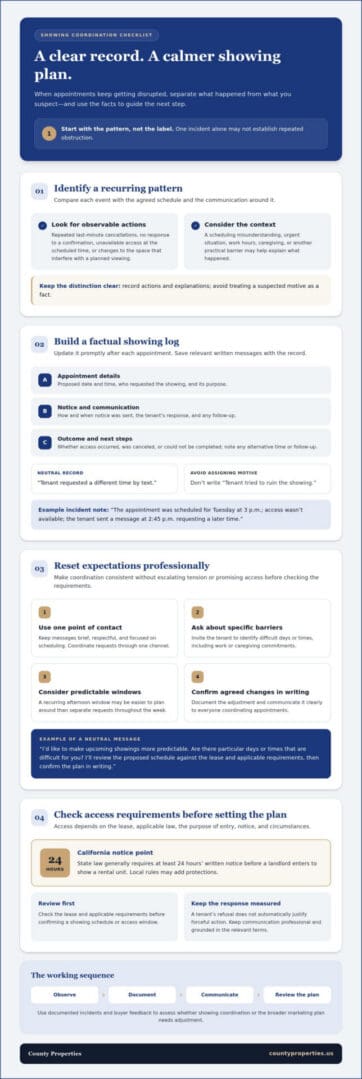
Look for recurring, observable actions, then compare each one with the agreed schedule and communication record. Examples might include a tenant canceling shortly before multiple appointments, not responding to a confirmation, preventing access at the scheduled time, or changing the space in a way that interferes with a planned viewing. One incident alone may not establish a pattern.
Record what you know, not conclusions about intent. Note the appointment time, what was communicated, what occurred, and any explanation the tenant gave. Did they propose another time or identify a specific concern? That context can help distinguish repeated obstruction from a reasonable request, a practical conflict, or a one-off emergency.
Why sellers should assess the situation before responding
An angry confrontation may make future communication harder, while a measured response leaves room to identify a workable process. A tenant may be managing work hours, caregiving, or another practical barrier. That doesn’t resolve every missed showing, but understanding the obstacle may help you consider a more predictable schedule.
Before contacting the tenant, write a short incident summary. Keep it neutral and specific: “The appointment was scheduled for Tuesday at 3 p.m.; access wasn’t available; the tenant sent a message at 2:45 p.m. requesting a later time.” Avoid labels such as “sabotage” in the record unless you’re quoting someone. The purpose is to document events accurately, not to prove a motive.
Repeated disruptions can limit when buyers are able to view the property and may require adjustments to showing coordination or the broader marketing plan. They don’t, by themselves, predict the outcome of the sale. If concerns arise about tenant rights or the relationship, keep communication professional and use the broader Landlord-Tenant Law Overview only as general background, not California-specific guidance. Before setting expectations for access, review the lease and applicable rules.
Document the Showings and Communicate a Clear, Professional Plan
A consistent process can turn a tense back-and-forth into manageable logistics. Start by reviewing the lease and applicable access requirements, then compare each planned showing with what was communicated and what actually happened. Keep the record factual. It can help you identify whether the difficulty comes from notice, timing, unclear expectations, or repeated access problems.
What should a showing log include?
Use a simple spreadsheet or written record, and update it promptly after each appointment. Include:
- Appointment details: proposed date and time, who requested the showing, and its purpose.
- Notice and communication: how and when notice was sent, the tenant’s response, and any follow-up.
- Outcome: whether access occurred, was canceled, or couldn’t be completed, stated without judgment.
- Next steps: any alternative time offered, agreed change, or follow-up needed.
Save relevant written messages with the log so the timeline is easy to understand later. For example, write “Tenant requested a different time by text” rather than “Tenant tried to ruin the showing.” The record should describe actions and communication, not assign a motive.
How to reset expectations without escalating conflict
Choose one consistent point of contact and keep messages brief, respectful, and focused on scheduling. Explain the proposed process, such as coordinating requests through one channel and offering a set of showing windows. Don’t imply that a window is automatically permitted. Align the plan with the lease, current requirements, and the circumstances.
Invite the tenant to identify specific scheduling barriers. A work shift, caregiving commitment, or difficulty with short-notice changes may call for a practical alternative. For example, ask whether a recurring afternoon window would be easier to plan around than separate requests throughout the week. Document any agreed adjustment and communicate it clearly to everyone coordinating appointments.
A neutral message could say: “I’d like to make upcoming showings more predictable. Are there particular days or times that are difficult for you? I’ll review the proposed schedule against the lease and applicable requirements, then confirm the plan in writing.” This sets a cooperative tone without making promises about access before checking the relevant terms.
If you’re considering how to handle a tenant who sabotages showings, this documented, logistics-first approach helps you respond to a pattern without escalating based on assumptions. It also connects showing coordination to the overall sale. For broader preparation and planning, see this Southern California home-selling guide.
California Tenant Rights: Address Access Concerns Without Crossing Legal Lines
A sale doesn’t erase a tenant’s rights to privacy and lawful access. Whether you can request entry depends on applicable law, the lease, the reason for entry, the notice given, and the circumstances. The balance is important: protecting your sale means coordinating legitimate buyer access, not treating a tenant’s home as freely accessible.
California Civil Code § 1954 generally requires at least 24 hours’ written notice before a landlord enters to show a rental unit to prospective buyers. The notice must state the date, approximate time, and purpose. After an initial written notice that the property is for sale, oral notice of at least 24 hours may be used for later buyer showings within 120 days. These rules can depend on the situation, and lease terms or local ordinances may add relevant requirements. Verify current requirements before relying on a particular notice method or schedule.
What should a California seller review before requesting access?
Start with the lease. Look for provisions about sale-related entry, how requests are communicated, and any agreed showing procedures. Then compare those terms with the current text of California Civil Code § 1954 and any applicable local rules. Confirm that the proposed purpose, timing, and notice process fit the circumstances rather than assuming a standard template covers every situation.
If the tenant disputes access, the lease is unclear, or the facts are unusual, pause and seek guidance from a qualified California attorney. A real estate representative can help coordinate showing logistics and communication as part of the sale, but legal questions require legal guidance.
What actions can make a difficult situation worse?
Don’t enter without proper authorization or required notice, and don’t assume that delivering a notice automatically settles a tenant’s objection. Avoid threats, repeated pressure, discriminatory treatment, or retaliation. A tenant’s objection is a reason to review the facts and process, not to force entry or escalate the dispute. If access remains contested, keep records and get appropriate legal guidance before taking further steps.
Understanding how to handle a tenant who sabotages showings includes resisting the urge to treat every failed appointment as permission to push harder. Review the lease, confirm applicable requirements, and keep communication focused on the proposed access and any specific concern. A documented, lawful approach supports the sale while respecting the tenant’s protections.
Make Showings More Predictable With Scheduling and Buyer-Access Alternatives
A predictable schedule can reduce surprises for both the tenant and prospective buyers. The right approach depends on buyer needs, the tenant’s documented routine, the property’s condition, and what the lease and applicable law allow. Treat alternatives as proposals to discuss, not access rights you can impose unilaterally. If an adjustment changes the agreed process, get the necessary agreement or legal guidance first.
Which showing arrangements may reduce friction?
Consider these options as planning tools. None replaces checking the lease and applicable requirements for each proposed arrangement.
| Approach | May suit | Planning point |
|---|---|---|
| Appointment-based showings | Buyers who need an individual visit and tenants whose schedules vary | Send requests consistently and allow for the required notice and any applicable terms. |
| Consolidated showing windows | Several expected buyer visits and a tenant who prefers fewer interruptions | Propose a defined window in advance; confirm that it works with the lease and applicable rules. |
| Virtual tour or photographs | Early buyer research or people unable to attend in person | Use as a supplement. Digital materials may not answer every buyer’s questions or replace an in-person visit. |
Advance scheduling and a consistent confirmation process can make expectations easier to follow. For example, the agent can communicate proposed visits through the agreed channel and share changes promptly. Don’t promise that a digital tour will eliminate the need for physical access.
How to choose a workable plan
Balance buyer convenience with the tenant’s stated constraints. If the tenant has identified recurring work or caregiving commitments, a proposed window outside those times may be worth discussing. If buyers need more flexibility, appointment-based visits may be more practical, provided the process remains consistent with the lease and applicable law. Document and confirm every adjustment rather than assuming it has been agreed to.
Reassess the plan after appointments. Note which visits were completed, which were missed, and whether the timing or communication created difficulty. Your agent can coordinate buyer requests, communicate schedule changes consistently, and connect showing logistics to the broader marketing plan. An agent can’t compel tenant cooperation. This measured approach can help you decide how to handle a tenant who sabotages showings without confusing a proposed schedule with automatic access.
County Properties provides seller representation and comprehensive marketing programs as part of a home sale. Learn more about County Properties’ selling services.
When Showings Keep Failing, Reassess the Sale Plan With a Real Estate Partner
If appointments continue to fall through, use a planned review point rather than reacting to each disruption in isolation. Set a date or agree to revisit the strategy after the next round of scheduled showings. Bring the showing log, buyer feedback, and current marketing plan together to see whether access problems are recurring and how they’re affecting buyer interest in this specific property.
When should you revisit the listing strategy?
Before changing course, look for clear records that show a recurring issue, not just a frustrating impression. Consider whether buyers have shared concerns about viewing availability, whether the property’s features call for in-person visits, and whether existing marketing materials answer common questions. These factors can inform adjustments to marketing or scheduling. Keep that review separate from any legal decision about tenant access, which should be based on the lease and applicable law.
A review can help you decide whether to continue with the existing appointment process, communicate schedule changes differently, or adjust how the property is presented to buyers. It doesn’t guarantee a particular sale result, and it doesn’t give anyone authority to compel tenant cooperation.
How seller representation can support a more coordinated process
A seller’s agent can coordinate listing information, appointment communications, buyer feedback, and marketing activity so changes are shared consistently. This gives you a clearer view of how showing logistics fit into the broader transaction, including your priorities for timing and the sale. Your agent can help organize the process, but tenant conduct and legal questions remain outside the agent’s authority.
If you’re evaluating representation, this guide to choosing a real estate agent can help you consider the working relationship and support you want throughout a sale. Coordinated guidance can bring greater clarity to a stressful process without making promises about access or outcomes.
Knowing how to handle a tenant who sabotages showings means grounding your next decisions in documented events, buyer feedback, and your goals. If you’re selling in Southern California, County Properties offers personalized guidance and seller representation as part of a coordinated sale plan.
Move Forward With a Clear, Steady Showing Plan
Repeated disruptions can make a sale feel uncertain, but a thoughtful response gives you a practical path forward. Document what happens, keep communication focused on logistics, and review the lease and applicable California requirements before changing access arrangements. A predictable showing process can reduce avoidable friction while respecting the tenant’s rights.
Knowing how to handle a tenant who sabotages showings also means reassessing the marketing plan when appointments keep failing. Use documented incidents and buyer feedback to guide decisions, and keep marketing adjustments separate from legal questions about access.
County Properties offers personalized guidance to Southern California sellers, with comprehensive marketing programs as part of seller representation. Led by Arnie Levine, the collaborative team can help coordinate showing communication within the broader sale plan. Discuss a coordinated home-selling plan with County Properties and take your next steps with a clear strategy and steady support.
Frequently Asked Questions
Can a tenant legally refuse showings in California?
It depends on the lease, the reason for entry, whether applicable notice requirements were met, and the circumstances. A tenant may object if a request doesn’t follow the governing requirements, so review the facts before treating a refusal as improper. Refusing a lawful, properly noticed entry may have legal significance in some situations, but it doesn’t automatically authorize an eviction. Local rules and tenant protections can also affect the analysis.
How do I prove that a tenant is sabotaging showings?
Document events rather than trying to prove the tenant’s motive. Keep a dated log of each proposed appointment, the notice method, tenant responses, whether access occurred, and any follow-up or alternative offered. Preserve relevant messages and compare incidents with the agreed schedule. Repeated cancellations or blocked access may reveal a pattern, but a clear record should distinguish observable conduct from assumptions about intent.
What should I do if a tenant cancels a showing at the last minute?
Record when the cancellation came in, what reason the tenant gave, and whether they suggested another time. Respond calmly and focus on rescheduling rather than assigning blame. Check that the proposed replacement appointment follows the lease and applicable notice requirements, then communicate the updated plan consistently to the people coordinating the showing. A one-time cancellation may have a practical explanation, so assess it alongside the broader record.
Can I enter a tenant-occupied home to show it to buyers?
You may be able to arrange entry for a buyer showing when the purpose, notice, lease terms, and circumstances meet applicable requirements. That isn’t permission to enter whenever you choose. Before proceeding, confirm that the planned entry is authorized and that the required notice has been provided. If the tenant objects or the situation is disputed, don’t force entry; pause and get advice from a qualified California attorney.
How much notice do I need to give a tenant before a showing in California?
California Civil Code § 1954 generally requires at least 24 hours’ written notice before entry to show a rental unit to prospective buyers. The notice must state the date, approximate time, and purpose. After an initial written notice that the property is for sale, oral notice of at least 24 hours may be used for later buyer showings within 120 days. Check current law, the lease, and applicable local rules for your situation.
Can I change the showing schedule to make it easier for my tenant?
Yes, you can propose a different schedule and discuss practical options, such as advance appointment requests or consolidated showing windows. Agree on changes with the tenant where needed, document the arrangement, and make sure it remains consistent with the lease and applicable law. A more predictable process may reduce scheduling friction, but don’t assume a proposed window creates a right to enter or replaces required notice.
What if my tenant keeps blocking showings after I have documented everything?
Keep the record current and avoid responding with threats, pressure, or entry without proper authorization. Review the lease and applicable access requirements, then consult a qualified California attorney about the specific dispute and any appropriate next steps. Your real estate agent can coordinate showing communications and reassess marketing with you, but can’t compel tenant cooperation. A documented, professional approach to how to handle a tenant who sabotages showings helps keep sale planning grounded in facts.