

What do you say when a neighbor asks why your home is listed, what price you expect, or when the next showing is scheduled? Dealing with nosy neighbors when your house is for sale can make an already personal process feel exposed, especially when you’d rather keep sale details private. You can be friendly without answering every question.
Set clear boundaries without turning curiosity into conflict. A brief, calm response can protect your privacy, and a few practical steps can keep showings and buyer conversations focused on the sale. You don’t have to manage every interaction alone. Your real estate agent can help organize sale-related communication and discuss how to handle a neighbor’s behavior if it starts to interfere with listing activity.
This guide covers ways to respond to awkward questions, limit unwanted attention around showings, and handle gossip or interference calmly. You’ll also learn when to involve your agent and when persistent or concerning behavior may call for additional support. With a thoughtful plan, you can stay courteous, protect your boundaries, and keep your home sale moving forward.
Key Takeaways
- Recognize why a listing can spark neighbor questions, and decide which sale details you prefer to keep private.
- For dealing with nosy neighbors when your house is for sale, prepare a brief, polite response and repeat it calmly rather than sharing more than you want.
- Before showings, put personal documents, schedules, and sensitive belongings out of view to help protect your household privacy.
- Keep a factual record of repeated contact, access attempts, or disruptions so you can respond appropriately without escalating through gossip.
- Work with your seller representative to organize listing questions and agree on how neighbor-related concerns should be handled.
Why Nosy Neighbors Take an Interest When Your House Is for Sale
A home sale can make private decisions more visible than usual. A sign appears in the yard, cleaners or other service providers come and go, and rooms may look different as you prepare for photographs and showings. Neighbors may ask questions out of friendly interest, practical curiosity, or habit. Even so, repeated questions can feel intrusive when you’re already managing a major transition.
The listing can also become a topic of neighborhood conversation. People may wonder whether a nearby home will sell quickly, who might move in, or whether the sale will change the feel of the street. Showings create more visible activity, and a neighbor who notices unfamiliar visitors may ask about the schedule. That attention doesn’t automatically mean someone has bad intentions. You can recognize ordinary curiosity while choosing what information stays private.
Which questions and behaviors can feel intrusive?
Questions about why you’re selling, your expected price, your moving date, or where you plan to go next can touch on personal or financial matters. One polite question is different from recurring pressure, especially if you change the subject and the neighbor keeps pressing. Likewise, noticing a showing from the sidewalk is not the same as repeatedly trying to enter private areas or disrupt a scheduled visit.
Pay attention to the pattern and its effect on the sale. Is the neighbor simply making conversation, or are they approaching visitors, interrupting appointments, or seeking access to areas that aren’t open to them? You don’t need to guess someone’s motives to recognize that a behavior is unwelcome. A general overview of privacy law and property rights can provide broader context, though it isn’t a substitute for advice about a specific situation.
Why do sellers feel pressure to answer?
Neighborhood relationships often involve familiar routines: waving from the driveway, chatting over a fence, or checking in after seeing a moving truck. In that setting, a short refusal can feel sharper than intended. You may worry a neighbor will interpret it as unfriendly, repeat partial details to others, or judge the circumstances behind your move. Those concerns can make it tempting to explain more than you’re comfortable sharing.
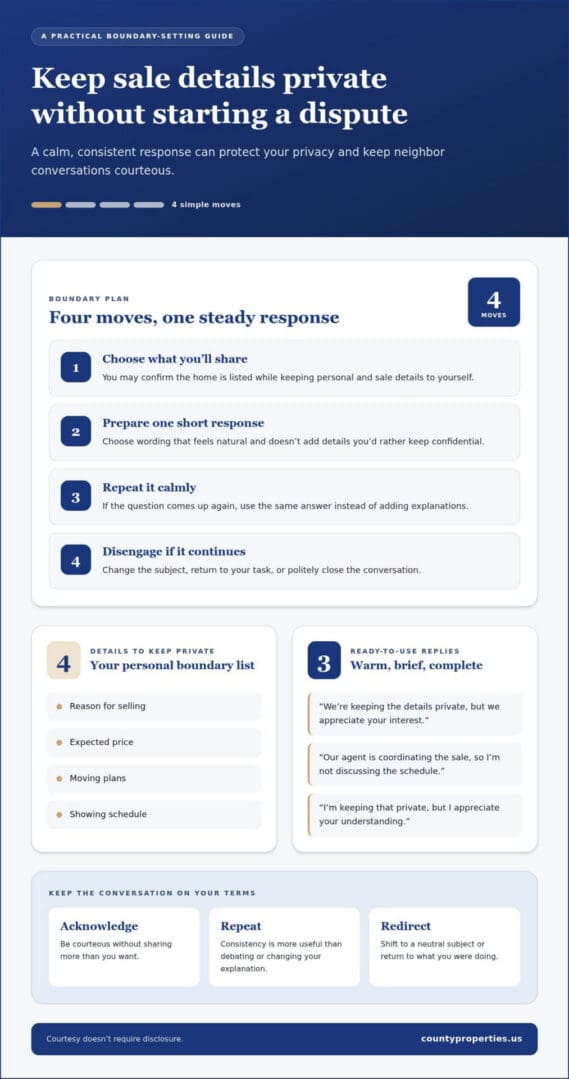
Courtesy doesn’t require disclosure. A consistent, low-key answer can preserve goodwill without turning the conversation into an interview. For example, say, “We’re keeping the details private, but we appreciate your interest,” or, “Our agent is coordinating the sale, so I’m not discussing the schedule.” Then shift to a neutral subject or end the conversation. In dealing with nosy neighbors when your house is for sale, the goal isn’t to assume the worst or shut down every friendly exchange. Decide what feels appropriate, respond calmly, and notice when curiosity becomes repeated pressure or interferes with listing activity.
How to Set Boundaries With Nosy Neighbors Without Starting a Dispute
A calm boundary works best when you decide on it before someone puts you on the spot. You don’t need a detailed explanation or an invented reason to avoid sharing personal information. A simple plan helps you stay courteous and consistent, even if the same questions come up more than once.
- Choose what you’re comfortable sharing. You might be happy to say that the home is listed, but prefer to keep your reason for selling, expected price, moving plans, and showing schedule private.
- Prepare one short response. Use wording that feels natural and doesn’t introduce details you’d rather keep confidential.
- Repeat it calmly. If the neighbor asks again, give the same answer instead of adding an explanation that invites more questions.
- Disengage when the conversation continues. Change the subject, return to what you were doing, or politely say you need to get back to a task.
This approach is especially useful during a sale because casual comments can turn into questions about negotiations, buyer interest, or access to the property. Share only details you’d be comfortable hearing repeated around the neighborhood. For broader context about handling information in real estate, the National Association of REALTORS® offers Data Privacy and Security in Real Estate resources.
What can you say when a neighbor asks personal questions?
Keep your answer warm but complete. For example: “We’ve decided it’s the right time for a change, but we’re keeping the details personal.” If asked where you’re moving, try, “We have plans in place, thanks for asking.” For listing details, say, “Our agent is handling questions about the home.” These replies acknowledge the neighbor without opening a new line of inquiry.
Avoid filling an awkward pause with private circumstances just to make the exchange feel comfortable. You can be friendly without providing a reason, a price expectation, or a timeline. If a neighbor asks a follow-up, return to your prepared line: “I’m keeping that private, but I appreciate your understanding.” Consistency is generally more useful than arguing or changing your explanation each time.
How can you end a conversation respectfully?
Use a brief closing phrase and a clear next action: “I should get back to packing,” or, “I have to prepare for an appointment. Take care.” If the neighbor returns to the same subject, repeat your boundary rather than offering fresh reasons to debate. A steady response keeps the interaction civil while making your limit clear.
If unwanted contact continues after you’ve stated your boundary, make a factual note of when it happened and what was said or done. A record can help if the pattern starts affecting your comfort or sale activity. If you want support organizing listing communication, County Properties seller representation can help coordinate sale-related conversations and showings.
Protect Your Privacy During Listings, Showings, and Open Houses
A home listing is designed to share selected information with prospective buyers, not every detail of your household. Property features, photographs, and showing arrangements may be part of the sales process, while your reasons for moving, negotiating position, daily routine, and personal circumstances can remain private. Keeping those categories distinct helps limit what neighbors or other curious observers can learn without making the home harder to market.
What information about the sale should remain private?
Before listing photos or buyer visits, walk through the home with privacy in mind. Put away mail, financial paperwork, medical information, family calendars, work schedules, and other documents that could reveal personal details. Store small valuables and items you wouldn’t want handled out of sight, too. Check desks, countertops, entryways, and visible screens for details that are easy to overlook during staging.
Also consider what you share online. A post about being away during a showing or your exact moving plans can reach people beyond the intended audience. Keep updates general, and avoid sharing access details or household routines in public or neighborhood groups. For background on how California describes privacy and personal information, review Real Estate Privacy and Public Records.
- Appropriate to share: Information already included in the listing, such as the home’s advertised features.
- Better kept private: Your reason for selling, lowest acceptable terms, personal documents, and when the home will be empty.
- Best coordinated with your agent: Questions about buyer visits, appointment timing, and listing arrangements.
How should sellers handle neighbor interest during showings?
A neighbor may ask whether a visitor is a potential buyer or when the next showing will take place. Keep your response neutral: “The listing agent is coordinating visits, so please direct questions about the home to them.” This keeps you from becoming the informal source for schedules or transaction details and gives your agent a consistent point of contact for sale-related questions.
Stick to the established showing process. Don’t invite a neighbor to let themselves in, pass along entry instructions, or interrupt an appointment to answer questions. If someone asks to view the home, direct them to the listing agent rather than making an exception on the spot. If occupants are present, give them space and avoid drawing neighbors into the visit.
Before showings or an open house, agree with your agent on how inquiries should be handled and what information can be shared. Decide how to respond if a neighbor approaches visitors or asks to enter. Clear expectations help keep buyer activity focused and reduce awkward conversations. For sellers dealing with nosy neighbors when your house is for sale, privacy isn’t about hiding the listing. It’s about sharing what supports the sale while keeping household details under your control.
When Neighbor Curiosity Becomes Repeated Interference
A neighbor asking about the listing once is different from a pattern that disrupts your privacy or the sale. Pay attention to what happens, how often it happens, and whether it affects scheduled activity. Repeated unwanted visits after you’ve asked for space, attempts to enter without your permission, or interruptions that make buyers or showing agents uncomfortable are practical reasons to set a firmer boundary and update your listing agent.
You don’t need to decide why the neighbor is acting this way or make a legal judgment before taking sensible steps. Focus on observable conduct. For example, note whether someone approached a buyer during an appointment, returned after being asked not to, or tried to access a private area. This helps you respond to the behavior itself instead of getting drawn into assumptions or neighborhood speculation.
How can you respond to repeated unwanted contact?
State your boundary clearly and keep the exchange brief: “I’ve asked that you not come onto the property during showings. Please direct questions about the sale to my agent.” If the conduct continues, avoid a prolonged debate. Use a communication channel that keeps a record, such as a written message, and don’t retaliate with public posts or gossip that could intensify the conflict.
Keep a straightforward incident log. Include the date and time, what you personally observed, who was present, and any relevant messages. Save communications in their original form, and distinguish what you witnessed from what someone else told you. A concise, factual record gives your agent a clearer picture of the effect on showings and helps you explain the situation if you seek further assistance.
When should your real estate agent be involved?
Tell your listing agent when a neighbor’s conduct affects access, interrupts appointments, approaches prospective buyers, or repeatedly seeks information about the sale after you’ve redirected them. Share specific examples rather than a general label such as “difficult.” Your agent can help keep listing questions within the agreed communication process and coordinate how showing-related inquiries are handled.
Agree on a simple plan together: what visitors should do if approached, where sale questions should be directed, and how you’ll report further incidents. Consistent responses help your agent understand any practical impact on marketing or buyer visits. This keeps dealing with nosy neighbors when your house is for sale focused on the sale rather than turning into a personal dispute.
If you feel in immediate danger, move to a safer place and contact appropriate local emergency or safety resources. For seller representation that helps organize sale-related communication and showings, connect with County Properties about seller representation.
How County Properties Can Help Keep Your Home Sale on Track
Neighbor questions can feel harder to manage when they overlap with listing activity, but you don’t have to handle every sale-related conversation on your own. Seller representation gives you a professional point of contact for coordinating marketing and showings, while helping keep questions about the listing within an agreed process. You remain in control of what you share about your household and personal circumstances.
What can you discuss with your listing agent?
Tell your agent what you’d prefer to keep private and describe any neighbor behavior that affects your comfort, property access, or buyer visits. Specific details help: a neighbor repeatedly asking about showing times is different from someone approaching visitors during an appointment. Together, you can decide how listing questions should be directed and what response is appropriate if a neighbor asks about access or schedules.
Keep the plan practical and consistent with the way the home is being marketed. You might agree that the agent handles questions about the listing and that you’ll pass along any interruptions affecting scheduled visits. A clear approach helps avoid mixed messages and gives you a reliable way to raise concerns as they arise.
What support can a local seller’s agent provide?
County Properties represents sellers in Southern California, including San Diego County, with personalized seller representation and comprehensive marketing programs. The team can help organize sale-related communication alongside marketing and showing coordination. Its collaborative approach gives you a professional partner to discuss how neighbor inquiries fit into the broader plan for presenting and selling your home.
Preparation matters, too. County Properties’ Southern California home-selling guide offers broader guidance for getting ready to sell, while its guide to choosing a real estate agent can help you think through the working relationship and support you want. County Properties was established in 1995, and founder Arnie Levine brings 36 years of Southern California real estate experience.
Dealing with nosy neighbors when your house is for sale is easier to manage when you and your agent agree on communication boundaries before questions or disruptions arise. Share your priorities, discuss a consistent plan, and revisit it if circumstances change. If you’re preparing to sell and would like personalized seller representation, talk with County Properties about your home sale. The first step is a conversation about your goals and the support you’re looking for.
Move Forward With a Sale Plan That Fits You
Your home sale deserves your attention, not a running commentary from the neighborhood. Decide what you’re comfortable sharing, then align with your agent on how questions about the property and showings should be handled. A clear plan gives you a steady response when curiosity comes up and helps keep your attention on the move ahead.
Dealing with nosy neighbors when your house is for sale doesn’t mean choosing between protecting your privacy and staying on good terms. You can be considerate while keeping personal details to yourself, and you can ask your agent to help organize sale-related conversations. Make that communication plan part of your selling strategy.
County Properties offers personalized seller representation and comprehensive marketing programs for homeowners in Southern California. If you’re ready to discuss the kind of support that would suit your sale, talk with County Properties about seller representation. With a thoughtful plan and a professional ally, you can move forward with greater confidence and focus on what comes next.
Frequently Asked Questions
Should I tell my neighbors that my house is for sale?
You can tell neighbors if you want to, but you don’t owe them personal details about your plans. A brief courtesy, such as mentioning that the home will be listed, may feel right if you have a friendly relationship. For dealing with nosy neighbors when your house is for sale, decide in advance what you’re comfortable sharing and use the same neutral answer if questions continue.
What should I say when a neighbor asks why I am selling my house?
Give a short answer that feels polite without explaining private circumstances. You might say, “We’re ready for a change, but we’re keeping our plans personal.” If the neighbor follows up with questions about the property, redirect them: “Our listing agent can answer questions about the home.” A prepared response can help you avoid sharing details just because a pause in conversation feels awkward.
Can a neighbor attend an open house?
Whether a neighbor may attend depends on the seller’s and agent’s plan for that open house. Don’t assume that being nearby automatically means someone can enter, or that neighbors are excluded. If a neighbor asks to come in, direct the access question to your agent and follow the arrangements already set for visitors. This keeps entry decisions consistent and avoids disrupting the event or current occupants.
What if my neighbor keeps asking about my asking price?
You don’t have to discuss your asking price or negotiating details with a neighbor. Try, “We’re keeping the financial details private, but the listing information is available through our agent.” If they ask again, repeat the same response rather than explaining your pricing strategy or how flexible you might be. Keeping those details within your real estate discussions can prevent casual neighborhood conversation from becoming a negotiation.
Can I ask a neighbor not to post about my home sale online?
Yes, you can make a clear, courteous request, such as, “Please don’t share details or photos of our sale online. We’d like to keep our plans private.” Keep the request focused on your preference rather than making assumptions about what the neighbor is allowed to post. It also helps to limit the personal details you share yourself, since online information can reach people beyond your intended audience.
What should I do if a neighbor disrupts a home showing?
Prioritize your safety and avoid confronting anyone if you feel at risk. Once the situation is calm, write down what happened, including when it occurred, what you observed, and whether a visitor or appointment was affected. Then tell your listing agent promptly and share any relevant messages. These details can help you and the agent decide how to handle future visits without relying on neighborhood rumors.
Can a nosy neighbor affect the sale of my house?
Curiosity alone doesn’t determine whether your home sells, and a neighbor’s questions don’t automatically change a buyer’s decision. The practical concern is behavior that interrupts a showing, unsettles visitors, or complicates access to the property. If that happens, let your agent know what occurred and keep listing-related communication organized through the agreed process. That gives you a clearer basis for responding than speculation about what a neighbor might do.