
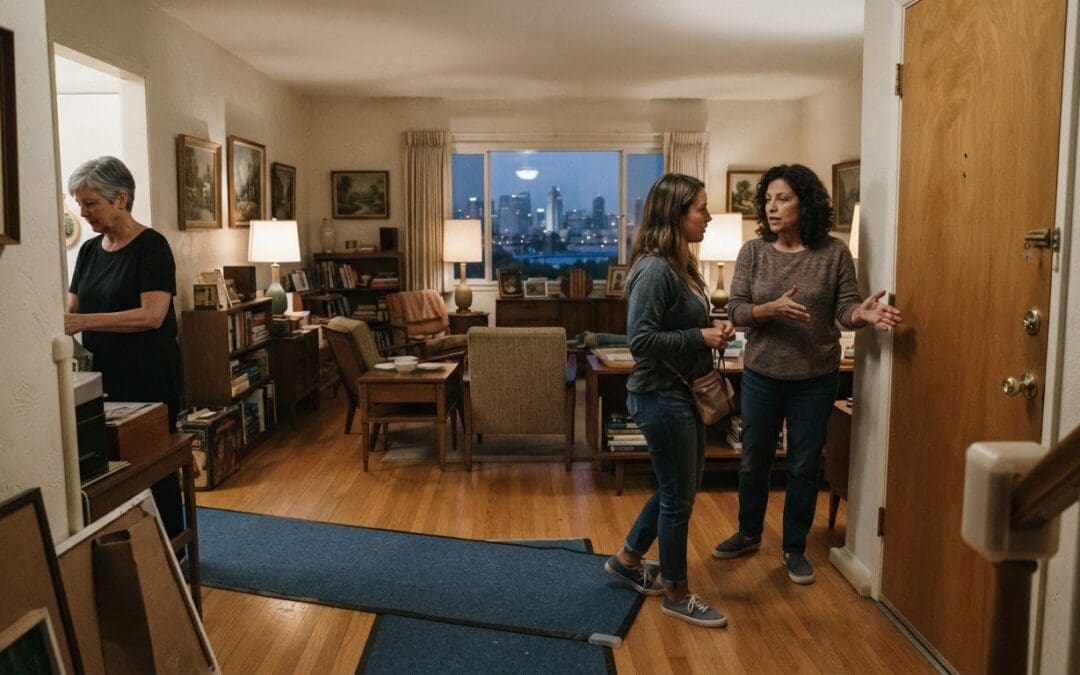
An estate sale can put more than valuables at risk: heavy foot traffic can also damage floors, doorways, and walkways. To protect your property during an estate sale, secure small valuables and private belongings, clearly close off rooms that aren’t included, and coordinate access with the sale team. Floor runners and padding can help protect flooring, corners, banisters, and door frames, while clear paths reduce trip hazards.
It’s understandable to focus first on what might be misplaced or sold by mistake. A well-planned sale also considers how shoppers will move through the home and which areas need to stay private or protected.
This guide explains how to secure jewelry and personal documents, mark and manage restricted rooms, and agree on clear responsibilities with the estate sale company. You’ll also learn how crowd flow, floor protection, and tidy walkways can help reduce damage and hazards during the event.
Key Takeaways
- Plan how jewelry, watches, and other small valuables will be inventoried, secured, and monitored during the sale.
- Make private rooms unmistakable with clear signs or barriers, and agree with the sale team on which areas stay closed.
- Set expectations for staff coverage, access routes, and restricted spaces before setup so everyone understands their role.
- Use floor protection and clear walkways to reduce wear and trip hazards; if the sale is part of a broader housing transition, County Properties can help with Senior Real Estate Transition or Seller Representation.
Securing jewelry, watches, silver, and small collectibles
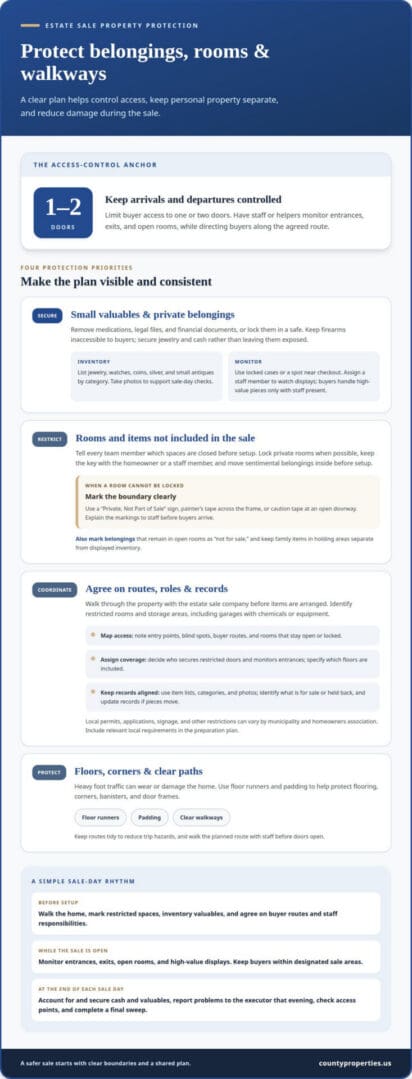
Protect high-value belongings before buyers arrive, and keep the security plan in place through closing. A clear inventory and access plan helps distinguish sale items from personal property.
Yes. Remove medications, legal files, and financial documents from the home, or lock them in a safe. Keep firearms inaccessible to buyers, and secure jewelry and cash rather than leaving them exposed. Take particular care during moving and setup, when belongings may change locations and rooms are opened.
List jewelry, watches, coins, silver, and small antiques by category, and take photos to support sale-day checks. Keep small valuables in locked cases or near checkout, where staff can watch them. Assign a staff member to monitor these displays, and allow buyers to handle high-value pieces only when staff are present. These steps reduce the risk of items going missing and make it easier to compare displayed pieces with the sale inventory.
Pre-Sale Security Walkthroughs
A pre-sale walkthrough helps map entry points, blind spots, high-value areas, and rooms that should stay open or locked. Use it to agree on buyer routes and decide where staff should monitor access. For a condo, include building visitor rules, concierge notification, and visitor limits in the plan. In a multi-floor home, identify closed floors and keep buyers within the designated sale areas.
End-of-Day and Overnight Security
End-of-day security means accounting for cash and valuables, reporting problems, and securing the home before the team leaves. Count and secure cash after each sale day, and report problems to the executor that evening. Check doors, windows, and other access points, then complete a final sweep. In a condo, follow building access procedures; in a multi-floor home, confirm closed floors remain off limits. Keep the home secured overnight, with sale items inside locked rooms or cases where possible.
Closing and marking rooms not included in the sale
Prevent theft and control access by locking private rooms, marking their doors, and limiting buyer routes. Before setup begins, tell every sale team member which spaces are closed.
Restricting Access to Private Rooms
Locking a room is the clearest way to protect belongings that aren’t for sale. Keep the key with the homeowner or an estate sale staff member, not near the doorway. Move sentimental pieces into that room before setup, then keep it closed throughout the event. This also prevents buyers from mistaking personal property for sale inventory or entering private spaces by accident.
Marking Rooms Excluded From the Sale
Visible door markings clarify boundaries when a room can’t be locked. Place a sign reading “Private, Not Part of Sale” on the door, or use painter’s tape across the frame. Caution tape provides a more noticeable barrier at an open doorway. Explain the markings to staff before buyers arrive so everyone gives the same direction when someone approaches an off-limits area.
For better oversight, estate sale professionals can limit arrivals and departures to one or two doors. Staff or helpers should monitor those entrances, exits, and open rooms while treating buyers courteously. In a multi-floor home, station team members on each open floor and close any upper floors excluded from the sale. This makes it easier to notice movement into restricted areas.
Mark items that remain in open rooms, too. A clear “not for sale” label helps buyers distinguish personal belongings from sale pieces, especially when furniture or décor stays in place. Keep family belongings in holding areas separate from displayed inventory. Before doors open, have staff walk the planned route and check that every excluded room remains secured and clearly marked.
If closing off rooms is part of preparing a home for a move, senior real estate transition planning can help connect the sale with the next housing decision.
Coordinating restricted areas with the estate sale company
Agree on room boundaries, staff responsibilities, and sale records before setup begins. A shared plan helps prevent restricted spaces from being opened or personal belongings from being added to the display.
Permits, applications, signage, and other sale restrictions can differ by municipality and homeowners association. Don’t assume the process in one city applies elsewhere. Consider consumer-protection and liability questions in light of the rules relevant to the specific sale. Include restricted rooms, buyer routes, and known local requirements in the company’s preparation plan.
Coordinate a walkthrough with the estate sale company before items are arranged. Identify rooms and storage areas buyers must not enter, including garages containing chemicals or equipment. Agree on who will keep restricted doors secured and who will monitor entrances. If the home has several floors, specify which are included and how staff will prevent access to closed areas.
Before sale setup, professional estate sale teams can use item lists, categories, and photographs to support setup and later checks. Record each small or high-value piece, photograph its condition, and mark whether it is for sale or being held back. Tell the company which belongings to remove from display, and keep the inventory consistent when pieces move between rooms. These records help staff compare displayed items with sale-day checks.
Ask for evidence of appropriate insurance and, where needed, bonding before the sale. You can also review the company’s standing through the local Better Business Bureau or attend a sale it runs. The American Society of Estate Liquidators is a trade association whose members must meet certain requirements and follow an ethics code. These steps provide concrete information about the company’s practices and professional commitments.
Put the final arrangements in writing: restricted rooms, keys, staff coverage, item records, and how belongings that aren’t for sale will be handled. Clear instructions reduce confusion when team members are setting up, adding tags, or moving items through the home.
Preventing property damage and trip hazards
An estate sale brings strangers through rooms that family members know well but may not be ready for crowds. The risks go beyond missing belongings: shoppers can bump furniture, scrape door frames, or trip over items left in walkways. To protect your property during an estate sale, plan the buyer route, protect vulnerable surfaces, and keep movement orderly from entry to checkout.
Floor runners and padding can protect flooring, corners, banisters, and door frames. Use them along the route buyers will follow, especially near narrow doorways and stairs where people may turn while carrying furniture or other large purchases. Keep rugs flat and secure, and move loose cords, boxes, and small objects away from walking paths. These preparations help reduce scuffs and obstacles.
Estate sale teams can manage crowds with line systems and head counts. A sale may bring dozens or even hundreds of shoppers through a home over a weekend, so avoid letting everyone gather in one room. Staff should monitor open areas and checkout, while clear paths help buyers move between displays without pushing past one another. Keep entrances and exits easy to identify.
Before moving furniture or opening storage areas, look for hazards that clutter may conceal. Neglected properties can contain biohazards or structural problems, so proceed cautiously rather than shifting items blindly. Keep garages with chemicals or equipment restricted or carefully managed. If a stair, floor, or doorway appears unsafe, keep buyers away and make the restriction clear to staff.
During setup, keep family members and sale staff aligned on which furniture must remain in place and which routes stay clear. Planning how to protect your property during an estate sale also means checking for unstable displays, blocked exits, and items that could roll or fall before opening. After shoppers leave, secure the home and keep unsold items from obstructing rooms. If the sale is part of planning what comes next for the home, consider planning your next property move.
County Properties: Short Sale and Foreclosure Prevention
County Properties can help when an estate sale is part of a larger decision about a home facing foreclosure or a short sale. The team provides Short Sale and Foreclosure Prevention, helping you consider the property transaction alongside your next steps.
If you’re managing a senior’s move, Senior Real Estate Transition can support the housing change. Seller Representation is relevant when you’re preparing to sell, while Buyer Representation can help if you’re planning a purchase. These services address real estate decisions that may follow the sale of household belongings, rather than the estate sale itself.
For guidance on the property decision connected to your situation, contact County Properties.
Make Your Next Property Decision With Confidence
A well-planned sale can also clarify what you want to do with the home afterward. As you consider how to protect your property during an estate sale, think beyond sale day: whether the property will be sold, retained, or part of a move can shape what comes next. Give yourself time to consider the timing and the people affected before choosing a direction.
If your next step involves selling a home, buying another property, or addressing a short sale or foreclosure concern, real estate guidance can help you understand your options. County Properties supports these property decisions through Seller Representation, Buyer Representation, and Short Sale and Foreclosure Prevention.
Talk with County Properties about your next property decision, and take the next step with a clearer plan.
Frequently Asked Questions
How can you secure valuables and personal documents before an estate sale?
Remove sensitive documents and medications from sale areas, and place them in a secure location outside the home or in a safe. Separate items the family intends to keep from sale inventory before staging begins. For example, create a private “retain” group for heirlooms and personal records, then document which family member is responsible for it. This reduces mix-ups during sorting and setup.
What security measures protect the home during an estate sale?
Set a clear buyer route and staff coverage so shoppers remain in sale areas. Keep payment and item checks at one checkout point, where staff can match purchases to sale tags as buyers leave. Establish a closing routine that covers doors, windows, and access points, then complete a final walkthrough. In a condo, include building visitor procedures in the day’s plan.
What contracts and sale terms protect the property owner during an estate sale?
Put the practical arrangements in writing before setup: which rooms are included, who may enter restricted areas, how displayed items are tracked, and how sale proceeds are reported. Include procedures for damage, missing items, and unsold belongings, along with the planned end-of-sale walkthrough. Clear written terms help the owner and sale team share expectations; they aren’t a substitute for legal advice.
How can you protect floors, walls, and furnishings from damage during an estate sale?
Before buyers arrive, clear the planned route of loose cords, boxes, and unstable displays. Identify tight turns where shoppers may brush walls or furniture, and keep large pieces away from doorways. During setup, avoid stacking items where they could topple, and leave walking space around displays. A final room-by-room check can catch shifted rugs or newly blocked paths before opening.
What steps should you take after an estate sale to secure and inspect the property?
After buyers leave, compare the remaining sale items with the inventory and note anything needing follow-up. Walk through each open room, garage, and entry area to spot damage, misplaced belongings, or items left behind. Confirm doors and windows are secured, and follow the planned process for unsold property. Keep a written record of any concerns for the executor or responsible family member.