
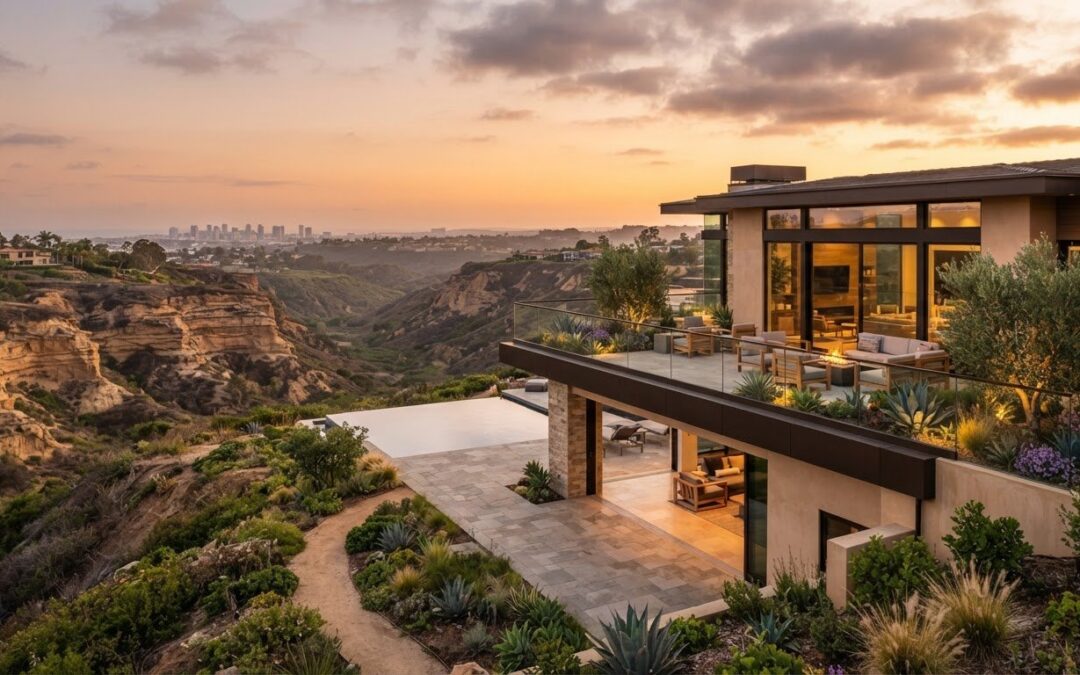
A canyon view in San Diego doesn’t automatically mean a detached home or a secluded location. Mira Mesa is about 16 miles north of downtown San Diego, according to the City of San Diego.
When comparing canyon view homes for sale in San Diego, look beyond the view: price, layout, access, and nearby amenities all affect how well a property fits your plans. This guide explains how to assess price information and time on market, and what styles and neighborhood features to consider.
You’ll also learn what Los Peñasquitos Canyon Preserve offers and how Mira Mesa’s location affects access to downtown. These details can help you weigh trade-offs, compare listings, and identify the features that matter most in your search.
Key Takeaways
- Compare recent sale prices by neighborhood, home type, and view to better understand what makes one listing different from another.
- Use days on market and the sale-to-list ratio to read market pace and assess how asking prices relate to completed sales.
- Explore how access to Los Peñasquitos Canyon Preserve, with 4,000 acres and about 12 miles of multi-use trails, could fit your lifestyle.
- Look beyond the view when comparing detached homes and townhomes; layout, setting, and access to daily amenities also matter.
- Identify which San Diego neighborhoods match your priorities, then use buyer or seller representation to guide the next steps in your transaction.
Local amenities and access to downtown San Diego
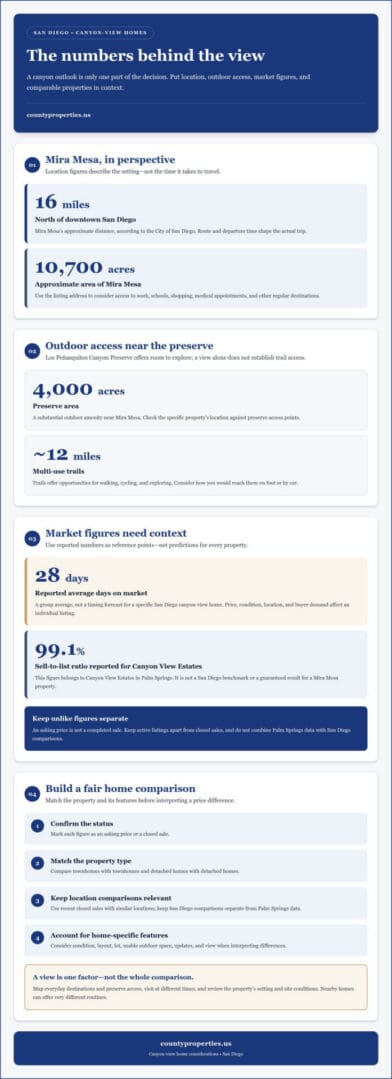
Mira Mesa offers a useful reference point for buyers weighing canyon scenery against everyday access. The neighborhood covers roughly 10,700 acres and sits about 16 miles north of downtown San Diego, according to the City of San Diego. That distance describes location, not a travel time; your route and departure time shape the actual trip. Compare the address with your regular destinations, including work, schools, shopping, and medical appointments.
Outdoor access is a defining amenity near Los Peñasquitos Canyon Preserve. The preserve covers 4,000 acres and has about 12 miles of multi-use trails. Those trails offer opportunities for walking, cycling, and exploring the landscape. However, a property’s view does not establish its distance from a trail entrance. Map the home’s location against the preserve’s access points, then consider how you’d reach them on foot or by car.
Nearby services vary by street and community. A home in Mira Mesa may have a different mix of shops, restaurants, and everyday services than a canyon-edge property elsewhere in San Diego. Use the listing address to map routine errands, and consider what routes are like at the times you expect to travel. For a home with a canyon outlook, also consider whether its position offers privacy while keeping daily destinations practical.
What San Diego zoning or building rules apply to homes bordering canyons? Before evaluating additions or new construction, identify the parcel’s zoning designation and any mapped site constraints. The project scope and property conditions determine which planning reviews, building approvals, or site-specific requirements apply.
What are the property taxes, HOA fees, and insurance costs for canyon-view homes in San Diego? Property taxes depend on assessed value and applicable local charges; HOA fees reflect the association’s budget and shared responsibilities. Insurance pricing depends on factors such as location, construction, replacement cost, and selected coverage.
What wildfire, erosion, or flood risks affect San Diego canyon-view properties? Risks vary by parcel. Canyon vegetation and access can affect wildfire exposure, while slope, soil, drainage, and runoff are relevant to erosion and flooding. Consider the property’s setting alongside available hazard information rather than assuming every canyon-view home has the same risks.
Use this practical viewing checklist for a Mira Mesa or other San Diego canyon-area listing:
- Map the address to downtown, your regular destinations, and the nearest Los Peñasquitos Canyon Preserve access point.
- Visit at different times to assess the actual routes, nearby activity, and how the view feels from the home.
- Review zoning and site constraints before planning exterior changes, then examine tax, HOA, and insurance details for that property.
- Look closely at the slope, drainage, and surrounding vegetation when assessing a canyon-facing lot.
These steps help you weigh the preserve’s recreational appeal against access, ownership costs, and site conditions. Even two homes near the same canyon can offer very different daily routines, so compare each address on its own merits.
Recent sales prices and averages
Start a price comparison by separating closed sales from active listings. A listing shows the seller’s current asking price, not what a buyer will ultimately pay. Treat it as an asking price, not a completed sale or a neighborhood average.
Canyon View Estates is in Palm Springs, so that average should not be presented as a San Diego canyon-home benchmark. The reported 99.1% sell-to-list ratio belongs with that market data as well. It describes the relationship between sale prices and asking prices in that dataset, not a guaranteed result for a Mira Mesa property.
Keep comparisons grounded by looking for recent closed sales with similar property types, locations, conditions, and views. A townhome in a planned development may not be a useful direct comparison for a detached house beside a canyon. Even nearby homes can differ in usable outdoor space, layout, updates, and view.
Build a simple comparison sheet instead of relying on one headline figure. Record each address, property type, asking or sale price, and whether the transaction closed. Note features that may explain differences between homes. Keep active listings separate from completed sales, and don’t combine Palm Springs figures with San Diego examples. This makes it easier to judge whether an asking price aligns with comparable homes.
- Confirm the status: mark each figure as an asking price or a closed sale.
- Match the property: compare townhomes with townhomes and detached homes with detached homes.
- Check the location: keep San Diego comparisons separate from Palm Springs data.
- Review the features: consider condition, layout, lot, and view when interpreting price differences.
For sellers, a relevant comparison set can help frame an asking-price decision. For buyers, it can reveal which features distinguish one listing from another. If the sale is part of a later-life move, County Properties’ Senior Real Estate Transition can support planning around that change.
Average days on market
The reported average is 28 days on market. Use it as a reference point, not a prediction for every San Diego canyon-view home. Averages summarize a group of listings, while a particular property’s timing depends on its asking price, condition, location, and buyer demand. Compare homes with similar features before drawing conclusions from one figure.
Days on market generally measures how long a property is actively listed before an offer is accepted. It can indicate how quickly buyers are responding, but it doesn’t explain why a home sold quickly or remained available. For example, a well-presented home priced in line with comparable sales may attract attention differently from one that needs substantial updates.
For buyers, time on market provides context for planning a showing and preparing an offer. A home that has been listed longer may merit a closer look at its condition, presentation, and price compared with similar properties. That doesn’t automatically mean the seller will accept less. A new listing may attract attention quickly, so set your priorities before viewing.
For sellers, the 28-day benchmark can help set expectations, but it shouldn’t replace property-specific analysis. Review comparable homes, then consider how your asking price, presentation, and canyon outlook position the listing. A dramatic view may distinguish a property, while limited access, deferred maintenance, or a less functional layout may influence buyer interest. Track viewing feedback and market activity to guide next steps.
Use a consistent comparison method when reviewing San Diego listings:
- Record each home’s initial listing date and current status.
- Compare similar property types, locations, condition, and view orientation.
- Separate active listings from closed sales when assessing market response.
- Note price changes and listing pauses, since the displayed time may not tell the full story.
For example, compare two canyon-facing homes with similar layouts before treating either as typical. If one has been listed longer, look at its condition and price alongside the other home’s features. The difference may reflect the individual properties rather than a broad shift in demand across San Diego.
Buyers can use days on market to prepare questions about a property’s history and current condition. Sellers can use it to review whether pricing and presentation are reaching the intended audience. In both cases, combine the 28-day reference with comparable listings and the features that matter most to your decision.
Home types and architectural styles
Canyon-facing homes vary in ownership type, layout, and architectural character. A detached house is a separate structure, while a townhome shares walls with neighboring homes. A condominium may have a canyon outlook from a private unit, while some building areas are shared. Compare property types first, then consider how each home’s design frames the view.
Canyon Pointe in Mira Mesa offers a local example of townhome housing. The development has 66 units and was built in 1985 and 1986. Its listing at 7711 Canyon Point Place provides a specific address to use when comparing floor plans and exterior forms. Don’t assume every canyon-view property is a standalone estate; attached homes can also face open space.
Architectural style shapes how rooms connect to the landscape. Broad windows may bring the canyon into a living area, while a balcony or patio can provide an outdoor viewing spot. During a showing, check the direction of the main windows and outdoor spaces. A view from one room may not extend to the rest of the home.
Consider practical details alongside style. A split-level layout places living spaces on different floors; a single-level plan keeps daily activities on one floor. With either design, note stairs, entry routes, storage, and how bedrooms relate to shared spaces. These details help you assess whether the home suits your routine, not just your preferred view.
How can buyers verify a home’s canyon view, boundaries, and protected open space? Visit the property to inspect the outlook from its rooms and outdoor areas, then compare the parcel boundary with available maps and property records. Review recorded documents for open-space designations or easements: a canyon-facing view alone doesn’t establish which land is protected.
Use a consistent checklist at each viewing:
- Identify whether the listing is detached, a townhome, or a condominium.
- Check which rooms and outdoor spaces actually face the canyon.
- Compare the floor plan with your needs for stairs, access, and privacy.
- Review parcel information and recorded documents for boundaries and open-space details.
- Note exterior condition and visible maintenance needs alongside architectural character.
For example, compare a Canyon Pointe townhome with a detached home by looking at shared walls, interior flow, and the view from the main living area. Focus on how each property functions and what its records show, rather than relying on a style label or listing photo.
For buyers considering a move later in life, layout can matter as much as the outlook. Reviewing the floor plan, access, and property records helps you compare options clearly before deciding which home fits your plans.
Which San Diego neighborhoods have homes with canyon views?
Mira Mesa is a practical starting point for exploring canyon-view properties in San Diego. The area includes Los Peñasquitos Canyon Preserve, a substantial natural landscape with trails and nearby residential communities. But a neighborhood name doesn’t mean a particular home overlooks a canyon. The parcel, building position, and direction of its windows determine the view.
Use the property address to narrow your search instead of relying only on listing labels. Look for canyon edges and open-space boundaries on a map, then compare each home’s location with those features. In Mira Mesa, check whether a listing is near Los Peñasquitos Canyon Preserve and whether the home actually faces the preserved land. A nearby canyon may not be visible from every street or room.
Compare listings by address and view orientation. A home backing onto open space can have a different outlook from one across the street or several blocks away. At a showing, check the view from the living room, bedrooms, windows, and outdoor areas. Visit at different times of day if lighting or surrounding activity affects your experience of the setting.
For each San Diego neighborhood or community you consider, follow the same steps:
- Start with a named destination, such as Los Peñasquitos Canyon Preserve.
- Map the listing address against the canyon edge and nearby open space.
- Check the direction of the main rooms and outdoor areas during a visit.
- Compare the parcel boundary with property records and available maps.
- Review recorded documents for easements or protected open-space details.
This approach helps distinguish a genuine canyon outlook from broad marketing language. Two Mira Mesa homes may both be described as canyon-adjacent, yet only one may have a direct view from its main living area. The property’s position, landscaping, neighboring buildings, and window placement all shape the experience. Compare these details in person, not only in listing photos.
Keep a shortlist of neighborhoods based on your priorities. Record each address, nearby open space, views from key rooms, and access to everyday destinations. Then compare homes in different locations using the same checklist. This makes it easier to weigh a canyon outlook against commute routes, nearby services, and layout without assuming every property in a named area offers the same setting.
For buyers searching for canyon view homes for sale in San Diego, Mira Mesa is a clear place to start. Let each address and the property’s features guide your comparison. A careful review of individual homes will show which listings offer the outlook and neighborhood setting you want.
County Properties: Seller Representation
County Properties represents homeowners preparing to sell a canyon-view property. Seller Representation can guide you through the sale process and help you consider how the home’s view and condition affect its presentation. If you’re buying, Buyer Representation can help guide your purchase decisions.
For homeowners facing financial difficulty, Short Sale and Foreclosure Prevention can help address the circumstances of a sale. A move prompted by changing housing needs may call for Senior Real Estate Transition. The right path depends on your situation and whether you’re buying, selling, or managing a significant transition.
If you’re ready to discuss your next real estate step, contact County Properties or visit countyproperties.us.
Take the Next Step Toward the Right Canyon Home
Turn your priorities into a focused property search. Decide what matters most: the canyon outlook, the home’s layout, nearby amenities, or a manageable transaction. Then compare individual properties against those priorities instead of relying only on a neighborhood label or listing description.
If you’re searching for canyon view homes for sale in San Diego, County Properties can guide your next real estate decision. Services include Seller Representation for homeowners preparing to sell, Buyer Representation for those looking to purchase, and Short Sale and Foreclosure Prevention for homeowners facing financial challenges. Start with your circumstances and what you want to accomplish.
Contact County Properties about canyon-view homes to discuss your next step. With a clear plan and professional guidance, you can move toward a decision that fits your goals.
Frequently Asked Questions
What homes with canyon views are currently for sale in San Diego?
For canyon-view homes for sale in San Diego, treat this as one listing, not a complete picture of the market. Listings change as homes enter or leave the market. Compare current options by address and property type, and confirm the outlook from the rooms or outdoor areas that matter most to you.
What are the prices of canyon-view homes in San Diego?
Prices depend on each property’s type, condition, location, layout, and view. An asking price differs from a completed sale, so use closed sales to understand what buyers paid. For a useful comparison, focus on homes in the same area with similar features. One listing or sale cannot establish a reliable price range for every canyon-view home in San Diego.
What is the price per square foot for San Diego canyon-view homes?
Calculate price per square foot by dividing a home’s sale price by its interior square footage. Use the recorded sale amount and reported living area for the same property, rather than combining details from separate listings. Compare homes with similar layouts and property types. Differences in condition, view orientation, and usable interior space can make this measure less useful on its own.
How do canyon-view home prices compare with similar homes without canyon views?
A canyon view alone doesn’t show whether a home will sell for more than a similar property without one. To assess the difference, compare closed sales that are similar in location, property type, condition, and layout. Then consider how clearly each home presents its view and whether its outdoor areas make the outlook easier to enjoy. This helps separate the view’s contribution from other features that influence buyer interest.
What property types and lot sizes are available among San Diego canyon-view homes?
Options may include detached houses, townhomes, and condominiums, depending on the neighborhood and current listings. Lot size varies by property, so review the parcel details for each address rather than assuming a canyon outlook means a larger lot. For attached homes, distinguish private living areas from shared or association-managed spaces. Compare recorded parcel information with the listing details to understand what land comes with the property.