

You’ve just spent another Sunday afternoon in a circular argument about safety, only to leave your childhood home feeling like the “bad guy” while your parent retreats into their shell. It’s a heavy burden to carry, especially when you’re caught between the fear of a looming medical crisis and the guilt of feeling like you’re forcing a life-altering change. Learning how to help a parent who is resistant to moving isn’t about winning a debate; it’s about protecting their dignity while ensuring their long-term well-being.
We understand that this resistance is rarely about the physical house and more about a defense of your parent’s identity. By 2030, one out of every five Californians will be 65 or older, meaning millions of families are currently navigating these same high-stakes transitions. This guide offers a necessary shift in perspective. You’ll discover empathetic communication strategies and professional resources designed to guide your family through a smooth transition without damaging your relationship. We’ll preview the latest California senior living trends and explain how a collaborative approach can turn a source of conflict into a shared milestone for your parent’s security.
Key Takeaways
- Understand that resistance is often a defense of identity rather than a rejection of help, allowing you to approach the conversation with deeper empathy and less conflict.
- Master the “seed planting” method to learn how to help a parent who is resistant to moving by prioritizing their autonomy through patient, Socratic questioning.
- Evaluate the true financial “tipping point” between aging in place and modern Southern California senior living options to make a secure, data-driven decision.
- Discover how professional logistics experts and estate managers can remove the physical and emotional burden of decluttering decades of accumulated possessions.
- Learn why a Seniors Real Estate Specialist (SRES®) serves as a dependable guide who works on your family’s unique timeline to ensure a smooth, professional transition.
Understanding the Roots of Resistance: Why “No” Feels Like Safety
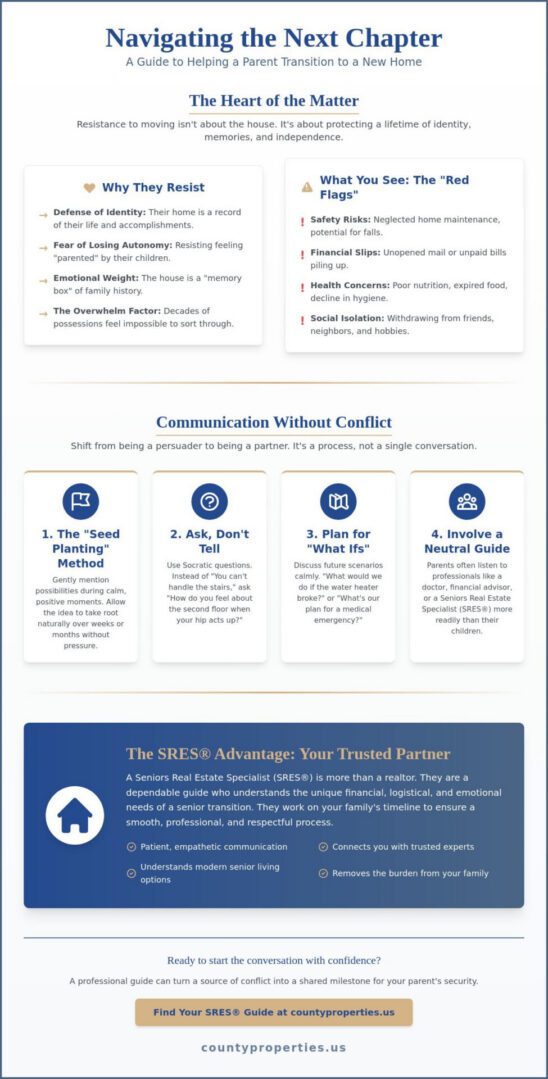
Resistance is rarely about the floor plan of a new apartment. It’s a psychological fortress built to protect a lifetime of identity. When you start exploring how to help a parent who is resistant to moving, you aren’t just discussing real estate; you’re challenging their sense of self. For many seniors, their home is a physical record of their successes, family milestones, and personal autonomy. Researching the psychological reasons for resistance reveals that “no” is often the only tool they feel they have left to maintain control over a world that feels increasingly unfamiliar.
The “overwhelmed brain” plays a massive role in this paralysis. Imagine looking at thirty or forty years of accumulated possessions and being told you must sort through them all. This logistical mountain creates a mental freeze. Additionally, a deep-seated stigma surrounding “nursing homes” often colors their perception of modern Southern California senior living. They may not realize that today’s luxury communities offer resort-style amenities rather than the clinical environments of the past. Pride can also mask genuine health triggers. A parent might insist they can still handle the stairs or the garden, even when neglected maintenance or frequent falls suggest otherwise.
The Emotional Weight of the Family Home
Your parents’ home is a memory box. Every scratch on the floor and every rose bush in the garden represents a moment in time. Moving can trigger transitional trauma, which is the acute psychological distress experienced during a major life relocation. This is especially true in close-knit areas like Hillcrest or Rancho Santa Fe, where losing daily social connections with neighbors can feel like a secondary bereavement. They aren’t just leaving a building; they’re leaving the community fabric that has supported them for decades.
Loss of Autonomy vs. Safety
When adult children step in to “help,” it can inadvertently feel like they’re parenting the parent. This shift in dynamics often triggers immediate defiance. To be successful, you must frame the move as a strategic way to preserve their independence rather than a way to take it away. A smaller, more manageable home means they spend less energy on chores and more on the activities they love. Learning how to help a parent who is resistant to moving involves identifying specific “Red Flag” moments before a crisis occurs, such as:
- Unopened mail or unpaid bills piling up on the counter.
- Signs of poor nutrition or expired food in the pantry.
- Neglected home maintenance that poses a safety risk.
- Social withdrawal or a decline in personal hygiene.
By recognizing these triggers early, you can move from a place of confrontation to one of collaborative planning. You aren’t forcing a change; you’re acting as a dependable guide for their next chapter.
Proven Strategies for the “Moving Talk”: Communication Without Conflict
Approaching the conversation about relocation requires a shift from being a persuader to being a partner. You shouldn’t expect a single meeting to resolve decades of attachment to a home. Instead, utilize the “Seed Planting” method. This involves mentioning possibilities in passing during calm, positive moments, allowing the idea to take root over weeks or months. This gradual approach is essential for understanding the reasons for resistance, as it gives your parent the space to process their fears without feeling cornered.
When you discuss how to help a parent who is resistant to moving, your most effective tool is Socratic questioning. Instead of telling them they can’t manage the stairs, ask, “How do you feel about navigating the second floor when your hip is bothering you?” This helps them reach their own conclusions about their physical limitations. You can also use “What If” scenario planning to look at future health or financial shifts. Ask how they would prefer to handle a sudden home repair or a medical emergency. If the emotional tension remains high, involving a neutral third party can change the dynamic. Many parents listen to a doctor or a senior real estate transition specialist more readily than they listen to their own children because the advice feels objective rather than personal.
The “I” Statement Approach
Shift the focus from their perceived “failures” to your own feelings to reduce defensiveness. You might say, “I find myself worrying about your safety when I’m at work,” instead of saying, “You aren’t taking care of yourself.” This keeps the conversation focused on your bond. When you hear the inevitable “I’m not ready yet,” meet it with empathy. Acknowledge their feelings by saying, “I hear you, and I want us to start looking at options now so we aren’t forced to make a rushed decision later during a crisis.”
Gathering the “Family Council”
Alignment is critical. Before speaking with your parent, ensure all siblings are on the same page. If one child disagrees with the move, a resistant parent may use that “split” to avoid the topic entirely. Keep your parent at the center of this “Family Council” to maintain their dignity. They should feel like the CEO of their own life, with the family acting as a supportive board of directors. Setting a timeline that feels like a marathon rather than a sprint helps everyone adjust to the transition at a manageable pace.
Exploring Modern Living Options in Southern California
Many families hesitate to suggest a move because they believe “aging in place” is the only way to honor a parent’s wishes. However, the true cost of staying in an older family home often remains hidden until a crisis hits. Retrofitting a house with ramps, walk-in tubs, and stairlifts can cost tens of thousands of dollars, yet these modifications don’t solve the problem of social isolation. Understanding how to help a parent who is resistant to moving requires looking at the practical, high-quality alternatives available in 2026. For many, the financial “tipping point” occurs when the cost of 24/7 in-home care exceeds the monthly fees of a managed community.
Southern California offers a spectrum of living arrangements that prioritize both safety and lifestyle. Independent living communities in San Diego often resemble luxury resorts, featuring chef-prepared meals, fitness centers, and organized social excursions. When medical support becomes a primary priority, assisted living provides a structured environment. As of May 2026, the projected median cost for assisted living in Los Angeles County is $6,281 per month, while Riverside County remains slightly more accessible at approximately $5,324. For those who aren’t ready for a large community, the Accessory Dwelling Unit (ADU) trend is a powerful compromise. Building a “granny flat” on a child’s property allows parents to maintain their own kitchen and living space while remaining just steps away from family support.
Downsizing vs. Rightsizing
We prefer the term “rightsizing” because it emphasizes finding a home that fits your parent’s current lifestyle rather than simply settling for less space. The Southern California housing market remains a strong environment for this transition. As of April 2026, sellers in California were typically receiving 100.60% of their list price. Selling a large, high-maintenance family home in this market can provide the necessary liquidity to fund a decade or more of premium senior living, turning a burdensome asset into a source of long-term security.
Local San Diego Senior Resources
San Diego is home to some of the nation’s most prestigious senior transitions. Communities in Rancho Santa Fe and La Jolla offer specialized care models that integrate seamlessly with the active Southern California lifestyle. Beyond the amenities, the climate itself is a health resource. Consistent sunshine helps maintain Vitamin D levels and encourages daily mobility, which is vital for bone density and mental health. When you’re figuring out how to help a parent who is resistant to moving, highlighting these tangible lifestyle upgrades can transform the conversation from one of “giving up” to one of “moving up.”
Reducing Anxiety Through Professional Logistics
The physical act of moving often creates more anxiety than the change of address itself. When you’re learning how to help a parent who is resistant to moving, you must address the logistical mountain they see before them. Professional estate managers provide a “turn-key” experience that removes the physical burden from both you and your parent. This shift allows the family to focus on the emotional transition while experts handle the heavy lifting. Unlike traditional movers, these specialists understand the delicate nature of late-life transitions.
Decluttering with dignity is a cornerstone of this process. Rather than an aggressive clean-out, professionals help seniors sort through possessions at a pace that respects their history. This reduces the emotional toll and prevents the “paralysis by analysis” that often stops a move before it starts. If you are struggling with how to help a parent who is resistant to moving, remember that professional logistics are a form of emotional care. Financial transparency is equally vital. By clearly understanding the projected proceeds of a sale, parents can feel secure knowing their future care is fully funded. In some cases, a cash offer on the home is the best way to reduce stress, as it eliminates the need for public showings and long escrow periods.
The Role of a Senior Move Manager
Senior move managers act as a vital buffer between parents and adult children. As of early 2026, these specialists in Southern California typically charge between $60 and $120 per hour. Their “White Glove” service includes photographing the current home to recreate the exact furniture layout and shelf styling in the new residence. This familiarity significantly reduces the disorientation seniors often feel during the first few nights in a new environment.
Preparing the House for Sale
We often recommend minimal repairs or “as-is” sales to reduce a parent’s anxiety. Extensive renovations are disruptive and can stall the transition process. We prioritize managing the MLS listing process with minimal disruption to your parent’s routine, scheduling showings only when they are already out of the house. If you are ready for a stress-free exit strategy, our team specializes in senior real estate transition services tailored to your family’s needs.
The SRES® Advantage: Why a Specialized Realtor Matters
Navigating a late-life move is a marathon, not a sprint. When you’re searching for how to help a parent who is resistant to moving, the choice of a real estate partner becomes the most critical decision in the process. A Senior Real Estate Specialist (SRES®) isn’t just a salesperson; they’re a trained advocate who understands the nuances of senior housing and the emotional weight of downsizing. This designation signifies that the agent has invested time in mastering the specific financial and legal challenges that impact homeowners over the age of 50. By choosing a specialist, you gain a partner who prioritizes your parent’s dignity over a quick closing date.
Our “patience-first” approach acknowledges that the market’s urgency shouldn’t dictate your family’s peace of mind. If your parent needs three months to decide which heirlooms to keep, we wait three months. We don’t use high-pressure tactics or aggressive sales language. Instead, we act as a dependable guide, providing the steady presence your family needs during a high-stakes transition. We also provide access to a trusted network of professionals, including elder law attorneys, estate organizers, and specialized senior movers. This collaborative, team-based ethos ensures that every aspect of the transition is handled with professional mastery, reducing the exhaustion of circular family arguments.
Expert Guidance Through Complex Transactions
Senior real estate sales often involve unique paperwork, such as managing properties held in a living trust or navigating specific California tax considerations. We provide a steady, guiding presence to ensure these complex legalities are handled correctly from the start. An SRES® agent protects seniors from predatory buyers and “off-market” investors who often target vulnerable homeowners with low-ball offers that don’t reflect the home’s true value. We ensure your parent receives the full market value for their greatest financial asset, providing them with the security they need for their next chapter.
Your Next Steps with County Properties
At County Properties, our “collaborative success” philosophy means we put your parent’s comfort at the forefront of every decision. We understand that learning how to help a parent who is resistant to moving is a delicate process, and we’re here to facilitate a gentle transition. We invite you to book a low-pressure consultation to discuss “what if” scenarios and explore potential timelines without any obligation. Our team is committed to serving San Diego families with a service-centric model that values personal community over transactional volume. Contact Arnie Levine and the County Properties team to start a gentle conversation today and discover how we can help your family move forward with confidence.
Empowering Your Family’s Next Chapter
You now have the tools to transform a stressful family conflict into a collaborative plan for the future. By shifting your perspective from “convincing” to “partnering,” you respect your parent’s legacy while prioritizing their long-term safety. Successfully learning how to help a parent who is resistant to moving requires a blend of empathetic communication, modern Southern California living options, and the right professional support to handle the physical and emotional logistics of the move.
You don’t have to navigate these complex legal and emotional waters alone. Our team, led by Arnie Levine, is here to act as your dependable guide. With over 30 years of Southern California market expertise and specialized SRES® certification, we provide full-service, turn-key transition support that puts your family’s needs first. We invite you to Request a Compassionate Senior Transition Consultation today to discuss your unique situation in a low-pressure environment. Taking this first step ensures your parents can enjoy a life of comfort and dignity while you regain the peace of mind you deserve.
Frequently Asked Questions
What do I do if my parent refuses to move even after a medical emergency?
You should pivot the conversation toward objective safety requirements established by medical professionals or a geriatric care manager. When a parent refuses to move after a crisis, a neutral third party can explain that staying in the home without 24/7 care is no longer a viable option. Often, suggesting a short-term “trial stay” at a local assisted living community can help them experience the benefits of professional support without feeling like the decision is permanent.
How can a Senior Real Estate Specialist (SRES®) help with a resistant parent?
An SRES® acts as a neutral, expert advisor who removes the emotional friction often found between adult children and their parents. These specialists understand the specific psychological and financial concerns of seniors, allowing them to explain how to help a parent who is resistant to moving through a lens of market data and long-term security. By working on the senior’s timeline rather than the market’s, they build the trust necessary for a smooth transition.
Is it better to sell a parents home “as-is” or do repairs first?
Selling “as-is” is almost always the better choice for senior transitions because it prioritizes the parent’s peace of mind over a construction project. While certain updates might slightly increase the final sale price, the stress of managing contractors and living through a renovation can be overwhelming for a resistant parent. You should focus on a low-impact exit strategy that allows them to move into their new environment as quickly and calmly as possible.
How do I bring up the topic of moving without sounding like I am “taking over”?
You can avoid sounding like you are “taking over” by using Socratic questioning to help your parent identify their own daily challenges. Instead of telling them they need to move, ask how they feel about managing the garden or navigating the stairs during the next rainy season. This approach ensures they remain the primary decision-maker in their own life while you act as a supportive facilitator rather than an authority figure.
What are the best downsizing options for seniors in San Diego?
San Diego offers premium downsizing options ranging from luxury independent living communities in Rancho Santa Fe to the increasingly popular Accessory Dwelling Units (ADUs). These “granny flats” provide a manageable, private living space on a family member’s property, allowing for close support without sacrificing autonomy. For those seeking a more social lifestyle, resort-style communities in La Jolla and coastal North County provide world-class amenities and active social calendars.
Can I sell my parents house if they have dementia but are resistant?
Selling a home when a parent has dementia requires you to have a durable Power of Attorney or a court-appointed conservatorship. If your parent lacks the legal capacity to sign real estate documents, you must work with an elder law attorney to ensure the transaction is handled correctly. You should always prioritize their safety and well-being, using professional guidance to navigate the legal and emotional complexities of a memory care transition.
How long does the senior relocation process typically take in California?
The senior relocation process in California typically spans three to six months to allow for a “patience-first” approach. This timeline provides enough space for emotional processing, professional decluttering, and a strategic marketing period for the family home. Rushing this transition often increases resistance, so you should build in extra time to ensure your parent feels heard and respected throughout every stage of the move.
What resources are available for decluttering a seniors home in Southern California?
Southern California families can utilize specialized senior move managers and professional estate organizers who focus on downsizing with dignity. These professionals help a parent who is resistant to moving by sorting through decades of possessions at a pace that respects their personal history. They also coordinate with local charities and estate sale companies to ensure that every item is handled according to your parent’s wishes, reducing the family’s physical burden.