

Whether you’re stepping into your potential dream home or preparing to sell, the home inspection can feel like the most high-stakes moment of the journey. The fear of missing a costly red flag or feeling overwhelmed by what to look for is real. That’s why having a detailed home inspection checklist is not just helpful-it’s essential for your peace of mind. As your trusted real estate partner, we’re here to provide the expert guidance you need to turn that uncertainty into confidence.
This comprehensive, room-by-room guide is designed to do exactly that. We’ll empower you to confidently assess a property’s condition, helping you spot potential issues and understand the difference between a minor fix and a major concern. Consider this your roadmap to a smoother, more transparent transaction, ensuring you can move forward on your real estate journey feeling prepared and in control.
Key Takeaways
- Learn to spot critical exterior issues, particularly signs of poor water management, which can signal expensive underlying problems long before you step inside.
- Utilize our comprehensive home inspection checklist as your trusted guide for a preliminary walkthrough, empowering you to ask smarter questions and negotiate with confidence.
- Identify the most common warning signs for a home’s major systems like HVAC and plumbing-the costliest components to repair or replace.
- Discover how to translate your observations into a clear action plan by categorizing findings as minor fixes, potential concerns, or major red flags.
Why This Checklist Matters: A Buyer’s Shield & a Seller’s Guide
Navigating the complexities of a real estate transaction requires preparation and knowledge. This comprehensive home inspection checklist serves as your trusted guide, empowering you whether you’re stepping into a potential dream home or preparing to list your property. It’s designed to help you identify key areas of concern long before a professional inspector arrives.
Ready to get started? Download our complete, printable Home Inspection Checklist PDF now. Keep it on your phone or print it out for your next home tour.
For Buyers: Think of this as your preliminary walkthrough tool-a shield against unforeseen problems. By using this checklist during a showing, you can spot potential red flags early, from water stains on the ceiling to an outdated electrical panel. This knowledge helps you make a more informed offer and enter negotiations with confidence.
For Sellers: Use this checklist as a proactive guide to get your home market-ready. Walking through your own property with a critical eye allows you to identify and address issues beforehand. Fixing a leaky faucet or clearing a clogged gutter now can prevent them from becoming sticking points during the official inspection, ensuring a smoother, faster sale.
Ultimately, being prepared saves everyone time, money, and stress. It’s important to remember, however, that this guide is designed to supplement, not replace, the work of a professional. A licensed home inspector has the training and specialized equipment to perform a much more thorough evaluation.
How to Use This Checklist Effectively
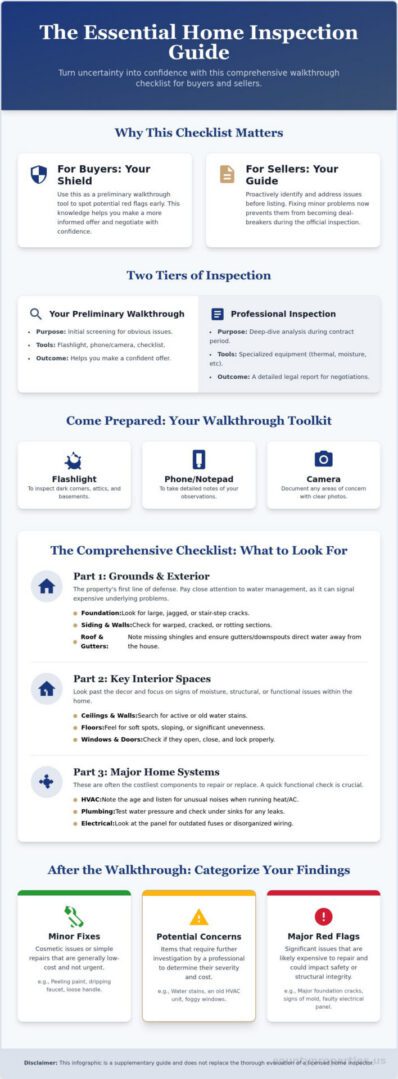
To get the most out of your walkthrough, approach it systematically. Don’t just wander from room to room; focus on specific systems and bring the right tools to help you investigate.
- Come prepared: Always bring a powerful flashlight, a notepad or phone for notes, and your phone’s camera.
- Be methodical: Go system by system (e.g., check all plumbing, then all electrical, then windows). This prevents you from overlooking important details.
- Document everything: Take clear photos or videos of any areas that concern you. These will be invaluable when discussing the property with your agent.
- Prioritize function over cosmetics: Ignore peeling paint or dated decor for now. Focus on safety and function-things like water pressure, electrical outlet operation, and signs of structural issues.
Key Differences: Walkthrough vs. Professional Inspection
Understanding the distinction between your initial walkthrough and a formal inspection is crucial. Your walkthrough with our checklist is an initial screening that helps you make a confident offer. A professional inspection, on the other hand, is a deep-dive analysis conducted during your contract’s contingency period. If you’re asking, What is a home inspection?, it’s a formal process where a licensed expert examines hundreds of components to produce a detailed report. This official report is the document your real estate agent will use to negotiate any necessary repairs or credits with the seller before you finalize the purchase.
The Comprehensive Checklist Part 1: Grounds & Exterior
Before you even step inside, a home’s exterior provides critical clues about its overall condition and history of maintenance. This is where your home inspection checklist begins, as the grounds and exterior are the property’s first line of defense against the elements. A professional inspector will follow an exhaustive process, often referencing standards like ASHI’s comprehensive checklist, but you can empower yourself by learning to spot the most common red flags. Pay close attention to how water is managed and look for signs of neglect, as these can foreshadow more significant issues inside.
Foundation, Walls, and Siding
The foundation and siding are the home’s protective shell. Your goal is to look for any breaches that could compromise its structural integrity or allow moisture and pests to enter. A well-maintained exterior is a strong indicator of a well-cared-for home.
- Foundation: Look for significant vertical or horizontal cracks in the concrete or brickwork. Hairline cracks can be normal, but large, jagged, or stair-step cracks in mortar may signal structural movement.
- Siding: Check for warped, cracked, or rotting sections. Note any loose panels or signs of water staining. On brick exteriors, look for crumbling mortar.
- Pest Activity: Scan the base of the foundation for termite mud tubes, which look like narrow tunnels of dried dirt. Also, check for damaged wood that could indicate carpenter ants or other pests.
- Grading: Ensure the soil and landscaping slope away from the foundation to prevent water from pooling against the house.
Roof, Gutters, and Chimney
While you should never get on the roof yourself for safety reasons, a careful look from the ground can reveal significant problems with the home’s primary shield against rain and snow. These components are expensive to replace, making them a critical inspection point.
- Roof: From a safe distance, look for shingles that are missing, curled, or cracked. Note any dark, algae-like streaks, which could indicate moisture problems.
- Gutters: Check if gutters are sagging, detached from the house, or filled with debris. This can cause water to overflow and damage the siding and foundation.
- Downspouts: Make sure downspouts are securely attached and extend at least four to six feet away from the foundation to direct water properly.
- Chimney: Inspect the chimney for cracked or missing bricks, a leaning structure, or a damaged cap.
Yard, Decks, and Driveways
The surrounding property and its structures impact usability, safety, and long-term maintenance costs. Drainage issues and deteriorating hardscaping can be costly to fix, so a thorough visual check is essential.
- Drainage: Look for low spots in the yard where water might pool or for signs of poor drainage, such as consistently soggy ground.
- Decks and Patios: Test railings for stability. Check for soft or rotting wood, especially where the deck attaches to the house. Look for cracks in concrete patios.
- Driveways and Walkways: Inspect for major cracks, uneven sections, or significant settling, which could be tripping hazards or signs of underlying soil issues.
The Comprehensive Checklist Part 2: Key Interior Spaces
Moving from the exterior to the interior, this section of your home inspection checklist guides you through the home’s core living areas. Your primary goal here is to identify signs of potential problems, especially water damage, which can be a common and costly issue. While a professional inspector’s process is incredibly thorough, as detailed in this official home inspection guide from the North Carolina Real Estate Commission, your own keen observations provide invaluable insight. Pay close attention to functionality, condition, and any tell-tale signs of neglect in every room.
Kitchen Inspection Points
The kitchen is often the heart of the home, and it’s full of systems that need to be in working order. Methodically test each component to ensure it’s ready for your family.
- Sink & Plumbing: Run both hot and cold water, then check underneath the sink with a flashlight for any drips or signs of past leaks, like water stains or warped wood.
- Appliances: Test every appliance included in the sale-run a short cycle on the dishwasher, turn on the oven and all stove burners, and check the microwave and garbage disposal.
- Ventilation: Turn on the range hood exhaust fan. Confirm that it is venting air effectively and not just making noise.
- Cabinets & Drawers: Open and close every cabinet and drawer to ensure they operate smoothly and are structurally sound.
Bathroom Inspection Points
Bathrooms are high-moisture areas where problems can easily hide. A thorough check here can save you from future headaches and expensive repairs.
- Toilets: Flush every toilet and check the base for any leaks or rocking, which could indicate a failed wax ring or subfloor damage.
- Faucets & Drains: Turn on the shower and sink faucets to check for adequate water pressure. Watch how quickly the tub and sink drain; slow drainage can signal a plumbing issue.
- Floors & Walls: Carefully look for soft spots in the flooring around the toilet and bathtub. Check for cracked tiles or failing grout in the shower.
- Exhaust Fan: Test the ventilation fan to ensure it is working properly to reduce moisture buildup and prevent mold.
Bedrooms, Living Areas, Attic & Basement
Finally, expand your inspection to the rest of the home’s interior, from the top floor to the bottom. Each space offers important clues about the overall health of the property.
- Walls & Ceilings: In every room, look up. Yellowish or brownish stains on the ceilings are a classic sign of a roof or plumbing leak.
- Windows & Doors: Open and close several windows and all interior doors. Note if they stick, sag, or fail to latch properly.
- Attic: If accessible, look for adequate insulation, proper ventilation (e.g., soffit and ridge vents), and any signs of leaks or pests.
- Basement: Check foundation walls for significant cracks. Note any signs of moisture, water intrusion, or a pervasive damp, musty smell.
The Comprehensive Checklist Part 3: Major Home Systems
Now we move to the heart of the home-the systems that provide comfort, safety, and convenience. The plumbing, electrical, and HVAC systems are the most critical and often the most expensive components to repair or replace. While your professional inspector will conduct a deep dive, adding these items to your personal home inspection checklist empowers you to spot potential red flags early in your journey.
You don’t need to be an expert; you just need to be observant. Pay attention to strange noises when systems are running, look for visible signs of neglect, and always try to locate the age and service history of major units.
Plumbing System
A home’s plumbing is its circulatory system. Take a moment to identify the visible pipes-copper and PEX (a flexible plastic) are modern standards, while older galvanized steel pipes can be prone to corrosion. The water heater is a key component to check.
- Look for any signs of rust or active leaking at its base.
- Check the manufacturer’s sticker for its age; most have a lifespan of 8-12 years.
- Test several faucets to ensure strong, consistent water pressure throughout the home.
Electrical System
The electrical system powers your life, so safety is paramount. Start by locating the main electrical panel. Does it look organized with clear labels? Test a few light switches and outlets in different rooms. In kitchens, bathrooms, and outdoor areas, look for GFCI (ground fault circuit interrupter) outlets-the ones with “test” and “reset” buttons-which are a modern safety requirement. Be on high alert for any exposed wiring or outlets that feel warm to the touch.
HVAC System (Heating, Ventilation, & Air Conditioning)
Regardless of the season, test both the heating and the air conditioning. Turn each system on and let it run for a few minutes. Does it produce warm or cool air as expected? Listen carefully for any loud clanking, grinding, or squealing noises, which could signal a failing component. Look for a service sticker on the furnace or outdoor AC unit, which may indicate the age and last maintenance date. A well-maintained system is a great sign.
Evaluating these complex systems can feel like the most daunting part of your initial walkthrough. This section of your home inspection checklist is designed to provide guidance, not to make you an expert overnight. Feeling overwhelmed? That’s completely normal. A trusted agent can guide you through this process, connecting you with qualified inspectors and helping you interpret the results to make a confident decision.
After the Walkthrough: What Do Your Findings Mean?
You’ve diligently walked through the property and filled out your notes. Now, it’s time to translate that information into a clear path forward. This crucial step isn’t about finding reasons to walk away from a potential dream home; it’s about empowering you to make a confident, well-informed decision. Discussing your findings with a trusted real estate partner is essential to understand the property’s true condition and prepare for the next steps in your journey.
Identifying Red Flags vs. Minor Issues
To make sense of your notes, the first step is to categorize each item. This simple organization helps you prioritize what truly matters and separates the deal-breakers from the simple to-do list items.
- Red Flags: These are serious issues that could be costly, complex, or dangerous. Look for signs of foundation cracks, outdated knob-and-tube wiring, evidence of active leaks, or pervasive musty smells that might indicate mold. These demand immediate professional evaluation.
- Potential Concerns: These are items that may not be immediate problems but will likely require attention and budget in the near future. An HVAC system over 15 years old, an aging roof with curling shingles, or double-pane windows with broken seals (fogging) fall into this category.
- Minor Issues: Nearly every home has these. Think dripping faucets, scuffed paint, sticky doors, or cracked light switch plates. While worth noting, these are typically simple fixes or inexpensive repairs.
Preparing for the Professional Inspection
Your personal walkthrough is the perfect prelude to the official inspection. Share your completed home inspection checklist and specific notes with your chosen professional inspector. This guidance helps them focus their expert eye on your areas of concern, ensuring nothing gets overlooked. Your real estate agent is an excellent resource for recommending a trusted, licensed local inspector who understands regional building codes and common issues.
Next Steps in the Buying Process
With your findings organized, you can decide on your next move. As a buyer, this information helps you determine if you’re comfortable proceeding with an offer, perhaps with contingencies for repairs. Remember, the goal of using a thorough home inspection checklist is not to find a “perfect” property-as none exist-but to find the right property for you, with full awareness of its condition. For expert guidance on navigating this process, the team at County Properties is committed to helping you make your dream home a reality.
From Checklist to Closing: Your Path to a Successful Transaction
Navigating a real estate transaction requires diligence and knowledge. This guide has shown that a comprehensive home inspection checklist is more than just a list-it’s your strategic tool. For buyers, it’s a shield against unforeseen costs, and for sellers, it’s a roadmap to a smoother, faster sale. By systematically evaluating a property’s exterior, interior, and major systems, you transform uncertainty into empowerment, turning inspection findings into clear, actionable next steps.
Understanding the report is one thing; knowing how to act on it is another. That’s where expert guidance becomes invaluable. With over 36+ years of experience in Southern California real estate, the team at County Properties specializes in guiding clients through complex transactions. Our service-centric team is committed to your success, ensuring you have a trusted partner on your journey.
Ready to move forward with confidence? Let our expert team guide you through a successful purchase or sale. Your dream home is within reach, and we are here to help you achieve it.
Frequently Asked Questions About the Home Inspection
Can a house ‘fail’ a home inspection?
Contrary to popular belief, a house cannot ‘fail’ an inspection. A home inspection is not a pass-or-fail test but an objective evaluation of the property’s condition on the day of the inspection. The inspector provides a detailed report outlining any found defects, from minor maintenance issues to significant structural concerns. This report is a tool to help you, the buyer, understand exactly what you are purchasing and to identify potential points for negotiation.
What are the most common deal-breakers found during a home inspection?
While every buyer’s tolerance is different, some common deal-breakers involve high-cost repairs or safety hazards. These often include major structural or foundation problems, evidence of widespread mold, an old or failing roof, outdated and unsafe electrical systems like knob-and-tube wiring, or significant plumbing and sewer line issues. These problems can be prohibitively expensive to fix and may deter even the most enthusiastic buyers from proceeding with the purchase.
Should I, as the buyer, attend the professional home inspection?
Absolutely. We strongly encourage you to attend the inspection, particularly for the final summary. This gives you a unique opportunity to see any issues firsthand and ask the inspector questions in real-time. Walking through the property with a professional provides context that a written report cannot. It helps you understand the home’s systems and prioritize items on your home inspection checklist, turning the report into a more practical, understandable guide.
How much does a professional home inspection cost in Southern California?
In Southern California, the cost for a professional home inspection on a standard single-family home typically ranges from $400 to $700. This price can fluctuate based on the property’s size, age, and location. Additional services, such as inspecting a pool, testing for mold, or conducting a sewer scope, will add to the total cost. It is always wise to get quotes from a few different qualified inspectors before making your final decision.
What issues are sellers legally required to disclose in California?
California law requires sellers to disclose any known ‘material facts’ that could affect a property’s value or a buyer’s decision to purchase. This is done primarily through the Transfer Disclosure Statement (TDS). Sellers must reveal issues like past flooding, structural defects, neighborhood noise problems, or any major repairs performed. The goal is to provide you with a transparent overview of the home’s history and any known problems before you finalize the sale.
How do I find a qualified and trustworthy home inspector?
Finding a qualified inspector is a crucial step. Start by asking for referrals from your trusted real estate agent, who has experience with local professionals. You should also verify credentials from respected organizations like the American Society of Home Inspectors (ASHI) or InterNACHI. Always check online reviews, ask for a sample report to review their work, and confirm they carry both liability and errors-and-omissions insurance for your protection.