

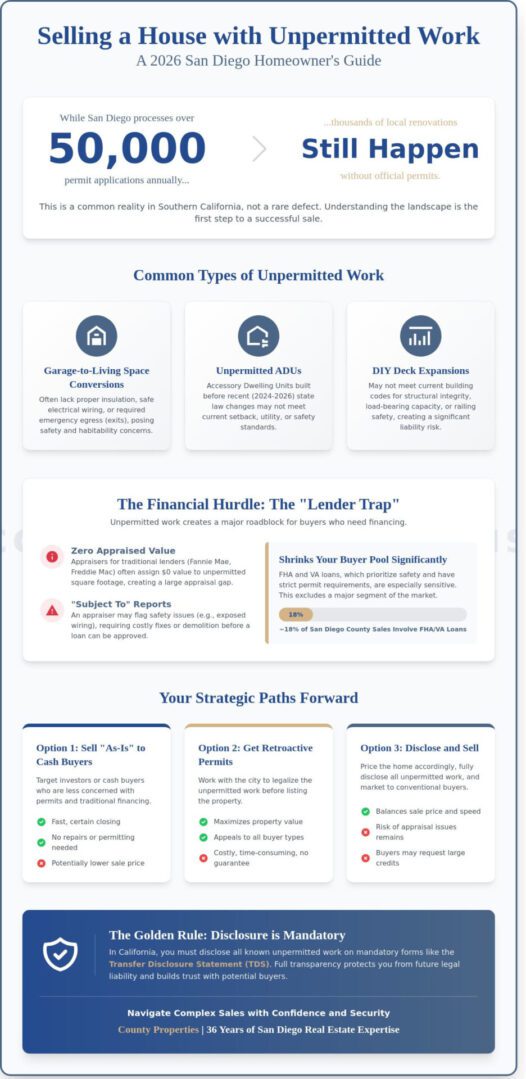
Imagine you’re days away from closing on your North Park bungalow when the buyer’s inspector asks to see the permits for that 400 square foot ADU you finished in 2023. Your heart sinks because you know those records don’t exist. It’s a common nightmare for local homeowners. You aren’t alone; the San Diego Development Services Department typically processes over 50,000 permit applications annually, yet thousands of local renovations still happen without official oversight. You probably feel anxious that a single code violation could force a costly teardown or cause a qualified buyer to walk away at the eleventh hour.
Complex real estate situations require specialized knowledge that goes beyond a Standard Listing. We provide dedicated support for homeowners in difficult positions, including those facing divorce or the threat of foreclosure. Our team also offers specialized assistance for seniors and heirs who are managing the sale of a family home filled with decades of history and, occasionally, unpermitted additions. To help you make the best financial choice, we provide access to a vetted network of professionals, including:
Selling a house with unpermitted work San Diego doesn’t have to be a legal minefield or a financial loss. As your trusted real estate partners with 36 years of experience, we’ve developed a proven roadmap to help you manage these hurdles while protecting your equity. This 2026 guide explains how to handle mandatory disclosures, target cash buyers who accept properties as-is, and leverage current city regulations to ensure a seamless, profitable closing. We’re here to help you move forward with confidence and security.
Key Takeaways
- Identify the specific types of unpermitted legacy work common in San Diego neighborhoods and how they impact your property’s marketability.
- Learn to navigate the “Lender Trap” and understand how appraisers value unpermitted square footage for FHA and VA buyers.
- Explore three strategic options for selling a house with unpermitted work San Diego, including the pros and cons of retroactive permitting versus selling as-is.
- Ensure legal compliance and protect yourself from liability by correctly completing mandatory California disclosure forms like the TDS and SPQ.
- Discover how leveraging 36 years of local expertise can simplify complex hurdles and prioritize your financial security during the sale.
Understanding Unpermitted Work in the San Diego Real Estate Market
If you’re selling a house with unpermitted work San Diego, you aren’t alone. In our local market, unpermitted work refers to any structural, electrical, or plumbing modifications completed without the formal approval of the San Diego Development Services Department. While this might sound like a deal breaker, it’s actually a frequent occurrence in neighborhoods like North Park, City Heights, and Clairemont. These areas are filled with legacy work where owners added value decades ago without filing for a building permit.
The legal reality is straightforward. You can legally sell a property with unpermitted additions in California as long as you follow strict disclosure laws. As we move through 2026, we’re seeing specific trends in these types of listings. Common examples include:
- Garage-to-living-space conversions that lack proper insulation or egress.
- Unpermitted Accessory Dwelling Units (ADUs) built before recent state law changes.
- DIY deck expansions that don’t meet current load-bearing safety codes.
Selling a house with unpermitted work San Diego requires a clear strategy. You don’t need to fear the “unpermitted” label, but you do need to understand how it impacts your home’s valuation and your liability as a seller.
The San Diego Permit History Check
To verify your home’s status, use the San Diego DSD ‘Open DSD’ portal. This digital tool lets you see every recorded permit tied to your address dating back decades. It’s vital to distinguish between grandfathered work, which may have been legal under older codes, and modern unpermitted additions that ignore current safety standards. A seasoned real estate agent plays a critical role here. We help by pulling historical blueprints and city records to ensure your disclosures are accurate, protecting your financial security during the transaction.
Why Unpermitted Work is a ‘Hidden’ Norm in SoCal
San Diego’s housing stock exploded during the building boom of the 1950s through the 1970s. During this era, many homeowners added rooms or upgraded systems with minimal oversight. Recent shifts in ADU laws between 2024 and 2026 have added another layer of complexity, as many older backyard structures don’t meet the specific technical requirements of the newest state mandates. Unpermitted work is a common market reality in Southern California rather than a rare defect. Understanding this context helps you approach your sale with confidence. Our team acts as your trusted partner, ensuring you take the next step in your life’s journey with the right information in hand.
The Impact of Unpermitted Additions on Appraisals and Financing
When selling a house with unpermitted work San Diego, the appraisal process often becomes a major roadblock. Most traditional lenders follow strict guidelines set by Fannie Mae or Freddie Mac. If an appraiser identifies a converted garage or a new sunroom that lacks the proper city records, they’ll likely assign it zero value. This creates a massive gap between the asking price and the appraised value. The “Lender Trap” is real; FHA and VA loans are particularly sensitive to these discrepancies. These government-backed programs prioritize safety and habitability. Since roughly 18% of San Diego County home sales involve these loan types, excluding those buyers shrinks your potential market significantly.
San Diego appraisers are trained to spot inconsistencies between tax records and the physical property. If an unpermitted addition has exposed wiring or structural issues, the appraiser may issue a “Subject To” report. This means the loan won’t fund until the owner secures a permit or returns the space to its original state. Beyond the loan, insurance companies pose another risk. Uninspected electrical work is a fire hazard that can lead to denied claims or policy cancellations after a standard 30-day inspection period.
Why Traditional Buyers Get Cold Feet
Most buyers in San Diego are looking for a turn-key experience. They worry about “assumed liability,” which is the fear of inheriting legal headaches or being forced by the city to tear down a structure. Safety is the primary concern for families. They don’t want to worry about uninspected structural integrity. To protect yourself legally, you must document these issues in the Transfer Disclosure Statement (TDS). A seasoned agent uses their selling a home in southern california expertise to explain these risks clearly. This helps reassure qualified buyers that the home is still a viable investment.
Navigating the Appraisal Gap
If you’re selling a house with unpermitted work San Diego, you can’t price it the same as a fully permitted neighbor. If a home has 1,500 square feet on record but actually measures 1,800, you should price based on the 1,500. However, you can still highlight the “functional utility” of the extra space. It’s a bonus room, even if it’s not official square footage. We often recommend working with lenders who handle “as-is” or renovation financing to bridge this gap. If you’re unsure how to value your unique layout, you can request a professional equity analysis to see exactly where your property stands in the current market.
Three Strategic Paths for Selling Your San Diego Home As-Is
Every homeowner’s situation is unique, so the right strategy depends on your timeline and financial goals. When you’re selling a house with unpermitted work San Diego, you generally face three distinct routes. Each path carries different levels of risk, investment, and potential profit. We’ve guided many families through these choices to ensure they reach a successful closing without legal headaches.
The Retroactive Permit Process in San Diego
This is the most intensive option, but it often yields the highest sale price. To legalize previous construction, you’ll work through the San Diego Development Services Department (DSD) “No-Fault” compliance programs. This process involves hiring architects to draft “as-built” plans and paying double permit fees as a penalty. Retroactive permits in San Diego typically require exposing wiring or plumbing for inspection, which means you might have to cut into finished drywall. While the County of San Diego Code Compliance Division ensures safety, the costs for structural inspections and repairs can add up quickly.
Selling on the MLS with Full Disclosure
If you don’t want to deal with construction, you can list the home on the open market. The key here is transparency. We help you phrase marketing remarks to attract buyers who aren’t afraid of a project. Phrases like “buyer to verify all permits” or “bonus room may not match tax records” protect you from future liability. This path usually targets cash-heavy buyers or seasoned investors. Success in this category requires a southern california housing market expert who knows how to negotiate with buyers who might try to use the permit issues to lowball your price.
- Option 1: The Retroactive Path. High time investment and cost, but it maximizes your home’s market value by making it eligible for traditional financing.
- Option 2: The Open Market ‘As-Is’ Path. A balanced approach that uses expert marketing to find buyers willing to take on the permit responsibility.
- Option 3: The Direct Cash Offer. The fastest exit strategy. You won’t need to make any repairs or pull any permits, though you’ll likely receive lower net proceeds.
Evaluating Your ROI
Deciding which path to take comes down to the numbers. You have to ask if spending $10,000 on permits and minor corrections will realistically add $50,000 to your home’s value. In high-demand neighborhoods like North Park or La Jolla, the answer is often yes. However, if the unpermitted work is a minor patio cover or a shed, the return on investment might not justify the months of waiting for city approvals. When selling a house with unpermitted work San Diego, we provide a detailed analysis of your home’s specific value to help you decide if the “fix-it” route or the “as-is” route serves your financial security better.
Navigating California Disclosure Laws and the TDS Process
California Civil Code Section 1102 requires sellers to provide a Transfer Disclosure Statement (TDS) to every potential buyer. This three-page document is the foundation of transparency in your transaction. When selling a house with unpermitted work San Diego, you must pay close attention to Section C. This specific area asks about room additions, structural modifications, or other alterations made without necessary permits. Omitting these details can lead to severe legal consequences after the keys change hands.
The Seller Property Questionnaire (SPQ) serves as a vital companion to the TDS. While the TDS covers general condition, the SPQ requires you to dig deeper into the property’s history. It asks if you’re aware of any work performed without permits, even if that work was completed by a previous owner. When you are selling a house with unpermitted work San Diego, the SPQ acts as a safeguard against future claims of fraud or misrepresentation. Attempting to use “I didn’t know” as a legal defense rarely holds up in a local courtroom. If a garage conversion or a deck is clearly visible, judges often rule that the seller had constructive knowledge of the modification.
Disclosure isn’t just a hurdle; it’s your ultimate insurance policy. According to 2023 data from the California Association of Realtors, non-disclosure is the leading cause of real estate litigation. By documenting every known issue, you shift the risk to the buyer. Once they’ve signed off on the disclosures, it becomes significantly harder for them to successfully sue you for those specific issues after the sale closes. It’s much cheaper to be honest upfront than to pay for a defense attorney later.
What You Must Disclose to San Diego Buyers
Transparency protects your equity. You’re legally obligated to share information regarding any modifications made without permits, regardless of who did the work. This includes past “Notice of Violation” letters or code enforcement contact from the San Diego Development Services Department. You must also disclose safety concerns, such as DIY electrical work in a sunroom that doesn’t meet current building codes or structural changes that might impact the home’s integrity.
Best Practices for Written Disclosures
Clarity is your best friend during this process. Don’t rely on vague “as-is” clauses; these don’t exempt you from the duty to disclose known defects. Be specific in your writing. Instead of saying “patios may not be permitted,” write “200 square foot patio enclosure added in 2018 without city permits.” If you have invoices from contractors or old blueprints, provide them. Never rely on oral agreements or handshake understandings about the home’s condition. If it isn’t in writing on the TDS or SPQ, it didn’t happen in the eyes of the law.
How County Properties Simplifies Complex San Diego Home Sales
Selling a house with unpermitted work San Diego homeowners often find overwhelming requires a steady hand and local expertise. Arnie Levine founded County Properties with a vision to move beyond conventional, high-pressure real estate practices. Our team brings 36 years of experience to the table, dating back to our start in 1995. We don’t believe in chasing quick commissions at the expense of your peace of mind. Instead, we use a collaborative team concept that prioritizes service and transparency. This holistic approach ensures your financial security remains the top priority throughout the entire transaction.
Our staff operates as a family of friends. We treat your home sale with the same level of care and attention we would give to our own family members. This personal touch is especially vital when dealing with legacy property issues or complex title hurdles. We take the time to understand your unique situation, providing a level of dedication that larger, corporate firms often lack.
Expertise in Distressed and Complex Property Sales
Complex real estate situations require specialized knowledge that goes beyond a standard listing. We provide dedicated support for homeowners in difficult positions, including those facing divorce or the threat of foreclosure. Our team also offers specialized assistance for seniors and heirs who are managing the sale of a family home filled with decades of history and, occasionally, unpermitted additions. To help you make the best financial choice, we provide access to a vetted network of professionals, including:
- San Diego Contractors: Professionals who understand local building codes and can provide accurate repair bids.
- Permit Consultants: Experts who can determine the feasibility of retroactively permitting a structure.
- Fix vs. Sell Analysts: We provide detailed estimates comparing the cost of repairs against the potential “as-is” sale price.
This data-driven method removes the guesswork from selling a house with unpermitted work San Diego buyers might otherwise be wary of. We empower you with facts so you can choose the path that protects your equity.
Your Next Steps with County Properties
The process begins with a clear understanding of your property’s current market position. You can request a free, no-obligation home valuation that specifically accounts for the impact of any unpermitted improvements. Arnie Levine and the County Properties team will then sit down with you to create a personalized, step-by-step roadmap. We guide you through disclosure requirements and negotiation strategies to ensure no surprises arise during escrow. County Properties provides a trusted partnership to turn unpermitted liabilities into successful closings.
Navigate Your San Diego Property Sale with Confidence
Successfully selling a house with unpermitted work San Diego requires a blend of strict legal compliance and strategic market positioning. You’ve learned that California’s Transfer Disclosure Statement (TDS) mandates full transparency to protect you from future litigation. While unpermitted additions can complicate traditional appraisals and buyer financing, they don’t have to stall your progress. You can choose to remediate the permits or target “As-Is” buyers who specialize in these complex scenarios.
County Properties brings over 36 years of local experience to your kitchen table. With a specialized SRES® (Senior Real Estate Specialist) designation and a proven track record in “As-Is” and distressed property sales, we handle the technical permit risks so you don’t have to. We’ve spent more than three decades helping San Diego homeowners turn complicated liabilities into successful closings. Don’t let permit history hold your financial future hostage.
Get a Professional Home Valuation and Permit Risk Assessment Today
Your property still holds significant value, and we’re here to help you unlock it.
Frequently Asked Questions
Is it illegal to sell a house with unpermitted work in San Diego?
It’s legal to sell a house with unpermitted work in San Diego as long as you disclose the status of the improvements to the buyer. California Civil Code Section 1102 requires sellers to complete a Transfer Disclosure Statement (TDS) that lists any room additions, structural modifications, or other alterations made without necessary permits. While the sale is legal, failing to disclose these details can lead to lawsuits for fraud or misrepresentation after the deal closes.
Will the City of San Diego fine me if I disclose unpermitted work in a sale?
The San Diego Development Services Department typically doesn’t monitor private real estate listings to issue fines. Code enforcement usually operates on a complaint-based system rather than auditing sales disclosures. However, if a neighbor reports the violation or a city inspector visits for a different reason, you could face penalties. Under San Diego Municipal Code 12.0805, civil penalties for building violations can range from $100 to $1,000 per day until the issue is resolved.
Can a buyer back out of a contract because of unpermitted additions?
A buyer can legally back out of a contract if they discover unpermitted work during their specified contingency period. The standard California Residential Purchase Agreement (RPA) provides a default 17-day window for buyers to conduct inspections and review all disclosures. If the unpermitted space creates safety concerns or makes the home difficult to finance, the buyer can cancel the agreement and receive their full earnest money deposit back without penalty.
How does unpermitted square footage affect my San Diego property taxes?
Unpermitted square footage is usually excluded from the San Diego County Assessor’s official records, so you might not be paying taxes on that extra space yet. Under California’s Proposition 13, property taxes are based on the assessed value at the time of construction or sale. If the unpermitted area is discovered during the process of selling a house with unpermitted work San Diego, the assessor may perform a supplemental assessment to capture the added value of the improvements.
Do I have to tear down my unpermitted ADU before selling?
You don’t have to tear down an unpermitted Accessory Dwelling Unit (ADU) to sell your property, but you must market it as non-habitable space. Since California passed Senate Bill 13 in 2019, homeowners have a 5-year grace period to bring unpermitted ADUs up to health and safety codes instead of facing immediate demolition orders. Most sellers choose to sell the home “as-is” while clearly stating the ADU doesn’t have a certificate of occupancy.
What happens if a buyer’s appraiser finds unpermitted work?
If an appraiser identifies unpermitted work, they’ll likely assign it zero value in their final report. The Fannie Mae Selling Guide allows appraisers to include unpermitted areas in the total room count only if the work was completed in a “workmanlike manner,” but many lenders still refuse to fund the loan. This often results in a low appraisal, which can force the seller to reduce the price or find a cash buyer who doesn’t require a bank appraisal.
Should I get a retroactive permit before listing my home?
Getting a retroactive permit is a helpful way to maximize your home’s value, but it isn’t always the best choice when selling a house with unpermitted work San Diego. The process often requires a licensed contractor to open up walls for inspection, which can delay your listing by 90 to 180 days. For minor upgrades like water heaters, the San Diego Development Services Department offers “No-Plan” permits that can be cleared much faster than structural additions.
Can I get home insurance on a property with unpermitted electrical work?
It’s difficult to secure full coverage for a home with unpermitted electrical systems because insurers view it as a high fire risk. In the 2023 California insurance market, major providers like State Farm have significantly tightened their underwriting standards. If a fire occurs in an unpermitted area, the insurance company may use the lack of permits as a valid reason to deny your claim, leaving you personally responsible for all repair costs and liabilities.