

Selling your home is one of life’s most significant financial journeys, but navigating the topic of agent commissions can feel like a confusing and expensive hurdle. If you’ve ever wondered what agents really do to earn their fee, or how recent industry-wide rule changes will impact your bottom line, you’re not alone. These are the critical questions every seller should be asking, especially as we head into 2026.
This guide was created to be your trusted resource, providing the clarity and confidence you need. We will break down the typical real estate agent commission California sellers can expect, explain how new regulations empower you in negotiations, and offer expert guidance to help you recognize and secure exceptional value from your agent. Our goal is to ensure you feel fully equipped to protect your equity and make the best possible decisions for your future.
Key Takeaways
- Understand that the typical real estate agent commission california sellers pay is between 5-6%, but this rate is not fixed and can vary.
- Learn how the 2025 NAR settlement rules give you, the seller, more control and transparency over the commissions paid to a buyer’s agent.
- Discover why all commission rates are negotiable and what factors you can use to have a productive conversation about fees with your agent.
- Shift your perspective from viewing commission as a cost to seeing it as an investment in expertise that can lead to a higher final sale price.
What is the Average Real Estate Commission in California?
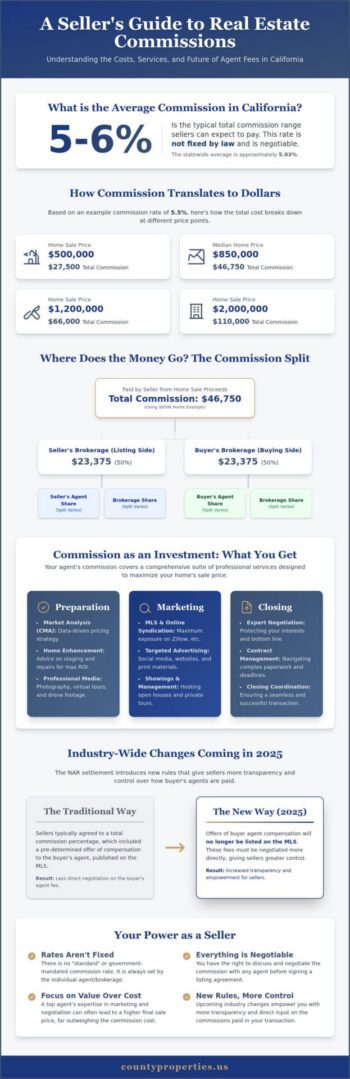
When navigating the sale of your home, one of the most significant costs to understand is the agent commission. In California, the total real estate commission typically falls between 5% to 6% of the home’s final sale price. While there’s no state-mandated rate, recent data shows the statewide average is around 5.03%. It’s crucial to remember this percentage isn’t for a single agent; it’s the total fee that gets divided between the agent representing the seller and the agent representing the buyer.
Let’s put this into perspective with a practical example. For a median-priced California home of $850,000, a 5.5% commission would amount to $46,750. This fee covers the comprehensive services provided by both real estate teams, from marketing and showings to expert negotiation and closing coordination.
| Home Sale Price | Commission Rate (Example: 5.5%) | Total Commission Cost |
|---|---|---|
| $500,000 | 5.5% | $27,500 |
| $850,000 | 5.5% | $46,750 |
| $1,200,000 | 5.5% | $66,000 |
| $2,000,000 | 5.5% | $110,000 |
The Traditional Commission Split Explained
The total commission is first split between two different companies: the seller’s brokerage (the “listing side”) and the buyer’s brokerage (the “buying side”), typically in a 50/50 arrangement. Using our $46,750 example, that’s $23,375 for each brokerage. Each agent then splits their portion with their respective company. The specifics vary, but it means the agent’s take-home pay is a fraction of the total fee, compensating them for the extensive scope of what real estate agents do, from marketing to closing.
Who Pays the Commission?
Traditionally, the home seller pays the entire commission for both agents. This payment is not made out-of-pocket. Instead, it is seamlessly deducted from the seller’s proceeds at the close of escrow by the title or escrow company. It’s important to note that the landscape of the real estate agent commission in California is evolving due to new industry rules, which may soon change how buyers’ agents are compensated. As your trusted partner, we are committed to providing the most current guidance on these developments.
What Services Are Covered by the Agent’s Commission?
When you see a figure for the real estate agent commission California allows, it’s not just for unlocking a door; it’s an investment in a comprehensive, professional service package designed to guide you from your initial consultation to a successful closing. A trusted agent invests significant time, expertise, and financial resources into your sale long before you see a “For Sale” sign. This fee covers a holistic approach to getting your home sold for the highest possible price in the shortest amount of time.
Pre-Listing Expertise and Preparation
The journey to a successful sale begins with meticulous preparation. Your agent provides expert guidance to position your property perfectly in the competitive San Diego market. This foundational work is crucial for attracting the right buyers and maximizing your home’s perceived value.
- Comparative Market Analysis (CMA): In-depth research of comparable properties to establish a strategic, data-driven list price.
- Home Enhancement Advice: Professional recommendations on staging, repairs, and cosmetic improvements that yield the highest return on investment.
- Professional Media Coordination: Managing and often paying for high-quality photography, videography, drone footage, and 3D virtual tours to make your listing stand out.
Comprehensive Marketing and Sales Strategy
Once your home is ready, your agent launches a multi-channel marketing campaign. This isn’t just a sign in the yard; it’s a proactive strategy to ensure your property reaches the widest possible audience of qualified buyers. This phase requires constant management, communication, and a deep understanding of modern marketing tactics.
- MLS and Online Syndication: Listing your home on the Multiple Listing Service (MLS), which then feeds to major online real estate portals, including prominent ones like Zillow.
- Targeted Advertising: Creating and funding marketing materials, including social media ads, property websites, and high-quality print flyers.
- Showings and Buyer Management: Hosting open houses, scheduling and managing private showings, and diligently following up with and vetting all potential buyers.
Negotiation and Closing Management
Receiving an offer is where an expert agent’s value truly shines. They act as your skilled negotiator and project manager, navigating the complex financial and legal steps toward closing. This phase is about protecting your interests and ensuring a seamless transaction from contract to closing.
- Offer Negotiation: Skillfully negotiating offers and counteroffers to secure the best possible price and terms for you.
- Paperwork and Disclosures: Managing all contracts, addendums, and legally required disclosures to ensure compliance and protect you from liability.
- Escrow Coordination: Liaising with the escrow officer, lender, appraiser, inspectors, and the buyer’s agent to keep the transaction on track and proactively solve any issues that arise.
Ultimately, the entire suite of services is provided on a contingency basis. The real estate agent commission is only earned if and when your home successfully sells and closes escrow. We are committed to your success because we only succeed when you do.
The NAR Settlement: How California Commissions Are Changing
You’ve likely heard news about a landmark settlement involving the National Association of Realtors (NAR) that is set to reshape the real estate landscape. In simple terms, this agreement changes the long-standing rules about how buyer’s agents are paid. While it brings significant changes, its core purpose is to create more transparency and empower consumers like you with greater negotiation power.
Effective mid-2024, the most critical change is this: sellers’ agents can no longer advertise the compensation offered to a buyer’s agent on the Multiple Listing Service (MLS).
It’s important to understand what this does not mean. It does not prohibit sellers from offering to pay the buyer’s agent commission. You absolutely still have the option to do so. The key difference is that this offer will now be communicated outside of the MLS, making the entire process more direct and negotiable from the start.
What This Means for You as a California Seller
This shift puts you in the driver’s seat. Instead of following a standardized field on the MLS, you will have a direct, strategic conversation with your agent about whether to offer compensation to a buyer’s agent and how much. This is no longer an automatic step but a key part of your marketing strategy. Offering a competitive commission can incentivize more agents to show your property to their qualified buyers, potentially leading to a larger buyer pool and stronger offers.
Will This Lower the Cost to Sell a Home?
This is the question on every seller’s mind. The answer is: it’s possible, but not guaranteed. While this ruling uncouples commissions, market forces will still heavily influence the total real estate agent commission california rates. Buyer’s agents still require compensation for their expertise and service. The cost may shift, or buyers may negotiate for seller credits to cover their agent’s fee. Ultimately, this change ensures that all fees are explicitly discussed and negotiated by all parties. Navigate these changes with a trusted expert by your side.
Is Commission Negotiable? A Guide for California Sellers
Let’s address the most common question sellers have: Yes, real estate commissions are, and always have been, negotiable. There is no state-mandated or industry-wide fixed rate in California. The total commission is set by individual brokers based on the comprehensive services they provide to successfully market and sell your home. This is a critical conversation to have upfront when interviewing potential agents to be your trusted partner in this journey.
However, a word of caution: choosing an agent based solely on who offers the lowest commission can be a financially detrimental decision. The focus should always be on the net proceeds-the final amount you walk away with. An expert agent may command a higher fee, but their strategic pricing, superior marketing, and masterful negotiation skills often result in a much higher final sale price, more than covering their commission.
Factors That Can Influence Commission Rates
When discussing the real estate agent commission California sellers will encounter, several elements can influence the proposed rate. Understanding these factors will help you have a more productive conversation:
- The Property’s Price Point: Higher-priced luxury homes may sometimes have a lower commission percentage, as the total dollar amount of the fee is still substantial.
- Condition and Complexity: A turnkey home in a high-demand neighborhood is simpler to market and sell than a property requiring significant repairs or facing unique challenges, which may justify a higher commission.
- Agent Experience and Services: A seasoned agent with a proven track record, a dedicated support team, and a robust marketing budget provides a different level of value than a new agent. Their fee reflects this comprehensive service.
- Dual Transactions: If you are selling your home and also buying your next one with the same agent, they may be willing to offer some flexibility on the commission structure.
How to Approach the Negotiation Conversation
Frame the conversation around value, not just cost. Instead of asking, “Will you cut your fee?” try a more collaborative approach: “Help me understand the full scope of services and the value you provide for your proposed commission.” Ask an agent to detail their specific marketing plan, their negotiation strategies for securing the best price, and their past results. A top-tier agent who consistently achieves above-asking-price offers provides a clear return on investment. The goal is to find a partner whose value proposition aligns with your financial goals, ensuring you don’t save a little on the fee only to lose a lot on the sale price. To discuss how our team provides unmatched value, contact County Properties today.
Commission as an Investment: Maximizing Your Home’s Sale Price
It’s natural to view a real estate commission as a simple cost. However, the most successful home sellers see it differently: as a strategic investment in a better financial outcome. Partnering with an experienced, full-service agent is about maximizing your net profit, not just minimizing a fee. The right guidance can mean the difference between leaving money on the table and achieving a top-dollar sale that far outweighs the commission itself.
A seasoned agent’s value is demonstrated in several key areas that directly impact your bottom line:
- Strategic Pricing: An expert understands the nuances of the San Diego market, pricing your home to attract maximum interest without undervaluing it. This data-driven approach often results in a sale price tens of thousands of dollars higher than an inexperienced agent might achieve.
- Comprehensive Marketing: We go beyond a simple MLS listing. Professional photography, virtual tours, and targeted digital campaigns create a competitive environment, attracting a larger pool of qualified buyers and often leading to multiple, competing offers.
- Masterful Negotiation: From navigating complex inspection reports to countering lowball offers, a skilled negotiator protects your equity. This expertise can save you thousands on potential repairs and concessions, ensuring you keep more of your hard-earned money.
The Pitfalls of ‘Saving’ on Commission
While discount services seem appealing, they often cost sellers more in the long run. Limited-service models may skip crucial steps like professional marketing or open houses, resulting in a lower final sale price. When navigating the standard real estate agent commission California structure, attempting to handle complex contracts and disclosures without expert guidance also exposes you to significant legal and financial risks that can be financially devastating.
The County Properties Approach: A Partnership for Success
At County Properties, our service-centric, collaborative team model is designed to be your trusted partner. Our primary goal is not just to close a deal, but to ensure your financial success. We invest our resources in a comprehensive marketing strategy to make your property stand out. We believe the right representation doesn’t cost you money-it makes you money. Discover the difference expert representation makes.
Your Trusted Partner in Navigating California Commissions
Understanding the nuances of real estate agent commission california is the first step toward a successful and profitable home sale. As we’ve covered, this commission is not merely a cost but a crucial investment in professional marketing, expert negotiation, and dedicated guidance. In a market reshaped by the NAR settlement, aligning with a seasoned agent who can clearly demonstrate their value is more important than ever. The right partnership ensures you navigate every complexity with confidence and achieve the best possible outcome for your property.
At County Properties, our service-centric team brings over 36 years of local real estate experience to your journey. We are committed to putting clients first, offering specialized expertise in senior real estate transitions and a collaborative approach that prioritizes your unique goals. We believe in providing steadfast guidance, not just closing deals.
Ready to move forward with a trusted partner by your side? Get a personalized consultation on selling your Southern California home. Let’s make your real estate goals a reality.
Frequently Asked Questions
Do I have to pay real estate commission if my house doesn’t sell?
No, commissions are contingent upon a successful sale. The standard listing agreement specifies that the fee is earned only when the transaction closes. If your listing agreement expires and your home has not sold, you generally do not owe your agent a commission for their time or marketing expenses. Always review your specific agreement for any unique clauses, but this is the standard practice for real estate professionals in San Diego.
Are buyer’s agents now working for free after the NAR settlement?
No, buyer’s agents are not working for free. The NAR settlement has shifted how their compensation is structured, making it more transparent and negotiable. Buyers now typically sign a representation agreement outlining their agent’s fee. This fee can be paid directly by the buyer or negotiated into the purchase offer for the seller to cover as a concession. The key change is that compensation is no longer advertised on the MLS.
What other closing costs should I expect as a seller in California besides commission?
Beyond commissions, California sellers should budget for several other closing costs. These commonly include escrow fees, the owner’s title insurance policy, county or city transfer taxes, and any prorated property taxes. You may also encounter costs for natural hazard disclosures, HOA transfer fees, and any agreed-upon repairs. As a guideline, these costs typically amount to an additional 1-3% of the final sale price of your home.
How do discount real estate brokers work and are they a good option?
Discount brokers typically offer a lower commission rate by providing a limited set of services. This might mean a flat fee to list your home on the MLS, but with less support for marketing, open houses, or contract negotiations. This model can be suitable for experienced sellers in a strong market. However, for those needing comprehensive guidance and expert negotiation to maximize their sale price, a full-service agent often provides greater value.
Is the total commission rate listed in the listing agreement?
Yes, the listing agreement is the legal contract where the total commission is explicitly stated. This document will clearly outline the total percentage you agree to pay upon a successful sale. It also specifies the amount of compensation being offered to the buyer’s agent. Carefully reviewing this section is essential to understanding the full cost of the real estate agent commission in California before you commit to listing your home.
Can a seller refuse to pay the buyer’s agent commission?
A seller can choose not to offer compensation to a buyer’s agent. However, this can be a risky strategy. It may significantly limit the number of potential buyers who see your property, as many buyers rely on seller-paid compensation to afford representation. This can result in fewer showings, weaker offers, and a longer time on the market. Offering a competitive commission is often the best way to attract the largest pool of qualified buyers.