

The family home is more than just a building; it’s a lifetime of memories, and the thought of leaving it behind can be overwhelming for your parents and for you. If you’re feeling anxious about how to start this conversation, daunted by decades of belongings, and worried about navigating this emotional journey without conflict, you are not alone. It’s a delicate process, one that requires patience, empathy, and a clear plan to move forward with care and respect.
This guide is here to serve as your trusted partner through this significant life transition. We believe that the process of helping parents downsize doesn’t have to be a source of stress or disagreement. Here, you will find expert guidance on everything from initiating a productive conversation to sorting through possessions and preparing the home for a successful sale. Our goal is to empower you with the tools to support your parents, ensuring they feel heard, respected, and confident as they step into the next chapter of their lives.
The First Step: How to Start the Downsizing Conversation with Empathy
Initiating a conversation about moving from a long-time family home is one of the most delicate parts of the journey. The process, often referred to as downsizing, is more than a logistical challenge; it’s an emotional journey filled with decades of memories. Approaching this topic requires immense empathy, patience, and a focus on partnership. Your role is not to make decisions for them, but to provide trusted guidance and explore possibilities with them. The goal is to open a dialogue built on listening, where you first seek to understand their hopes, fears, and vision for the future before offering solutions.
Finding the Right Time and Tone
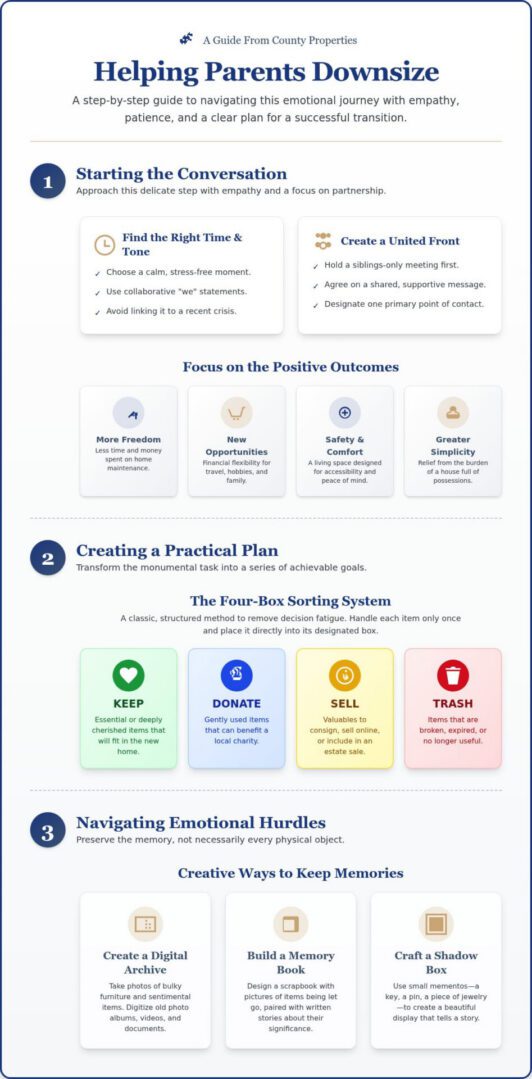
Success begins with the right setting. Choose a calm, neutral time when no one is feeling rushed, stressed, or tired-a quiet afternoon is often better than a busy holiday gathering. Frame the discussion collaboratively with “we” statements like, “I was thinking about what we all want for the future,” instead of “You need to start thinking about…” This fosters a sense of teamwork. Crucially, avoid linking the conversation to a recent health scare or crisis, as this can make your parents feel pressured and defensive rather than empowered.
Focusing on the Positive Outcomes
While loss can be a primary emotion, gently guide the conversation toward the new freedoms and opportunities that lie ahead. The core of helping parents downsize is showing them a vision for a simpler, more enjoyable lifestyle. Frame the move around what they stand to gain:
- More Freedom: Less time, money, and energy spent on home maintenance, yard work, and repairs.
- New Opportunities: The financial flexibility to travel, invest in hobbies, or help grandchildren.
- Enhanced Safety & Comfort: A living space designed for accessibility and peace of mind.
- Greater Simplicity: The relief that comes from unburdening themselves from a house full of possessions.
Involving Siblings and Creating a United Front
If you have siblings, getting on the same page is non-negotiable. Before speaking with your parents, hold a sibling-only meeting to agree on a shared, supportive approach. Decide on the core message and designate one person as the primary point of contact to avoid confusion or conflicting advice. Presenting a united, calm, and supportive front shows your parents that you are a reliable team, ready to provide guidance and support throughout every step of their journey.
Creating a Practical Plan: A Step-by-Step Downsizing Checklist
The journey of helping parents downsize can feel monumental, but a structured approach transforms this challenge into a series of achievable goals. The key is progress, not perfection. Before you touch a single box, measure the new living space. Knowing the exact dimensions of their future home provides clear, logical boundaries for what can come along. We recommend starting this journey in low-emotion areas like a laundry room or garage to build momentum. Scheduling short, consistent work sessions-perhaps two hours every Saturday-keeps everyone engaged without leading to burnout.
The Room-by-Room Method
To prevent feeling overwhelmed, tackle one room, or even just one closet, at a time. This focused strategy allows you to see tangible results quickly. Make it a rule to completely finish one area before moving to the next. For a wonderful morale boost, take ‘before’ and ‘after’ photos. Celebrating these small victories provides the motivation needed to continue the process with a positive outlook.
The Four-Box System: A Simple Sorting Strategy
This classic method provides much-needed structure. Get four large boxes or bins and clearly label them:
- Keep: Items that will fit in the new home and are essential or deeply cherished.
- Donate: Gently used items that can benefit a charity.
- Sell: Valuables you plan to consign, sell online, or include in an estate sale.
- Trash/Recycle: Items that are broken, expired, or no longer useful.
This systematic approach removes much of the decision fatigue that often complicates the process of dealing with family possessions. To be truly efficient, handle each item only once and place it directly into its designated box to avoid second-guessing.
Setting a Realistic Timeline
Recognize that sorting through a lifetime of memories takes time. This is a journey measured in months, not weeks. A key part of helping parents downsize successfully is to work backward from the target moving date and set clear milestones for completing each room. Most importantly, build in breaks for rest and reflection. This prevents emotional and physical burnout, ensuring the entire experience remains a supportive one for your parents.
Navigating Emotional Hurdles and Sentimental Items
The process of helping parents downsize is often more emotional than logistical. A family home is a living museum of memories, and sorting through decades of belongings can feel overwhelming. It’s crucial to remember that you are not just clearing out ‘stuff’; you are guiding them through a lifetime of memories. For many seniors, their home and possessions are deeply connected to their sense of identity and history. Approach this journey with empathy, patience, and the understanding that this is a significant life transition that deserves time and respect.
Creative Ways to Keep Memories
The goal is to preserve the memory, not necessarily every physical object. This shift in perspective can make letting go much easier. Our team often provides guidance on creative ways to honor your family’s history without filling up a new, smaller space. Consider these expert strategies:
- Create a Digital Archive: Take high-quality photographs of bulky furniture, cherished collections, or sentimental items they can’t keep. Digitize old photo albums, home videos, and important documents to preserve them safely.
- Build a Memory Book: Design a scrapbook or photo album featuring pictures of the items being let go, paired with written stories or anecdotes about their significance.
- Craft a Shadow Box: Use small mementos-a key, a piece of jewelry, a ticket stub-to create a beautiful shadow box that tells a story in a compact, displayable format.
Handling Resistance and Difficult Decisions
It’s natural for parents to feel resistant or emotional. When you encounter a difficult item, avoid pressure. Instead, become a gentle guide by asking questions like, “What’s your favorite memory associated with this?” This honors their feelings and opens a conversation. For more practical items, the ‘one-year rule’ can be a useful, impartial tool: if it hasn’t been used in over a year, it may be time to let it go. Most importantly, know when to take a break. If emotions are running high, step away and return to the task later. Forcing decisions only leads to regret and resentment.
Distributing Heirlooms and Valuables
Deciding the future of valuable or heirloom items requires a clear and fair process. Encourage your parents to gift significant pieces to family members now, allowing them the joy of seeing their treasures appreciated. For items with unknown monetary value, like art or antiques, consulting a professional appraiser provides clarity and prevents future disputes. It’s also important to be realistic; market values for many collectibles have changed, and it can be difficult to know what to do with unwanted items. Discussing a fair method for dividing possessions among siblings ahead of time-such as taking turns choosing-can maintain family harmony throughout this sensitive process.
Navigating this journey requires a trusted partner. For more personalized guidance on senior real estate transitions, the dedicated team at County Properties is here to help.
The Next Chapter: Selling the Family Home with a Senior-Focused Approach
After the emotional work of sorting through memories, the next step is preparing the family home for sale. This process is far more than a transaction; it’s about securing your parents’ financial future and ensuring a seamless transition. The effort you’ve already put into helping parents downsize is the single most important step toward a successful sale. A decluttered, well-maintained home not only attracts more buyers but also commands a higher price, making the entire journey more rewarding.
Why a Senior Real Estate Specialist (SRES) Matters
Navigating a late-in-life move requires more than just real estate expertise; it requires compassion. A Senior Real Estate Specialist (SRES®) has specialized training to understand the unique financial and emotional challenges of clients over 50. They operate with patience and a no-pressure approach, connecting you to a trusted network of professionals-from movers to estate planners-to provide comprehensive guidance every step of the way.
Preparing the House for the Market
With the home decluttered, you can focus on maximizing its appeal. Prioritize minor repairs like fixing leaky faucets or patching drywall, followed by a professional deep cleaning. First impressions are critical, so enhance curb appeal with simple landscaping and a fresh coat of paint on the front door. Staging can help buyers visualize themselves in the home, often by using fewer, carefully selected pieces to make rooms feel more spacious and inviting.
For more significant repairs or renovations aimed at maximizing the sale price, partnering with a professional service can streamline the process. A full-service contractor such as Blues City Home Remodeling and Construction can handle everything from minor updates to larger projects, ensuring the home is presented in its best possible light.
The same principle of maximizing value applies to other significant assets, such as vehicles. A professional detailing can make an older car look its best for a potential sale, while investing in its long-term protection aligns with the goal of a lower-maintenance lifestyle. As an example of modern protective care, a ceramic coating Dallas TX can preserve a vehicle’s paint for years, making upkeep much simpler.
Exploring Selling Options: Traditional Market vs. Cash Offer
Every family’s situation is different, and the right selling strategy depends on your priorities. The traditional open market typically yields the highest sale price but requires showings and keeping the home in pristine condition. Alternatively, a direct cash offer provides speed, certainty, and convenience, eliminating the need for repairs or public showings. A trusted agent can guide you through the pros and cons of each path, ensuring you make the best decision for your parents’ peace of mind.
The process of helping parents downsize and sell their home should empower them, not overwhelm them. Let us provide a no-obligation consultation to explore the best path forward for your family.
Guiding Your Parents Toward Their Next Chapter
Downsizing is more than just a move; it’s a profound emotional and logistical journey. As we’ve explored, this transition begins with compassionate communication and requires a patient, practical plan to navigate both cherished memories and the complexities of selling a long-time family home. The process of helping parents downsize is a significant act of love, but you don’t have to manage it alone. Having a trusted guide with specialized expertise can make all the difference.
At County Properties, our team includes Certified Senior Real Estate Specialists (SRES) who bring a compassionate, service-first approach to this unique transition. With over 36 years of experience serving Southern California families, we provide the expert guidance needed for a seamless and respectful journey. When you’re ready to take the next step, we are here to help. Talk to a Senior Real Estate Specialist today and let us help your parents step confidently into their new beginning.
Frequently Asked Questions
What do we do if our parents are hoarders and the situation is overwhelming?
When facing a hoarding situation, the key is to be compassionate and systematic. Start with one small, manageable area, like a single countertop or corner, to avoid feeling overwhelmed. For more complex cases, consider hiring a professional organizer who specializes in hoarding. These experts can provide objective guidance and emotional support, creating a structured plan that respects your parents’ feelings while ensuring the home becomes safe and ready for sale. This approach prioritizes everyone’s well-being.
How do we fairly handle valuable items like antiques, art, or jewelry collections?
To ensure fairness, begin by allowing your parents to choose the items they wish to keep. For remaining valuables, create a system like a family draft where siblings take turns selecting items. For high-value assets, obtaining a professional appraisal is a wise step. This allows for an equitable distribution, whether you decide to sell the items and split the proceeds or have one sibling “buy out” the others’ shares at the appraised value, ensuring transparency and preventing disputes.
What are the most important legal and financial documents we should locate during this process?
Locating key documents early is a critical step. Prioritize finding the property deed, mortgage information, and homeowners insurance policy. You should also gather essential personal papers such as wills or trust documents, powers of attorney for both finances and healthcare, birth certificates, and Social Security cards. Having recent tax returns and bank statements on hand will also provide a clear financial picture, which is vital for a smooth transition and future planning for your parents.
Are there professional services that can manage the entire downsizing and moving process for us?
Yes, there are specialists known as Senior Move Managers who offer comprehensive, end-to-end services. These professionals are experts in the challenges of helping parents downsize. They can manage every detail, from creating a floor plan for the new home and sorting possessions to hiring and overseeing movers, packing, and even setting up the new residence. Their goal is to provide a seamless, stress-free transition for the entire family, serving as your trusted project manager.
How can we help our parents feel at home and adjust after moving into a smaller space?
To ease the adjustment, focus on creating a sense of familiarity in their new home. Prioritize unpacking and arranging cherished items first, such as their favorite armchair, family photos, and beloved books. Help them establish new daily routines quickly and encourage them to explore their new community’s amenities or social groups. These actions help bridge the gap between their old life and the new, fostering a sense of comfort, belonging, and independence in their smaller space.
What if my siblings and I disagree on how to help our parents downsize?
Disagreements are common when helping parents downsize due to the emotional and financial stress involved. The best first step is to hold a dedicated family meeting with a clear agenda, focusing all discussions on your parents’ best interests as the non-negotiable common ground. If you remain at an impasse, consider bringing in a neutral third party, such as a mediator or a trusted real estate professional, to facilitate a productive conversation and guide you toward a unified decision.