
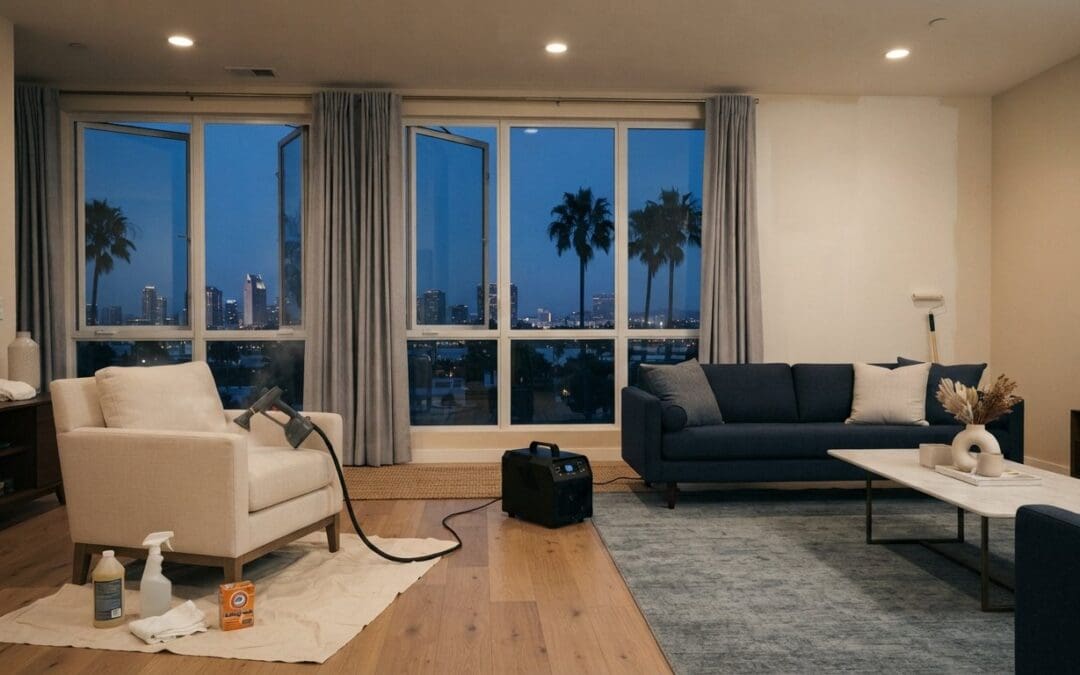
Cigarette smell can often be reduced before a sale, but air freshener only masks the odor. Smoke residue can remain in fabrics and on surfaces. Selling a house that smells like smoke may require deep cleaning, washing or replacing soft furnishings, and sealing walls before repainting. Start by identifying where the odor lingers.
A stale tobacco smell can make preparing your home for buyers feel overwhelming, especially when routine cleaning does little to help. A methodical inspection can show which cleaning steps are practical and where more extensive work may be needed.
This guide covers cleaning curtains, carpets, and upholstery, when repainting may help, and why smoke residue in walls or ceilings can be difficult to address. It also explains what to consider before ozone treatment and how to plan your next steps as a seller, rather than relying on temporary fixes.
Key Takeaways
- Start with odor-holding soft furnishings: wash what’s washable, and consider professional cleaning or replacement for deeply affected items.
- Repainting may help, but clean and seal smoke residue with an odor-neutralizing primer before applying new paint.
- Ozone generators require strict precautions: keep people and pets out during treatment, then allow at least 2 hours for ozone to dissipate and ventilate the space.
- Persistent odor can come from residue in walls, ceilings, and other materials, so surface cleaning alone may not address the source.
- Use baking soda or a diluted vinegar solution as a starting point for carpets and upholstery, then assess whether the odor remains.
1. Cleaning or replacing soft furnishings
When selling a house that smells like smoke, focus on porous furnishings, smoke-coated surfaces, and the HVAC system. Wash or professionally clean odor-holding items, then address walls, ceilings, and hard floors. Replace furnishings that still smell strongly after cleaning. These steps target residue instead of covering up the odor.
Start with curtains and draperies that are machine washable. For the first wash, use half a cup of vinegar instead of detergent, then wash them again with detergent. For a mattress, spray a vinegar-and-water solution twice a day for at least a week, or leave baking soda on it for around three days before vacuuming. Test solutions in a small, hidden area first and follow the item’s care instructions.
Carpets, rugs, and upholstered furniture can hold odor deep in their fibers and padding. Sprinkle baking soda on suitable fabric surfaces, leave it overnight or for a few days, then vacuum thoroughly. A household vinegar solution can be made with one part water and one part white vinegar. If the smell remains, professional cleaning may reach embedded residue more effectively. Heavily affected items may need replacing.
Before cleaning hard surfaces, open windows and doors and turn on fans. Wipe walls, ceilings, cabinets, and hard floors with a suitable cleaning solution, rinsing as needed to remove loosened residue. Work from higher surfaces downward so dust does not settle on areas you have already cleaned. Ventilation can help while you clean, but the Centers for Disease Control and Prevention says windows, fans, air conditioners, purifiers, air fresheners, and ventilation systems do not get rid of secondhand smoke.
Replace the HVAC filter with an odor-removing filter containing neutralizing charcoal, and change it regularly. A dirty filter can circulate particles and odor, so include the return vent and accessible grilles in your cleaning. If the odor persists after you replace the filter, have the ductwork assessed and cleaned as part of professional cleaning or restoration. Duct cleaning alone will not remove residue from furnishings or surfaces.
If contamination is extensive, a professional cleaner or restoration service can assess carpets, drapes, upholstery, and other affected materials together. Ask for a room-by-room plan that identifies what to clean and what may be better replaced. The CDC’s account of Betty describes how smoke smell made selling houses harder, underscoring why buyers may notice lingering odor during a showing. After cleaning, recheck each room with the HVAC running before deciding whether more treatment is needed.
2. Will repainting the walls help reduce the smoke smell?
Repainting can reduce smoke odor, but paint alone will not remove the residue underneath. First clean smoke-affected surfaces, apply an odor-neutralizing primer, then add two coats of paint. This helps seal lingering odor instead of simply covering discoloration.
Indoor tobacco smoke leaves nicotine and other chemicals on surfaces and in household dust. This thirdhand smoke residue can linger for years, so walls may not be the only source. Clean ceilings, trim, doors, and other affected areas before painting. Fresh paint will not address odor coming from flooring, furnishings, or the HVAC system.
Smoke-related evidence can affect a buyer’s view of the home and its value. Estimates indicate that stale tobacco odor or stains can reduce a selling price by as much as 30%; another estimate puts the resale-value reduction from indoor smoking at up to 29 percent. These figures illustrate potential impact, not a guaranteed price for a specific property.
Should you remove smoke odor or sell a smoke-smelling house as-is? Cleaning and sealing residue can help address an avoidable buyer concern, while an as-is sale leaves buyers to weigh the odor and possible remediation. Before deciding how to prepare the home, compare the visible damage, how far the odor has spread, and the work involved.
Should sellers disclose cigarette smoke, nicotine residue, or past smoking to buyers? Disclosure requirements depend on the property’s location, and required forms vary. Answer applicable questions accurately, and describe known odor or residue when the relevant form asks about it.
What are the legal smoke or odor disclosure requirements when selling a house in the United States? There is no single smoking-history requirement described for every state; requirements depend on location. Required disclosure documents in many states, including California, do not currently ask about a home’s smoking history.
Buyers can look for stale tobacco odor, wall or ceiling stains, and residue on surfaces during a showing or inspection. Home inspectors may note odors or residues associated with smoking, but a fresh coat of paint can make visual signs less obvious. Sellers can prepare for a clearer assessment by addressing odor sources before showings and recording completed cleaning or repair work. For guidance on preparing the sale, seller representation can help you plan your next steps.
3. Using ozone generators to remove cigarette odor
Ozone treatment may be part of a cigarette odor plan, but timing depends on the room, residue, and treatment process. One account described a cleaned and treated apartment smelling as if nobody had smoked after a couple of days. Another landlord reported running a generator for 4 hours per room and removing odor after 4 nights. These are examples, not a universal schedule.
Ozone generators produce ozone, which can react with odor-causing compounds in a room. They do not remove smoke residue from carpets, walls, or furniture. Clean or remove affected materials first, then consider whether ozone treatment suits the remaining odor problem. Otherwise, the smell may persist because residue is still in the home.
Safety comes first. Use an ozone generator only in an unoccupied space, with no people or pets present while it runs. Keep everyone out during treatment, and never treat an occupied room. Government agencies do not recommend long-term ozone exposure because it can contribute to eye and respiratory irritation.
Ozone generators can produce ozone, but their output and suitability vary by device. That range describes equipment output, not a recommended treatment duration or a guarantee of odor removal. Follow the machine’s operating instructions and keep its output and intended use in mind when planning treatment.
After treatment, allow at least 2 hours for ozone to dissipate, then ventilate the space. Don’t treat that waiting period as a substitute for ventilation. Keep the area unoccupied while the machine runs, and continue keeping people and pets away during the dissipation period and ventilation. Plan this work before showings, not while buyers or occupants are inside the home.
One landlord’s account involved running an ozone generator for 4 hours in each room over 4 nights. The reported result was odor removal, but that example doesn’t establish the right schedule for another property. Room size, the amount of residue, and whether soft materials remain affected all influence the work required.
When preparing a home for sale, treat ozone as one step in a larger cleanup, not a shortcut around cleaning. First remove or clean odor-holding items and address visible residue, then check whether cigarette smell remains. If it does, weigh treatment time and safety requirements against your sale schedule before arranging showings. Avoid masking residual odor with fragrance, which leaves the underlying material untreated.

4. Cigarette smoke residue in walls and ceilings
Smoke residue can settle on painted walls, ceilings, trim, and other indoor surfaces. Thirdhand smoke is residual nicotine and other chemicals left after tobacco use; it can remain on surfaces and in household dust for years. Formaldehyde and benzene are examples of carcinogens found in thirdhand smoke. A room can retain odor even after furnishings are removed.
Check more than the wall’s visible color. Look for yellowing, tacky areas, or a stale smell near ceilings, corners, doors, and vents. Wipe a small, inconspicuous section with a suitable cleaner and check the cloth for discoloration. This test can help identify residue, but a clean-looking surface does not prove the materials beneath it are unaffected.
The depth of contamination can vary sharply between rooms. One homeowner described smoke buildup linked to 75 to 100 pack-years of smoking in two rooms. Another account involved a tenant who smoked heavily in a rental for seven years. These examples show why a light surface wash may not address deposits accumulated over prolonged indoor smoking.
Cleaning and sealing affected surfaces can help prepare a home for sale, but paint alone can trap odor beneath the finish. Remove residue before applying an odor-neutralizing primer and repainting. Include ceilings and trim, not just eye-level walls. If odor returns after the room is closed, inspect hidden or porous materials, such as insulation, flooring, and built-in furniture, instead of adding another coat of paint.
Deep cleaning and ventilation may still leave residue behind. Researchers found thirdhand smoke pollutants in smoker homes two months after residents moved out, despite deep cleaning and ventilation. Home inspectors may note smoking-related odors or residues, and potential buyers may consider that evidence in their assessment. Keep a clear record of cleaning, sealing, and replaced materials to explain what work you completed.
Severe contamination may require removing and replacing more than paint or wallpaper. Remediation can involve carpets, drywall, insulation, flooring, built-in furniture, doors, and even the heating and air-conditioning system. In the most serious cases, a buyer may need a full gut remodel to make the home free of tobacco chemicals. Assess affected rooms together because odor can travel through connected spaces and systems.
Use inspection findings to distinguish surface cleaning from material replacement. If residue is limited to washable surfaces, targeted cleaning and sealing may be appropriate. If odor persists in ceilings, wall cavities, or HVAC components, plan for broader remediation before deciding how to present the property. The scope depends on where residue remains and which materials can be cleaned rather than replaced.
5. Deodorizing carpets, rugs, and upholstery
Carpets, rugs, and upholstered furniture can hold cigarette odor in their fibers and backing. Start by thoroughly vacuuming loose dust and debris, including carpet edges and areas beneath movable furniture. Check care labels before applying any cleaner. For showings, clean the entire affected area, not just the most noticeable spot, which can leave lingering odor nearby.
For a simple surface treatment, mix one part water with one part white vinegar. Test the solution in a hidden area first, then apply it lightly to a suitable surface with a cloth. Avoid soaking carpet or upholstery, since excess moisture can damage materials. Let the test area dry fully and check for color changes or remaining odor before treating a larger section.
Baking soda is another at-home option. Sprinkle it over carpets, rugs, or upholstery, leave it overnight or for a few days, then vacuum thoroughly. Work in manageable sections to cover the fabric evenly and remove the powder completely. Check care instructions before using baking soda on delicate upholstery, and avoid applying it to materials that should not be vacuumed.
Check places where odor can collect beyond the visible surface. Lift removable cushions and inspect seams, the underside of rugs, and carpet edges near walls. If a rug smells stronger underneath, surface deodorizing may not reach the affected backing. Likewise, carpet can retain odor after vacuuming if residue remains in its fibers or padding.
Professional cleaning may be the next step for smoke-affected carpets, drapes, and upholstered furniture. A professional assessment can help identify items that may respond to cleaning and those that may need replacing. Group affected pieces by room to see whether one source, such as a living-room sofa, is keeping the smell noticeable after other items are cleaned.
After cleaning, let each treated item dry completely, then reassess the room without adding air freshener. Check the carpet, rugs, and upholstery separately, since one untreated piece can keep the cigarette smell present. If odor remains deep in the carpet or padding, include it in your home-preparation plan before arranging buyer visits.
If extensive odor remediation complicates your sale plans, County Properties can help you consider cash offer facilitation as one possible path. That option may be relevant when you’re weighing further work against moving forward with the home in its current condition.
County Properties: Seller Representation
County Properties provides Seller Representation to help you plan your sale after assessing smoke odor, cleanup, and repair needs. If residue remains or repainting and remediation feel difficult to prioritize, discuss how the home’s condition fits your selling decisions. This guidance can help you weigh preparation steps against your transaction goals, since not every property needs the same work.
Bring a clear picture of the affected rooms, completed cleaning, and any repairs you are considering. These details can help you develop a practical plan for presenting the property and moving forward with the sale.
Contact County Properties or visit countyproperties.us to discuss your next step.
Move forward with a clear selling plan
Selling a house that smells like smoke is also a decision about how you want to move forward. Set your priorities before committing to more work: consider your timeline, the home’s overall condition, and how much preparation feels practical. A focused plan can help you choose your next step deliberately, rather than reacting to each new concern as it appears.
County Properties offers Seller Representation to guide you through the sale. If your plans involve a broader real estate transition, the team also offers Buyer Representation and Short Sale and Foreclosure Prevention. The right path depends on your goals and situation, so bring your priorities to the conversation and decide on a workable next step.
For support planning your sale, contact County Properties about selling. You can move ahead with a thoughtful plan and a steady partner beside you.
Frequently Asked Questions
Can you get cigarette smell out of a house?
Yes. Removing odor means addressing contaminated materials, not just covering up the smell. Wash or clean treatable items, remove materials that retain strong odor, and clean affected surfaces. If the smell returns after cleaning, inspect less visible sources, such as carpet padding or HVAC components. A room-by-room check helps identify which materials still need attention before showings.
Does cigarette smoke stay in walls?
Yes. Smoke residue can cling to walls and ceilings, and thirdhand smoke chemicals can remain on indoor surfaces and in household dust for years. A surface that looks clean may still hold residue. Check for odor or discoloration around corners, trim, and vents, then clean and assess those areas before repainting. Persistent odor can also point to residue in concealed or porous materials.
What is the most powerful odor eliminator?
No single product removes smoke odor from every material. The most direct approach is to remove or clean the source rather than mask it with fragrance. Odor-neutralizing primer can seal cleaned, affected surfaces before repainting. Ozone treatment is another option for an unoccupied space, but it requires strict safety precautions and does not remove residue from furnishings or building materials.
Will repainting the walls help reduce the smoke smell?
It can help when smoke residue on the walls is part of the problem, but paint alone will not clean the surface. Clean and seal the affected area with odor-neutralizing primer, then apply two coats of paint. Check ceilings, trim, and nearby surfaces too. If odor remains in carpet, furniture, or the HVAC system, repainting will not address those sources.
How does cigarette smoke odor affect a home’s sale price?
Smoke odor can influence what buyers are willing to offer, especially when they expect extensive cleaning or material replacement. Market estimates report that evidence of indoor smoking, including stale odor or stains, can reduce a home’s selling price by as much as 30%. The effect for an individual property depends on its condition, buyer response, and the scope of needed remediation.
How much does professional smoke odor removal cost for a house?
The cost depends on the situation and is provided after a quote request. Key factors include the home’s size, the number of affected rooms and materials, whether carpets or furnishings need replacing, and whether walls, insulation, or HVAC components need work. Treating washable items differs from remediation involving multiple rooms and building materials.
What steps remove cigarette smoke smell from walls, carpets, HVAC, and belongings?
Work from removable items toward the building itself. Wash suitable curtains and belongings, and clean carpets or upholstery according to their care instructions. Clean affected walls and hard surfaces before sealing or repainting. Replace the HVAC filter with an odor-removing charcoal filter, and assess persistent odor in the ducts. If a strong smell remains after cleaning, identify affected materials that need professional cleaning or replacement.
Is ozone treatment safe and effective for removing smoke odor in a home?
Ozone treatment can reduce odor, but it must be used only in an unoccupied space, with people and pets absent while the machine runs. Allow at least 2 hours for ozone to dissipate afterward, then ventilate the area. Long-term exposure is not recommended by government agencies because it can contribute to eye and respiratory irritation. Ozone also doesn’t remove residue from surfaces or furnishings.