

What if the professional you hired to guard your home’s equity is actually the greatest risk to your financial security? If you find yourself feeling pressured to accept a low offer or left in the dark during critical escrow phases, your intuition is likely correct. In a market where the San Diego median home price has reached $1,074,000 as of April 2026, the stakes are far too high to settle for subpar representation. Recognizing the signs of a bad real estate agent is not just about avoiding frustration; it’s about protecting your largest investment from avoidable errors and ethical oversights.
You deserve a collaborative partner who understands the nuances of the 2026 California disclosure updates, including new requirements for gas appliances and AI-altered listing photos. We understand how overwhelming it feels when communication breaks down or when you’re uncertain about the new mandatory buyer-broker agreements under AB 2992. This guide provides a clear framework to evaluate your current representation and transition to a trustworthy ally who prioritizes your goals. You’ll learn exactly which red flags to watch for and how to secure a path to a stress-free, successful closing.
Key Takeaways
- Learn to identify the specific signs of a bad real estate agent, from communication breakdowns to a lack of critical market data.
- Understand why poor representation poses a significant financial threat in the high-stakes Southern California market and how to avoid post-sale legal vulnerabilities.
- Discover how to distinguish between a truly neglectful professional and an efficient, team-supported model that ensures your transaction remains a priority.
- Gain the confidence to review your representation agreements and learn the strategic steps to terminate a failing partnership or pivot within a brokerage.
- Explore how a collaborative, service-first approach protects your equity and transforms the real estate process into a secure, goal-oriented experience.
Recognizing the Red Flags: Common Signs of a Bad Real Estate Agent
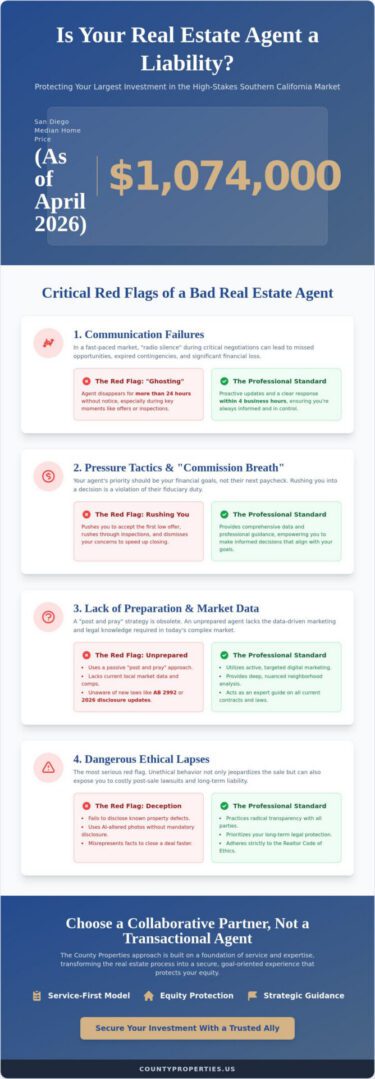
Identifying the signs of a bad real estate agent early can save you from a catastrophic financial outcome. In a high-stakes environment like San Diego, where the median home price reached $1,074,000 in early 2026, your representative should act as a vigilant guardian of your equity. When an agent lacks current market data or arrives at a listing unprepared, they aren’t just being unprofessional; they’re demonstrating a lack of respect for your investment. This behavior often signals a deeper inability to handle the complex legal and situational challenges inherent in modern transactions.
For seniors transitioning out of a long-term family home, the red flags are often more subtle but equally damaging. A bad agent might gloss over the emotional weight of the move or fail to explain the specific logistics of a senior real estate transition. If an agent seems dismissive of your questions regarding the physical challenges of downsizing or the timeline required for a smooth move, they’re likely prioritizing their own convenience over your security. A trustworthy partner should offer methodical assistance, ensuring every step of the transition feels stable and supported.
Communication Failures and the ‘Ghosting’ Phenomenon
In the fast-paced Southern California market, timing is everything. An acceptable response time is generally within four business hours; anything beyond 24 hours without prior notice is a clear warning sign. When you’re buying a home in Southern California, missed messages often lead to lost opportunities. A negligent agent who disappears during critical negotiation windows isn’t just “busy.” They’re failing their fiduciary duty. This “radio silence” can result in missed counter-offers or expired contingency periods, leaving you legally and financially vulnerable.
Pressure Tactics vs. Professional Guidance
You should never feel like a pawn in your agent’s quest for a commission. “Commission-breath” manifests as an agent pushing you to accept the first offer that comes along, even if it doesn’t align with your financial goals. This behavior is a direct violation of the spirit behind the National Association of Realtors Code of Ethics, which mandates that agents put their clients’ interests above their own. A professional guide provides the data you need to make an informed choice, rather than rushing you through inspections or disclosures to meet an arbitrary closing date.
Ethical lapses are perhaps the most dangerous signs of a bad real estate agent. This includes failing to disclose known property defects or using AI software to materially alter listing photos without the mandatory 2026 disclosures. These actions don’t just jeopardize the current sale; they open you up to post-sale lawsuits and long-term liability. True expertise involves a deep understanding of San Diego neighborhood nuances and a commitment to transparency that protects your long-term peace of mind.
Why Poor Representation is a Financial Risk in Southern California
The Southern California housing market is currently undergoing a period known as “The Great Reset.” With the San Diego median home price holding at $1,074,000 as of April 2026, even a minor oversight in your representation can lead to a significant loss of equity. When you’re dealing with assets of this magnitude, the signs of a bad real estate agent often manifest as a passive marketing approach. A “post and pray” strategy, where an agent simply uploads photos to the MLS and waits, is no longer effective in a market where inventory is rising and homes are taking longer to sell. You need an active facilitator who utilizes targeted data to reach qualified buyers.
Marketing negligence isn’t the only risk; a lack of specialized knowledge can be devastating for seniors or those in high-stress transitions. According to industry experts at Mashvisor, some of the most critical Warning Signs of a Bad Real Estate Agent include a failure to provide comprehensive market analysis and a lack of experience with specific property types. For those managing a senior real estate transition, an agent’s inability to coordinate complex logistics or understand unique tax implications can jeopardize a lifetime of savings. We believe your professional ally should offer a service-first philosophy that puts your long-term safety above a quick closing date.
Navigating California Disclosures and Legal Requirements
California’s real estate laws are among the most stringent in the nation, particularly with the 2026 updates regarding tobacco use disclosures and gas appliance reporting. A negligent agent who fails to meticulously manage your Transfer Disclosure Statement (TDS) or Natural Hazard Disclosure (NHD) leaves you vulnerable to post-sale lawsuits for years after the transaction. In 2026, a California realtor’s fiduciary duty is a strict legal obligation to act with the highest degree of loyalty, good faith, and full disclosure toward their client at all times. If you suspect your interests aren’t being prioritized, it may be time to consider professional seller representation that focuses on legal accuracy and financial security.
The Cost of Poor Negotiation in High-Value Markets
In high-value areas like Orange County or San Diego, negotiation skills are your primary defense against equity erosion. Leaving just 1% of your home’s value on the table during a counter-offer stage translates to over $10,000 in lost profit. You can spot a bad agent if they “fold” too early or pressure you to concede on price just to keep a deal from falling through. Partnering with an experienced veteran ensures you have a steady, guiding presence who knows exactly when to stand firm. True professional mastery means having the confidence to walk away from a bad deal to protect your financial future.
Red Flag vs. Reality: Is Your Agent Bad or Just Busy?
Distinguishing between a high-performing professional and the genuine signs of a bad real estate agent requires understanding how modern real estate teams operate. You might feel a pang of worry if you don’t hear from your agent every single day, but frequency of contact isn’t always the best metric for success. In 2026, the “Lone Wolf” model, where one person attempts to handle every administrative and strategic task alone, often leads to burnout and errors. A team-based approach is usually a sign of professional mastery, as it allows your lead agent to focus on high-level negotiations while specialists manage the finer details of your file.
You should evaluate your expectations based on the current “Great Reset” market conditions. With inventory levels rising across Southern California and the average days on market increasing, a home taking longer to sell isn’t necessarily a reflection of poor representation. The real test is whether your agent remains proactive or becomes reactive. A dependable guide will keep you informed of these shifts with data-backed insights, ensuring you feel secure even when the market moves at a slower pace.
The Support Staff Litmus Test
High-tier teams utilize assistants to streamline paperwork and scheduling, which is a sign of operational efficiency rather than neglect. You’re facing a red flag only if your lead agent has completely withdrawn from the strategic elements of your transaction. If a junior assistant who lacks local expertise is suddenly making decisions about your counter-offers or legal disclosures, your investment is at risk. This direct involvement is non-negotiable when you’ve hired a senior real estate specialist. These transitions require a seasoned mentor’s touch to navigate the complex emotional and logistical hurdles that an administrative assistant simply isn’t trained to handle.
Market Realities vs. Professional Performance
If your property isn’t attracting offers, it’s time to determine if the issue is the price, the market, or the marketing strategy. Ask your representative for a comprehensive “marketing audit” to see exactly how they’re positioning your home. A professional ally will provide a transparent breakdown of digital impressions, showing feedback, and how your listing compares to recent 2026 sales. Signs of a bad real estate agent include vagueness or an inability to provide this data. Conversely, a good agent will offer honest, sometimes difficult feedback about your property’s condition or pricing. Trust the professional who values your financial safety enough to tell you the truth, even when it isn’t what you want to hear.
How to Protect Your Interests and Terminate the Relationship
Realizing that you need to end a professional relationship is a difficult but essential step toward securing your financial future. If you have identified persistent signs of a bad real estate agent, your priority must shift from politeness to protection. Continuing with an agent who ignores your goals or lacks market data only increases your risk in a volatile market. You have the right to representation that mirrors your values and respects the magnitude of your investment.
The process of moving forward should be handled with methodical care to ensure your transaction doesn’t lose momentum. You’ll need to document specific failures, such as missed deadlines or communication gaps, to build a clear case for a clean break. This documentation provides a factual basis for your decision, making the “it’s not working” conversation a matter of professional standards rather than personal conflict. By staying focused on the data and your contractual rights, you maintain your dignity while taking control of your equity.
Understanding Your Contractual Obligations
Your first step is to carefully review your Listing Agreement or Buyer Representation Agreement. Pay close attention to the “protection period” clause, which is a standard feature in California real estate contracts. This clause ensures the original agent is compensated if you sell to a buyer they introduced during the contract term, even after the agreement ends. Understanding these boundaries prevents unexpected financial surprises later in the process. Most reputable brokers will release an unhappy client from their contract to protect the firm’s long-term reputation and community standing.
To initiate a split, you should submit a formal written request for cancellation to the agent and their Managing Broker. This creates a paper trail and signals that you’re serious about protecting your interests. If you still believe in the brokerage but don’t trust the specific agent, you can request a “Brokerage Pivot.” This allows the firm to assign a different, more experienced veteran to your file, keeping your listing active while providing you with the high-level service you deserve.
The Professional Way to Move Forward
Before you consider hiring outside assistance, speak directly with the Managing Broker of the firm. Their role is to ensure all agents under their license follow the highest ethical standards. They can often mediate a smooth transition, ensuring that your listing photos, marketing data, and showing feedback remain your property. This collaborative approach is far more effective than aggressive tactics and keeps your home’s reputation intact in the local community. Finding a real estate agent near me who offers a service-first guarantee will help restore your confidence in the process.
Transitioning to a new partner allows you to reset your strategy with fresh market data and a renewed focus on your financial security. If you’re ready to partner with a team that prioritizes your goals over a quick commission, you can view our collaborative representation models to see how we protect our clients throughout every phase of the closing.
The County Properties Approach: Collaborative vs. Transactional Success
Many of the common signs of a bad real estate agent are actually symptoms of a flawed business model. When a single individual tries to manage every aspect of a complex Southern California transaction, details inevitably slip through the cracks. Arnie Levine established County Properties as a departure from these industry norms, building a team-centric structure specifically designed to eliminate the gaps that lead to client frustration. By moving away from the “Lone Wolf” approach, we ensure that every phase of your journey is managed by a specialist who is focused on your financial security rather than their next commission check.
Our “Service-First” philosophy dictates that your safety and peace of mind always take precedence over a closing date. In a market where San Diego home prices remain high and inventory is expanding, you need a partner who isn’t afraid to advise against a bad deal. We view our role as your reliable professional ally, providing the methodical assistance required to navigate high-stakes personal situations. Whether you are managing a senior real estate transition or seeking short sale and foreclosure prevention, our collaborative model provides a sense of certainty that a transactional agent simply cannot offer.
A Steady Guide Through Complex Transitions
A collaborative team provides a level of coverage and expertise that protects you from the “radio silence” often found with individual agents. Our approach utilizes a specific linguistic blend we call “Relational Professionalism.” This merges high-level service standards with a deep sense of personal community. We prioritize internal cooperation over individual competition, ensuring that the collective knowledge of our seasoned veterans is always at your disposal. This is particularly vital for specialized needs like senior transitions, where the logistical and emotional hurdles require a steady, guiding presence rather than a high-pressure salesperson.
- Collaborative Expertise: You benefit from a close-knit group of professionals who have navigated various market cycles since our founding.
- 24/7 Coverage: Our team model ensures that your questions are answered and your transaction remains a priority at all times.
- Methodical Support: We break down complex legal and situational challenges into digestible segments, keeping you in control of the process.
Next Steps: Experience the Difference
If you suspect your current representation is falling short, we offer a professional second opinion on your listing or home search. This is not a high-pressure sales pitch; it’s a statement of sincere intent to help you protect your equity. During a “No-Pressure” consultation, we’ll review your current market data, marketing strategy, and disclosure documents to identify any potential vulnerabilities. You deserve a partner who views your success as a shared achievement. We invite you to connect with the County Properties team for a reassuring real estate experience and discover the path to a collaborative, stress-free closing.
Secure Your Financial Future with Professional Mastery
Protecting your home equity in the evolving Southern California market requires a representative who values legal transparency and data-driven negotiation. You now possess a clear framework to distinguish between standard market shifts and the genuine signs of a bad real estate agent. By recognizing red flags like ethical oversights or communication breakdowns early, you can take the necessary steps to safeguard your investment and transition to a more reliable partner.
County Properties is led by Arnie Levine, a Senior Real Estate Specialist with decades of local market experience. We utilize a collaborative, team-based approach to ensure your needs are met with precision and care. Our focus remains on your long-term success rather than a quick transaction, providing the steady guidance you need during significant life milestones. You don’t have to navigate the complexities of escrow alone or feel pressured into decisions that don’t serve your financial goals.
Discover a higher standard of real estate service with County Properties. We’re here to act as your steadfast ally, offering a path to a stress-free and rewarding closing. Your journey toward a secure financial future begins with the right professional partnership.
Frequently Asked Questions
Can I fire my real estate agent if I’ve already signed a contract?
Yes, you can terminate your relationship, but you must first review the cancellation terms in your signed agreement. Most contracts include a specific termination clause that outlines the process for a split. If your agent is unwilling to release you, contact their managing broker directly to explain your concerns. Most reputable firms will grant a release to protect their professional reputation and community standing.
What should I do if my agent isn’t responding to my texts or calls?
You should first send a formal email to create a paper trail of the communication lapse. If you don’t receive a response within 24 hours, contact the agent’s office or support staff to ensure there isn’t an emergency. Persistent silence during critical negotiation windows is one of the clearest signs of a bad real estate agent and should be documented if you plan to terminate your contract.
Is it a red flag if my agent suggests a lower price than I expected?
It is only a red flag if the agent cannot provide current market data to justify the suggestion. In the “Great Reset” market of 2026, where inventory is rising across Southern California, a price adjustment might be a strategic necessity. A professional ally will provide a Comparative Market Analysis (CMA) showing recent sales in your zip code to help you make an informed financial decision.
Do I have to pay a commission if I cancel my listing agreement?
You generally don’t owe a full commission upon cancellation, but you may be responsible for specific marketing expenses if they were outlined in your contract. You must also be aware of the “protection period” clause. This clause ensures the agent is compensated if you sell your home to a buyer they introduced to the property during the term of the agreement, even after the contract ends.
How can I tell if an agent is truly an expert in my specific San Diego neighborhood?
You can verify expertise by asking for a list of their closed transactions within your zip code from the last 12 months. A true local expert should also be able to discuss the 2026 California disclosure updates, such as requirements for reporting gas appliances or nicotine use. They should have a deep understanding of neighborhood nuances that generic data reports simply cannot provide.
What is the difference between a Realtor and a real estate agent?
A real estate agent is licensed by the state to conduct transactions, while a Realtor is a member of the National Association of Realtors. Realtors must adhere to a strict Code of Ethics that mandates a higher level of professional conduct. This membership provides you with an additional layer of protection, as it holds the professional to specific fiduciary duties and ethical standards during your transaction.
Can a real estate agent represent both the buyer and the seller in California?
Yes, dual agency is legal in California, but it requires the informed, written consent of both parties. The agent must act as a neutral facilitator and cannot disclose confidential pricing information to either side. While this can streamline communication, it requires a highly experienced veteran to manage the potential conflicts of interest while ensuring both the buyer and seller feel their financial interests are protected.
What should I look for in a new agent after a bad experience?
You should prioritize a collaborative, team-based model that offers consistent coverage and a service-first guarantee. Look for an experienced mentor who provides transparent data and a clear communication plan. Finding a partner who understands the signs of a bad real estate agent will help you avoid repeating past mistakes, ensuring your next transaction is a secure, goal-oriented experience that prioritizes your equity.